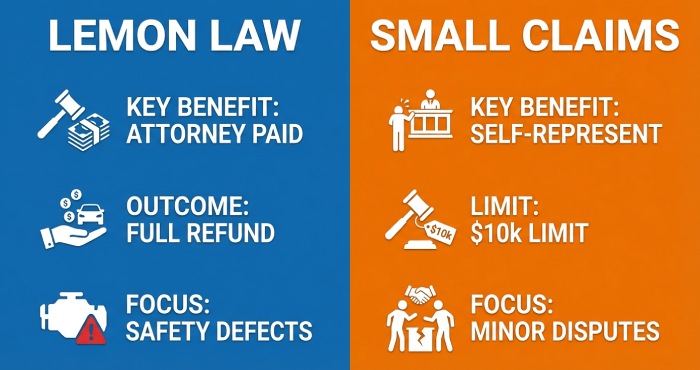
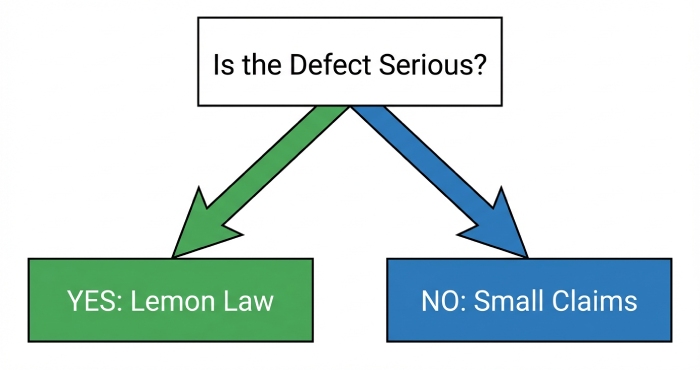
If you’re facing issues with a faulty car in California, reaching out to knowledgeable attorneys who specialize in the Song-Beverly Consumer Warranty Act often referred to as California Lemon Law lawyers can assist you in determining whether to file a claim under the Lemon Law or seek compensation via Small Claims Court.
Although both pathways can potentially result in a refund or buyback, Lemon Law attorneys can provide guidance through the more expedited and effective legal protections offered by the statute, allowing you to reclaim your money with reduced stress and increased accountability from the manufacturer, unlike managing a Small Claims case by yourself.
Eligibility and proof standards in California
Criteria for California’s Lemon Law
To qualify under California’s Lemon Law, your vehicle should still be covered by the original or certified pre-owned warranty when the defect arises, and this defect must notably influence its usability, worth, or safety. If the manufacturer fails to resolve the issue after a reasonable number of attempts, you may be entitled to a refund or a replacement.
Requirements and Monetary Limits for Small Claims
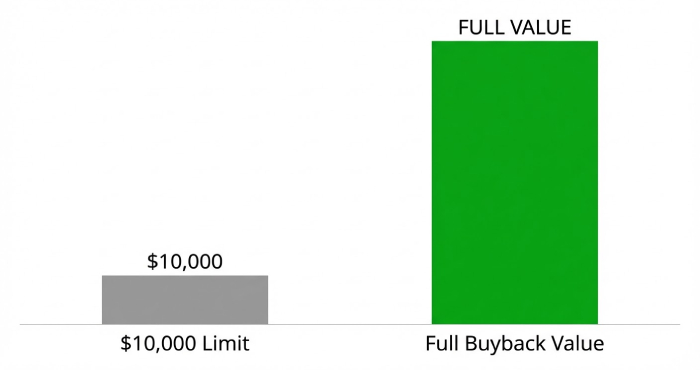
In California’s small claims court, individuals can typically seek up to $10,000, while businesses face lower thresholds. You need to accurately identify the defendant, make a prior request for payment, and supply clear documentation such as contracts and repair records.
Evidence of Warranty Breach
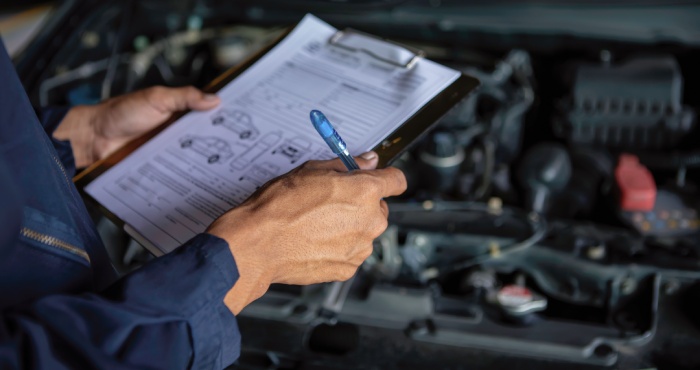
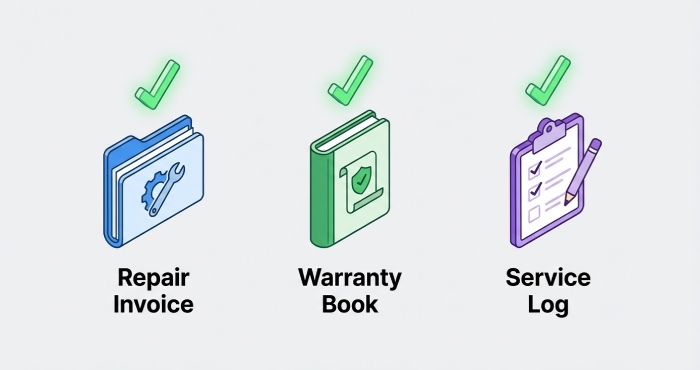
To demonstrate a breach of warranty, you must provide repair orders, diagnostic evaluations, and service logs that indicate the issue remained unresolved during the warranty period. It is essential to show that repairs were attempted while the warranty was active to bolster your case.
Impact of Significant Defects on Safety
You must establish that the defect has a considerable impact on the vehicle’s operation, value, or safety. Providing supporting documentation such as photographs, videos, and a comprehensive repair history can enhance your argument.
Step-by-step processes and timelines
Lemon law pathway (what accelerates it)
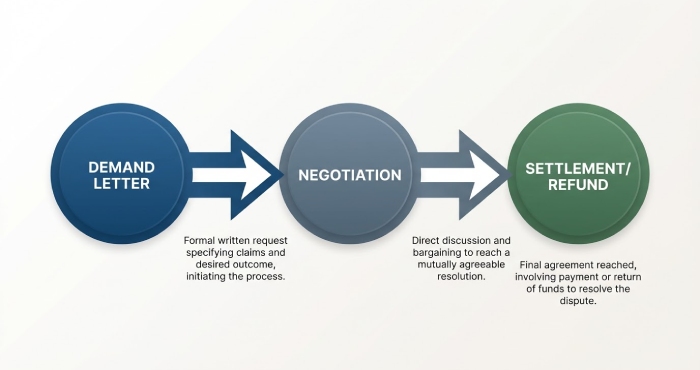
Demand letter: Send a detailed written demand to the manufacturer outlining the defective vehicle history, repair attempts, and requested refund or replacement. This triggers consumer protection review internally.
Arbitration or early settlement: Some manufacturers offer arbitration. If well-documented, arbitration can shorten time and cost; however, evaluate pros/cons before agreeing.
Settlement negotiations:Strong breach of warranty evidence can prompt buyback offers quickly. Mileage offsets and tax/registration credits are calculated at this stage.
Litigation (if needed): Filing a claim in superior court can lead to broader legal remedies, including civil penalties for willful violations and recovery of attorneys’ fees under California lemon law.
Speed boosters:
Complete repair process records, prompt demand, and a clear request for refund or replacement. Delays often stem from missing paperwork or unclear defect descriptions.
Small claims pathway (what accelerates it)
Filing a claim: Prepare the claim form, attach key exhibits (purchase agreement, warranty booklet, repair orders, communications), and pay filing fees.
Service: Timely and proper service on the manufacturer or car dealer is critical. Early, correct service accelerates the court hearing date.
Court hearing: Present concise proof of vehicle defects, out-of-pocket losses, and your demand. Attorney not required; the judge issues a decision outcome, typically the same day or shortly thereafter.
Speed boosters:
A single defendant, accurate addresses for service, and a calendar with near-term dates. Consider court availability and the defendant’s ability to appear to avoid continuances.
At-a-glance: Which is faster for a vehicle refund?
Topic
Lemon Law
Small Claims Court
Scope
Warranty vehicle defects with repeated repair failures.
Small money disputes for quick compensation.
Best For
Owners/lessees with serious car defects (e.g., California Lemon Law).
Individuals wanting fast, low-cost cases without lawyers.
Speed
Faster with repair records and settlement readiness.
Faster with proper paperwork and quick court dates.
Remedies, costs, and risks
Remedies and Adjustments under Lemon Laws: According to state lemon laws, consumers are entitled to either a refund or a replacement vehicle (after deducting a mileage adjustment). Additionally, they may also be eligible for civil penalties in cases of intentional violations and can recover legal fees if they win their case.
Limitations, Expenses, and Collection in Small Claims: Small claims courts provide a quicker, more economical resolution with capped damages. However, there are no statutory penalties or fee shifting, meaning the plaintiff must manage the collection of any awarded judgment themselves.
Unexpected Costs to Consider: Even if your claim is successful, various factors such as mileage deductions, restrictions on expert testimony use, and possible delays in receiving payment can diminish or postpone your overall compensation.
Decision guide and checklist
How to choose the fastest route
Opt for lemon law if:
You’ve made several recorded attempts to fix your vehicle under the manufacturer’s warranty, and the issue significantly compromises its safety, value, or performance. You seek either a refund or replacement, along with potential penalties and legal fees.
Select small claims court if:
Your damages are within the court’s monetary limits and concern straightforward out-of-pocket expenses or warranty issues. You prefer a quicker, more straightforward procedure with fewer formalities.
Documents to gather
Purchase/lease contract, warranty booklet, and any extended coverage.
Complete repair attempts file: repair orders, work descriptions, dates, mileage.
Timeline of symptoms, photos/videos, recall notices, and communications with the manufacturer or dealer.
Proof of payments, incidental expenses (towing, rentals), and demand letters.
Pitfalls that slow cases
Gaps in records, missing repair orders, or unclear defect descriptions.
Failing to send a clear demand for refund or replacement before filing.
Suing the wrong entity or improper service in small claims court.
Agreeing to arbitration without understanding its limits on legal remedies.
When to get help
Complex defects, disputed warranty coverage, or pushback on buyback calculations merit consultation. For localized guidance, lemon law lawyers at McMillan Law Group provide insight into the claim process.
If you find yourself with a malfunctioning vehicle, knowing how Lemon Law differs from Small Claims Court can help you avoid unnecessary time, expense, and hassle. Although Small Claims Court might appear to be a faster option for smaller issues, California’s Lemon Law typically offers more robust protection, such as complete refunds, vehicle replacements, and coverage for legal fees making it a superior choice for eligible situations. By seeking advice from a knowledgeable Lemon Lawyer San Diego, you can ensure that you select the quickest and most efficient route to obtain the compensation you deserve and get back on the road safely.
When a manufacturer buys back a vehicle due to Lemon Law regulations, many owners mistakenly believe their involvement concludes with receiving the buyback payment. In truth, this buyback can influence various aspects of your finances, including your auto loan, credit score, and insurance rates. It’s crucial to comprehend how outstanding loans are addressed, how it might reflect on your credit report, and the possible effects on your future insurance costs.
What Qualifies as a Lemon and How Manufacturer Buybacks Work
A vehicle is termed a “lemon” when it possesses significant flaws that impact its safety, functionality, or resale value, and these issues remain unresolved despite reasonable efforts to repair them within the warranty period. Many states necessitate documentation of recurring repairs for the same issue or extended durations when the vehicle was not operational.
If a manufacturer repurchases the vehicle, this must be made known, and the title may be marked as a lemon to alert prospective buyers. Following a buyback, the warranty might be renewed or modified, and certain states mandate additional protection for the fixed defect.
State standards, disclosures, and title branding
State standards define the number of repair attempts (often 3–4) or days out of service (often 30+ within the rights period).
Disclosures are mandatory when a manufacturer completes a repurchase; buyers must be told the car is a buyback and whether a lemon title applies.
Title branding affects resale value and may trigger insurance risk assessment changes.
Warranties and state-operated arbitration
Many states require consumers to attempt state-operated arbitration before litigation. Filing an arbitration application can accelerate a remedy while formalizing the lemon law claim record.
State-operated arbitration (sometimes called State-Operated Arbitration) evaluates repair attempts under the manufacturer’s warranty and determines eligibility for repurchase.
If approved, the manufacturer completes a buyback, pays applicable collateral charges, and processes title status changes.
Auto Loan Outcomes After a Buyback: Payoff Math, Negative Equity, and Refunds
Payoff and mileage offsets:
Most statutes allow the manufacturer to deduct a reasonable usage fee (based on miles driven before the first failed repair attempts). Compare the payoff quote from your lender to the repurchase rate to confirm whether any balance remains.
Negative equity:
If the mileage offset and add-ons cause a shortfall, you may owe residual principal. Consider refinancing a replacement motor vehicle or negotiating with the manufacturer for incidentals.
GAP and add-on refunds:
Cancel GAP, extended service contracts, and other add-ons. Pro-rata refunds can reduce negative equity. Ask the selling dealer or authorized dealer for cancellation forms.
Replacing or refinancing:
If you proceed with a new vehicle purchase, shop financing after the repurchase posts to your credit to avoid double-counting debt. Keep loan documents showing the repurchase satisfied the prior obligation.
Tip:
For a leased vehicle, lessor notification is crucial. The buyback funds typically go to the lessor, and excess payments or fees are reconciled with you.
Credit Report and Score Impacts: Reporting, Mistakes, and Timing
Lenders often report a lemon law repurchase as an “account paid by manufacturer” or similar. To avoid misreporting:
Prevent repo codes: Ensure the lender codes the account as a repurchase, not a voluntary surrender or repossession.
Dispute errors: If your file shows derogatory marks, submit disputes with credit bureaus including the repurchase letter, arbitration decision, and payoff confirmation.
Timing effects: Scores may dip temporarily when the prior account closes and new credit for a replacement motor vehicle is opened. Over time, on-time payments rebuild scores.
Maintain a clean paper trail: arbitration application, decision, repair records, and dealer communications. This documentation helps resolve any credit reporting errors quickly.
Insurance Implications and Vehicle Coverage
Canceling or transferring:
If the defective vehicle is repurchased and surrendered, cancel or transfer insurance coverage the same day to avoid paying for non-owned risk. Many insurers issue pro-rated premium refunds.
Branded-title/buyback vehicles:
Cars with a lemon title may be categorized as high-risk vehicles by some carriers. This can lead to increased premiums, coverage denial, or limits on comprehensive/collision vehicle coverage. Shop carriers that underwrite branded titles.
CLUE report considerations:
Claims history follows the VIN and policyholder. A CLUE report with multiple tow or repair claims tied to the vehicle defects can influence insurance rates. Provide context that the issues were under manufacturer’s warranty and resolved via lemon law.
Risk assessment:
Insurers evaluate title status, value impairment, and vehicle safety features. If a California Lemon Law lawyer helps secure an enhanced manufacturer warranty after a buyback, be sure to submit that legal documentation to your insurance provider, as it can positively influence coverage terms and premiums.
Ask your insurance provider in writing how a lemon title affects insurance coverage options across personal use, leased vehicle, and business use vehicles.
Special Situations: Leased and Business Use Vehicles
Leased vehicle: The title is held by the lessor. Complete lessor notification early, ensure payments stop on repurchase, and reconcile fees like disposition charges.
Business use vehicles: Some statutes treat business vehicles differently or exclude them above certain gross weight limits. Confirm coverage denial risks and underwriting differences with your insurance provider.
Personal use: Most lemon law frameworks focus on personal use motor vehicles purchased or leased for household purposes.
Lemon Law Attorney Insights (2025): Buyback, Credit, and Policy Stats
A Lemon law attorney explains how 2025 trends in vehicle buybacks, manufacturer credits, and policy changes are shaping consumer outcomes and claim success rates nationwide.
Topic
2025 Snapshot (San Diego / California)
Lemon Law Cases
~25,000+ cases filed statewide
Buyback Success Rate
~65% of valid claims approved
Average Buyback Amount
~$25,000 refund per vehicle
Loan & Credit Impact
Loans paid off; minimal credit impact
Insurance & GAP
GAP insurance often eligible for refund
Practical Resources and Media Insights
Government and directories: The Georgia Attorney General’s Consumer Protection Division publishes guidance on Georgia Lemon Law procedures and State-Operated Arbitration. CountyOffice.org can help locate DMV and County Office Property contacts for title questions.
Legal and education: Amar Law Group provides educational materials on the lemon law process and repurchase logistics. For California-specific guidance, consult experienced counsel; reputable options include san diego lemon law attorneys. If you’re in East County, you can also find information for visiting Alpine.
Media on buybacks and branded titles: On YouTube, channels like Samcrac, Steve Lehto Second Channel, and superspeedersRob often discuss buyback mechanics, lemon title disclosures, value impairment, and insurability of high-risk vehicles.
Key reminders:
Use written communications with your manufacturer and insurance provider.
Preserve every document that proves repair attempts, vehicle defects, and manufacturer’s warranty coverage.
Plan for potential increased premiums when insuring a branded-title vehicle, and get multiple quotes to optimize insurance rates and vehicle coverage.
Purchasing a used car can be an exciting endeavor. It gives you the chance to own a vehicle that suits your needs and preferences without the hefty price tag of a brand-new automobile. However, buying a used car can sometimes mean you’re taking on a car with potential mechanical issues. This is where used car warranties come into play.
00:00
Understanding Used Car Warranties
A used car warranty provides coverage for certain repairs and services to your vehicle. The specifics of what is covered will largely depend on the type of warranty you purchase. Common types of used car warranties include:
Powertrain Warranty: This warranty typically covers the car’s engine, transmission, and other major mechanical systems. It doesn’t cover wear-and-tear parts like brakes or tires.
Bumper-to-Bumper Warranty: Also known as a comprehensive warranty, it provides extensive coverage, including the powertrain, electronics, air conditioning, among others. It’s more expensive but offers broader protection.
Corrosion Warranty: This covers repairs needed due to rust or corrosion.
Roadside Assistance: While not a warranty in itself, many warranty providers offer this service for free. It provides coverage for emergency situations like a flat tire or dead battery.
In addition to the type of warranty, it’s essential to understand warranty terms. These are expressed as a combination of a time period and mileage (for example, three years or 36,000 miles) and the warranty coverage is valid until either term is reached.
Benefits of Having a Used Car Warranty
While used car warranties represent an additional cost, they offer several benefits that could make the investment worthwhile:
Peace of Mind: Knowing that potential repairs are financially covered can provide significant peace of mind, allowing you to enjoy your vehicle without the constant worry of potential breakdowns.
Budget Control: Car repairs can be expensive and often come at unexpected times. A used car warranty can help manage these costs, making them more predictable.
Higher Resale Value: Cars with transferrable warranties often have a higher resale value. Buyers are more likely to purchase a used car knowing that it has warranty protection.
Additional Perks: Many warranty providers offer extra benefits such as roadside assistance, car rental discounts, or trip interruption services.
How to Maintain Your Used Car to Maximize Warranty Benefits
Maintaining your used car is crucial not only to keep it running smoothly but also to maximize the benefits you can derive from your warranty. Regular maintenance can ensure that your used car remains in top shape and prevent minor issues from escalating into significant problems that may not be covered by your warranty. Below are some essential tips for maintaining your used car to maximize your warranty benefits.
Understand Your Warranty
The first step to maximize your benefits is understanding the specifics of your warranty. Take time to read and comprehend the terms, conditions, and exclusions of your warranty. Know what is covered and what isn’t. This information will guide your car maintenance routine.
Follow the Manufacturer’s Recommended Maintenance Schedule
Car manufacturers provide a maintenance schedule that outlines when certain services should be performed on your car. Adhering to this schedule is crucial to keeping your warranty valid and your car in optimal condition. These services can include oil changes, tire rotations, and major tune-ups.
Keep Track of All Maintenance Records
Documentation is key. Keeping a detailed record of all performed services and potential repairs on your car can serve as proof of proper maintenance, should you need to claim your warranty. This includes receipts, invoices, and detailed notes of what work was done and when.
Use Authorized Repair Centers
Depending on the terms of your warranty, you may be required to have your car serviced or repaired at authorized centers. Using these centers not only ensures that qualified technicians handle your vehicle, but it also helps avoid any potential warranty disputes.
Regularly Check Fluid Levels
Regularly checking and topping off necessary fluids like engine oil, transmission fluid, brake fluid, and coolant prevents damage to your vehicle’s components, helping you avoid potential repair costs that might not be covered by your warranty.
Keep Your Car Clean
Keeping your car clean protects it from rust and corrosion. Regular exterior washes and interior cleans prevent long-term damage.
Keep in mind that some states have very limited requirements for used vehicles. To understand the specific rules and regulations in your state, contact your attorney general’s office or consult with Lemon law attorneys.
Many people find it overwhelming to deal with the legal system, especially when it comes to defending their consumer rights related to defective vehicles. In such cases, seeking assistance from a California Lemon Law lawyer can make a significant difference. These attorneys have a deep understanding of the law and can assist clients in recognizing faulty products and securing appropriate solutions.
00:00
Understanding the California Lemon Law
In California, the Song-Beverly Consumer Warranty Act, commonly referred to as the California Lemon Law, safeguards consumers who buy or lease vehicles – be it new or used – plagued with significant warranty issues that persist despite multiple repair attempts by the manufacturer or dealership. This legislation extends beyond automobiles to encompass trucks, SUVs, RVs, motorcycles, and select watercraft and other consumer products.
According to regulations, if a vehicle manufacturer fails to fix a vehicle in accordance with the written warranty after several attempts, they are obligated to promptly replace the vehicle or reimburse the buyer with an agreed-upon amount. This rule applies to leased, purchased, and business vehicles that meet specific criteria.
It is crucial to seek guidance from a Lemon Law attorney San Diego as they possess the expertise needed to navigate the complexities of dealing with manufacturers and dealerships. Their knowledge can assist you in obtaining the rightful compensation for your situation.
Signs You Might Have a Lemon
Identifying a ‘lemon’ isn’t always straightforward. However, there are common signs that could indicate that your vehicle may qualify under the California Lemon Law.
Repetitive Repairs: A clear sign that your vehicle might be a lemon is when it keeps needing the same repair over and over again, particularly for the same problem, and the issue continues even after numerous repair attempts.
Safety Issues: Failure to address significant safety concerns in your vehicle, despite multiple repair attempts, may indicate that you are dealing with a lemon due to its impact on performance and worth.
In the Shop for Extended Periods: Should your car spend over 30 days in a year at the repair shop, it could be eligible for protection under the Lemon Law.
Several Attempts to Fix Different Issues: Should your vehicle continue to experience various issues that the manufacturer or dealer have been unable to resolve after numerous attempts, it is possible that your car meets the criteria of being a lemon.
The Role of a California Lemon Law Attorney
Having a California Lemon Law lawyer by your side is crucial for navigating complex legal issues related to faulty vehicles. They offer more than just legal support, serving as advisors who provide guidance and assistance in securing the rightful justice for you.
What a Lemon Law Attorney Does
In California, Lemon Law attorneys are experts in the regulations surrounding defective vehicles that persistently fail to be repaired after numerous attempts. They focus on the Song-Beverly Consumer Warranty Act and other related statutes governing consumer rights in such cases.
The lawyer is responsible for examining the client’s car paperwork to determine if it meets the criteria for being a ‘lemon’. They communicate with the car manufacturers to negotiate for a refund or replacement on behalf of their clients. If necessary, they may take the matter to court if an agreement cannot be reached through peaceful means.
Benefits of Consulting with a Specialized Attorney
Consulting with a specialized Lemon Law attorney has numerous benefits:
Expert Advice: These lawyers possess extensive knowledge of legal matters and are well-equipped to offer professional guidance on determining if your vehicle meets the criteria for being a lemon, as well as presenting you with the available courses of action.
Hassle-Free Process: An expert lawyer is well-versed in the specific procedures required and can streamline the entire process on your behalf. They take charge of all the documentation and discussions, tasks that may prove intricate and time-intensive for someone lacking experience in this field.
Maximizing Compensation: A seasoned lawyer is well-versed in effective tactics to secure the highest possible compensation for you, guaranteeing a fair resolution which may include a full buyback, replacement vehicle, or coverage of repair expenses.
How a Lemon Law Attorney Can Help Navigate the Legal Process
The legal process involved in a lemon law claim can be complex and overwhelming for many individuals. A Lemon Law attorney simplifies this process by:
Evaluating Your Case: An evaluation of your vehicle’s repair history, warranty details, and any pertinent paperwork will be conducted to ascertain whether it meets the criteria for being classified as a lemon under California legislation.
Mapping A Strategy: After confirming the legitimacy of your claim, they will strategize to secure the highest compensation available for you.
Filing Your Claim: The lawyer will proceed to create and submit all essential documents concerning your case. This entails composing a formal letter to the manufacturer detailing the problem, efforts to resolve it, and the specific solution you are requesting.
Negotiating The Settlement: The lawyer will handle negotiations with the manufacturer or dealership for you, taking away the burden of this potentially stressful interaction.
Representing You in Court: Should negotiations fail to resolve the case and it proceeds to court, rest assured that the attorney will advocate on your behalf to maximize the likelihood of a positive result.
Engaging the services of a California Lemon Law lawyer could prove to be the most efficient means of safeguarding your rights and financial interests in the face of issues with a troublesome vehicle. Their wealth of experience, specialized skills, and unwavering commitment can offer priceless support in navigating through these intricate scenarios.
The Consultation Process
Initiating a consultation with a California Lemon Law lawyer serves as a vital initial action to determine the validity of your potential Lemon Law claim. This meeting offers you the chance to grasp the legal ramifications of your situation, explore possible approaches, and build a connection with the attorney.
What to Expect During an Initial Consultation with a Lemon Law Attorney
In your first meeting with the attorney, a thorough evaluation of your case will be conducted to determine if your vehicle meets the criteria for protection under the California Lemon Law. Your attorney will scrutinize your repair history, warranty information, communications with the manufacturer or dealership, and relevant documents. Be prepared for detailed questions about your vehicle’s background, the types of defects present, the number of repair attempts undertaken, and the impact of these issues on its functionality, worth, or safety.
In the event that your car qualifies as a potential lemon, your lawyer will go over possible solutions like exchanging the vehicle, repurchasing it, or offering a cash settlement. They will also explain the payment arrangement, highlighting that Lemon Law cases in California are usually managed on a contingency basis, meaning you only pay if your case is successful.
Questions to Ask During the Consultation
It is essential to be proactive during the consultation. Some pertinent questions to ask could include:
Experience: How many Lemon Law cases have they handled? What is their success rate?
Process: What is the general process for a Lemon Law claim? How long does it usually take?
Communication: How often will you receive updates about your case?
Fees: Could there be any costs if the case is not successful? Will the manufacturer be required to pay your attorney fees if you win?
How to Prepare for Your Meeting with an Attorney
For a successful consultation, thorough preparation is key. Begin by collecting important documents related to your vehicle, such as the purchase agreement, warranty information, repair bills, and any correspondence with the manufacturer or dealership. Keep detailed records of your vehicle’s past issues, including repair dates, types of defects, and their impact on performance. Make a list of questions to cover all essential points during the meeting and make the most out of your consultation.
Even the most knowledgeable consumers can find it difficult to navigate the intricate terrain of the California Lemon Law. When dealing with a possible ‘lemon’, knowing your rights and the advantages of having a skilled legal advocate by your side can significantly impact your outcome. By enlisting the help of a California Lemon Law lawyer, you not only have someone fighting for your rights but also expertly leading you through the legal system to ensure you get the fair treatment you are entitled to.
Being well-prepared with the necessary documents and inquiries for your first meeting with your attorney is crucial in evaluating your case effectively and devising an optimal legal plan. This initial consultation is a key factor in determining whether your car meets the criteria for being considered a lemon, as well as exploring potential solutions that could be accessible to you.
Safeguarding your investment in a vehicle goes beyond the initial purchase. It involves guaranteeing that your vehicle remains dependable and secure. In the event that it proves to be faulty, it is essential to have proper legal representation to secure the compensation entitled to you by law. Consulting with a California Lemon Law attorney is a worthwhile step towards ensuring your satisfaction and protection as a consumer.
In the United States, a lemon law is a law that provides protection to consumers who buy defective vehicles. If you have purchased a defective vehicle, you may be entitled to a refund or replacement of the vehicle.