How California Lemon Law Applies to New Cars With Intermittent Safety Defects
California Lemon Law may protect consumers who buy or lease new vehicles that develop recurring safety-related defects covered by the manufacturer’s warranty. Intermittent failures can be particularly frustrating because a problem may not appear every time the vehicle is inspected by a dealership. However, the fact that a defect occurs intermittently does not necessarily prevent a vehicle from qualifying for Lemon Law protection. Eligibility depends on the nature of the defect, its impact on the vehicle’s use, value, or safety, and the manufacturer’s efforts to repair the problem.
Under California Lemon Law, a manufacturer may have an obligation to repurchase or replace a vehicle when it is unable to repair a warranty-covered defect after a reasonable number of repair opportunities, depending on the circumstances. Covered defects may involve braking systems, steering components, airbags, cameras, radar sensors, lane-keeping technology, or other safety-related systems. A recurring safety defect may support a Lemon Law claim even when a dealership says it “could not duplicate” the problem during an inspection. The vehicle’s repair history, documented complaints, diagnostic information, and other evidence can help establish the nature and persistence of the defect.
Safety Defects May Qualify Even When They Are Intermittent
A lemon law case involving an intermittent safety defect often turns on documentation. The problem may appear unpredictably, but if it substantially impairs the use, value, or safety of the new car, California lemon law protection may apply.
Why “could not duplicate” does not end the claim
Dealers often write “no problem found” or “could not duplicate concern” on repair orders. That does not automatically defeat a lemon law claim. A lemon law attorney can evaluate whether repeated visits, consumer complaints, diagnostic trouble codes, software updates, or service bulletins support the lemon law case.
The warranty period matters
Most claims depend on whether the issue arose while the vehicle was still covered by warranty. A Breach of warranty theory may also apply when the manufacturer or vehicle manufacturer failed to honor its repair obligations.
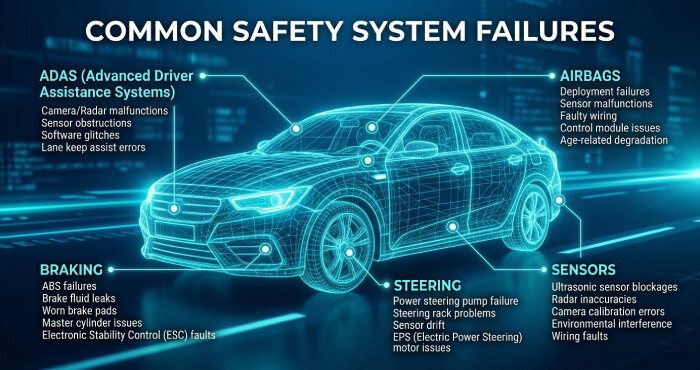
Common Intermittent Safety Feature Failures: ADAS, Braking, Steering, Airbags, and Sensors
Modern vehicles increasingly rely on complex electronic safety systems. These systems can experience intermittent failures because of software glitches, wiring problems, sensor misalignment, calibration issues, defective modules, or communication errors between vehicle components. When these problems repeatedly affect a vehicle’s safety or operation and cannot be properly repaired, they may become relevant to a California Lemon Law claim.
Advanced Driver Assistance Systems
Advanced driver assistance systems (ADAS) can be the source of intermittent safety-related defects in modern vehicles. Features such as adaptive cruise control, automatic emergency braking, blind-spot monitoring, forward collision warnings, and lane departure warnings may malfunction, activate unexpectedly, or fail to operate as intended. When an ADAS problem is covered by the vehicle’s warranty and the manufacturer cannot adequately repair it after a reasonable number of repair opportunities, the defect may be relevant to a California Lemon Law claim.
Examples of ADAS problems
A new car may brake suddenly with no obstacle ahead, fail to warn of a vehicle in the blind spot, or drift out of its lane despite lane-keeping assistance being enabled. These symptoms can support a lemon law claim when the manufacturer cannot provide a reliable fix.
Braking, Steering, and Airbag Concerns
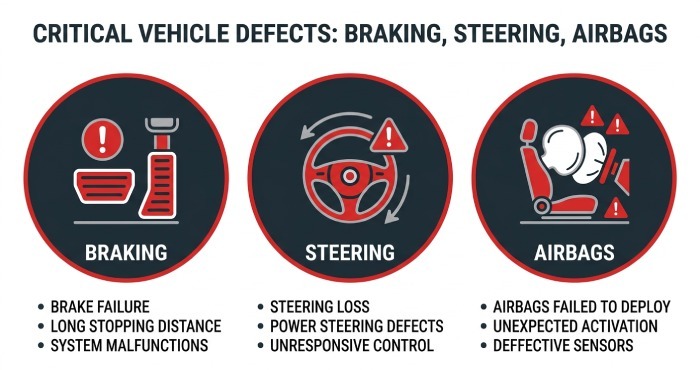
Intermittent braking and steering problems are among the most serious warranty defects. A defective vehicle may experience a soft brake pedal, delayed braking, sudden emergency braking, power steering loss, steering pull, or warning lights that come and go.
Airbag and restraint system warnings
Airbag lights, seatbelt sensor warnings, and occupant detection failures should be taken seriously. If a manufacturer or auto manufacturer cannot repair these issues, the consumer may be entitled to lemon law compensation.
Cameras, Radar, Lidar, and Parking Sensors
Sensor failures can affect parking assistance, rear cross-traffic alerts, collision warnings, and autonomous safety features. Dirt or weather may occasionally interfere with sensors, but repeated warnings, calibration failures, or module replacements may indicate a deeper defect.
Software updates are not always enough
An automaker may attempt to resolve intermittent failures through software updates. If the new car continues to malfunction after updates, the lemon law process may become necessary.
Proving an Intermittent Problem: Repair Orders, Video Evidence, Diagnostics, and Dealer Communications
A strong lemon law case depends on evidence. Because intermittent defects may not appear during a short test drive, owners should build a detailed record from the first sign of trouble. This helps a lemon law lawyer show that the defective vehicle has a recurring, safety-related problem.
Repair Orders and Service Records
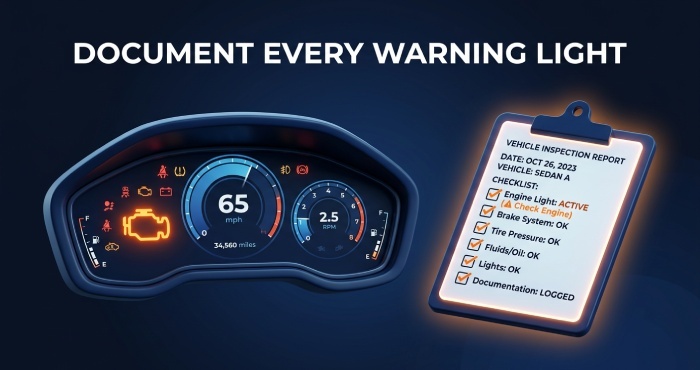
Every dealership visit should produce a repair order. The repair order should clearly list the consumer’s complaint, mileage, dates, symptoms, warning messages, and the dealer’s findings. If the dealer minimizes the issue, ask that your exact complaint be included.
What to document on each visit
Track when the defect happens, weather conditions, driving speed, road type, dashboard warnings, and whether passengers witnessed the failure. These details can make a lemon law claim more credible.
Video Evidence and Photos
Video evidence can be powerful in a California lemon law claim. Safely recorded footage of warning lights, malfunction messages, unintended braking, steering alerts, or sensor failures can help prove the defect exists.
Use safe documentation methods
Never record while driving if doing so creates danger. Ask a passenger to record, use a mounted camera, or document the issue after pulling over safely.
Diagnostics, Codes, and Dealer Communications
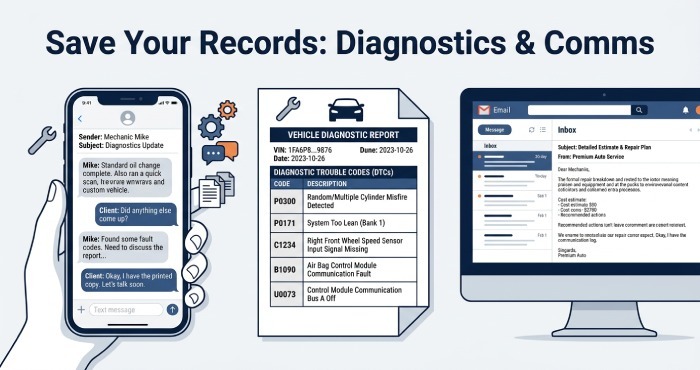
Diagnostic trouble codes, calibration records, module replacement notes, and software update logs can help lemon law experts determine whether the manufacturer has been unable to repair the new car. Save emails, text messages, voicemails, and service appointment confirmations.
Communications can reveal delay
If the dealer says parts are unavailable, engineers are reviewing the issue, or the manufacturer has no fix, those communications may support the lemon law case.
When to Contact a Lemon Law Lawyer in California for a New Car Claim
A consumer should contact a lemon law lawyer when a new car has repeated safety failures, multiple repair visits, extended time in the shop, or a defect the dealer cannot duplicate. Waiting too long can make filing a claim harder, especially if records are incomplete.
A qualified lemon law attorney can review repair orders, warranty terms, vehicle history reports, and communications with the manufacturer. Many attorneys offer a free consultation or lemon law consultation to determine whether the consumer may qualify for lemon law protection.
Why Legal Representation Helps
An experienced lemon law attorney understands how manufacturers defend intermittent defect cases. The manufacturer may argue that the defect is normal, caused by driver error, repaired, or not substantial. Legal representation helps counter those arguments with evidence and legal strategy.
Consumers often search for a california lemon law lawyer when a dealer repeatedly fails to repair a dangerous vehicle issue. Drivers in San Diego may also look for a lemon law attorney san diego for local guidance. Although this article focuses on a new car, motor home owners may need an rv lemon law attorney for similar warranty disputes.
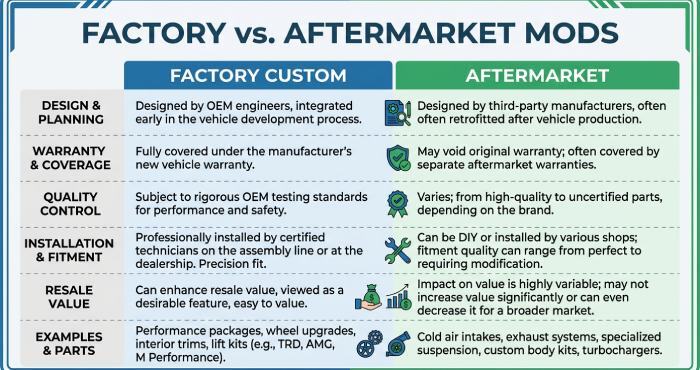
Under lemon law, the key question is not whether a vehicle is unusual, expensive, or performance-oriented—it is whether the defective product qualifies as a covered motor vehicle and whether the defect substantially impairs use, value, or safety. Custom cars can include factory-ordered vehicles with manufacturer performance packages, dealer-installed appearance or tuning options, specialty vehicles, unique vehicles, assembled vehicles, kit-based builds, and modified production models.
Factory Custom Cars, Unique Vehicles, and Assembled Vehicles
A factory custom car is usually easier to evaluate under lemon law because the manufacturer built and warranted the motor vehicle. Examples include a performance trim, track package, upgraded suspension, carbon-ceramic brakes, factory supercharger, manufacturer-installed ECU calibration, or special-edition model. These custom cars often remain within the standard warranty because the performance components were part of the original build.
By contrast, assembled vehicles, kit cars, and heavily modified vehicles may involve more complex Lemon Law questions. When a vehicle contains components that were not installed by the original manufacturer, the manufacturer may argue that certain defects were caused by aftermarket modifications rather than a factory issue. However, modifications alone do not automatically eliminate a consumer’sLemon Law rights. The key factors are whether the vehicle is covered by a valid warranty, whether the defect substantially affects the vehicle’s use, value, or safety, and whether the manufacturer had a reasonable opportunity to repair the problem.
Vehicle Title and Registration Details Matter
For custom cars, the vehicle title can become central evidence. If the vehicle title lists the car as a regular production model but the sale documents show factory performance content, warranty coverage may be clearer. If the vehicle title identifies one of several assembled vehicles, the manufacturer may argue that some defects came from non-factory work. Before you register your vehicle, confirm that the title application, vehicle transfer paperwork, insurance verification, and temporary permits are consistent with the vehicle’s actual configuration.
How Manufacturer Performance Packages Affect Warranty Coverage
Manufacturer-installed performance packages, such as factory power upgrades, sport suspensions, upgraded transmissions, or enhanced brake systems, are generally covered under lemon law protections. If these factory-authorized components fail during the warranty period and remain unresolved after a reasonable number of repair attempts, the defect may support a valid lemon law claim for the vehicle.
Warranty Coverage Versus Aftermarket Add-Ons
Problems arise when a dealer, aftermarket shop, or owner adds non-factory parts. A manufacturer can deny warranty coverage if it can prove the modification caused the defect. However, it cannot automatically reject every lemon law complaint just because custom cars have modifications. For example, aftermarket specialty license plates from MyPlates, cosmetic wraps, or interior trim changes usually should not affect an engine defect. On the other hand, non-factory tuning, oversized turbochargers, or used auto parts installed in a drivetrain may complicate buyer protection.
Motorists should keep every purchase order, repair invoice, and warranty booklet. In California, a consumer with a defective performance vehicle may consult a california lemon law lawyer to evaluate whether the manufacturer’s warranty still applies. RV owners with customized or performance-equipped motor homes may also need guidance from an rv lemon law attorney.
When Modifications Can Complicate a Lemon Law Claim
Title, Registration, and Ownership Issues
Beyond mechanical defects, custom and assembled vehicles may also face ownership and title issues, such as lien disputes, title delays, or registration problems, that can complicate lemon law claims. While Texas resources and administrative agencies can assist with vehicle titling and registration matters, eligibility for lemon law relief ultimately depends on the vehicle’s warranty coverage, repair history, and applicable state law.
When Commercial or Specialty Use Changes the Analysis
Some performance-modified vehicles may be owned for business purposes, used by companies, or maintained as part of a collection. Commercial use can sometimes affect warranty coverage or the way a manufacturer evaluates a Lemon Law claim. Vehicle owners should keep clear records showing how the vehicle was used, maintained, and repaired. Understanding the vehicle’s warranty terms and usage history can help determine whether a defect may qualify for protection under applicable Lemon Law laws.
HB718 and Temporary Permit Concerns
For custom and performance vehicles, keeping accurate ownership and service records is important when pursuing a Lemon Law claim. Maintain copies of purchase agreements, warranty documents, registration records, repair orders, and communications with the dealership or manufacturer. These documents can help establish when the vehicle was purchased, when defects were discovered, and whether the manufacturer had a reasonable opportunity to repair the problem.
Steps to Protect Your Rights and Build a Strong Lemon Law Case
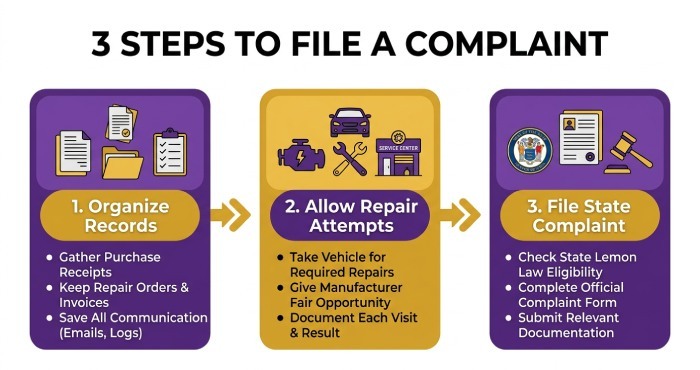
Practical Action Plan Before You File a Complaint
Organize your purchase documents, title, registration, insurance, and repair records, and identify whether each vehicle component was factory-, dealer-, or aftermarket-installed. Then allow the manufacturer a reasonable opportunity to repair the vehicle, and if the problem continues, file a lemon law complaint through the appropriate state process.
If your case is in Southern California, speaking with a lemon law attorney san diego can help clarify deadlines, warranty defenses, and documentation strategy. Consumers elsewhere should review their state’s consumer protection rules before they file a complaint.
1. Evidence to Preserve
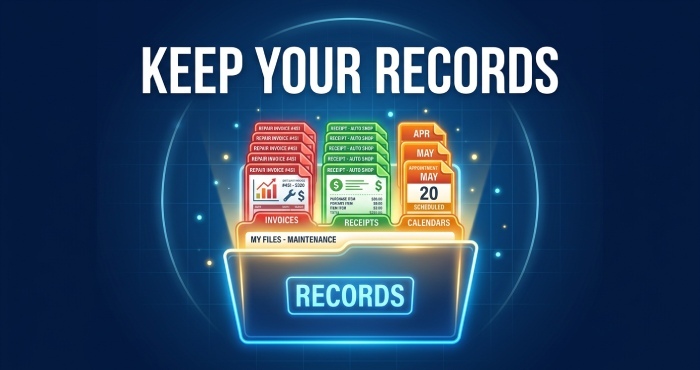
Keep photos, videos, diagnostic codes, tow records, repair invoices, warranty documents, correspondence with the manufacturer or dealership, inspection reports, and notes from every service visit. If your vehicle has aftermarket modifications or manufacturer performance upgrades, preserve installation records, purchase receipts, and documentation showing when each modification was added. This evidence can help demonstrate the vehicle’s condition, repair history, and whether the defect was related to a warranty-covered issue rather than owner modifications.
2. How to File a Complaint Effectively
When you file a Lemon Law complaint, be specific and provide as much documentation as possible. A strong complaint should include details about the defect, dates of repair visits, vehicle mileage, number of repair attempts, total days the vehicle was out of service, and how the issue affects the vehicle’s safety, value, or usability. Include supporting documents such as repair orders, warranty records, communication with the manufacturer or dealership, and inspection reports. Accurate documentation can help strengthen your claim and demonstrate whether the manufacturer had a reasonable opportunity to fix the problem.
3. Protecting the Value of Custom Cars
Do not continue driving a dangerous motor vehicle just to “prove” the defect. Also avoid major new modifications while the lemon law complaint is pending. If you need to register your vehicle, renew it, add or remove lien information, or complete a vehicle transfer, keep copies of every submission. Accurate vehicle title records, proper vehicle registration, and consistent warranty documentation help preserve consumer protection rights for custom cars, unique vehicles, and assembled vehicles.
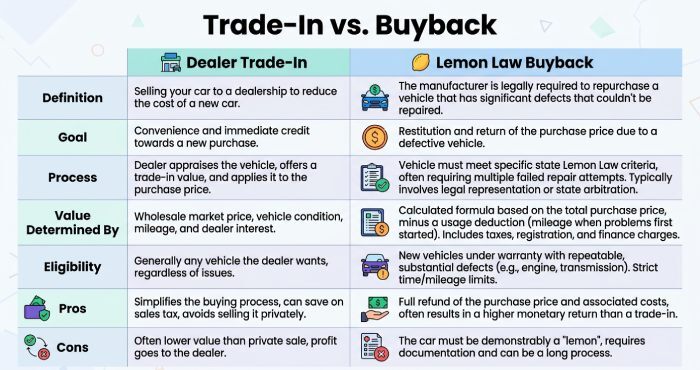
Before committing to a California Lemon Law buyback program, consumers should understand how different trade-in options may affect legal entitlements, financial recovery, and the possibility of receiving a refund of purchase price.
Under the Song-Beverly Consumer Warranty Act, a faulty vehicle may qualify for a manufacturer buyback, replacement vehicle, cash settlement, or other remedies when repeated repair attempts fail to fix a substantial non-conformity covered by an Express Warranty.
1: Dealer Trade-In Toward a New or Certified Pre-Owned Vehicle
A traditional Dealer trade-in is often the fastest path to a replacement vehicle. You bring the defective car to a Dealership or Auto dealer, receive a trade-in value, and apply that amount toward a new model or certified pre-owned vehicle. This option may appeal to a Consumer who needs immediate transportation and cannot wait for a manufacturer buyback or formal buyback program.
When a Dealer Trade-In May Make Sense
A dealer trade-in may be a practical option if the defects are minor and do not qualify under California Lemon Law. However, serious or repeated warranty issues may make a lemon law claim more beneficial than trading in the vehicle.
Watch for Negative Equity and Reduced Value
A vehicle with known defects may receive a lower trade-in value, creating negative equity or additional costs. Compare the dealer’s offer with the potential benefits of a California Lemon Law refund or replacement before making a decision.
Keep Every Document Before Signing
Save all repair orders, warranty records, receipts, and communications before completing a trade-in. These documents can help support your California Lemon Law claim if you pursue legal action later.
2: Manufacturer Loyalty or Goodwill Trade-In Assistance
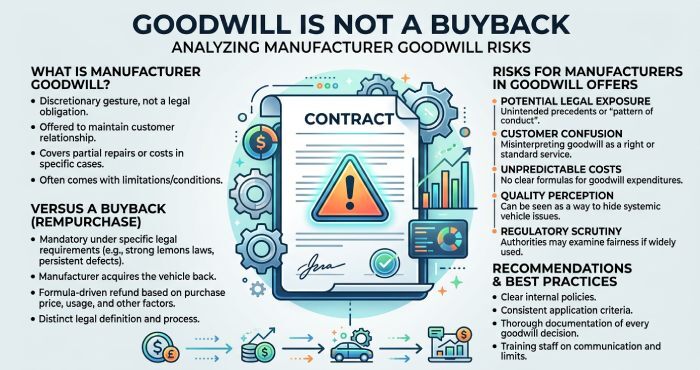
Goodwill Is Not the Same as a Buyback Program
A goodwill offer may provide a rebate, partial loan payment, or discount on a replacement vehicle, but it is generally not the same as compensation available under California Lemon Law. A qualifying buyback may include a refund, reimbursement of eligible costs, finance charges, and other recoverable amounts, subject to the applicable usage deduction.
Manufacturer buyback programs must also comply with California disclosure requirements when the vehicle is resold, helping protect future buyers through consumer protection and warranty laws.
Questions to Ask Before Accepting Goodwill
Ask whether accepting goodwill assistance waives your lemon law claim, affects future remedies, or prevents you from seeking a manufacturer buyback later. A lemon law attorney can review the settlement language before you sign. If you are in Los Angeles, Orange County, or the County of Los Angeles, local California lemon law attorneys may also be familiar with regional dealership practices.
3: Private-Party Sale Before Filing a Lemon Law Claim
A private-party sale may sometimes produce a higher price than a Dealer trade-in. However, selling a defective car directly to another buyer before filing a lemon law claim can be risky, especially if the faulty vehicle has unresolved non-conformity issues.
Disclosure Risks and Consumer Rights
Private sellers should avoid misrepresenting a vehicle’s condition. If the car has a history of repeated repairs, safety defects, or multiple visits to an authorized dealer, those issues should be disclosed to help prevent future disputes.
Selling a defective vehicle may also affect your lemon law claim. Once the vehicle is sold, it may be harder to pursue a manufacturer buyback, replacement vehicle, or refund because the manufacturer may no longer be able to inspect it. Some Lemon Law Firm attorneys advise waiting until your claim is resolved before selling.
Impact on Refund and Compensation
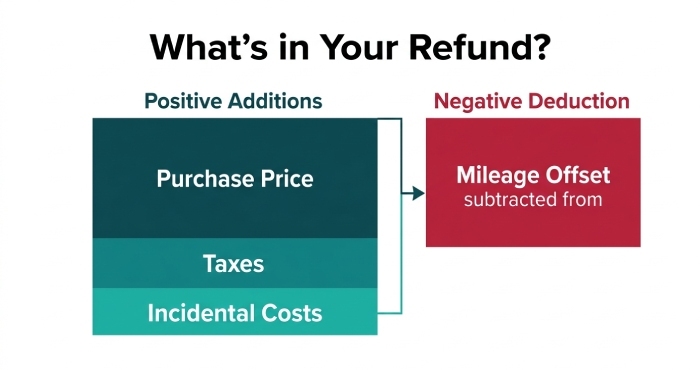
A California Lemon Law refund may include your down payment, monthly loan payments, taxes, registration fees, payoff amount, and certain out-of-pocket expenses, minus any applicable mileage deduction.
4: Third-Party Online Car Buying or Instant Cash Offer Programs
Advantages of Fast Cash Offers
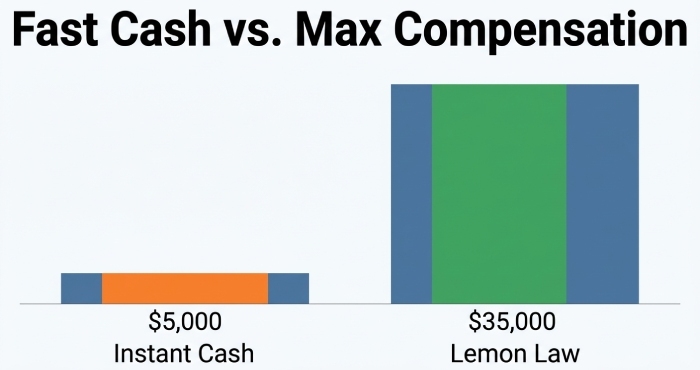
The main benefit is speed. You may receive payment within days and avoid repeated visits to auto dealerships. For a Consumer with a faulty vehicle that is unreliable, a fast sale can help secure funds for a replacement vehicle.
Still, online offers may be reduced after inspection if the defective car has warning lights, drivetrain problems, electrical defects, or incomplete repair records. A transferable warranty may help preserve value, but serious defects can sharply lower the final offer.
Legal and Financial Trade-Offs
If the vehicle potentially qualifies under California Lemon Law, an instant cash sale could leave money on the table. A manufacturer buyback may provide broader compensation than a standard resale offer, especially where the Manufacturer failed to repair a serious non-conformity after reasonable repair attempts.
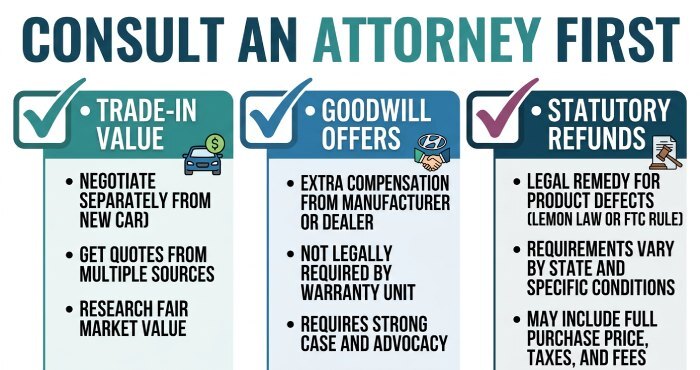
Before choosing these trade-in options, compare the cash offer with possible legal protection under the Song-Beverly Consumer Warranty Act. A lemon law attorney can estimate whether a buyback program, cash settlement, replacement, or refund would likely exceed the third-party offer. For specialized vehicles, such as motor homes, consulting an rv lemon law attorney may be especially important.
5: Trade-In After Consulting a California Lemon Law Lawyer
Why Legal Review Comes First
A lemon law attorney can determine whether you may qualify for a manufacturer buyback, replacement vehicle, refund of purchase price, or cash settlement. The fee-shifting provision in California Lemon Law may require the Manufacturer to pay attorney fees for a successful claim, which can make legal review accessible to many consumers.
If you need regional help, resources such as a lemon law attorney san diego or a california lemon law lawyer can explain how a trade-in might affect your legal entitlements. Consumers in Orange County may search for a Lemon Attorney Orange County, while those elsewhere may consult California lemon law attorneys, a Legal Professional, or a Lemon Law Firm familiar with Manufacturer and Dealer practices.
Coordinating Trade-In Timing With a Lemon Law Claim
A lemon law attorney may recommend waiting to trade in your vehicle until the manufacturer reviews your claim or settlement discussions begin. Proper timing and documentation can help protect your legal rights and maximize your potential recovery.
What a Lawyer May Compare
A lemon law attorney may compare:
Dealer trade-in value versus statutory refund
Goodwill offer versus formal buyback program
Replacement vehicle terms versus refund of purchase price
Manufacturer buyback estimate versus private-party sale
A California lemon law buyback may seem simple, but missing details can reduce the compensation you receive. The Song-Beverly Consumer Warranty Act allows eligible consumers to seek a vehicle repurchase when warranty repairs fail. Reviewing every part of the buyback offer helps ensure you receive all payments you may be entitled to.
1: Accepting a Buyback Offer Before Confirming the Full Refund Formula
The first trap is assuming the number in the offer letter is the correct buyback refund. Under the California lemon law, a lemon law buyback generally includes the down payment, monthly payments, registration-related charges, and other eligible payments, minus a mileage offset.
A proper refund calculation should account for what the Consumer actually paid, not just the current value of the vehicle. The Song-Beverly Consumer Warranty Act is not a trade-in statute; it is designed to restore consumers when warranty coverage fails. A lemon law attorney can review whether the manufacturer buyback offer includes all recoverable amounts.
What Should Be Included in the Refund Calculation?
The buyback process should account for the purchase price or lease payments, sales tax, vehicle registration, finance charges, and certain incidental damages. If the Manufacturer leaves out towing, rental cars, rideshare costs through Uber or Lyft, or other out-of-pocket costs caused by the defect, the offer may be incomplete.
The Difference Between Value and Statutory Refund
A vehicle repurchase is not based on what the Dealer says the car is worth today. California lemon law focuses on the statutory refund formula, warranty coverage, and the impact of the defect during the manufacturer’s warranty period.
2: Overlooking the Mileage Offset Deduction in California Lemon Law Claims
The mileage offset in a California Lemon Law buyback is typically based on the miles driven before the first repair attempt for the defect. An incorrect calculation can significantly reduce your refund, so reviewing repair records and the first qualifying service visit is essential before accepting a buyback offer.
3: Letting the Manufacturer Undervalue Taxes, Registration, and Incidental Costs
A lemon law buyback should accurately include eligible sales tax, registration fees, and other recoverable costs. Keep receipts and records for expenses such as rental cars, towing, or rideshare trips, as proper documentation can help support reimbursement for incidental damages.
4: Assuming the First Offer Is the Best the Automaker Will Make
The first settlement offer from a manufacturer is not always the maximum amount available under California Lemon Law. If your vehicle has repeated warranty repairs, a serious safety defect, or extended time in the repair shop, you may qualify for a higher refund or a full buyback under the Song-Beverly Consumer Warranty Act, so review any offer carefully before accepting it.
5: Missing Hidden Release Language That Waives Future Legal Rights
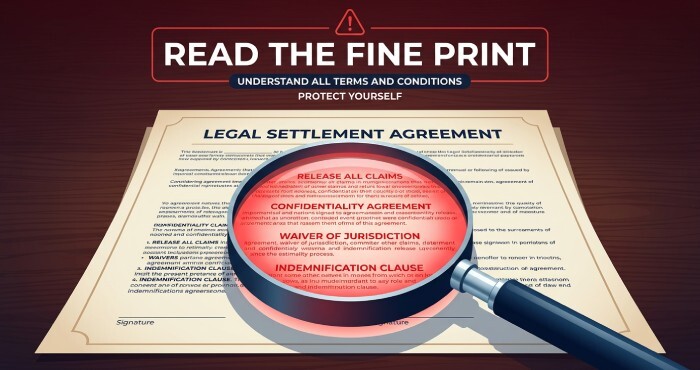
A lemon law settlement agreement may include release terms that waive more rights than expected, including future claims against the manufacturer or related parties. Before signing, review the agreement carefully to ensure the release is limited to the vehicle buyback and does not unnecessarily affect other legal or warranty rights.
6: Failing to Account for Loan Payoff, Negative Equity, or Lease Obligations
If your vehicle is financed or leased, a lemon law buyback should clearly explain how the loan or lease payoff will be handled. Before accepting a settlement, confirm that it resolves any remaining financial obligations, including lender or lessor balances, to avoid unexpected costs or delays.
7: Agreeing to a Replacement Vehicle Without Comparing It to a Refund
A replacement vehicle is not always the best outcome under California Lemon Law. Before accepting one, compare it with a refund to understand differences in financing, warranty coverage, monthly payments, and overall value, especially if the replacement is a certified pre-owned vehicle.
When a Replacement May Be Less Favorable
If the original vehicle had repeated repair attempts, a recurring safety defect, or extensive time out of service, a full lemon law buyback may be better than a replacement vehicle. A qualified California lemon law lawyer can compare the legal and financial consequences before the Consumer commits.
8: Not Documenting Repair Attempts, Downtime, and Dealer Communications
Strong repair records are essential for a successful California Lemon Law claim. Keep all repair orders, service dates, and written communications, as these documents help prove the defect persisted despite multiple repair attempts and support your eligibility for a refund or buyback.
9: Waiting Too Long to Contact a Lemon Law Lawyer in California
Acting early can strengthen your California Lemon Law claim. If your vehicle has repeated repair attempts, extended downtime, or the manufacturer suggests arbitration, consulting a lemon law attorney promptly can help protect your rights and improve your chances of a successful buyback or settlement.
California State drivers with RV or motor home problems may need advice from an rv lemon law attorney because large recreational vehicles often involve multiple warranty providers and complex inspection issues. Consumers in Southern California may also consult a lemon law attorney san diego when the buyback process involves local Dealers, return logistics, or regional manufacturer representatives.
Organizations such as Lemon Law Group Partners and other California lemon law firms often emphasize early review because documentation, warranty coverage, and timeline issues are easier to address before settlement pressure begins.
10: Signing Settlement Paperwork Before Reviewing Attorney Fee Protections
California’s lemon law allows Consumers who prevail under the Song-Beverly Consumer Warranty Act to recover reasonable attorney’s fees from the Manufacturer. Those fees should be paid separately and should not reduce the buyback refund, cash settlement, or repurchase amount.
Before completing a lemon law buyback, Consumers should review the refund calculation, mileage offset, loan or lease payoff, DMV paperwork, release terms, and payment timeline. Confirming these details helps ensure the buyback resolves the issue without unexpected financial complications.
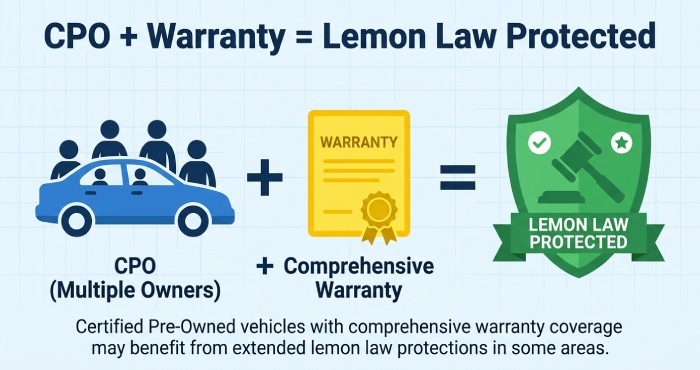
Yes. A certified pre-owned car with multiple previous owners can still qualify for lemon law protection if it was sold with a valid written warranty and the defect occurred during applicable warranty coverage. Under the California Lemon Law, the key issue is not simply how many people owned the pre-owned vehicle before you. The central question is whether the manufacturer, dealer, or warranty provider failed to repair a substantial defect after reasonable repair attempts while the manufacturer’s warranty or CPO warranty was still active.
For buyers in Orange County and throughout California, this distinction matters. Many consumers assume that used cars, pre-owned cars, or Certified Pre-Owned (CPO) vehicles are excluded from Lemon Law protections. That is not always true. A certified pre-owned car may be protected if it came with a manufacturer’s warranty, a remaining new car warranty, or another qualifying written warranty backed by the manufacturer.
How California Lemon Law Applies to Certified Pre-Owned Vehicles
The California Lemon Law, formally part of the Song-Beverly Consumer Warranty Act, protects consumers who purchase or lease vehicles covered by a written warranty. While many people associate California Lemon Law with brand-new vehicles, lemon law coverage can also apply to certified pre-owned vehicles when they are sold with warranty protection.
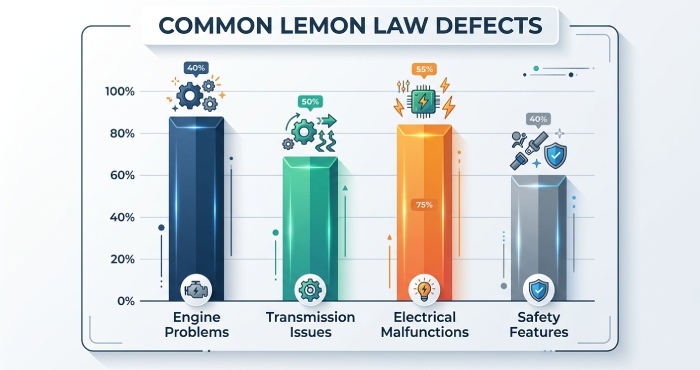
A Certified Pre-Owned (CPO) vehicle is typically inspected, reconditioned, and backed by the manufacturer or a manufacturer’s agent. If the certified pre-owned car has serious vehicle defects—such as engine problems, transmission issues, electrical malfunctions, or defective safety features—the buyer may have a valid lemon law claim.
CPO Cars and Written Warranty Protection
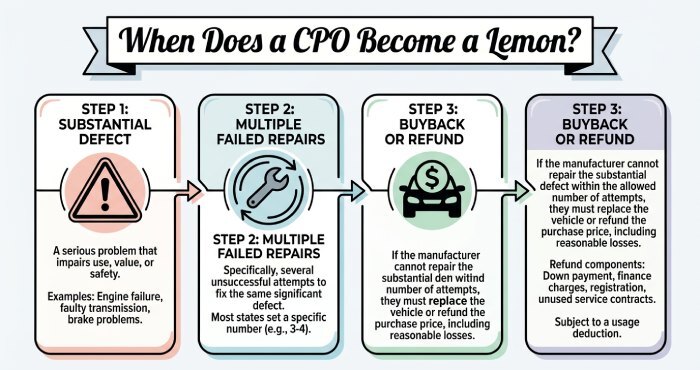
In California, a certified pre-owned (CPO) car that comes with a written warranty might be eligible for protection under the Lemon Law. If a significant issue compromising the vehicle’s safety, functionality, or worth cannot be resolved after a reasonable number of attempts to repair it, the owner could be entitled to various remedies, including a refund, replacement, compensation, or a buyback from the manufacturer, commonly known as a lemon law buyback.
Consumers searching for guidance may compare resources from a California lemon law lawyer, especially when evaluating whether a certified pre-owned car still has enforceable warranty rights.
Why Multiple Previous Owners Do Not Automatically Disqualify a CPO Vehicle
Multiple prior owners do not automatically prevent a pre-owned vehicle from being covered under California Lemon Law. The number of owners may affect the factual analysis, but it is not the sole deciding factor. What matters most is whether the vehicle was sold with an active manufacturer’s warranty, CPO warranty, or other qualifying written warranty.
For example, a certified pre-owned car may have had two previous owners but still be sold by an authorized dealer with manufacturer-backed warranty coverage. If that pre-owned vehicle develops a persistent issue during the warranty period, the buyer may still have a lemon law claim.
What Really Matters: Warranty Status and Defect History
A lemon law attorney usually examines the warranty, documentation of repairs, purchase receipts, and any proof indicating when the defect first occurred. If the problem surfaced while under the manufacturer’s or certified pre-owned warranty, the buyer might still have legal avenues to pursue.
Thorough repair documentation, assessments from mechanics, and records from repair shops can demonstrate that a significant defect was present and that attempts to fix it were not successful.
When a Prior Lemon Law Buyback Is Involved
If the certified pre-owned car was previously repurchased by the manufacturer, the seller may have had a duty to disclose that history. A prior manufacturer repurchase does not always mean the vehicle cannot be resold, but the disclosure must be accurate. A lemon law attorney can evaluate whether the manufacturer repurchase history was properly revealed and whether a new lemon law claim is still available.
The Role of Manufacturer Warranties and CPO Warranty Coverage
A manufacturer’s warranty is often the foundation of a California Lemon Law case involving a certified pre-owned car. The warranty may be the remainder of the original new car warranty, an extended CPO warranty, or another written warranty issued by the manufacturer or warranty provider.
If the pre-owned vehicle has ongoing warranty coverage, the manufacturer may be responsible for repairing covered defects. When the manufacturer or its authorized dealer cannot repair a substantial defect after reasonable repair attempts, the consumer may have a lemon law claim.
Why the Manufacturer’s Warranty Is Critical
The manufacturer’s warranty helps determine whether the defect arose during the protected period. Time restrictions, mileage limits, and warranty terms all matter. If the defect began before the warranty expired, the buyer should preserve documentation showing the first repair visit, repair orders, and communications with the dealer or manufacturer.
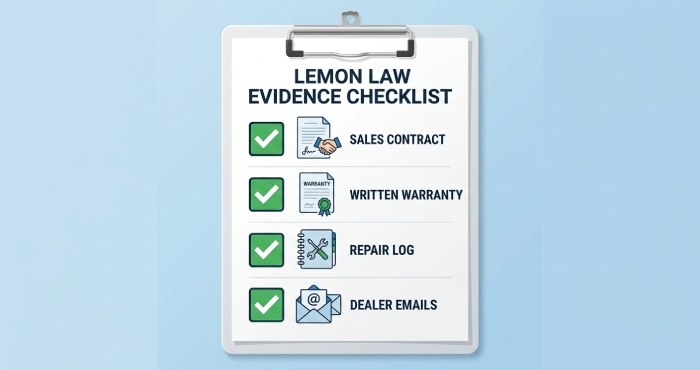
Key Evidence Needed to Prove a Lemon Law Claim for a Used CPO Car
Important evidence may include:
The CPO sales contract and purchase documents
The written warranty, manufacturer’s warranty, and CPO warranty booklet
A complete repair log showing dates, mileage, symptoms, and repair attempts
Repair orders documenting engine problems, transmission issues, electrical malfunctions, or safety features that failed
Emails, text messages, or letters exchanged with the dealer or manufacturer
Notes about loss of use, towing, rental cars, or repeated visits to the mechanic
A California Lemon Law case often turns on whether the manufacturer had a reasonable opportunity to repair the pre-owned vehicle. If the same significant defect continues after multiple repair attempts, or if the car spends an excessive number of days out of service, the certified pre-owned car may qualify for a lemon law buyback.
For broader regional comparison, some consumers also review resources from a lemon law attorney san diego when researching how California claims are handled.
When to Contact a Lemon Law Lawyer in California for a Certified Pre-Owned Vehicle
A consumer should contact a lemon law attorney as soon as recurring problems appear in a certified pre-owned vehicle covered by a manufacturer’s warranty or written warranty. In Orange County, firms such as Attorney Barnes and Barnes Law Firm Orange County may offer a free consultation to determine whether the vehicle qualifies for a lemon law buyback.
An attorney can handle negotiations, mediation, or litigation if necessary, and may also identify issues involving prior repurchases or inadequate disclosures. Consumers with defective motor homes or recreational vehicles can similarly seek guidance from an RV lemon law attorney to evaluate their rights and available remedies.