
If your vehicle is at the dealership more often than it’s in your garage, what starts as a small annoyance can escalate into significant frustration. Multiple repairs, ongoing service visits, and persistent issues might suggest that your car is a lemon. Knowing how to respond like keeping a record of repairs and seeking advice from a lemon law lawyer can assist you in safeguarding your rights and possibly obtaining a refund, replacement, or resolution for the issues.
A practical game plan when the service lane becomes your second home
Americans across the United States have noticed longer waits and repeat visits at car dealerships since COVID-19, as parts delays and employee turnover ripple through every service department. If your vehicle seems to live at the dealership, you need a disciplined approach that protects your warranty, trims repair turnaround time, and maximizes customer satisfaction whether you stay with the dealer, pivot to a local garage, or engage an independent repair shop.
Start with the mindset that you are managing a project. The more organized you are, the faster the auto repair path becomes and the more leverage you have with any repair shop.
Spot the pattern: document every visit, symptom, and day out of service
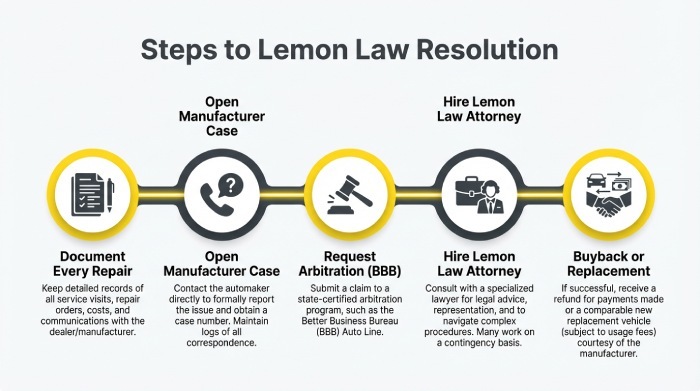
- Maintain a comprehensive digital log of all repairs made to your vehicle. Retain every repair order, image, or video, and note each day the car is non-operational to bolster a lemon law case. Request that the service team document your issues precisely as you describe them, and ensure they provide diagnostic reports and repair documentation. This meticulous record will assist in any warranty challenges, arbitration processes, or future buyback inquiries.
- Track repair turnaround time for each visit. Note when you schedule appointment, drop-off and pick-up timestamps, and any missed completion dates. This helps escalate within the dealership and with the manufacturer.
- Capture costs and coverage. Record labor costs estimates, the cost of repairs not covered by warranty, any parts warranty details, and rental/loaner approvals. Transparency on the repair process and repair scenarios prevents surprises.
- Build continuity with people. Document the service advisor, technician, and mechanic who saw the vehicle so repair expertise travels with your car. If employee turnover disrupts continuity, your file preserves it.
- Use routine maintenance as an advantage. While you’re in for car maintenance, request a consultation on recurring issues, preventative repairs, and service options to reduce future downtime.

Make the dealership work for you: communication tactics, escalation, and loaners
You can often improve repair turnaround time and quality of service with firm but professional communication.
- Set expectations early: At check-in, ask the service department for a written timeline, what parts are on backorder, and the next steps in the repair process. Confirm how and when you’ll receive updates.
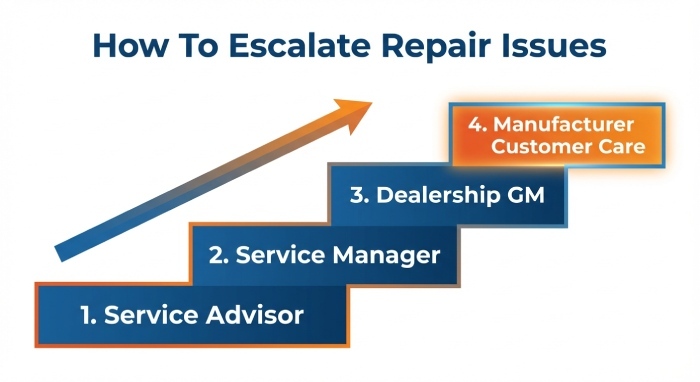
- Escalate smartly: If dates slip, request a meeting with the service manager and, if needed, the dealership’s general manager. Bring your digital record of repairs to show repeat car repairs and days out of service.
- Request transportation: If the car remains down for more than a day or is awaiting a critical diagnosis, ask for a loaner or rental assistance per warranty or goodwill policy.
- Open a manufacturer case: Call the automaker’s customer care to create a case number that tracks repair scenarios, authorizes assistance, and signals to the dealership that the corporation is watching.
- Seek a second set of eyes: For stubborn issues, consider a branded specialty repair shop or an independent repair shop that regularly handles your make. For example, Garfield Auto Service Center is a local garage option known for straight talk and efficient auto repair. Many independent repair shop teams excel at vehicle diagnostics and can uncover root-cause issues that a rushed dealer lane might miss.
- Keep the relationship human: A respectful relationship with mechanics and advisor influences outcomes. Clear notes, punctual appointment scheduling, and constructive feedback improve cooperation and customer satisfaction.
Know your service options beyond the dealer
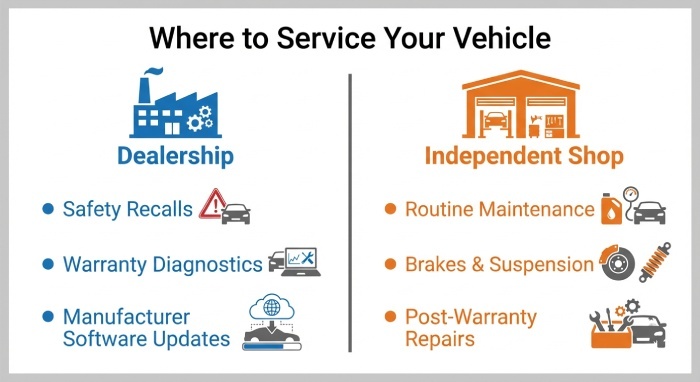
- Warranty and where you service: Under U.S. law, routine maintenance and many car repairs can be performed at a local garage or independent repair shop without voiding warranty, as long as proper parts and procedures are used. However, recalls and Technical Service Bulletins (TSBs) typically require a dealership visit for updates and documentation.
- Match the shop to the problem: Exhaust system rattles, fuel line repairs, and brake pulsation are often handled quickly at a quality independent repair shop with the right technician and tools. Complex control module reprogramming on foreign cars such as BMW, Audi, Volkswagen, and Porsche may be faster at a dealer with factory scan tools, while many domestic cars have broad tool support in the aftermarket.
- Consider brand-savvy experts: Some local garage operations maintain factory-level repair expertise for Subaru models like the Subaru Forester and Subaru Outback. Ask any repair shop about their training, equipment, and parts warranty policies up front.
Know your rights: warranty coverage, TSBs/recalls, and lemon law thresholds
- Warranty basics: Powertrain and bumper-to-bumper coverage vary by manufacturer; verify what’s covered, any parts warranty on replaced components, and how labor costs are handled after coverage expires. For recurring faults, ask if a TSB applies; TSBs document known issues and approved fixes.
- Recalls: Safety recalls must be performed at the dealership at no cost. If parts are delayed, press for a loaner on safety grounds and keep documenting repair turnaround time.
- Numerous states provide assistance if a vehicle has undergone multiple unsuccessful repair attempts or has been out of service for a specified duration within the initial 12 to 24 months. If you’re nearing these thresholds, consulting a lemon law attorney can help evaluate your circumstances and guide you in filing a lemon law claim.
Push for resolution: manufacturer cases, arbitration/buybacks, and legal next steps
- Open and manage the case: Ask the manufacturer to assign a case manager. Provide your digital record of repairs, all diagnosis notes, and proof of days out of service. Request expedited parts and a written plan to complete car repairs.
- Arbitration: Many brands participate in BBB AUTO LINE or similar programs. Arbitration can produce a repair, replacement, or buyback without going to court. Keep your documentation tight, emphasizing repair turnaround time and repeat failures.
- Buyback or replacement: If your vehicle meets lemon law criteria, the manufacturer may repurchase or replace it. Ensure the settlement accounts for taxes, fees, and incidental expenses like rental cars.
- Should the dealership and manufacturer persist in their delays, an experienced lemon law attorney can take action by pushing for compliance with legal deadlines, imposing penalties, and recovering attorney fees when appropriate. By compiling a comprehensive file that includes warranty details, repair receipts, and correspondence, a proficient lemon law attorney can leverage this information to bolster and expedite your case.
Minimize downtime and plan ahead: quick fixes now and smarter choices next time
- Triage the issue: Ask whether a temporary fix or safe-to-drive workaround exists while a part is on order. Many auto repair items like minor exhaust system hangers can be stabilized at a local garage to keep you mobile.
- Use strategic appointment scheduling: Schedule appointment slots early in the week and first thing in the morning to improve repair turnaround time. Confirm parts availability before leaving the car.
- Seek targeted expertise: For stubborn drivability issues, book a consultation with an independent repair shop known for advanced vehicle diagnostics. A seasoned technician with deep repair expertise often shortens the path to the correct diagnosis.
- Build your support network: Maintain a relationship with mechanics at a trusted repair shop, and ask for honest guidance on cost of repairs versus value. For foreign cars with specialized needs, verify the shop’s tooling; for domestic cars, ensure they can flash modules and handle modern ADAS calibrations.
- Research before you buy again: Evaluate brands and car dealerships for quality of service and real-world ownership experience. Resources like getjerry.com, and consumer advocates such as Kevin Hunter The Homework Guy on YouTube, can help you vet service options, labor costs expectations, and common repair scenarios before you sign for a new vehicle.
- Think of the total lifecycle: Factor warranty coverage strength, dealer density, and independent support into your next purchase. Some regions have superb dealer networks, while others rely more on a high-quality local garage ecosystem.
- Keep up with maintenance. Proper car maintenance and preventative repairs reduce comebacks and help any dealership or repair shop quickly distinguish new faults from wear items. Clear service records also boost resale value.
When your car spends more time at the dealership than in your garage, you’re not helpless. Systematic documentation, assertive communication with the service department, strategic use of a local garage or independent repair shop, a vigilant eye on warranty rules, and timely escalation to the manufacturer create leverage and get you back on the road faster.
If your car is frequently in the shop instead of parked at home, it might not just be a stroke of bad fortune it could potentially be classified as a lemon. Knowing your legal rights and maintaining detailed repair records can greatly aid your pursuit of a resolution. Reaching out to knowledgeable Lemon Law attorneys San Diego can clarify whether you’re eligible for a refund, replacement, or damages, and will support you in navigating the legal process efficiently.