
A lemon law arbitration hearing offers a quicker and more user-friendly option compared to traditional court proceedings. Being well-prepared and aware of what to expect can greatly enhance your confidence when presenting your case. In this setting, a neutral arbitrator examines the details concerning your vehicle’s issues, its repair history, and warranty provisions.
Both you and the manufacturer will have the chance to provide evidence, documents, and witness statements. Although the process is generally less formal than a courtroom trial, it adheres to a specific structure where each party articulates their stance and answers questions.
Lemon Law Arbitration Basics
Lemon law arbitration offers a quicker and more affordable way to settle disputes concerning vehicle defects, bypassing the courtroom. A neutral arbitrator examines the evidence, warranty details, and relevant laws before issuing a binding decision, usually under the supervision of state agencies.
The criteria for eligibility differ among programs and may include new or used vehicles, motorcycles, and more, while specifying what constitutes a defect, the number of repair attempts, and the timeframes involved. In contrast to traditional litigation, arbitration is less formal, more expedient, and often leads to a binding outcome, with local dispute resolution centers typically handling the hearings and the overall process.
 buyback-calculator-1258.jpg” alt=”The Arbitration Process” width=”700″ height=”370″ />
Pre-Hearing Preparation
Thorough preparation strongly influences outcomes in lemon law arbitration. Whether your claim involves the new car lemon law, used car lemon law, motorcycle lemon law, farm equipment lemon law, or wheelchair lemon law, focus on building a clear, chronological record.
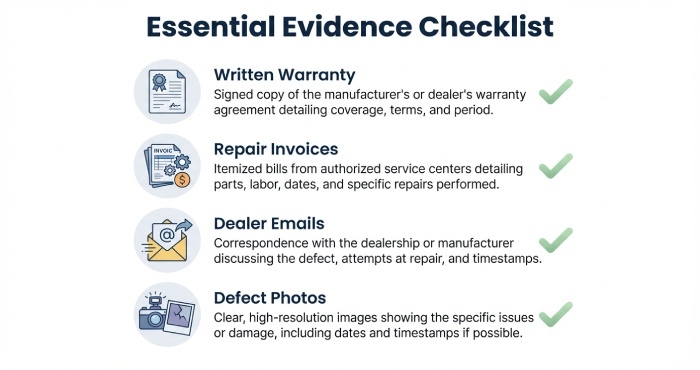
Key evidence to gather:
- The written warranty and all warranty booklets.
- Detailed repair orders and invoices showing dates, mileage, repair attempts, and results.
- Manufacturer or dealer communications, including emails and service bulletins.
- Proof of days out of service and any tow or rental records.
- Photos, videos, and expert reports describing the defect and substantial impairment.
- For leases, documentation about alleged excess wear and damage or lease wear and tear damages.
If you choose representation, experienced lawyers can handle case strategy, organize evidence, and examine witnesses, and for local support, you may consider consulting San Diego lemon law lawyers.
Filing and Case Processing
Starting the arbitration process generally involves an arbitration filing with the program administrator. You’ll submit a claim form, a request for an arbitration form, and supporting administrative forms. Many programs charge a modest filing fee; in some states, the attorney general’s office subsidizes costs, but a filing fee may still apply. Track deadlines closely: statutes and program rules specify when you must file after the final repair attempt or after delivery of the motor vehicle. Missing a deadline can jeopardize case acceptance.
Once your paperwork and filing fee are received, case processing moves quickly. The program administration will:
- Confirm eligibility under the new car lemon law, used car lemon law, motorcycle lemon law, farm equipment lemon law, or wheelchair lemon law.
- Notify the manufacturer and dealer.
- Assign a neutral third party arbitrator and schedule the hearing—sometimes at a CDRC.
- Provide instructions for exhibits, witness lists, and remote participation.
Some programs require an award filing fee only if you request court confirmation of the arbitrator’s decision or pursue enforcement, and a lemon law attorney can help you determine when this step is necessary.
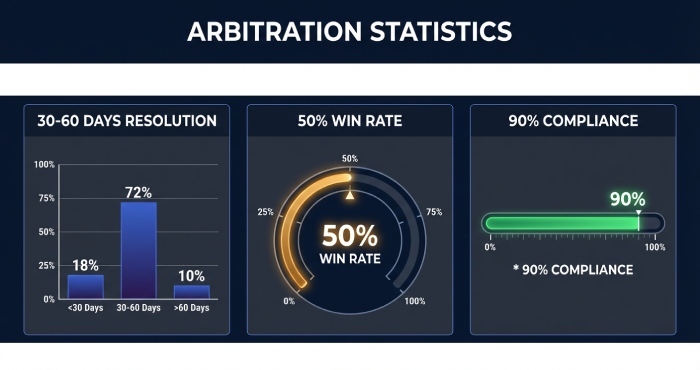
Key Lemon Law Arbitration Statistics at a Glance
| Statistic | Details |
| Resolution Time | Usually 30–60 days |
| Filing Cost | Typically $0–$50 |
| Compliance Rate | Over 90% follow awards |
| Common Outcomes | Mostly refund or replacement |
What Happens at the Hearing and After
Inside the Hearing Room
A lemon law arbitration session is designed to be organized yet adaptable, enabling consumers who represent themselves to articulate their concerns effectively. These hearings can occur in person or online, often hosted at a Community Dispute Resolution Center. Typically, they involve a neutral arbitrator, the consumer or lessee (with or without legal representation), a representative from the manufacturer or dealer, and any relevant witnesses.
The proceedings usually kick off with introductions and the administration of oaths, after which the consumer presents evidence related to the defect, the history of repairs, and the effects experienced. Following this, the manufacturer offers their defenses and technical insights, after which both parties can provide rebuttals and finalize their arguments. To enhance the effectiveness of the presentation, it’s beneficial to maintain a clear timeline, organize exhibits methodically, and ensure that technology is set up properly for virtual sessions.
Standards of Proof and Common Issues
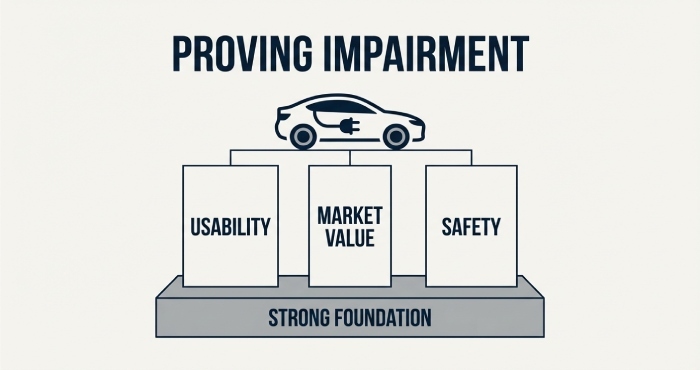
At the core of any lemon law case — be it related to cars, motorcycles, farm machinery, or wheelchairs — is the necessity to demonstrate that a defect significantly impacts the item’s usability, market value, or safety, and that it remains unaddressed despite reasonable attempts at repair. Manufacturers frequently claim that the defect is trivial, results from improper use, isn’t covered by warranty, or is due to delays caused by the owner.
Common pitfalls in these claims include inadequate record-keeping, ambiguous timelines, and confusing normal wear with genuine defects. To prevail, it’s essential to clearly establish the connection between the issue, the repair attempts, and their consequences, bolstered by well-organized evidence and credible witness accounts, since thorough documentation and consistency often play a crucial role in the arbitration outcome.
Outcomes and Enforcement
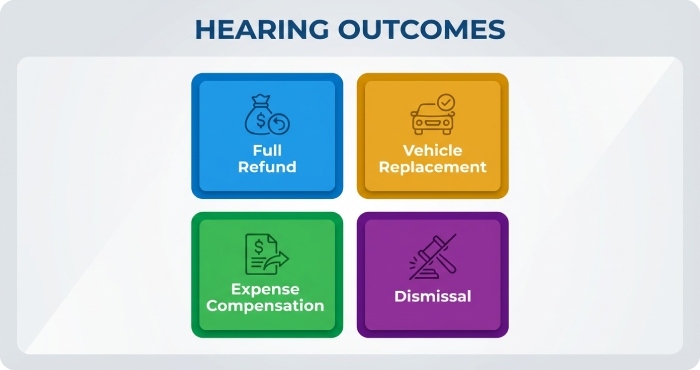
Following the hearing, the arbitrator delivers a ruling that might involve a refund (excluding mileage), a substitute vehicle, or compensation for incidental expenses such as towing cost or rental fees; certain programs may also reimburse filing costs. If the manufacturer is victorious, the case is thrown out. In binding arbitration, the awarded decision is mandatory and usually needs to be fulfilled quickly, which often involves the consumer returning the vehicle and signing release forms.
The rights to appeal differ by state, with some allowing a retrial while others impose limitations on review. Therefore, adhering to the program’s guidelines and deadlines is crucial. If the manufacturer fails to comply, legal enforcement or post-award support may be required.
Practical tips:
- Stay in close contact with experienced lemon law lawyers, who can guide you on the steps to redeem a refund or arrange a comparable replacement and ensure all requirements are properly handled.
- Keep proof of any post-award expenses.
- If enforcement becomes necessary, consult counsel familiar with program administration and court confirmation procedures.
Finally, remember that the structure supporting lemon law arbitration—whether through NYSDRA-affiliated CDRCs, ACCES-VR Mediation resources, or funding touchpoints like IOLA Initiatives, CMSC AmeriCorps, and the Lawrence H Cooke Dispute Resolution Legacy Fund—exists to ensure access to fair dispute resolution. Use those resources, follow instructions precisely, and leverage the streamlined arbitration process to obtain the legal remedy your lemon law program provides.