
Strong documentation is essential for a successful California Lemon Law claim. Under the Song-Beverly Consumer Warranty Act, eligible consumers may receive a refund, replacement vehicle, compensation, civil penalties, and attorney’s fees. A California lemon law lawyer can review the warranty, purchase records, and repair history to determine whether the vehicle qualifies.
1: Vehicle Purchase or Lease Agreement Showing Warranty Coverage
Your purchase or lease agreement provides key lemon law details, including the buyer, seller, vehicle, purchase date, mileage, financing or lease terms, and whether the vehicle was new, used, certified pre-owned, a demo, or leased.
Why the Agreement Matters
Under California Lemon Law and the Song-Beverly Consumer Warranty Act, timing is critical. The contract helps establish whether the defective vehicle was covered by a warranty when the substantial defect appeared. It may also show the vehicle value, loan/lease pay off amount, registration charges, taxes, and fees that may factor into a full purchase refund or fair replacement.
Key Documents to Preserve
Keep the retail installment sales contract, lease agreement, buyer’s order, odometer disclosure, pink slip paperwork, certified pre-owned inspection checklist, and any defect disclosure documents provided by the dealership or used car dealership.
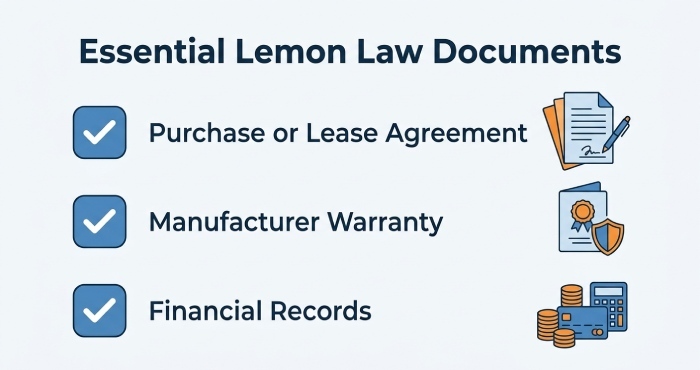
2: Manufacturer’s Written Warranty and Extended Service Contracts
The manufacturer’s written warranty is essential to proving a breach because the Song-Beverly Consumer Warranty Act examines whether the manufacturer or its authorized repair facility failed to bring the vehicle into conformity with the applicable express warranty.
Warranty Terms That Support the Claim
Keep all warranty booklets, CPO materials, service contracts, powertrain and emissions coverage, and relevant Federal Lemon Law or Magnuson-Moss documents. A lemon law lawyer can review the warranty terms, repair history, defect, and applicable deadlines, including whether the statute of limitations has been preserved.
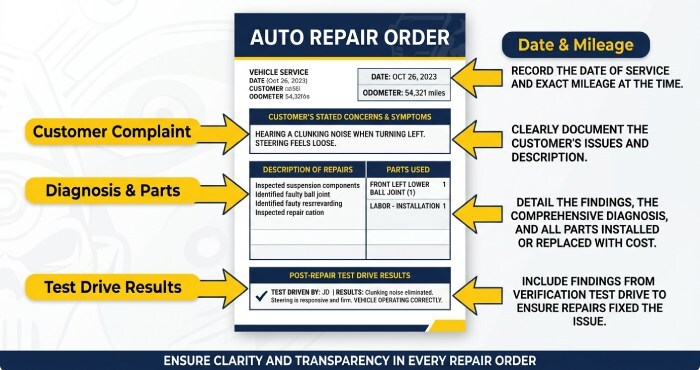
3: Repair Orders and Service Invoices from the Dealership
What Each Repair Order Should Show
Keep every repair invoice showing the date, mileage, complaint, diagnosis, parts replaced, labor performed, and test-drive results, including “could not duplicate,” “operating as designed,” or “no problem found” entries, as they may still support a lemon law claim when the defect persists.
Avoid Verbal-Only Service Visits
If a service advisor tells you the dealership cannot find the problem, ask for a written repair order. A lemon law attorney can use repeated written complaints to show a reasonable number of repairs, even when the manufacturer later argues that no defect existed.
4: Detailed Timeline of Defects, Breakdowns, and Repair Attempts
Building a Persuasive Chronology
List the date, mileage, symptom, safety concern, dealership visit, and outcome for every event. Include recurring problems such as engine stalling, transmission hesitation, brake failure, electrical shutdowns, infotainment failures, battery drain, or airbag warnings.
Safety and Substantial Defect Details
California Lemon Law generally focuses on defects that impair use, value, or safety. If the issue is a safety defect affecting vehicle safety—such as loss of steering, brake malfunction, or sudden power loss—note how it affected driving conditions, passengers, and the risk of a crash.
5: Written Communications with the Dealership and Manufacturer
Emails, texts, letters, case numbers, and portal messages can prove notice, repair delays, refusals, or warranty-related inconsistencies.
Communications That Strengthen the Case
Save all communications with the service advisor, sales manager, manufacturer, corporate offices, and case managers. Record call dates, representative names, and key details, as these records may support a lemon law attorney’s evaluation of willful violations. Online reviews and California Lemon Law resources may also reveal recurring manufacturer or dealership issues, but they do not replace legal advice.
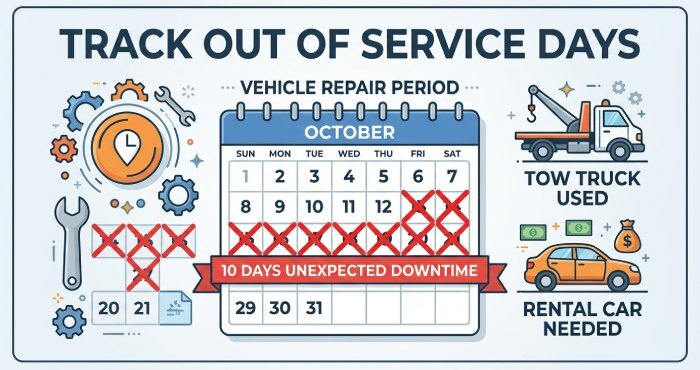
6: Proof of Days the Vehicle Was Out of Service
The number of days a vehicle remains out of service can provide strong evidence, as California Lemon Law may offer relief when extended warranty repairs keep the vehicle at a dealership for an excessive period despite repeated repair attempts.
What Counts as Out-of-Service Evidence
Keep repair orders, rental receipts, tow records, dealership appointments, parts backorder notices, and messages showing extended downtime, as they can support settlement, refund, or replacement vehicle claims.
For recreational vehicle claims, downtime evidence may be especially important because repairs can involve specialized components, long parts delays, or multiple service locations. In those cases, consulting an rv lemon law attorney may help determine whether the recreational vehicle qualifies.
7: Photos, Videos, and Diagnostic Records Documenting the Defect
Visual evidence can make a defective vehicle case more persuasive. Photos and videos help demonstrate intermittent or recurring issues that the dealership claims it cannot duplicate.
Effective Visual and Technical Proof
Document warning lights, leaks, smoke, unusual noises, screen failures, water intrusion, brake alerts, and transmission problems when safe. Keep diagnostic codes, scan reports, battery tests, alignment records, and inspection results to help a lemon law lawyer establish that the defect is recurring, warranty-covered, and not caused by the consumer.
8: Maintenance Records Showing Proper Vehicle Care
Manufacturers often defend California Lemon Law claims by blaming the consumer for poor maintenance, misuse, aftermarket modifications, or neglect. Maintenance records help rebut those arguments.

Records That Show Responsible Ownership
Keep maintenance receipts, recall notices, and manufacturer-recommended service records, along with pre-sale inspections and certified pre-owned documents. A lemon law attorney can review these records to assess warranty coverage and vehicle eligibility under California’s Song-Beverly Consumer Warranty Act and related law.
9: Expert Inspection Reports Supporting the Lemon Law Claim
Expert inspections can determine whether a defect is substantial, recurring, and warranty-related by examining the vehicle, diagnostic codes, service records, and quality of previous repairs.
When Expert Evidence Helps
Expert reports can help establish the cause of disputed vehicle defects, especially involving electrical, engine, ADAS, water leak, or safety issues. A lemon law attorney san diego can determine whether an inspection is needed and use the findings to strengthen negotiations with the manufacturer.
10: Records of Costs, Payments, and Damages for Settlement Negotiations
Complete financial records strengthen settlement negotiations by making it easier to calculate compensation, refunds, vehicle replacements, and other remedies available under California Lemon Law and the Song-Beverly Consumer Warranty Act.
Financial Records to Gather
Keep records of your down payment, loan or lease payments, registration fees, insurance, towing, rental cars, rideshare costs, repairs, and other related expenses, as they may affect your refund, payoff, civil penalties, and settlement value. A California Lemon Law lawyer may also pursue recoverable attorney’s fees and evaluate potential claims under the Song-Beverly Consumer Warranty Act or the federal Magnuson-Moss Warranty Act when a manufacturer fails to meet its warranty obligations.