
California Lemon Law Buybacks and Core Tax Concepts
How California Lemon Law Vehicle Buybacks Work
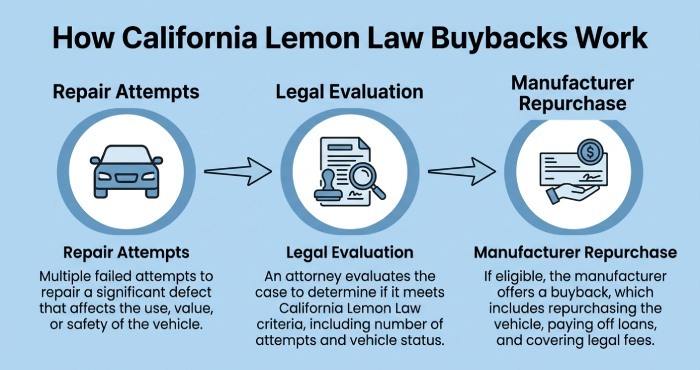
Under the California lemon law, a consumer may be entitled to a vehicle repurchase, replacement, or negotiated lemon law settlement when a manufacturer cannot repair substantial defects within a reasonable number of attempts. The lemon law legal process typically begins with documenting repair orders, warranty history, mileage, purchase or lease terms, and communication with the dealer or manufacturer. A lemon law lawyer evaluates whether the defect affects use, value, or safety and whether the manufacturer has met its legal obligations.
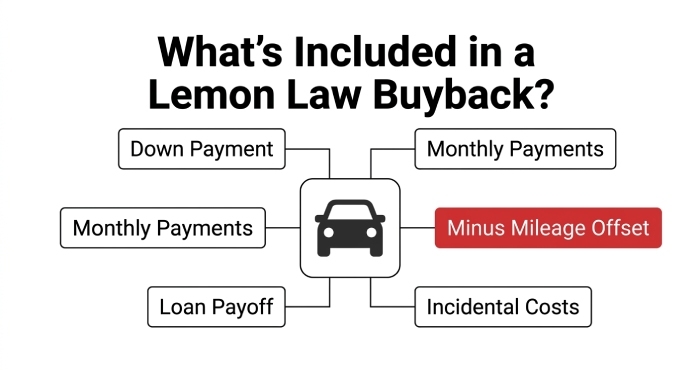
In a vehicle buyback, the manufacturer generally repurchases the defective vehicle by refunding amounts paid by the consumer, often reduced by a mileage offset for use before the first relevant repair attempt. A California lemon law buyback may include the down payment, monthly payments, payoff of the loan or lease balance, registration charges, certain fees, and qualifying incidental damages. Because each lemon law settlement is fact-specific, the tax implications can vary.
Consumers often ask whether lemon law settlement proceeds are taxable. In many vehicle buyback situations, the settlement proceeds are treated as a refund of the purchase price rather than taxable income. However, not every payment in a lemon law settlement is automatically non-taxable. The tax implications depend on what the payment represents, how the agreement is structured, and whether any portion compensates the consumer beyond reimbursement.
What a Buyback Usually Includes
A California lemon law repurchase typically covers the vehicle’s purchase or lease payments, minus the statutory mileage offset, and may also include loan payoff, trade-in credit, and qualifying expenses such as towing, rental cars, rideshare, or repair costs. Because a vehicle buyback may represent a return of amounts the consumer previously paid, some portions of the recovery may not be treated as taxable income. However, the tax treatment depends on the nature of the payment, the underlying claim, and how the settlement is structured.
Documents to Keep for Lemon Law and Tax Purposes
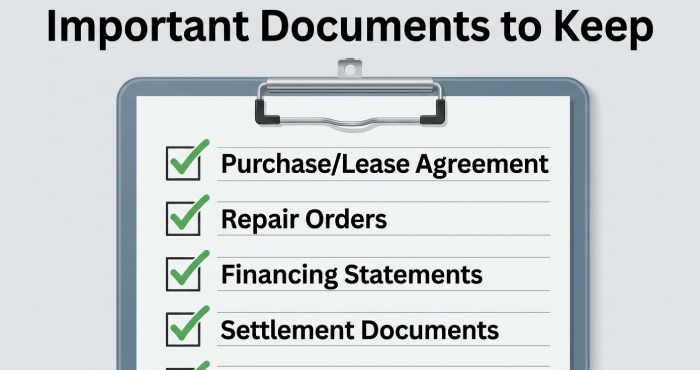
Consumers should keep copies of their vehicle purchase or lease agreement, repair orders, warranty records, financing statements, payoff information, settlement documents, receipts for reimbursed expenses, and any tax forms received in connection with the settlement. These records can help document the amounts paid, reimbursed expenses, and how the settlement was structured. A tax professional can use this information to evaluate the appropriate tax treatment and reporting requirements.
Settlement Taxability and Professional Guidance
Tax Treatment of Refunds, Settlements, and Cash-and-Keep Offers
The tax treatment of a California lemon law settlement depends on how the payment is characterized. A full buyback may generally be treated as a return of the consumer’s purchase price rather than taxable income, while cash-and-keep payments require closer review because compensation for diminished value, inconvenience, or other losses may have different tax consequences. A lemon law lawyer can help clarify settlement language and payment allocation, but a qualified tax professional should determine whether any portion is taxable and how it should be reported. Clear documentation identifying payments as refunds, reimbursements, statutory recoveries, or other compensation can help reduce future tax uncertainty.
Sales Tax, Registration Fees, and Incidental Cost Reimbursements
California lemon law buybacks may include reimbursement for sales tax, registration fees, and qualifying incidental expenses such as rental cars, towing, repairs, and travel costs. These amounts are generally intended to restore money the consumer previously paid rather than provide new income, although tax treatment can vary depending on the settlement structure and prior deductions. Consumers should keep receipts, repair invoices, registration records, loan statements, payoff letters, and manufacturer communications to document reimbursed expenses and help a tax professional determine the appropriate tax treatment.
When Lemon Law Compensation May Be Taxable Income
The tax treatment of California Lemon Law compensation may vary depending on what the payment is intended to compensate and the nature of the underlying claim. Amounts that represent a return of the vehicle’s purchase price or reimbursement of certain expenses may receive different tax treatment from amounts awarded for other purposes, such as interest, lost income, or additional compensation.
The IRS generally looks to the origin and nature of a claim when determining the federal tax treatment of settlement proceeds. If a settlement includes multiple payment categories, clear documentation and allocation may be important. Receiving a Form 1099 does not necessarily mean that the entire settlement is taxable. Consumers should consult a qualified tax professional regarding their individual reporting and documentation requirements.
Why a California Lemon Law Lawyer and Tax Professional Matter
A California lemon law lawyer helps protect the consumer’s legal rights, evaluates liability, manages litigation strategy when needed, and negotiates the structure of the lemon law settlement. For consumers comparing representation, a california lemon law lawyer can explain how buybacks, replacements, mileage offsets, and cash-and-keep resolutions typically work. Consumers with recreational vehicle claims may also benefit from speaking with an rv lemon law attorney, while local consumers may prefer a lemon law attorney san diego for regional guidance.
The tax professional is equally important because legal advice from an attorney is not the same as individualized tax advice. The California lemon law lawyer focuses on the legal process, manufacturer compliance, settlement language, and legal responsibilities. The tax professional focuses on taxable income, tax implications, tax compliance, and whether the lemon law settlement proceeds should be reported. Together, they help reduce the risk of an unfavorable tax result.