
A pickup truck with recurring towing failures may qualify under California Lemon Law when a warranty-covered defect substantially affects its use, value, or safety and remains unresolved after reasonable repair attempts. This can apply to new, leased, or qualifying used trucks with valid warranty coverage.
Towing defects involving the transmission, brakes, engine cooling, trailer stability, electrical systems, or towing package may support a claim. A California lemon law attorney can review the circumstances and determine whether you may qualify for a buyback, refund, replacement, or other compensation.
How California Lemon Law Applies to Pickup Trucks Used for Towing
Covered Trucks, SUVs, and Similar Vehicles
California’s Lemon Law can apply to a truck, SUV, van, or other qualifying vehicle purchased or leased for personal, family, household, or certain business uses. Some business vehicles may qualify if they meet statutory requirements, including limits involving fleet size and gross vehicle weight.
A new vehicle is often the clearest example, but a used vehicle can also qualify when sold with remaining factory warranty. A certified pre-owned pickup may qualify if warranty-backed towing defects appear during the covered period. In some cases, a demonstration vehicle or dealer loaner sold with warranty protection can also receive Lemon Law protections.
New Vehicle and Used Vehicle Coverage
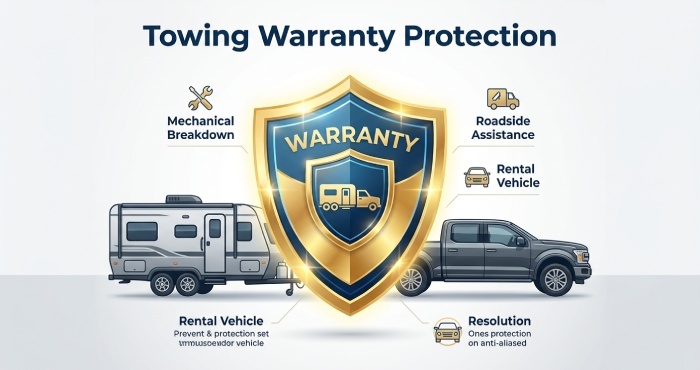
A new vehicle with a factory-installed tow package is expected to perform safely and reliably within its rated capacity. A qualifying used vehicle may also be protected when towing-related vehicle defects arise under the remaining manufacturer warranty. If a used car dealership sells a certified pre-owned pickup with warranty promises, those documents may become important evidence in a lemon law claim.
Warranty Coverage Matters
The defect generally must be reported while covered by the manufacturer warranty or qualifying warranty coverage. If the dealer says a towing issue is “normal,” but the problem continues, truck owners should request written repair orders rather than relying on verbal explanations.
Common Persistent Towing Problems That May Indicate a Lemon
Towing places extra stress on the engine, transmission, brakes, suspension, cooling system, electronics, and advanced driver-assistance systems. Repeated failure in these systems may indicate a lemon truck.
Transmission, Drivetrain, and Powertrain Failures
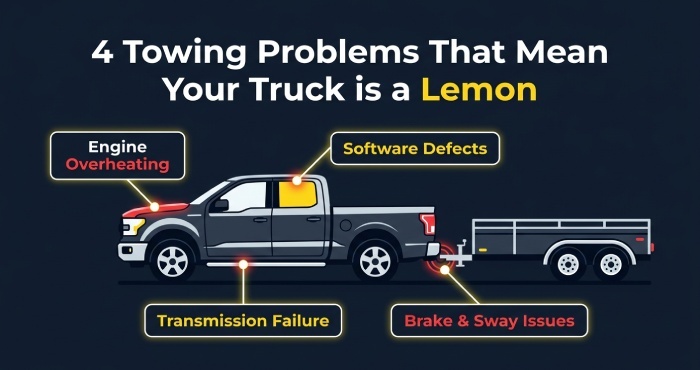
Common towing-related vehicle defects include hard shifting, transmission overheating, slipping gears, driveline vibration, loss of torque, or sudden limp mode while hauling a trailer. These problems can create serious safety risks, especially on grades, highways, or while merging.
Engine Cooling and Overheating
A pickup that overheats while towing within its rated capacity may have radiator, fan, thermostat, turbocharger, or software defects. If the dealer performs multiple repairs but the truck continues overheating, that history may support a lemon law case.
Brake and Trailer Control Problems
Towing defects may also involve trailer brake controller failure, unstable trailer sway control, electronic stability issues, or malfunctioning safety feature systems. When factory towing technology does not work as designed, the defect may substantially impair safe operation.
Electrical and Software Defects
Modern trucks depend on complex software. A faulty towing mode, recurring dashboard warnings, trailer detection errors, backup camera glitches, or blind-spot monitoring failure may support a lemon law claim if the problem remains unresolved after repeat visits.
Warranty disputes can affect vehicles from BMW and Mercedes to Mini Cooper and RVs. An RV lemon law attorney can help owners understand their rights when covered defects substantially impair their vehicle.
What Counts as a Reasonable Number of Repair Attempts in California
Repair Attempts and Days Out of Service
- Repair Attempts and Days Out of Service: Repeated repairs or extended downtime may strengthen a truck’s lemon law claim.
- Multiple Repairs for the Same Defect: Multiple repair attempts for the same towing problem can provide strong evidence of a recurring defect.
- Safety-Related Towing Defects: Defects affecting braking, steering, stability, or acceleration may require prompt legal review.
Manufacturer and Dealer Responses
Manufacturers may blame overloading, modifications, or improper towing, so owners should preserve towing ratings, payload records, and trailer weight documentation. A lemon law lawyer can challenge unsupported defenses and help the consumer, as Plaintiff, pursue the claim against the manufacturer or defendant.
Evidence Truck Owners Should Gather to Support a Lemon Law Claim
A successful lemon law claim depends heavily on documentation. The more organized the records, the easier it is for a lemon law lawyer to evaluate the legal process and pursue appropriate compensation.
Key Documents to Save
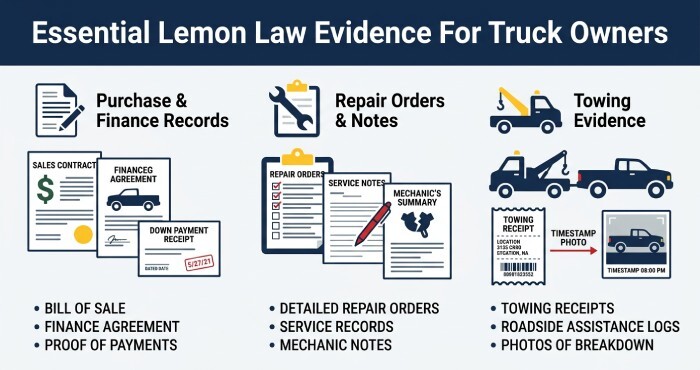
- Purchase, Lease, and Finance Records: Keep all purchase, lease, registration, warranty, and financing documents to support refund or buyback calculations.
- Repair Orders and Dealer Notes: Keep every repair order showing the complaint, mileage, diagnosis, repairs, and dealer findings.
- Towing Evidence: Save weight slips, photos, videos, warning lights, towing specifications, and service messages to document proper vehicle use.
Communications and Warranty Proof
Keep emails, texts, voicemails, service portal screenshots, and customer care case numbers. Also preserve the manufacturer warranty, extended warranty paperwork, certified pre-owned documents, and any warranty coverage statements from the used car dealership.
A California Lemon Law Guide can help consumers understand basic filing requirements, but every case depends on its specific facts. Consulting a qualified lemon law attorney in San Diego can help determine whether the available evidence supports a settlement, vehicle repurchase, replacement vehicle, or trial strategy.
When to Contact a Lemon Law Lawyer in California for Truck Towing Issues
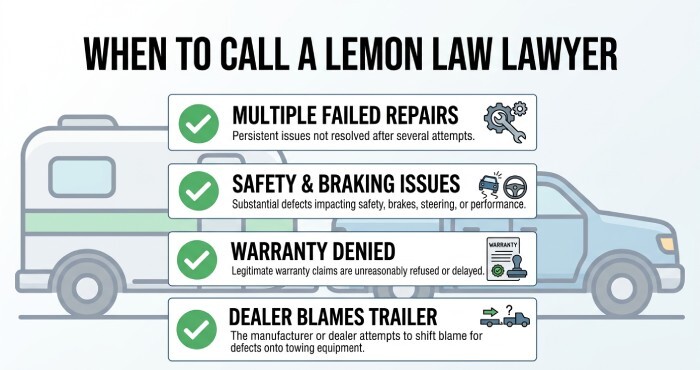
Truck owners should contact a California lemon law lawyer as soon as towing defects continue after repeated service visits, particularly when the dealer cannot duplicate the problem, denies warranty coverage, or claims the issue is normal. Seeking legal representation early can help protect the truck owner’s rights and avoid mistakes that could weaken a lemon law claim.
Signs It Is Time for a Case Review
You should consider contacting a lemon law attorney if:
- The same towing problem has required multiple repairs.
- The truck has spent significant time at the dealership or auto shop.
- The manufacturer refuses to authorize further warranty repairs.
- The towing defect affects safety, braking, stability, acceleration, or cooling.
- You bought a new vehicle, certified pre-owned truck, or qualifying used vehicle with active warranty.
- The dealer blames trailer weight without evidence.
- You need help evaluating compensation, refund, buyback, or repurchase options.
Truck owners should contact a California lemon law lawyer when persistent towing defects continue despite repeated repairs, warranty coverage is denied, safety is affected, or the dealer disputes the cause, so they can evaluate potential compensation, repurchase, or buyback options.