
When a car experiences persistent mechanical, electrical, or software issues, many customers expect that the dealership or manufacturer will fix these problems permanently under warranty. However, some owners find that instead of truly addressing the defect, the manufacturer simply keeps replacing parts. This leads to a crucial question: does replacing parts continuously allow a vehicle to qualify for lemon law protection if the underlying issue remains unresolved?
In numerous instances, the answer is affirmative. Lemon laws typically focus on whether the manufacturer has effectively repaired the vehicle after a reasonable number of attempts, rather than tracking the number of parts swapped out. If the ongoing defect continues to impact the vehicle’s usability, value, or safety despite numerous repairs and replacements, the consumer may still have a legitimate claim under lemon law.
Understanding the Purpose of Lemon Law
Lemon laws protect consumers when a vehicle has serious defects that cannot be fixed after several repair attempts. Under the California Song-Beverly Consumer Warranty Act, manufacturers may have to replace the vehicle or provide a refund if the problem continues. Experienced lemon law lawyers can help consumers understand and enforce their rights.
Replacing major parts like an engine or transmission does not automatically remove lemon law liability. If the same issue keeps happening or the vehicle remains unreliable, the repair history may still support a claim. Knowledgeable lemon law lawyers can review the case and help determine if the manufacturer failed to properly fix the defect.
Replacing Parts Is Still Considered a Repair Attempt
Manufacturers often claim they are tackling the issue by installing new components. This may indeed be the case, but each time a customer returns to the dealership for the same persistent problem, it is generally recorded as a repair attempt under lemon law.
For instance, a dealership might replace several parts, including:
- Transmission sensors
- Engine control modules
- Fuel injectors
- Battery systems
- Infotainment systems
- Wiring harnesses
- Steering assemblies
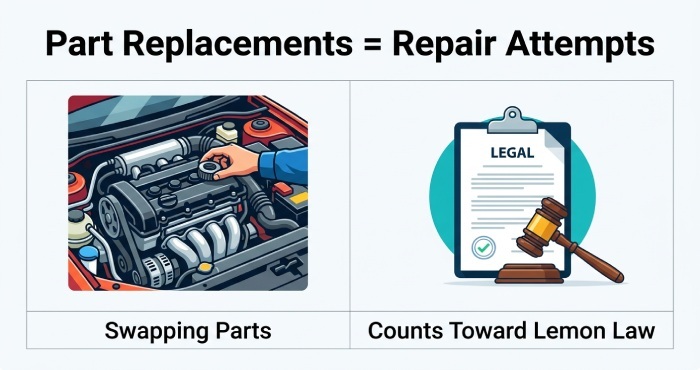
However, if the same problem reoccurs after these replacements, the documented repair attempts can actually bolster the consumer’s case under lemon law, showcasing a pattern of ineffective repairs.
Legal authorities often prioritize outcomes over efforts. Thus, if the defect persists despite multiple part replacements, the manufacturer may still be required to provide a refund or a replacement vehicle.
The Real Question: Was the Vehicle Fixed?
A manufacturer might swap out numerous components, but if the defect persists, the vehicle can still be considered a lemon. The critical elements to consider are whether the problem significantly affects the vehicle’s:
- Functionality
- Worth
- Safety
Take, for instance, a car that frequently stalls during operation. Even after replacing the fuel pump, ignition system, and onboard computer, the stalling issue remains. This means that despite multiple parts being replaced, the fundamental safety concern is still unaddressed.
Likewise, a manufacturer might change the transmission several times, but if the vehicle continues to jerk, slip gears, or lose power, it may still fall under lemon law protections.
The law typically does not favor endless unsuccessful repairs; instead, it evaluates whether the manufacturer has effectively fixed the defect within a reasonable number of attempts.
What Counts as a “Reasonable Number” of Repair Attempts?
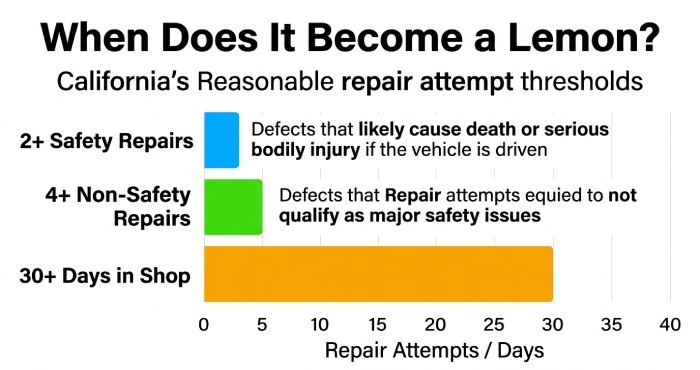
Lemon law criteria vary by state, yet many states adhere to comparable rules regarding attempts to fix issues. In California, a vehicle can be classified as a lemon under the following conditions:
- A significant safety issue has been addressed twice or more, yet persists.
- A non-safety issue has undergone four or more repairs, but remains unresolved.
- The vehicle has been out of operation for a total of over 30 days due to warranty-related repairs.
These criteria hold true irrespective of whether the dealership made repairs, adjustments, or parts replacements during those service visits. This implies that frequent replacements of components often become a part of the repair history that strengthens the claim.
Why Manufacturers Replace Parts Repeatedly
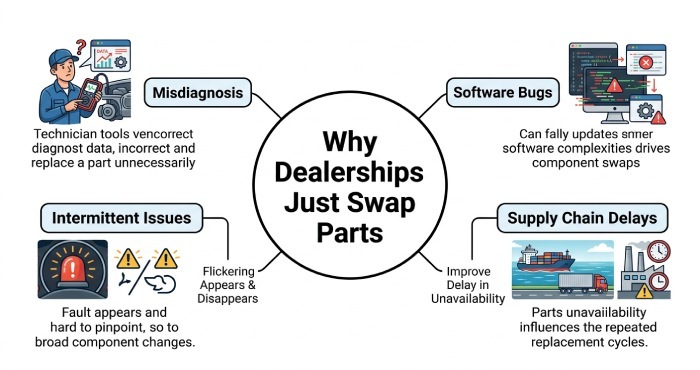
There are multiple reasons why manufacturers opt to replace parts rather than resolving the underlying issue permanently.
Misdiagnosing Issues
Today’s vehicles have complex electronic and software systems, leading technicians to potentially misidentify the problem, resulting in unnecessary replacements.
Revisions and Updates
Manufacturers frequently release updated repair instructions or components. Dealerships might install a replacement part, only to later realize there’s a newer fix available.
Occasional Issues
Some faults happen sporadically, making them challenging to diagnose during service visits. This uncertainty can lead technicians to make educated guesses on which part may be faulty.
Software Compatibility Issues
As modern cars depend more on integrated software, simply replacing hardware may not address underlying programming or communication problems.
Supply Chain Challenges
Manufacturers may resort to part replacements while awaiting redesigned components or improved repair solutions.
Regardless of these justifications, consumers are still protected by lemon laws when issues remain unresolved. This legislation prioritizes the consumer’s experiences with a malfunctioning vehicle over the manufacturer’s repair difficulties.
Documentation Is Extremely Important
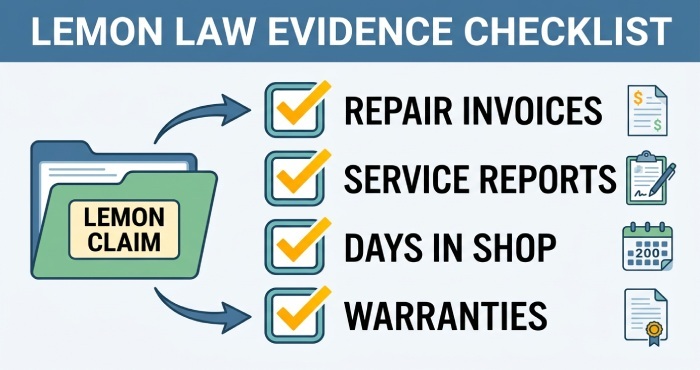
Individuals considering a lemon law claim need to keep meticulous records of all repairs and part changes. Key documents to gather include:
- Repair invoices
- Warranty documents
- Service reports from the dealership
- Dates of repair appointments
- Duration the vehicle was in the shop
- Notes on persistent issues
- Correspondences with the manufacturer
Repair orders can often highlight a trend of ongoing part replacements linked to the same unresolved problem. Such records can serve as crucial evidence indicating that the manufacturer had numerous chances to fix the vehicle but did not succeed. Many lemon law claims that succeed heavily depend on dealership repair documentation that reflects repeated complaints.
Part Replacement Does Not Reset Lemon Law Rights
Many consumers mistakenly believe that replacing a major component, such as an engine or transmission, automatically resets their lemon law rights. In reality, this is often untrue. If the original defect continues or the vehicle experiences ongoing warranty-related problems, prior repair attempts may still count toward a valid lemon law claim.
Manufacturers cannot simply erase a vehicle’s repair history by swapping out parts. A knowledgeable lemon law attorney can review the repair records, identify recurring defects, and help consumers determine whether they qualify for compensation, a replacement vehicle, or a refund under state lemon law protections.
For instance:
- Changing a faulty transmission doesn’t negate previous repair attempts related to the transmission.
- Replacing a battery pack in an electric vehicle may not fix ongoing charging issues.
- Substituting an infotainment unit may not resolve persistent electrical system problems.
Courts tend to consider the complete repair history instead of just whether a particular component has been replaced.
Software Defects and Repeated Repairs
Contemporary automobiles are facing a rising number of software-related challenges that are tough to resolve permanently.
Manufacturers often try multiple remedies, including:
- Updating software
- Replacing modules
- Recalibrating systems
- Changing sensors
- Resetting electronics
If the issues persist, impacting drivability, safety features, charging capabilities, or overall vehicle performance, lemon law protections may be applicable.
This situation has become particularly prevalent in electric and highly computerized vehicles, where defects often stem from communication failures across various systems rather than a single malfunctioning part.
Even if software patches and module swaps are implemented, they still count as attempts at repair if the defect is not fixed.
When a Vehicle Is Out of Service for Too Long
A lemon law claim can still be valid even if the manufacturer is diligently working on replacing parts, as long repair times can independently support it. Many lemon laws stipulate that vehicles out of service for a prolonged period due to warranty fixes are eligible for consideration.
For instance, if a vehicle is in the shop for more than 30 total days for repairs, the owner might be entitled to relief, regardless of the manufacturer’s attempts to address the issue with different parts and repair tactics. Significant delays resulting from backordered parts or repeated unsuccessful repairs can greatly impact a consumer’s daily routine and bolster their case.

Arbitration and Legal Claims
Manufacturers may occasionally motivate consumers to agree to ongoing repairs without limit. However, consumers aren’t obligated to accept endless repair attempts after a certain point has been established.
If multiple replacements do not fix the issue, consumers have several options, including:
- Manufacturer arbitration programs
- State-certified arbitration
- Lemon law claims
- Settlement discussions
In California and several other states, if a consumer wins a lemon law case, manufacturers might be required to cover the attorney fees, thus making legal help more attainable for those impacted.
Final Thoughts
A manufacturer that repeatedly replaces parts instead of fully correcting a defect does not automatically avoid liability under lemon law protections. In many cases, multiple part replacements can actually strengthen a claim by showing the manufacturer had several opportunities to repair the issue but failed to permanently resolve it.
The central question in most lemon law cases is not whether repair attempts were made, but whether the vehicle was successfully repaired within a reasonable number of attempts. If serious defects continue to affect the vehicle’s safety, performance, or value despite ongoing repairs and component replacements, consumers may still qualify for compensation such as a refund, vehicle replacement, or other remedies available under state lemon law statutes. Consulting an experienced Lemon Law lawyer San Diego can help vehicle owners understand their rights and determine whether they have a valid claim.