
When purchasing a car, numerous buyers depend on the assurances given by sales staff regarding repairs, warranties, or the vehicle’s state. Sadly, these verbal commitments often lack significant legal support if issues persist and the vehicle falls under Lemon Law protections. Without written proof, it’s challenging to establish the differences between what was promised and what was actually provided.
Depending only on spoken guarantees can significantly undermine your case if you continue to face ongoing mechanical problems. To safeguard your rights effectively, ensure that every repair promise, warranty extension, and acknowledgment of defects is documented in writing. In Lemon Law situations, seasoned Lemon law lawyers understand that written proof holds much more legal significance than verbal claims, bolstering your case and enhancing the likelihood of a favorable outcome.
Why Verbal Promises from Dealerships Don’t Protect Your Lemon Law Rights
Dealerships often try to reassure buyers with spoken assurances “We’ll take care of it,” “If it keeps acting up, we’ll swap it out,” or “Don’t worry, we’ll buy it back.” While comforting, these statements rarely protect your lemon law rights. Lemon laws are designed for consumer protection, but they operate through written terms, objective proof, and statutory procedures not casual conversations.
When a defective vehicle keeps returning for vehicle repair, your legal remedies such as repurchase, refund, or replacement hinge on the warranty, the manufacturer’s warranty process, and evidence of repair attempts within a reasonable amount of time under state law and state statutes.
What Lemon Law Really Requires: written warranties, qualifying defects, repair attempts, and proof
Lemon laws vary by state, but core requirements are consistent across the automotive industry and many jurisdictions, including the District of Columbia and New York State.

Written warranties and qualifying defects
- Express warranty vs. implied warranty: Lemon law coverage typically starts with an express warranty or manufacturer’s warranty. An implied warranty (rooted in the Uniform Commercial Code) can support claims about merchantability and fitness, but many claims still hinge on the written warranty period.
- Qualifying defects and quality standards: A product defect must substantially impair the use, value, or safety of motor vehicles under applicable quality standards. This applies to a new vehicle and, in many states, to a used vehicle still under warranty.
- Warranty coverage scope: Read your warranty for exclusions, warranty coverage boundaries, and procedures. The Federal Trade Commission encourages consumers to keep all warranty booklets and service records for consumer goods like vehicles.
Repair attempts, timelines, and proof
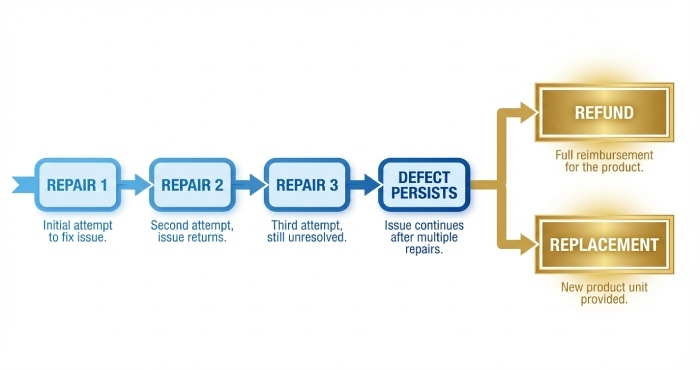
- Repair attempts: Most lemon laws require a specific number of unsuccessful repair attempts or a cumulative number of days out of service. The standard is whether the manufacturer had a reasonable amount of time to fix the problem.
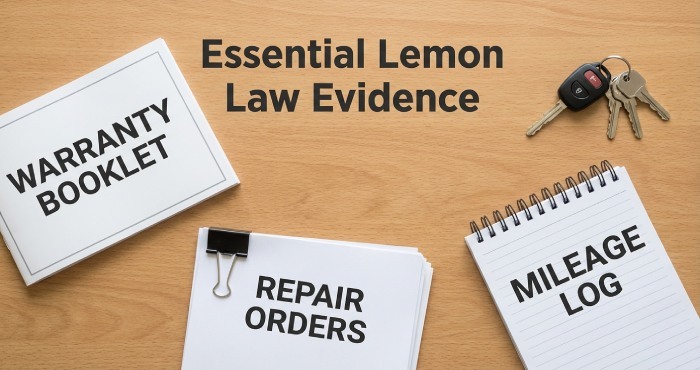
- Proof: Keep all repair orders, receipts, dates, mileage in/mileage out, diagnostic notes, and communications. This evidence substantiates your lemon law rights and your entitlement to repurchase, refund, or replacement.
- Remedies: Lemon law remedies often include repurchase, refund, or replacement, and may cover towing and rentals during service downtime. Some state statutes include buy-back provisions, unit replacement, or incidental damages and attorney fees.
Evidence checklist
- Warranty booklet and purchase/lease contract
- All repair orders and invoices (every visit)
- Dates, odometer readings, and descriptions of symptoms
- Photographs, videos, or data logs for intermittent faults
- Written complaints to the dealer and manufacturer
Why Verbal Assurances Don’t Count: integration clauses, parol evidence, and Magnuson–Moss limits
Car sales and service contracts frequently contain integration clauses stating the writing is the entire agreement. Under the parol evidence rule, courts typically exclude prior or contemporaneous verbal statements that contradict or add to the written contract. This means a salesperson’s spoken promise to “replace” a defective vehicle or “buy back” the car if it continues to stall generally cannot modify the purchase agreement or the warranty.
The Magnuson-Moss Warranty Act sets federal standards for written warranties on consumer goods but does not convert oral promises into enforceable warranty terms. Instead, it requires clear written disclosures and prohibits deceptive practices. If a dealer verbally promises a refund or replacement that is not in writing, you may have a misrepresentation issue, but your clearest path to lemon law rights still runs through documented warranty claims and the manufacturer’s procedures.
California’s Song-Beverly Consumer Warranty Act (California Civil Code) is an example of robust consumer protection: it obligates the manufacturer to offer repurchase, refund, or replacement when the defect persists within the warranty. Yet even under Song-Beverly, integration clauses, state law contract principles, and the text of the written warranty control. Similar consumer rights concepts exist globally such as the Australian Consumer Law and rulings cited by the Parliament of Queensland, or programs like the Canadian Motor Vehicle Arbitration Plan (CAMVAP) reinforcing that written terms, not oral assurances, drive dispute resolution.
Misleading Dealer Phrases to Watch For—and What They Actually Mean
Consumers hear reassuring lines across the automotive industry. Here’s how to decode them:
- “We’ll take care of it.”
- What it sounds like: A guarantee of repurchase, refund, or replacement.
- What it means: At most, another repair attempt. Your lemon law rights still depend on documented defects, repair history, and the manufacturer’s process.
- “If it happens again, we’ll buy back the car.”
- What it sounds like: A binding buy back.
- What it means: Unless it’s in writing, it’s not enforceable. Lemon laws require specific conditions, and buy-back provisions typically come from the manufacturer after review.
- “All cars do that—normal for Toyota.”
- What it sounds like: No defect exists.
- What it means: The dealer may be normalizing a product defect. Independent diagnostics and written records matter more than ad hoc explanations.
- “We’ll put you in a loaner and keep trying.”
- What it sounds like: A path to replacement.
- What it means: Rentals or loaners may ease the inconvenience, but they do not guarantee lemon law remedies.
Protecting Your Claim—and Next Steps if You Suspect a Lemon
You can’t stop people from making verbal assurances, but you can control your recordkeeping and escalation.
Get it in writing, document repairs, and track timelines and mileage
- Get it in writing: Ask the dealer to put any promise of repurchase, refund, or replacement in writing. If they won’t, rely strictly on your warranty and state statutes.
- Document everything: Each visit must generate a repair order. Insist that your complaint (e.g., stalling, brake vibration, infotainment reboots) and all diagnostics are fully described. This is crucial for proving a defective vehicle under lemon laws.
- Track timing: Log dates and days out of service. Keep mileage-in/mileage-out for every visit to establish the frequency and persistence of the defect within a reasonable amount of time.
- Preserve communications: Save emails, texts, and call notes with the dealer and manufacturer. Accurate records strengthen your statutory rights and options for dispute resolution.
- Understand coverage: Review the express warranty and implied warranty limitations. Confirm what the manufacturer’s warranty covers, including towing, rentals, and parts criteria for unit replacement.
If you suspect a lemon: notify the manufacturer, use the right dispute process, and consider legal help
- Notify the manufacturer: Follow the warranty booklet’s escalation process and contact information. Many brands require you to open a case before considering repurchase, refund, or replacement.
- Choose the correct forum: Some manufacturers use the Better Business Bureau’s BBB Auto Line or similar arbitration programs as a first step. Arbitration can resolve claims, but do not forgo your lemon law rights under applicable state law. The Magnuson-Moss Warranty Act also intersects with arbitration provisions.
- Know your jurisdiction: Remedies differ under state law. For example, California’s Song-Beverly Consumer Warranty Act within the California Civil Code defines strong buy-back provisions for motor vehicles. Other state statutes differ in thresholds. Always compare the written warranty against your state’s lemon law remedies.
- Weigh settlement outcomes: A buy back may be offered as a refund or a repurchase with deductions for mileage; a replacement may be a comparable new vehicle. Confirm incidental damages, rentals, towing, and attorney fees where permitted.
- Get experienced counsel: If repairs continue to fail, consult counsel who understands consumer rights and the Uniform Commercial Code. Experienced attorneys evaluate whether the product defect meets statutory tests and whether dispute resolution or litigation is appropriate.
Key reminders as you move forward:
- Lemon law rights come from documents, not conversations.
- The manufacturer decides on repurchase, refund, or replacement after reviewing warranty records.
- Follow the written steps, meet the repair attempts criteria, and keep impeccable proof.
Worldwide insights strengthen these core principles. Organizations such as the Federal Trade Commission advise American consumers about warranties and misleading practices. Similarly, laws like the Australian Consumer Law and initiatives such as the Canadian Motor Vehicle Arbitration Plan focus on a documentation-driven approach in their respective regions.
Closer to home, a Lemon Law attorney in San Diego will apply that same discipline under California’s consumer protection statutes helping you document repair attempts, preserve service records, and build a strong claim based on evidence rather than assurances. Whether your case involves a new or used vehicle, success depends on thorough records, clear timelines, and knowledgeable legal guidance.