
When your motorcycle consistently experiences problems, frequent malfunctions, or ongoing safety concerns, what used to be an exhilarating experience can swiftly turn into a frustrating and expensive hassle. Luckily, California’s Lemon Law — formally known as the Song-Beverly Consumer Warranty Act — provides robust protections for consumers facing issues with defective vehicles, including certain motorcycles.
Step 1: Confirm Your Motorcycle Qualifies Under California Lemon Law
Prior to taking any steps, it’s essential to verify if your motorcycle is eligible for protection under California’s Lemon Law. California offers relatively extensive consumer safeguards compared to some other states, but certain criteria must still be met for eligibility.
Your motorcycle could qualify if:
- It was bought or leased in California.
- It remains under the manufacturer’s original warranty.
- The defect significantly affects its use, value, or safety.
- The manufacturer or authorized dealer has been allowed a reasonable number of repair attempts.
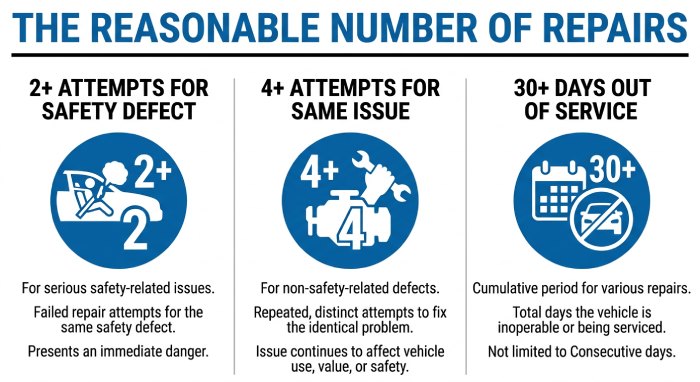
In Warner Springs, California Lemon Law generally considers a “reasonable number” of repair attempts to be met when a serious safety defect has been repaired two or more times, the same issue has been unsuccessfully addressed at least four times, or the motorcycle has been out of service for a cumulative total of more than 30 days.
Step 2: Build a Bulletproof Record of the Problem
Begin collecting evidence as soon as you notice any issues:
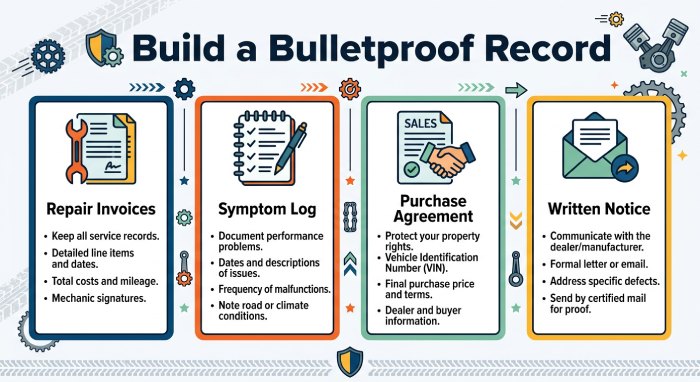
- Retain your purchase or lease agreement and warranty documentation.
- Keep all repair orders and invoices from the dealership.
- Document a comprehensive log of symptoms and incidents.
- Note mileage, dates, and circumstances when problems arise.
- Capture photos or videos that illustrate the defect.
- Save any recalls, technical service bulletins (TSBs), or service campaigns related to your motorcycle.
- Preserve all written correspondence with the dealer or manufacturer.
When keeping your symptom diary, make sure to include:
- A description of the problem (e.g., stalling, brake malfunction, overheating)
- How often and how long the issue occurs
- Riding conditions (speed, weather, terrain)
- Any warning lights, unusual sounds, or odors
- Safety hazards faced
Step 3: Protect Your Claim While Seeking Repairs
- Always get your motorcycle serviced at an authorized dealership.
- Adhere closely to the manufacturer’s recommended maintenance schedule.
- Retain all receipts related to services and maintenance.
- Avoid making aftermarket modifications or tuning for enhanced performance.
- Refrain from DIY repairs on issues that are covered by warranty.
- Keep a record of all expenses for towing, rentals, and other related costs.
- Cease riding the motorcycle if it presents a significant safety hazard.
Manufacturers often attempt to dismiss claims by suggesting that the defect arose from misuse or unauthorized alterations. By adhering to the correct procedures, you can counter these arguments and fortify your case.
Step 4: Provide Formal Notice and Final Repair Opportunity
After determining that your motorcycle qualifies under California’s lemon law, the next important action is to officially inform the manufacturer. This action is essential and typically necessary prior to taking any legal steps. In your notification, make sure to:
- Send it via certified mail as well as email.
- Clearly outline the defect and any repair history.
- Attach copies of all repair documentation and records.
- Request either a final repair attempt or an inspection.
- Specify your preferred outcome (either a refund or a replacement).
- Set a reasonable timeframe for their response.
- Retain proof of delivery and keep copies of all communications.
Submitting this formal notice shows that you have given the manufacturer a fair chance to resolve the problem, which is a critical requirement under California law.
Step 5: Choose the Best Path to Resolution
1. Manufacturer Arbitration Programs
Some manufacturers provide arbitration services to settle disputes. While these can expedite resolution, they may be skewed in favor of the manufacturer, so it’s crucial to examine the conditions thoroughly.
2. Lemon Law Lawsuit
Many individuals opt to file a claim in civil court under the Lemon Law, which allows them to seek full remedies, including legal fees.
3. Federal Warranty Claims
You can also consider filing a claim based on the Magnuson-Moss Warranty Act if necessary, enabling you to recover damages for warranty violations.
Regardless of your choice, thorough preparation is essential. Structure your evidence logically, including:
- A timeline of events
- Details about the defect
- Attempts made for repairs
- Duration the vehicle was out of service
- Financial impacts and associated costs
- Any safety issues encountered
A well-organized case greatly enhances your likelihood of achieving a favorable outcome.
Step 6: Understand Your Remedies and Get Expert Help
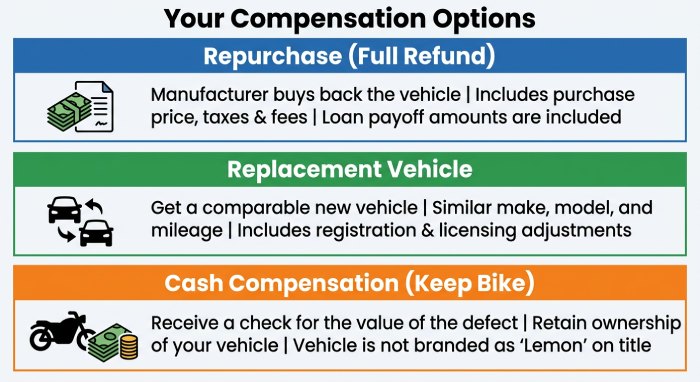
- Manufacturer Repurchase Option: You might be eligible for a complete refund that includes the purchase amount, taxes, fees, and other related costs, minus a minor deduction for mileage prior to the first repair.
- Replacement Bike: You have the possibility of receiving a new motorcycle that has comparable features and warranty to your original model.
- Cash Compensation (Keep the Bike): In some situations, you can retain your motorcycle while also receiving payment for its decreased value.
- Additional Damages: You may be compensated for extra expenses such as rental vehicles, towing services, and diagnostic charges.
- Coverage for Legal Fees: If you prevail in your lawsuit, the manufacturer generally covers your legal expenses, enabling you to engage skilled lemon law attorneys with minimal upfront financial commitment.
Step 7: Finalize Your Case and Protect Your Future
- Thoroughly check settlement or release agreements.
- Verify the final payment figure and its breakdown.
- Make sure your loan is settled and the lien has been lifted (if applicable).
- Understand the implications of title branding for repurchased vehicles.
- Clear out any personal belongings and accessories from the motorcycle.
- Cancel extended warranties and GAP insurance to receive refunds.
- Update your insurance policy as necessary.
- Keep copies of all final documents and communications.
Additionally, think about reporting major safety defects to the National Highway Traffic Safety Administration (NHTSA). Doing so can help safeguard other riders and may lead to recalls or additional preventive measures.
The Numbers That Matter in a Successful Motorcycle Lemon Case
| Statistic | Data Point | Insight |
| Repair Attempts | 2–4 tries | Multiple repairs needed to qualify |
| Success Rate (with lawyers) | 70–90% | Lawyers boost winning chances |
| Resolution Time | 3–8 months | Cases take a few months |
| Refund/Settlement | 60–80% | Most claims get compensation |
| Documentation Impact | +50% success | Strong records improve results |
Final Thoughts
Turning a defective motorcycle into a successful lemon law claim in California requires strong documentation, persistence, and guidance from an experienced Lemon Law attorney in San Diego, CA. By staying organized and acting quickly, you can secure the refund, replacement, or settlement you deserve.