
If a car continues to malfunction after numerous repairs, keeping thorough records can be crucial in turning frustration into a successful claim. Consumer protection laws, such as California’s Lemon Law, highlight the importance of detailed documentation from repair visits, warranty discussions, and maintenance history as compelling proof.
By carefully organizing these documents and frequently collaborating with a knowledgeable lemon law attorney, car owners can effectively change their troubling situation into a solid legal case for a refund, replacement, or compensation.
Understand Your State’s Lemon Law: Eligibility, Thresholds, and Deadline
A successful claim under the California Lemon Law requires understanding eligibility rules under California Civil Code §§1793.22–1793.25, which apply when a vehicle cannot be repaired after a reasonable number of attempts during the warranty period. Consulting a Lemon Law Lawyer San Diego can help you navigate these requirements and pursue a refund, replacement, or repair from the manufacturer.
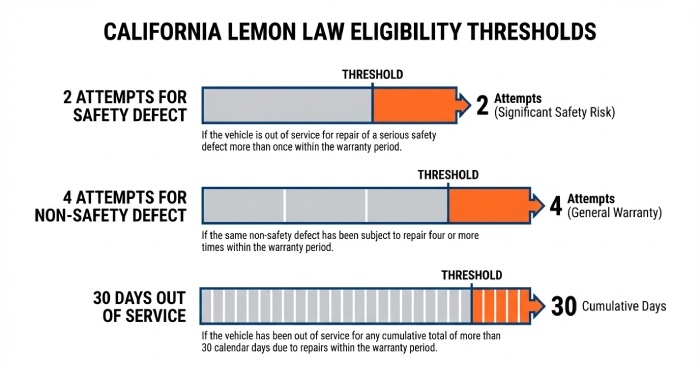
- Eligibility and thresholds: Under CCC §§1793.22-25 (often referred to as the Tanner Consumer Protection Act within the broader Song-Beverly Consumer Warranty Act), a vehicle is presumed a lemon if, during the warranty, it has:
- Two or more repair attempts for a serious safety defect, or
- Four or more attempts for the same non-safety defect, or
- Been out of service for repairs for a cumulative 30 days or more.
- Deadlines: Act within the warranty period and file promptly once presumptions are met. Document each repair attempt and each day out of service to match the statutory requirements precisely.
- Remedies: When the presumption is met, you may obtain a lemon law buyback (a refund with mileage offset), a replacement, or, in some instances, other relief through warranty returns processes.
Your case must be rooted in meticulous documentation. Keep all purchase, service, and communication records to establish a clear timeline that aligns with the California state law presumptions under CCC §§1793.22-25. If the matter proceeds to a buyback vehicle resolution, additional registration procedures and branding implications will follow under the Vehicle Code and Department of Motor Vehicles rules.
Build an Airtight Paper Trail: The Documents That Prove Your Claim
The strongest lemon law cases are built on solid evidence. A skilled lemon law lawyer gathers documentation showing the vehicle’s history, warranty claim progress, and the manufacturer’s repair attempts to support the claim.
- Purchase and Ownership Records: Retain the bill of sale, dealer documents, financing agreements, title papers, registration info, and proof of insurance. Verify that the vehicle identification number (VIN) on all documents is consistent to ensure a complete and accurate ownership history.
- Warranty and Repair Documentation: Keep the warranty booklet, any warranty information, and all repair invoices or orders that detail dates, mileage, and notes from technicians. Additionally, preserve any communications from the manufacturer regarding warranty claims, repair approvals, or goodwill gestures.
- Communications Log: Document copies of emails, letters, and written correspondence with the dealer or manufacturer. Take detailed notes during phone conversations or in-person meetings, focusing on repairs, returns, or the status of claims.
- DMV and Branding Information (If Buyback Happens): Keep notifications regarding branded title status and any instructions related to registration following a buyback. Include relevant documentation about registration requirements and title elements from the California DMV.
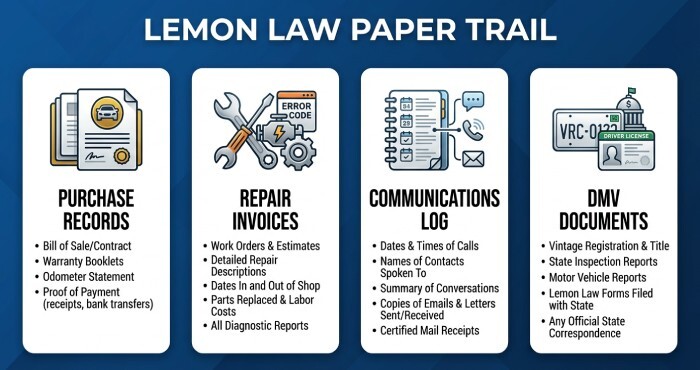
Building this paper trail supports both the lemon law merits and the eventual administrative steps such as branded title issuance and any necessary registration renewal, replace registration, or new registration actions with the California State Department of Motor Vehicles.
Master the Repair Order: What Must Appear on Every Service Visit
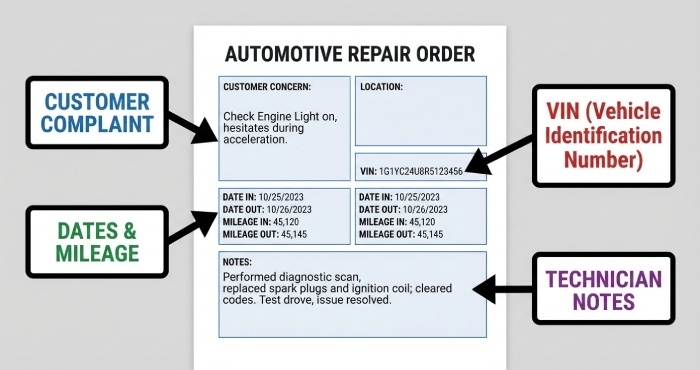
The repair order is the backbone of a lemon law claim. Treat each visit like evidence collection for a future hearing or negotiation.
The essential elements of a persuasive repair order
- Customer complaint in your words: Use plain, repeatable language (“vehicle stalls at highway speed”).
- Dates and mileage: Time-stamp the problem’s persistence and progression.
- VIN, license plate, and your contact information: Confirm identifiers match your vehicle record and vehicle registration.
- Technician findings and cause: A thorough diagnostic path with codes and test results.
- Warranty status and whether the work was performed under warranty returns or standard warranty claim processes.
- Repair action and parts replaced: Be specific; ambiguity weakens statutory presumptions under CCC §§1793.22-25.
- Next steps: Document whether the problem is unresolved or requires monitoring.
Common pitfalls that undermine claims
- Vague complaints (“acts weird”) and missing technician notes
- Missing or incorrect VIN, mileage, or date
- “No problem found” without documenting reproducibility steps
- Failure to obtain a copy of the repair order at drop-off and pick-up
- Gaps in documentation that break the timeline needed for lemon law presumptions
Organize and Quantify: Timelines, Logs, and Calculations That Persuade
Organizing your documentation converts narrative into proof. Create a chronological log that lists dates in service, dates out of service, mileage at each visit, and symptom descriptions. Quantify:
- Number of repair attempts per defect category (safety vs. non-safety)
- Cumulative days out of service to meet the CCC §§1793.22-25 presumption
- Mileage offset for a lemon law buyback refund calculation, as permitted by California Civil Code
- Towing, rental, and incidental expenses linked to the defective vehicle
Use a single spreadsheet that references the VIN, aligns each entry to repair orders, and notes any manufacturer responses or warranty returns decisions. This analysis positions you for negotiation and signals compliance with statutory requirements.
If the manufacturer agrees to a lemon law buyback, prepare for downstream administrative steps. Under the California DMV’s registration procedures, a buyback vehicle receives a branded title—often “Lemon Law Buyback”—and that brand will appear under VC §§4453 provisions governing the information on certificates and registration documents. Keep copies of your updated vehicle registration, any new registration or title transfer paperwork, and correspondence confirming that branding. If you retain the vehicle post-repair under a settlement, confirm how the branded title and disclosure requirements apply to future sale or trade-in.
Thorough documentation can transform a troublesome vehicle issue into a solid legal case. By maintaining comprehensive records of repairs, warranty information, and communication logs, consumers create compelling evidence of persistent defects. An experienced Lemon Law attorney can leverage this documentation to bolster the claim and assist in obtaining a refund or a replacement vehicle.