
Owning an RV symbolizes liberation — the thrill of the open road, breathtaking campgrounds, and memorable experiences. However, if your RV spends more time at the mechanic than on journeys, that ideal can swiftly turn into aggravation. Ongoing issues, constant breakdowns, and expensive repairs can trap RV owners in a frustrating loop of trouble and costs.
Fortunately, California’s Lemon Law provides robust protections for those facing issues with defective vehicles, including some RVs. By gaining insight into how these laws function, what constitutes a lemon, and how to effectively navigate the claims process, RV owners can escape the cycle of relentless repairs and seek compensation, a replacement, or a refund.
What Makes an RV a Lemon in California?
Components Covered
In California, the coverage varies based on the RV type:
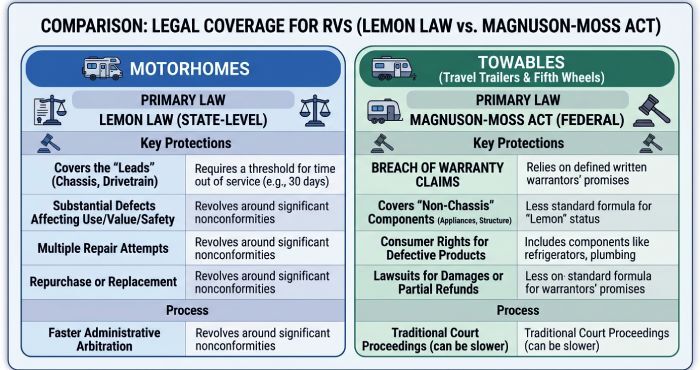
- Motorhomes (Class A, B, and C): Generally covered under Lemon Law for both the chassis (including the engine, brakes, and transmission) and, in many situations, the living areas.
- Towable RVs (such as travel trailers and fifth wheels): Usually not classified as “vehicles” under Lemon Law, but they may be eligible for remedies under warranty protections like the Magnuson-Moss Warranty Act.
 buyback-value-5367.jpg” alt=”RV claims” width=”700″ height=”370″ />
Qualifying Issues
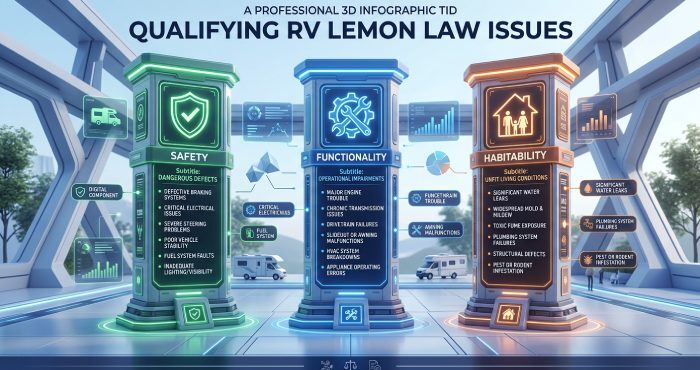
To be considered a valid defect, the issue must be more than a slight inconvenience. It should meaningfully affect:
- Safety (for instance, brake malfunctions or steering problems)
- Functionality (such as engine stalling or transmission issues)
- Habitability (like failures in the electrical system that impact living conditions)
Attempts at Repair
In California, a “reasonable number” of repair efforts is generally defined as:
- The same defect being fixed 2-4 times without success, or
- The RV being out of commission for a total of 30 days or more for repairs, or
- A serious safety issue having been addressed at least twice without resolution.
Timeframe (Rights Period)
The defect must be identified and reported within:
- The warranty period provided by the manufacturer, and
- Generally within 18 months or 18,000 miles, whichever limit is reached first.
Nonetheless, claims can still be valid after this timeframe if the defect originated earlier and continued.
Which Laws Cover RVs in California?
 motorhomes & towables” width=”700″ height=”370″ />
California Lemon Law:
This legislation pertains to newly purchased vehicles and some pre-owned ones that still have existing manufacturer warranties. It is typically upheld with the assistance of skilled Lemon Law attorneys. The law mainly focuses on motorized recreational vehicles (RVs) and mandates that the manufacturer must fix the defect, offer a replacement, or buy back the vehicle if the problem remains unresolved.
Magnuson-Moss Warranty Act (Federal Law) :
This federal statute is relevant to consumer products that have written warranties, which includes components of RVs. It is particularly beneficial in situations where the Lemon Law does not apply to certain parts, such as appliances or interior systems. It empowers consumers to pursue repairs, compensation, or reimbursement for legal costs.
Warranty Details
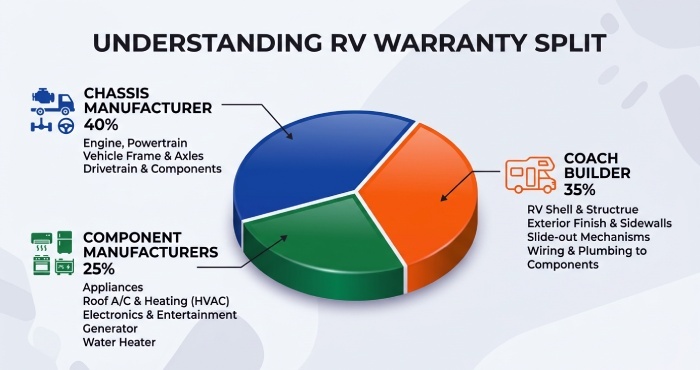
- RV warranties are frequently divided among multiple parties:
- The chassis manufacturer (responsible for the engine and drivetrain)
- The coach builder (focused on the living spaces)
- Component manufacturers (providing appliances, generators, and slide-outs)
It is essential to know which party is accountable for each defect. Certain repairs may need to be conducted by designated authorized service centers, and neglecting to adhere to these guidelines could impact your warranty claim.
Building a Strong Lemon Law Claim
Achieving a favorable outcome in a Lemon Law claim largely hinges on meticulous documentation and effective communication. A thoroughly prepared claim can be the turning point between a rejected case and a successful outcome.
Essential Records
Maintain comprehensive evidence of the following:
- Repair invoices (including dates, mileage, descriptions of problems, and actions taken)
- Receipts related to repairs
- Maintenance logs (to demonstrate responsible upkeep)
- Visual evidence (photos and videos) of ongoing issues
- Records of interactions with dealers and manufacturers
- Duration of vehicle incapacity
Each repair visit must accurately describe the reported problem. Be specific and consistent, avoiding ambiguity in your descriptions.
Notifying the Manufacturer
Prior to seeking legal action, it’s crucial to:
- Inform the manufacturer of the defect in written form
- Allow them one last chance to fix the issue
- Adhere to the guidelines provided in your warranty or owner’s manual
- Send all notifications via certified or registered mail and retain proof of receipt.
Engaging with Dealers and Manufacturers
- Always utilize authorized service facilities
- Arrange for repairs without delay
- Request written verification if there are any delays in obtaining parts
- Ensure that each service visit is thoroughly documented
- If available, participate in the manufacturer’s internal dispute resolution or arbitration process, as it may be necessary before you can file a formal claim.
The Claims Process in California
Step 1: Final Repair Opportunity
After several unsuccessful repair attempts, offer the manufacturer one more chance to resolve the problem by sending them a formal written notice.
Step 2: Initiate a Claim or Seek Arbitration
If the issue continues, you have two options:
- Utilize the manufacturer’s arbitration program (if one exists), or
- File a Lemon Law claim through legal means.
In California, arbitration isn’t a prerequisite for lawsuits, but it can often expedite the resolution process.
Step 3: Build Your Case
Ensure your claim includes:
- Complete repair history
- Evidence of written notice
- Documentation of downtime
- Warranty information
Having thorough documentation enhances your likelihood of a successful resolution.
Key Takeaways for RV Owners
Recreational vehicles provide amazing opportunities for adventure and freedom, but ongoing problems can transform that thrill into annoyance. Thankfully, the California Lemon Law presents a straightforward way to seek resolution, particularly if you collaborate with a knowledgeable Lemon Lawyer in San Diego who can adeptly handle these cases. Understanding how the law pertains to your particular RV and circumstances is crucial for obtaining a favorable resolution..
Motorhomes typically qualify for protections under the Lemon Law, whereas towable RVs may depend more on warranty regulations, such as the Magnuson-Moss Warranty Act. No matter which legal route you pursue, keeping thorough documentation, communicating promptly, and being persistent are vital.
If your RV frequently requires repairs, collaborating with lemon law lawyers and meticulously recording the problems can assist you in obtaining a refund, a replacement, or an equitable resolution.