
When issues occur with a faulty vehicle or product, consumers often find it shocking that the manufacturer might push to resolve the matter through arbitration rather than in a courtroom. Arbitration clauses are frequently hidden within the fine print of purchase agreements or warranty papers, which can lead buyers to unknowingly forfeit their right to have their case heard by a judge or jury.
This is why consulting with an experienced lemon law attorney is crucial; they can examine your contract, clarify your rights, and assess whether the manufacturer can legitimately mandate arbitration or if you still have the choice to pursue your claim in court.
Can a Manufacturer Force You Into Arbitration Instead of Court?
Manufacturers increasingly rely on an arbitration clause in product warranties, online terms, and registrations to channel disputes away from the court system and into private arbitration. In many cases, mandatory arbitration provisions are enforceable, resulting in forced arbitration that is final and binding arbitration before a neutral arbitrator rather than a judge or jury.
When you accept these terms often by opening a box, clicking “I agree,” or registering a product you may be waiving the right to court and narrowing your right to sue in a public forum. While this trend originated in the employment contract context with private sector employers like Walmart and Amazon, similar language now permeates consumer purchases and technology, from smart appliances to vehicles.
That said, not every arbitration agreement sticks. Enforceability turns on contract law basics (notice and assent), the Federal Arbitration Act (FAA), and specific defenses. Understanding when a company can be compelling arbitration and when you can resist helps you choose whether to challenge the clause, file small claims, or use the arbitration process strategically.

What Is Mandatory Arbitration in Consumer Purchases?
Mandatory arbitration is a form of alternative dispute resolution that routes a legal dispute to a private arbitrator, typically under AAA or JAMS rules, for binding arbitration. In consumer contexts, it often includes a class-action waiver that bars bringing claims on a class or collective basis, and it may impose confidentiality. These features can reduce litigation risk for manufacturers but also restrict consumers’ ability to sue in open court.
-
How It Works
- Final and binding arbitration: The arbitrator hears evidence and issues an arbitration award that is generally final and binding arbitration with extremely limited appeals.
- Private arbitration: Proceedings are usually confidential, outside the judicial system, and not part of the public record.
- Remedies: You can still seek statutory claims and damages, and in some cases injunctive relief, but discovery and appellate review are narrower than in the court system.
-
The Arbitrator’s Role
- The arbitrator functions like a private judge, setting schedules, resolving motions, and issuing the final and binding arbitration decision.
- Arbitrator selection, potential fees, and rules (e.g., consumer protocols) directly affect cost, speed, and fairness.
-
Finality and Appeals
- Courts rarely disturb an arbitration award. Limited grounds include fraud, evident partiality, or exceeding powers under the FAA.
2. Where These Clauses Appear
- Warranties and packaging: Many product boxes include in-box notices that reference an arbitration clause and class-action waiver.
- EULAs and online terms: End user license agreements, app terms, and website terms-of-service frequently include forced arbitration.

-
Warranties and Packaging
- “Shrinkwrap” or “in-box” inserts may bind you when you keep or use the product after receiving notice.
-
EULAs and Registrations
- “Clickwrap” acceptance during registration or activation often evidences assent to an arbitration agreement.
3. How You “Agree”
- Clickwrap: Checking a box next to hyperlinked terms (containing an arbitration agreement) is powerful evidence of mutual assent.
- Shrinkwrap/in-box: Keeping a product after being notified of a forced arbitration provision can imply acceptance.
-
Clickwrap vs. Browsewrap
- Courts prefer clear clickwrap assent over passive browsewrap links; clarity boosts enforceability.
-
Shrinkwrap and In-Box Notices
- If disclosures are conspicuous and offer a reasonable opportunity to reject or return, enforceability rises.

The Legal Framework: When Can a Manufacturer Compel Arbitration?
According to federal regulations like the Federal Arbitration Act and various state consumer protection laws, a manufacturer has the ability to require arbitration if there is a legitimate arbitration clause in the purchase or warranty contract. This can significantly influence the way a consumer approaches a lemon law claim.
FAA Basics and Supreme Court Tilt
- The FAA requires courts to place arbitration contracts on equal footing with other contracts.
- Supreme Court rulings have approved class-action waiver provisions and allowed companies to enforce arbitration clauses broadly, sometimes even when presented as a take-it-or-leave-it contract that reflects unequal bargaining power.
Required Elements for Enforceability
- Notice: The arbitration clause must be reasonably conspicuous.
- Mutual assent: Consumers must agree, typically via clickwrap, signed warranty cards, or continued use after notice.
- Consideration: Usually satisfied by mutual promises to arbitrate.
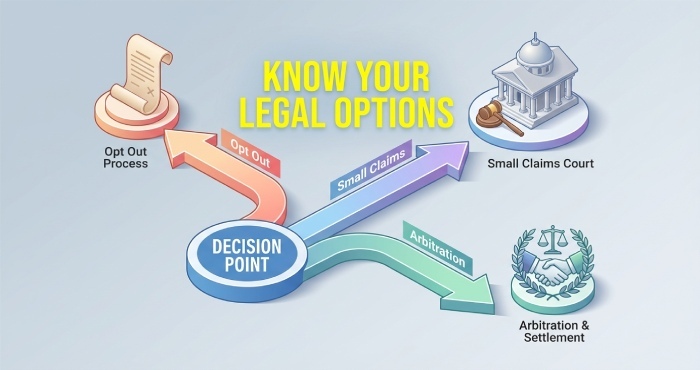
- Small-claims carveouts: Many clauses permit either party to pursue small claims, preserving a limited right to sue in local tribunals.
Class-Action Waivers and Collective Actions
- A class-action waiver generally precludes suits on a class or collective action basis, which can limit aggregate remedies but may accelerate individual outcomes.
When Arbitration Clauses Don’t Stick
Even with the FAA’s pro-arbitration tilt, some arbitration clauses are unenforceable.
Common Contract Defenses
- No assent: Hidden terms or ambiguous assent mechanisms can defeat formation.
- Unconscionability: Overly harsh terms (e.g., excessive arbitration fees) or one-sided provisions may be struck.
- Ambiguity: Vague scope, conflicting terms, or unclear delegation to the arbitrator can sink enforceability.
State-Law Limits and Public Policy
- Ordinary state-law contract doctrines not targeting arbitration per se are not preempted by the FAA.
- Public-injunctive-relief exceptions: In some states, claims seeking public injunctive relief may be nonarbitrable to preserve broad consumer protections.
Special Populations and Statutes
- Minors: Capacity issues can void or allow disaffirmance.
- Magnuson–Moss Warranty Act: While not a blanket ban on arbitration, there are nuances; for written warranties, pre-dispute binding arbitration requirements can raise compliance concerns if not clearly and properly disclosed.

Your Options If You’re Told to Arbitrate
You are not powerless when a manufacturer points to an arbitration clause.
Step 1: Locate and Read the Clause
- Search packaging, warranty booklets, online terms, and confirmation emails for forced arbitration language, any opt-out window, and small-claims exceptions.
Step 2: Consider Opting Out
- Some agreements allow a 30–60 day opt-out. If available, exercise it promptly to preserve your right to sue in court without waiving the right to court inadvertently.
Step 3: Small-Claims Strategy
- Use small-claims carveouts when efficient; many consumers recover modest damages faster here than in private arbitration.
Step 4: Challenge Enforceability
- Argue no assent, unconscionability, ambiguity, or conflict with public injunctive relief principles. Courts may deny compelling arbitration when contract formation fails or the clause is oppressive.
Step 5: If Arbitrating, Be Strategic
- Forum and fees: AAA and JAMS have consumer rules capping arbitration fees for individuals. The manufacturer typically pays most administrative costs in consumer cases.
- Mass-arbitration leverage: Coordinated filing of many similar claims can prompt global settlements or policy changes.
- Remedies: Seek damages, refunds, repair or replacement, and when available, injunctive relief.
Initiating the Arbitration Process
- File a demand citing the arbitration agreement, select the arbitrator list, and track deadlines. Preserve all receipts, communications, and defect evidence.
Who Pays What
- Consumer fee caps and business-paid case management fees vary by forum; read the rules to minimize your outlay.
AAA vs. JAMS Considerations
- Look for consumer-friendly protocols, fee schedules, virtual hearing options, and clear standards for final and binding arbitration.
Using Mass-Arbitration Dynamics
- Coordinated filings by many customers can increase settlement pressure while staying within each clause’s procedures.

Practical Pros, Cons, and Consumer Tips
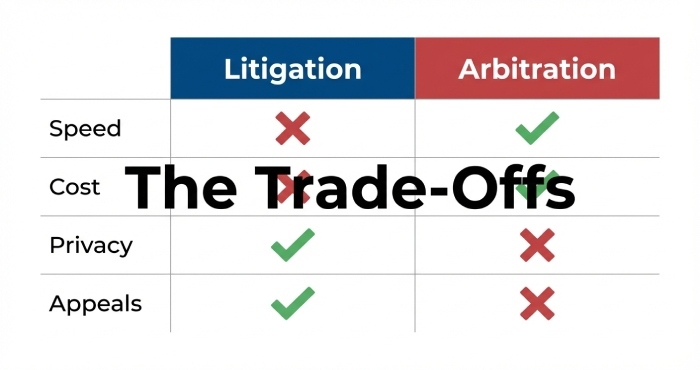
Arbitration can be faster and cheaper than a lawsuit, but it narrows procedures and appeals.
Pros
- Speed and cost: Streamlined timelines compared to the judicial system.
- Expertise: An experienced arbitrator for technical product disputes.
- Flexibility: Remote hearings and simplified rules.
Cons
- Limited discovery and appeals: Harder to uncover systemic defects; arbitration award review is minimal.
- Confidentiality: Private arbitration can conceal patterns of defects or safety risks.
- Fragmentation: Class-action waiver prevents class or collective basis remedies, reducing deterrence.
Consumer Tips
- Gather documentation: Retain faulty components, photographs, and any pertinent correspondence.
- Seek equitable conditions: Opt for products that allow you to opt out, have access to small claims courts, and feature reasonable cost-sharing arrangements.
- Obtain legal advice: A lemon law lawyer in Southern California can evaluate your situation and the risks associated with arbitration.
- Notify authorities: Alert your state Attorney General or the Federal Trade Commission about any safety or fraud issues.
- Review employment cases: Major companies such as Walmart, Amazon, Uber, Uber Eats, DoorDash, and Instacart implement mandatory arbitration clauses that may restrict employee claims.
- Monitor legislation: The FAIR Act seeks to limit compulsory arbitration, but current rulings from the Federal Arbitration Act and the U.S. Supreme Court prevail.
Note: When buying a car, particularly if issues occur, the legal principles that apply to employment arbitration agreements can also pertain to consumer sales contracts. It’s crucial to thoroughly examine any arbitration clause before you sign, as it may mean giving up your right to pursue your case in court. Seeking advice from a Lemon law attorney in San Diego can clarify whether entering into a binding arbitration agreement aligns with your objectives for settling a dispute and obtaining the compensation or remedy you need.