
DIY Lemon Law strategies help vehicle owners build strong documentation, track repair attempts, and encourage manufacturers to address serious defects quickly. If multiple warranty repairs fail to fix a problem that significantly affects the vehicle’s safety, value, or use, consulting experienced lemon law lawyers can help you understand state timelines and pursue remedies such as a refund, replacement, or settlement.
Rules and Records: The Foundation
Hack #1: Map Your State’s Lemon Law Rules, Deadlines, and Remedies
Begin by outlining the Lemon Law criteria specific to your state, which encompasses notice regulations, the count of repair attempts or duration of being out of service, and the potential remedies like refunds, vehicle replacements, or exchanges. Seasoned Lemon Law attorneys stress the importance of adhering to strict deadlines and maintaining detailed records to strengthen your claim and enhance the chances of a favorable outcome.
What to Map
- Statute of limitations and any tolling rules
- Final repair opportunity notice content and delivery method
- Calculation of use deduction and buyback formula based on MSRP
- Eligibility for a substantially similar replacement vehicle versus full refund
- Whether a release of claims is required at delivery of relief (and what it must say)
Pro Tip: Dispute Programs and Arbitration
Some states require a certified dispute settlement mechanism or state certified dispute settlement step before filing suit. Know whether arbitration is recommended or mandatory and whether it is binding arbitration.
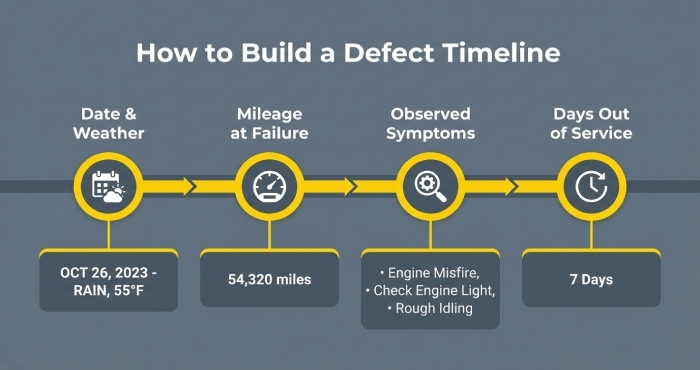
Hack #2: Build a Precise Defect Timeline and Mileage/Days-Out-of-Service Log
Maintain a day-by-day chronology of symptoms, mileage at each failure, and days out of service. Pair each entry with a specific vehicle repair order to show repeated, unresolved defects under warranty or extended warranty coverage.
Logging Essentials
- Date, mileage, weather/conditions, warning lights, and drivability notes
- Dealer name, repair order number, and actual downtime
- Service advisor statements or “could not duplicate” notes
- Cross-references to videos, OBD-II data, and TSBs/recalls
Evidence and Service Documentation
Hack #3: Demand Complete Repair Orders and Paper Trails at Every Service Visit
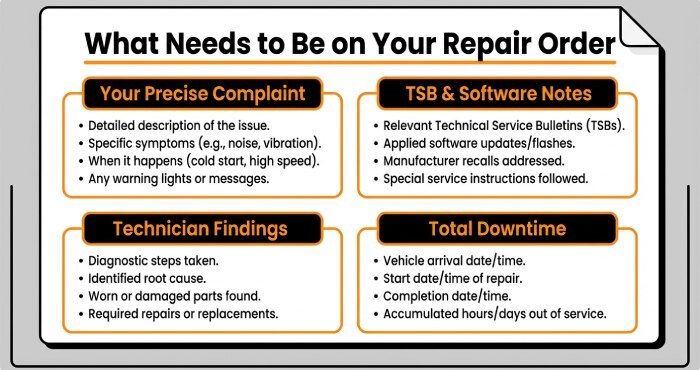
Insist on detailed, printed repair orders—don’t accept a vague paper form or a bare-bones email. Incomplete documents are a trap for the unwary and weaken a DIY Lemon Law record.
What Belongs on Every Repair Order
- Your precise complaint in your own words
- Technician findings, tests performed, and all parts replaced
- Software updates, TSB numbers, road-test notes, and mileage in/out
- Total days out of service and next-steps plan
Service Write-Up Checklist
- Confirm the VIN and odometer match your log
- Ask for line-item labor ops and part numbers
- Request copies of prior visits if the system “can’t find” them
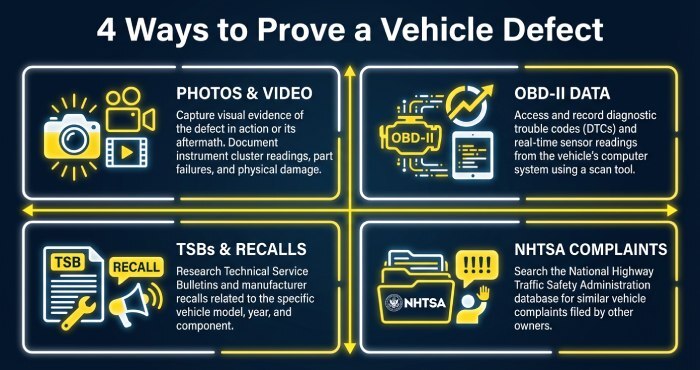
Hack #4: Document the Defect Like a Pro—Photos, Video, OBD-II Data, and Witness Statements
Use your phone and an OBD-II scanner to create a clear record. Short videos of the defect, freeze-frame codes, dash lights, and ambient conditions strengthen a lemon law claim.
Corroboration Matters
- Collect witness statements from passengers or service personnel
- Capture consistent conditions (cold start, highway speed, steep grade)
- Back up files in a cloud folder labeled for fast review
Hack #6: Use TSBs, Recalls, and NHTSA Complaints to Prove a Known, Repeated Issue
Technical Service Bulletins (TSBs), safety recalls, and NHTSA complaint data show the manufacturer knew (or should have known) of systemic problems. This evidence supports both liability and remedy.
Source and Cite
- Print or save TSB PDFs with publication dates and applicability
- Reference NHTSA campaign numbers and complaint IDs
- Note whether updates were attempted during vehicle repair
Quick Sources List
- OEM service portals and dealer printouts
- NHTSA.gov for recalls and consumer complaints
- Owner forums corroborating repeat symptoms (as supplemental context)
Trigger and Calculate Remedies
Hack #5: Trigger the Final Repair Opportunity with a Clear, Certified Demand Letter
Most Lemon Law statutes require giving the manufacturer a final chance to repair. Send a certified, return-receipt letter that sets a deadline and identifies the defect history.
What to Include
- VIN, in-service date, mileage, concise defect summary, and repair attempts
- Demand for relief: full refund or a substantially similar replacement vehicle
- Request for a safe loaner or replacement vehicle free of charge during further work
- Warning: do not sign any premature release of claims in exchange for diagnostics
- Cite fee-shifting provisions and your readiness for dispute settlement or arbitration
 lemon law buyback value” width=”700″ height=”370″ />
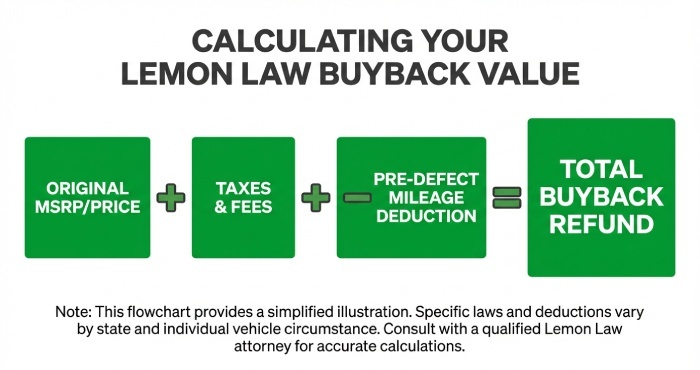
Hack #7: Calculate Your Buyback Value Using the Statutory Formula and Use-Offset
Most statutes compute a full refund using MSRP or purchase price plus taxes, fees, and incidental damages, minus a use deduction based on miles driven before the first substantial defect. Include financing charges and add-ons where permitted.
Formula Basics
- Start with MSRP or the actual purchase price, as your state requires
- Add sales tax, title, registration, and permissible incidental costs
- Subtract the use deduction tied to pre-defect miles
- Compare with a trade out or a replacement vehicle to see which refund option is best
- Evaluate the manufacturer’s offer against statute and your documents
Organize and Negotiate With Leverage
Hack #8: Create a Claims Binder and Digital Evidence Vault for Fast, Persuasive Review
Organize your lemon law claim like a trial exhibit set in Inglewood. An indexed binder and a synced cloud folder can speed up reviews by manufacturer customer service teams, outside counsel, or a state-certified dispute settlement panel in California.
Sections to Include
- Timeline and days-out-of-service summary
- All repair orders and invoices (chronological)
- Photos, video, OBD-II logs, TSBs/recalls/NHTSA complaints
- Demand letter, delivery receipts, and any settlement or case results references
Hack #9: Negotiate with Leverage—Fee-Shifting, Arbitration Programs, and Escalation Paths
Leverage comes from clean documentation, clear remedies, and statutory fee-shifting. Politely escalate from dealer to manufacturer customer service, then to corporate resolution teams. Consider a certified dispute settlement mechanism or arbitration if it improves timing while weighing the risk of an adverse decision in binding arbitration.
Leverage Points
- Cite statute of limitations and your intent to preserve all lemon law rights
- Compare outcomes: full refund versus replacement vehicle; confirm whether accessories and extended warranty refunds are included
- Reject any overbroad release of claims that exceeds your state’s Lemon Law
- If the manufacturer’s offer is low, present your calculation and a clean, paper form settlement draft you propose
To sum up, utilizing these DIY Lemon Law strategies can assist you in recording issues, managing repair documentation, and bolstering your consumer rights case. Nevertheless, seeking advice from a knowledgeable San Diego lemon law attorney can enhance your likelihood of obtaining a refund, replacement, or equitable settlement.