
What California Lemon Law Requires Manufacturers to Do
The California Lemon Law gives Consumers powerful remedies when a defective vehicle cannot be repaired within the limits required by law. These lemon law protections apply to many vehicles bought or leased in California, including a new car purchase, leased vehicle, demonstration vehicle, certain used vehicle purchases, and a certified pre-owned vehicle when covered by an active warranty or manufacturer warranty.
At the core of the California Lemon Law are manufacturer obligations. A Manufacturer must honor the vehicle warranty, provide warranty repairs, and, when the statutory requirements are met, offer a buyback, replacement vehicle, or other lemon law compensation. These manufacturer obligations are not optional, even when the Dealership tries to minimize the problem or delay the repair service.
These duties matter because many Consumers only interact with the selling dealer or service department and may not realize that the Manufacturer is often the party ultimately responsible for the warranty promise. If the vehicle cannot be restored to a safe, reliable, and conforming condition after reasonable repair attempts, the Manufacturer cannot simply keep sending the Consumer back for the same ineffective repair over and over again.
Covered Vehicles and Covered Defects
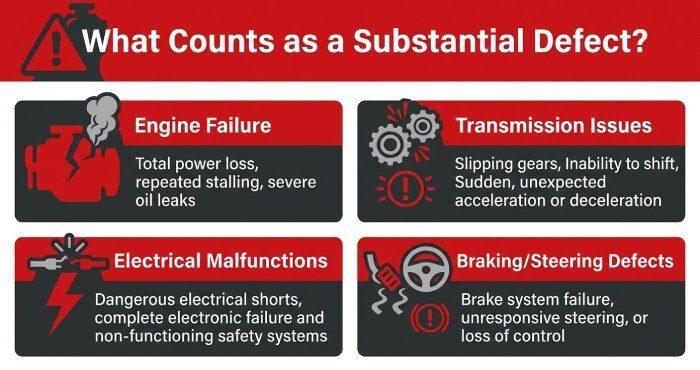
A lemon vehicle may involve serious vehicle defects such as engine failure, transmission problems, electrical malfunctions, steering issues, braking defects, or vehicle safety defects. The problem must generally be a substantial defect that affects use, value, or safety.
The California Lemon Law may cover:
- New cars, trucks, SUVs, and vans
- A used vehicle sold with remaining warranty coverage
- A certified pre-owned vehicle
- A leased vehicle
- Lemon RVs and motor homes
- A demonstration vehicle sold with warranty protection
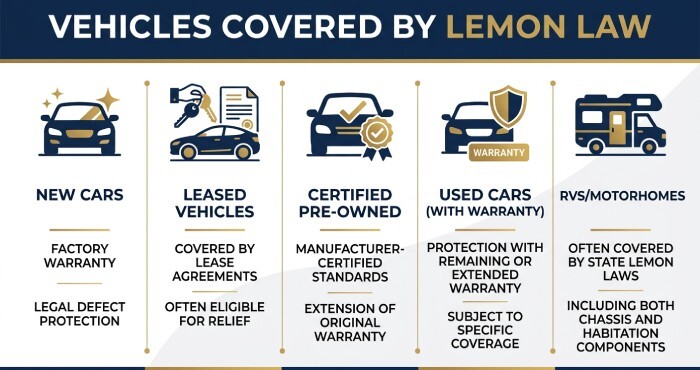
For motor home owners, consulting an rv lemon law attorney may be especially important because Lemon RVs often involve complex warranty, chassis, and coach-related repair issues.
The Manufacturer’s Duty to Take Warranty Complaints Seriously
A hidden obligation under the California Lemon Law is the duty to treat warranty complaints as more than ordinary customer service issues. When a Consumer reports recurring symptoms, warning lights, abnormal noises, safety concerns, or drivability problems, the Manufacturer and its authorized repair network should respond with appropriate diagnostic effort and repair support.
This is especially important when the defect is intermittent. Many lemon law disputes involve vehicles that fail unpredictably, such as a car that stalls only in traffic, a transmission that jerks after warming up, or an electrical system that shuts down without warning. A Manufacturer should not ignore a serious concern merely because the technician cannot duplicate the issue during a short road test.
Why Good-Faith Warranty Handling Matters
Good-faith warranty handling means the Manufacturer should investigate the complaint, authorize necessary repairs, communicate with the dealer, and track repeated concerns. When the same defect keeps appearing in repair orders, the Manufacturer may have notice that the vehicle is not conforming to warranty.
Consumers should pay attention to whether the dealer appears to be contacting the Manufacturer, opening technical assistance cases, ordering updated parts, or following service bulletins. These details may show whether the Manufacturer acted responsibly or whether the Consumer was left cycling through incomplete repairs.
A pattern of delay, denial, or superficial repair can become important evidence. If the Manufacturer had enough information to recognize that the vehicle qualified for relief, but still refused to provide a buyback or replacement vehicle, that conduct may support stronger legal remedies.
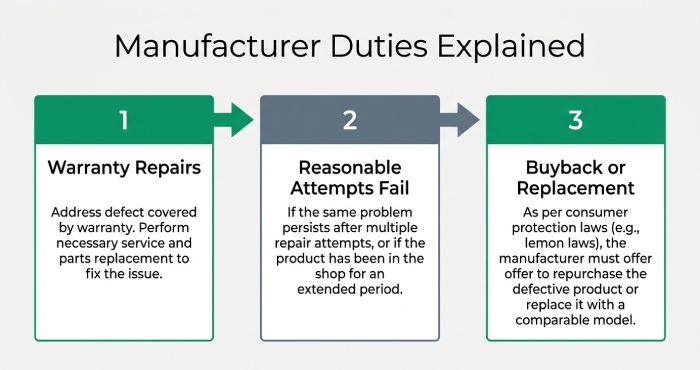
Warranty Repairs: Reasonable Opportunities, Timelines, and Documentation
Reasonable Repair Attempts Explained
Reasonable repair attempts depend on the nature of the defect. A serious safety issue may require fewer repair attempts than a non-safety defect. If the defective vehicle has been in the shop multiple times for the same issue, or out of service for an extended period, the consumer protection rules may favor the car buyer.
A lemon law lawyer can review repair orders, mileage, warranty terms, and the timeline of events to determine whether reasonable repair attempts have occurred. A lemon law attorney can also identify whether the dealer or manufacturer failed to follow required procedures during the legal process.
Why Repair Orders Matter
Every repair service visit should create a written repair order. This document should describe the complaint, diagnosis, mileage, dates, and repairs performed. Without documentation, the Manufacturer may argue that the lemon law claim lacks proof.
Consumers should keep:
- Repair invoices
- Warranty records
- Tow receipts
- Rental car receipts
- Communications with the Dealership
- Notes about recurring symptoms
When to Contact a Lemon Law Lawyer in California
Consumers should contact a lemon law lawyer as soon as the same defect keeps returning, the vehicle has been out of service for too long, or the Dealership cannot provide a lasting fix. Early attorney consultation can prevent mistakes that weaken a lemon law claim.
Signs You May Have a Lemon Law Claim
You may have a lemon law claim if:
- Your vehicle warranty is still active
- The same substantial defect has required repeated repair attempts
- The Manufacturer or Dealership keeps delaying repairs
- The vehicle has serious vehicle safety defects
- You bought a used vehicle or certified pre-owned vehicle with warranty coverage
- You are being offered repairs but not a refund or replacement vehicle
A california lemon law lawyer can provide a case review and explain the legal process, including whether the Manufacturer owes a purchase refund, replacement vehicle, or other lemon law compensation.
Local Help and Specialized Guidance
Drivers in San Diego, including military families and members of the U.S. Armed Forces, may need fast help when a defective vehicle disrupts work, commuting, or deployment-related obligations. Speaking with a lemon law attorney san diego can help clarify local filing strategy, dealer responsibilities, and California Lemon Law deadlines.