
When your car starts acting more like a burden than a benefit, it may be more than just bad luck—it could be a “lemon.” California’s Lemon Law Warranty empowers consumers to fight back, ensuring manufacturers are held accountable for persistent defects. With the guidance of experienced lemon law lawyers, drivers can turn frustrating repair cycles into rightful compensation or replacement. Understanding your rights is the first step toward reclaiming control of your vehicle—and your peace of mind.
What Qualifies as a “Lemon” in California
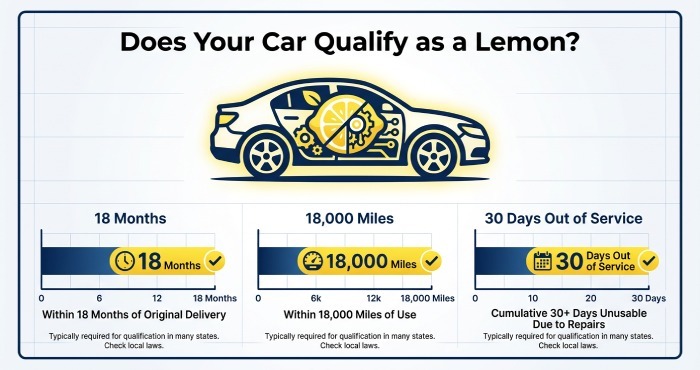
California’s Song-Beverly Consumer Warranty Act is a cornerstone of Warranty Law that protects buyers when a vehicle—a covered consumer product—fails to conform to an express warranty. A car is presumed a “lemon” when, within the first 18 months or 18,000 miles (whichever comes first), either:
- The warrantor or seller made at least two attempts to repair a serious safety defect, or four or more attempts to repair a recurring defect that substantially impairs use, value, or safety; or
- The vehicle was out of service for repair for a cumulative 30 or more days.
These are guidelines under state statutes, not absolute requirements; other timelines can still qualify.
- New vs. Used/CPO and “Pre-Owned Goods”: New vehicles typically come with extensive manufacturer-backed warranties, whereas used or Certified Pre-Owned (CPO) vehicles — and even secondhand items — may be eligible for certain protections if they come with a warranty or service plan, despite being sold “as is.”
- Types of Defects and Required Repair Attempts: For significant safety-related defects, fewer repair attempts are generally needed, whereas recurring problems must demonstrate a reasonable number of documented repair efforts to be valid.
- Time Frames and Extensions: While many assumptions focus on an 18-month period or 18,000 miles, claims can still be successful beyond these thresholds if backed by solid documentation, all within a standard four-year statute of limitations.
- Essential Concepts in Warranty Law: Warranty law encompasses express warranties, implied warranties of merchantability and fitness for a particular purpose, alongside regulations stipulated by the Uniform Commercial Code that clarify consumer rights and remedies.
- Key Roles – Warrantor, Seller, Merchant, Consumer: The party providing the warranty is known as the warrantor, while the individual or business selling the vehicle is the seller or merchant; the consumer is the end user who purchases it for personal use.
The Claim Process, Step by Step
A disciplined process maximizes your consumer rights and enforces the warrantor’s warranty obligations.
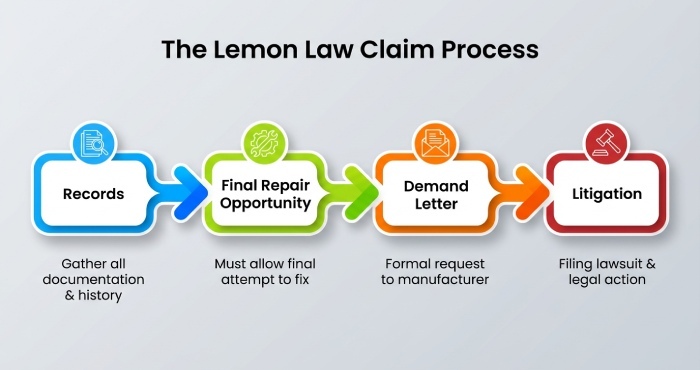
- Records to Preserve: Keep all documents pertaining to repairs, including orders, invoices, correspondences, and expense logs linked to the defect.
- Reporting Issues and Final Repair Opportunities: Contact the seller immediately and provide them with a chance for a final repair, unless safety concerns make this impossible.
- Demands, Mediation, and Litigation: Draft a demand letter, explore options for arbitration or mediation, and proceed with legal action if necessary for resolution.
- Timeframes and Expectations: The timeline for evaluating and resolving cases can differ, with arbitration typically being quicker than litigation.
- Loaner Vehicles/Reimbursement for Rentals: You might qualify for a loaner vehicle or reimbursement for rental costs as part of incidental damages.
Practical Playbook to Protect Your Claim
Turn strong facts into a strong file.
Communication Scripts and Recordkeeping
- At service check-in: “Please note that this is the third visit for the same stalling issue; I need a safety inspection and a loaner if the vehicle is kept overnight.”
- In writing to the warrantor: “This nonconformity substantially impairs use, value, and safety. Please confirm your final repair attempt date or proceed with repurchase/replacement under California Warranty Law.”
- Organize a timeline: Complaint, diagnosis, parts ordered, repair completion, days out of service.
Don’ts That Weaken Your Case
- Avoid modifications that create causation disputes.
- Don’t miss scheduled maintenance; the seller may argue misuse.
- Refrain from continuing to drive a dangerous defective product; document safety concerns immediately.
Negotiation Tips
- Leverage the Uniform Commercial Code’s remedies for breach of warranty alongside Song-Beverly.
- Cite the Magnuson-Moss Warranty Act when the warrantor fails to provide conspicuous disclosure or misstates warranty coverage.
- Compare offers as you would during comparison shopping—replacement versus refund—using total cost, taxes, negative equity impact, and downtime.
Choosing Counsel and Resources
- Experienced counsel can navigate mediation, arbitration, or litigation while maximizing attorneys’ fees recovery permitted by statute. For tailored guidance, you can consult specialized lemon law lawyers or work with a focused advocate, such as a Cadillac lemon law attorney in San Diego.
Post-Resolution Options: Replacement vs. Refund
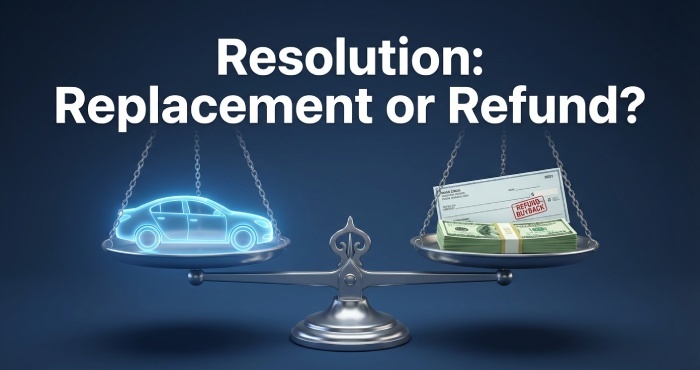
- Replacement: Ensure fitness for a particular purpose and merchantability with a fresh written warranty and no hidden limitation of warranties.
- Refund: Confirm buyback line items, including taxes, fees, and incidentals, and verify the mileage offset calculation.
Final Pointers on Broader Warranty Law
- It’s crucial to document express and oral warranty commitments in writing whenever feasible.
- The implied warranty of merchantability guarantees that a vehicle is suitable for standard driving conditions, while the fitness for a particular purpose applies when specific requirements are made known.
- If a written warranty or service agreement is in place, disclaimers of implied warranties could be rendered invalid if they contradict state laws.
- Warranty legislation dictates how warranty terms are enforced, whereas product liability deals with damages resulting from faulty products.
- If you encounter a roadblock in a dispute settlement mechanism, escalate under federal law with the FTC or consult a Lemon Law attorney or your state’s attorney general, as consumer protections like Magnuson-Moss apply across industries, with vehicles being high-value examples where state and federal rights converge.
If your vehicle becomes a “lemon,” the California Lemon Law offers protections so you don’t have to face the issue by yourself. By knowing your rights and taking swift action, you can confidently seek a repair, replacement, or refund. With appropriate legal support, even the most challenging car problems can lead to a just and positive outcome.