
Roadside assistance records can help document what happened before a vehicle reached a dealership or repair shop. California Lemon Law may protect consumers whose qualifying vehicles have defects covered by an applicable manufacturer’s warranty that substantially impair the vehicle’s use, value, or safety. Coverage depends on the vehicle, warranty, purchase or lease circumstances, and applicable law. Used vehicles and recreational vehicles may require additional analysis to determine which protections apply.
Record #1: Towing Dispatch Logs Showing When and Where the Vehicle Became Inoperable
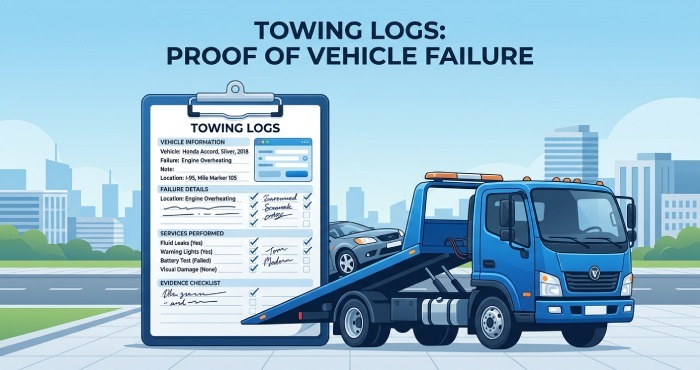
Towing dispatch logs can show when a lemon vehicle breaks down or becomes unsafe. They may include the date, location, vehicle details, reason for towing, and destination. In a California Lemon Law case, these records can support evidence of actual vehicle failures.
When combined with diagnostic reports, repair orders, and manufacturer communications, towing logs may help establish a pattern of defects. They can also support a lemon law lawyer’s response to claims that a problem was intermittent or could not be duplicated. However, towing logs alone do not prove a defect or manufacturer notice.
Record #2: Roadside Assistance Service Reports Describing the Reported Defect
Roadside assistance reports may document driver complaints, technician observations, and issues such as engine failure, brake problems, warning lights, or electrical defects. In a lemon law claim, these records provide timely evidence of a breakdown and help a lemon law attorney establish the repair timeline and show that the vehicle experienced problems while covered by the manufacturer warranty.
California Lemon Law claims may depend on whether the manufacturer or its authorized repair facility had a reasonable opportunity to repair a qualifying defect. If a roadside report describes the same symptoms documented in later repair orders, it may help establish a consistent timeline. However, a roadside assistance event does not automatically qualify as a manufacturer repair attempt. A california lemon law lawyer can review the evidence to assess potential remedies under applicable law.
Record #3: Jump-Start Records That Document Repeated Battery or Electrical Problems
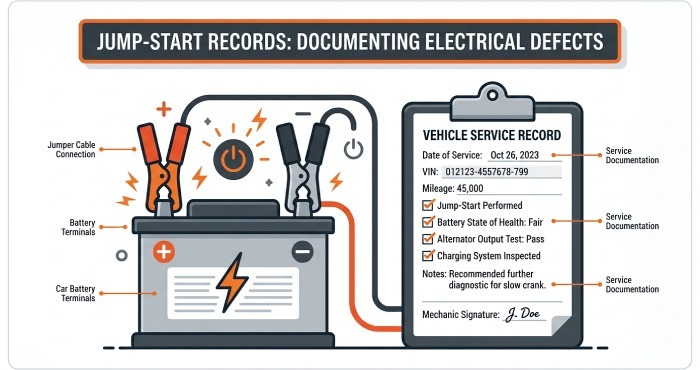
Jump-start records may help support a California Lemon Law claim when repeated battery failures point to deeper vehicle defects involving the charging system, alternator, starter, or electrical components. A lemon law lawyer can compare these records with repair orders and diagnostic notes from the dealer to show recurring problems covered by the manufacturer warranty.
These records may also show incidental expenses, missed work, rental needs, finance costs, and inconvenience caused by the defective vehicle. If you are seeking a case evaluation from a lemon law attorney san diego, bring jump-start logs, roadside assistance invoices, repair records, and communication with manufacturer representatives. A lemon law attorney can decide whether the documentation fits the lemon law process and the Song-Beverly Consumer Warranty Act.
Record #4: Flatbed Tow Receipts Connecting Breakdowns to Dealership Repair Visits
Flatbed tow receipts can show that a vehicle broke down and needed transport to a dealership. In a California Lemon Law claim, these records may help prove that the vehicle became inoperable.
When combined with repair orders, tow receipts can document the breakdown, inspection, and repair attempts. A lemon law attorney may use them during settlement negotiations or in Court to support evidence of recurring vehicle defects and loss of vehicle use.
Records #5 and #6: Safety, Reliability, Mileage, and Timeline Evidence
Record #5: Lockout, Fuel Delivery, or Winching Records That Reveal Safety or Reliability Issues
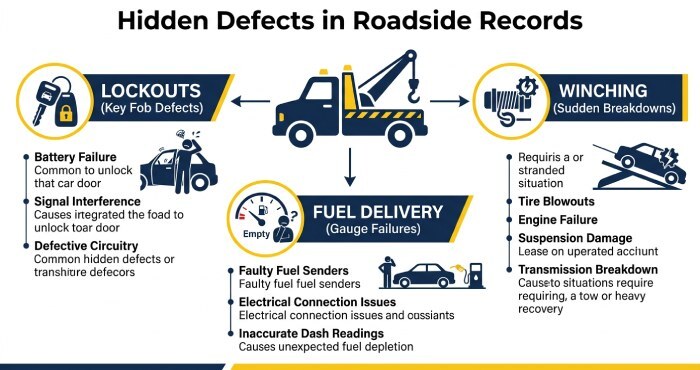
Lockout, fuel delivery, and winching records may reveal recurring vehicle reliability or safety issues, such as defective key fobs, fuel gauge problems, or sudden breakdowns. A lemon law attorney can compare these records with repair orders and manufacturer warranty coverage to determine whether the incidents relate to recurring defects reported to the authorized dealership.
For RV owners, roadside records may be especially important because a lemon RV can involve drivetrain, electrical, plumbing, slide-out, or safety systems. An rv lemon law attorney can assess whether the documentation shows reasonable repair attempts under California Lemon Law.
Record #6: Mileage and Date Stamps That Help Establish a Lemon Law Repair Timeline
Mileage and date stamps can help establish the chronology of a California Lemon Law claim. Warranty dates, repair attempts, and applicable filing deadlines may all matter. Roadside assistance records may show the mileage when a problem occurred, but warranty coverage should be verified against the warranty terms, purchase or lease documents, and other relevant records.
A lemon law attorney may build a timeline using the purchase or lease documents, roadside assistance logs, repair orders, diagnostic reports, and service history. This timeline can help assess the frequency of reported problems, the repair history, and the manufacturer’s response. Whether the evidence establishes the legal requirements for a claim depends on the specific facts and applicable law.
Records #7 and #8: Complaint Details and Out-of-Pocket Losses
Record #7: Customer Notes and Complaint Summaries Recorded by the Assistance Provider
Customer notes can preserve the driver’s original description of a vehicle problem before the Dealer shortens it in repair orders. These notes may record issues such as engine shutdowns, brake failures, transmission problems, or warning lights with power loss. This information can help document defects in a California Lemon Law claim.
A lemon law attorney may compare customer notes with repair orders to identify missing details or inconsistencies. These records may help show what the Consumer reported and how the Manufacturer or repair shop responded. Keeping clear, reliable documentation of warranty coverage, repair attempts, and vehicle defects can support the claim.
Record #8: Payment Receipts and Membership Records That Help Verify Out-of-Pocket Losses
Payment receipts and roadside membership records can help document expenses caused by a defective vehicle. These may include towing charges, roadside service fees, rental costs, rideshare expenses, hotel stays, and other related expenses. In a California Lemon Law claim, certain costs may be recoverable depending on the circumstances and applicable law.
Some Lemon Law attorneys offer contingency-fee agreements. California law may also allow eligible buyers to recover reasonable attorney fees and costs when legal requirements are met. Refunds, replacement vehicles, and civil penalties are subject to specific rules and are not automatic. A California lemon law lawyer can review the records, explain potential recovery, and assess how the warranty and applicable legal requirements affect the claim.