
Short answer: Yes—intermittent no-starts can support a lemon law complaint
If your motor vehicle won’t start consistently, you may be able to file a lemon law claim. Across most states, lemon law statutes are designed for consumer protection when a defective vehicle has a substantial defect that persists despite reasonable repair attempts during the vehicle warranty period. A no-start problem is a core reliability failure: motorists can’t commute, reach appointments, or safely exit dangerous situations. Because this defect impairs use, value, and safety, it commonly qualifies under state lemon laws.
Persistent no-start conditions can occur on new, leased, and sometimes used vehicle purchases that are still within warranty. Even if the issue is intermittent, thorough documentation and timely action are key. If you’re buying or selling a vehicle with a starting-system history, disclosures and accurate vehicle documentation also matter for consumer protection and future claims.
Why no-start issues meet the “substantial defect” standard
- Reliability and safety: An engine that frequently fails to start can strand motorists in unsafe locations. Consumer protection laws recognize this is not a minor annoyance.
- Value and utility: Repeated tow bills and missed trips reduce the vehicle’s value and use, justifying a lemon law complaint if the manufacturer or dealer cannot fix it.
- Warranty coverage: When a defect arises and is reported within the vehicle warranty, the manufacturer is obligated to complete effective repair attempts.
Why intermittent no-start problems often qualify under lemon laws
Even when a no-start is intermittent, it can meet lemon law thresholds if:
- The defect is covered by the written vehicle warranty.
- The dealer or manufacturer-authorized service center has multiple documented repair attempts, or the vehicle has accumulated days out of service.
- The problem substantially impairs the motor vehicle’s use, value, or safety.
Common root causes include electrical faults, sensor failures, ignition module issues, keyless start system defects, or battery/charging anomalies. If a manufacturer cannot duplicate the condition at every visit, your detailed logs, videos, and tow receipts can bridge the gap and support your lemon law complaint.
Manufacturer responsibility and diagnostic complexity
Manufacturers are responsible for warrantable defects and ensuring their dealer network follows proper diagnostic trees. Intermittent electrical or software faults can be complex; still, repeated “no trouble found” findings do not bar you from filing. Under most statutes and rules, what matters is the defect’s persistence and the adequacy and number of repair attempts, not whether it fails in the service bay every time.
What to document and how many repair attempts or days out of service are required
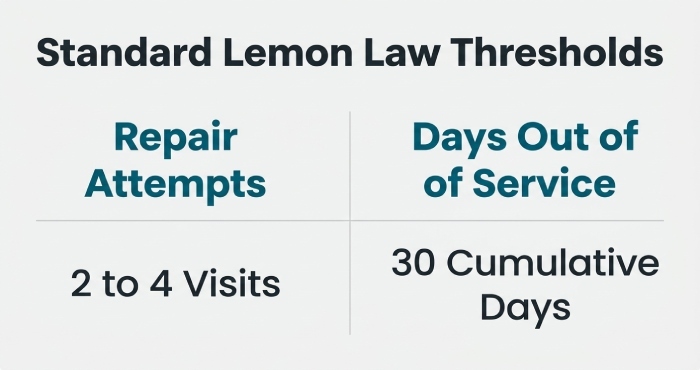
Requirements vary, but many states follow:
- Repair attempts: Typically 2–4 repair attempts for the same defect.
- Days out of service: Approximately 30 cumulative days for any defects during the eligibility window.
In California, the Department of Consumer Affairs administers the state’s Lemon Law through its arbitration and consumer protection programs. The law generally requires a reasonable number of repair attempts or substantial time out of service within the first 18 months or 18,000 miles (check current statutes and rules). Always verify the latest thresholds, forms, and online services before you file a lemon law claim.
What to save for your claim
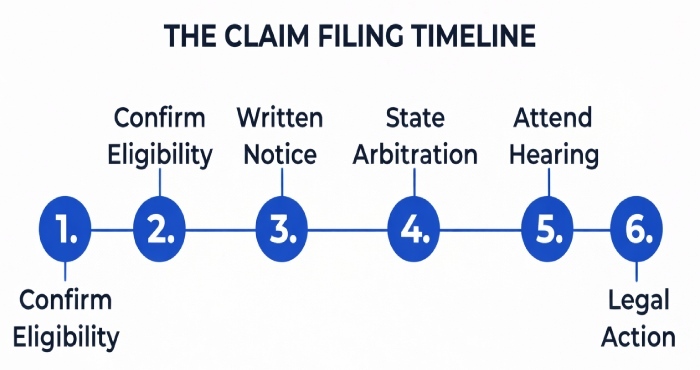
- Repair orders, warranty invoices, and tow receipts for every visit with dates and mileage.
- Photos/videos of no-start events and dashboard alerts.
- Records tying your identity to the car: vehicle title, vehicle registration, VIN, and proof of vehicle insurance.
Include dealer names and locations, and note whether any temporary permits were used if the vehicle was in transit or awaiting parts. If your vehicle purchase involves a vehicle transfer or if you are considering buying or selling a vehicle with an unresolved defect, preserve the chain of vehicle documentation and any copy of title or Title Check results.
Proof packet checklist
Core records
- All repair attempts for the same no-start concern; each repair order should list the VIN and the stated concern. Include any communications with the dealer and manufacturer and any complaints you submitted.
Event logs and media
- A dated log of each no-start with time, weather, miles, and what happened. Short videos proving symptoms when the dealer could not replicate are powerful in administrative hearings or arbitration.
Supporting paperwork
- Vehicle title, vehicle registration, vehicle license plates information, proof of vehicle insurance, and any Title Check or VIN Assignment records if the car had prior branding issues or unique vehicle history (for example, Assembled Vehicles or Abandoned Vehicles designations).
Key state-by-state differences: eligibility windows, new vs. used/leased vehicles, and warranty coverage
- Eligibility Period: Different states establish their own time or mileage constraints from the date of purchase or delivery, often allowing extensions if repairs are initiated during this period.
- New vs. Used/Leased Vehicles: Generally, most states provide coverage for new and leased cars, and some extend this to used vehicles that remain under warranty from the manufacturer. There are also specific guidelines for vehicles that are either imported or registered out of state.
- Exemptions: Certain types of vehicles, such as motorcycles or RVs, may be excluded in some states. Furthermore, temporary permits typically do not impact eligibility, though it’s important to verify local regulations.
California-specific process and resources (DMV & arbitration programs)
- The California Lemon Law is governed by the Song-Beverly Consumer Warranty Act, with numerous conflicts being addressed through arbitration avenues such as the Better Business Bureau AUTO LINE and monitored by the California Department of Consumer Affairs.
- The California Department of Motor Vehicles offers assistance with vehicle registrations, titles, and various licensing resources for the public.
- In cases of repair disagreements or alleged fraud, the California Bureau of Automotive Repair plays a key role in upholding regulations and addressing complaints related to automotive services.
Other state differences to watch
- Some states require you to first use the manufacturer’s dispute settlement/arbitration program.
- Remedies and caps vary by jurisdiction.
- Filing locations, fees, and hearing venues differ; always consult local consumer protection agencies or lemon law lawyers for jurisdiction-specific timelines and procedures.
How to file: steps from notifying the manufacturer to arbitration or court, plus deadlines
1. Confirm eligibility and timing
- Check your warranty booklet and state statutes and rules for eligibility windows tied to vehicle purchase or first use.
- Ensure the defect occurred and repair attempts began within the warranty period.
2. Notify the manufacturer and dealer in writing
- Send a dated letter or email describing the no-start defect, prior repair attempts, and your request for buyback or replacement. Keep copies.
- Ask for a final repair attempt if required by your state’s consumer complaint process.
3. Use required dispute settlement or state programs
- Certain states mandate or suggest utilizing a manufacturer’s arbitration program prior to pursuing legal action. In California, conflicts can be addressed through services such as the Better Business Bureau AUTO LINE for mediation or arbitration as outlined in the Song-Beverly Consumer Warranty Act. Thus, it’s crucial to act promptly and be aware of filing deadlines to safeguard your rights.
4. Prepare and submit your packet
- Include all repair attempts, vehicle title and vehicle registration, proof of vehicle insurance, VIN, Title Check, and any copy of title. If dealer closures complicate access to records, note this and use Dealer License Lookup or webDEALER data as substitutes.
- If documentation issues arise (vehicle transfer anomalies, title litigation, VIN assignment needs), contact the California Department of Motor Vehicles for guidance. Incident or tow records from the California Highway Patrol may also help if they are relevant to your case.
5. Attend the hearing or arbitration
Bring witnesses, logs, and videos. Be ready to explain how the defect impairs use, value, or safety.
Consider counsel—an experience lemon law attorney can help frame your evidence and preserve appeal rights.
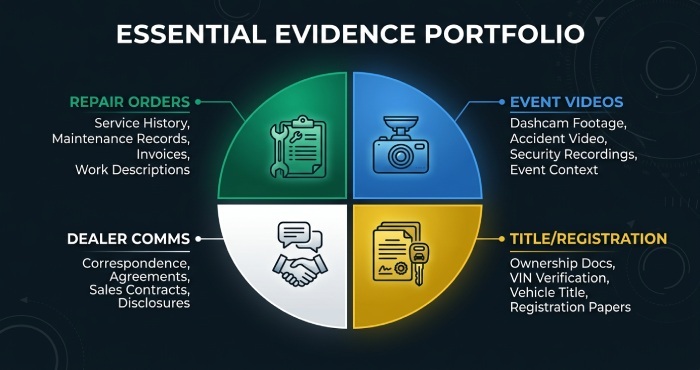
6. Court, if needed
If administrative remedies fail, you may proceed to court within the applicable statute of limitations. Consult a local lemon law attorney in San Diego or seek guidance through the State Bar of California if your case arises in California.
Remedies and alternatives: buyback or replacement, costs you can recover, and what to do if you don’t qualify
- Buyback: The manufacturer will reclaim your vehicle, deducting a usage fee, while you hand over the title and registration to facilitate the transfer back to them.
- Replacement: You might be provided with a similar replacement vehicle; however, it’s essential to check how taxes, fees, and license plates will be handled.
- Recoverable costs: Costs for services such as towing, rentals, and additional expenses could be reimbursed, and in certain situations, legal fees may also be recoverable if legally permissible.
If you don’t qualify under lemon law:
- Pursue warranty or breach-of-warranty claims: File under the Magnuson-Moss Warranty Act or Song-Beverly Consumer Warranty Act if your vehicle repeatedly fails to meet warranty standards.
- Negotiate with the dealer: Request goodwill repairs, buybacks, or trade assistance while ensuring full disclosure of prior issues to maintain compliance and trust.
- Inspect for prior damage or tampering: Check vehicle history with the California Department of Motor Vehicles and review theft or fraud concerns through the California Highway Patrol to identify title branding or past issues.
Practical tip: Whether you plan to file a lemon law claim or are preparing for buying or selling a vehicle after repairs, maintain a meticulous record trail—VIN-stamped repair orders, dated logs, and complete paperwork. That diligence strengthens any lemon law complaint under California’s Lemon Law or other state consumer protection programs and protects you in future transactions involving a motor vehicle.