
It’s a common frustration that you bring your vehicle in for persistent problems, only to receive a repair order marked “No Trouble Found” (NTF) or “Could Not Duplicate.” Manufacturers often argue that NTF entries undermine a lemon claim. In reality, NTF service records can be powerful evidence that you repeatedly sought warranty repairs, gave the dealership and manufacturer a fair chance to fix the defect, and endured days out of service. When organized correctly, NTF paperwork helps demonstrate notice, opportunity to repair, and nonconformity over time three pillars that many state lemon laws and warranty statutes require.
There is a useful legal reasoning analogy here. In Lemon v. Kurtzman, the Supreme Court analyzed the relationship between government and religion under the Establishment Clause of the First Amendment by applying a structured, three-pronged framework. While that constitutional “Lemon test” does not govern consumer lemon claims, the disciplined approach examining purpose, effect, and excessive entanglement mirrors how you should build an evidence record around NTF entries: clarify your purpose (what defect you reported), show effect (how it impaired use, value, or safety), and avoid confusion or “entanglement” in your narrative by keeping documentation clean, consistent, and corroborated.
What “No Trouble Found” Means and What Lemon Laws Actually Require
“NTF” means the service department did not confirm the symptom or did not identify a fault code during that visit. It does not mean “no defect exists,” nor does it erase prior or subsequent confirmations of the problem. Most lemon laws focus on:
- Whether the defect is covered by warranty.
- A reasonable number of repair attempts (often 2–4 for a serious safety issue, or more for non-safety defects).
- Or, a cumulative number of days out of service (commonly 30+ within the first 12–18 months or 12,000–18,000 miles, depending on the jurisdiction).

Even when a ticket reads NTF, it still counts as a repair attempt if you complained about the same condition and authorized diagnosis. The key is consistency: the same symptom reported across multiple visits, even with alternating “verified” and “NTF” outcomes, can establish repeated attempts and ongoing nonconformity.
How NTF Repair Orders Prove Notice, Attempts, and Days Out of Service
- Notice to manufacturer: NTF tickets document the date, mileage, and exact complaint, proving you promptly alerted the warranty provider.
- Attempts: Each NTF visit is still an “attempt” because technicians inspected and (at least purportedly) tested the vehicle. Courts and arbitrators often credit these as bona fide efforts.
- Days out of service: Whether diagnosed or not, the vehicle was surrendered for inspection. Accumulate the drop-off and pick-up timestamps to count total days out, which can trigger statutory presumptions in some states.
Practical example
If a transmission shudders intermittently, you could have five visits: two with confirmed codes and repairs, three marked NTF. Together, they show persistent defect reporting, multiple opportunities to repair, and recurring impairment enough to satisfy many lemon statutes’ thresholds.
Evidence You Can Gather to Strengthen NTF-Based Claims

Objective data sources
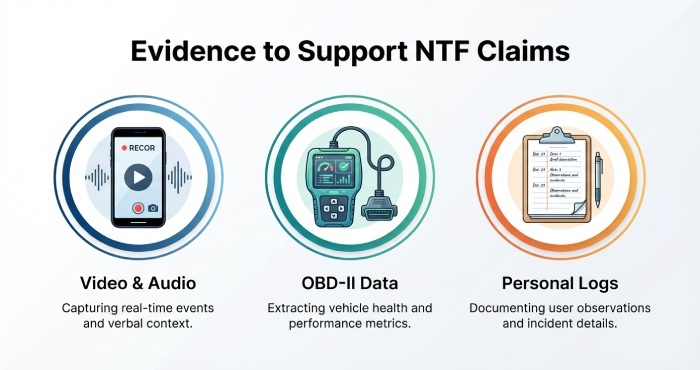
- Smartphone videos with audible narration (“Date, mileage, speed—vehicle shuddering under light throttle”).
- OBD-II scan reports or freeze-frame data where available.
- Telematics or dashcam logs showing warning lights, limp mode, or power loss.
Owner documentation
- A contemporaneous log listing dates, mileage, conditions (hot/cold, highway/city), and safety impacts.
- Receipts for tows, rentals, rideshares, and lodging when the vehicle is undriveable.
Third-party corroboration
- Independent mechanic assessments noting intermittent faults.
- Witness statements from passengers or coworkers who observed the condition.
Tie the symptom to impairment
- Detail how the issue affects use (e.g., can’t merge), value (deal-breaker for resale), or safety (stalling in intersections). This ties NTF complaints to statutory standards rather than just inconvenience.
Working with the Service Department to Create a Clear Paper Trail
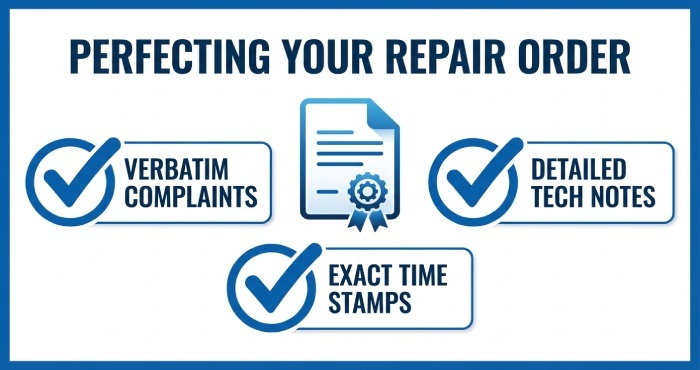
Ask advisors to transcribe your complaint verbatim, focusing on observable symptoms rather than diagnoses.
Exact words matter
- “Vehicle stalls when slowing to a stop after 15 minutes of driving; occurs 3–4 times per week” is far stronger than “car dies sometimes.”
Request full line items
- Ask for all technician notes, tests performed, road test distances, and any software versions or calibrations checked.
Time-stamped documentation
- Ensure in/out dates and mileage are recorded. A single-day NTF entry is still a day out of service; multi-day diagnostic holds add up quickly.
If a pattern of NTF repeats, escalate to the manufacturer’s regional representative and request a field technician ride-along. That step often converts “intermittent” into “verified.”
Legal Pathways: Using NTF Records in Arbitration or Court and Maximizing Remedies
Arbitration strategy
- Lead with a chronology. Present a timeline that interleaves NTF and verified visits, emphasizing consistency of the symptom and cumulative downtime.
- Highlight that NTF entries reflect attempts and notice, not the absence of a defect.
Litigation strategy
- In court, use technician depositions to establish standard diagnostic procedures and the limits of “no code, no problem” logic.
- Expert testimony can explain intermittent failures (thermal, software, or tolerance stack issues) and why NTF does not negate nonconformity.
Maximizing remedies
- Seek repurchase or replacement where statutes allow, plus incidental and consequential damages tied to rentals and tows.
Fee shifting and civil penalties
- Many statutes allow a prevailing consumer’s lemon law attorney to recover attorney’s fees, and in cases of willful manufacturer misconduct, courts may award civil penalties or enhanced damages; maintaining early and consistent NTF documentation can significantly strengthen settlement leverage.
A Useful Analogy: The Lemon Test and Evidence Building
The Supreme Court of the United States in Lemon v. Kurtzman evaluated whether certain Pennsylvania and Rhode Island programs violated the Establishment Clause of the First Amendment, the religion clause that governs the relationship between government and religion. Although that constitutional case concerns separation of church and state, its structured analysis offers a helpful model for organizing complex records like NTF service histories.
- Secular purpose: In Lemon v. Kurtzman, the Court asked whether the Pennsylvania statute and Rhode Island statute had a secular legislative purpose. In your vehicle claim, define the purpose of each visit: to remedy a safety-critical or usability problem, not to “test the system.” Repeat this secular purpose-like clarity in every complaint narrative.
- Primary effect: The Court also examined whether the primary effect of state funding advanced or inhibited religion in non-public schools (including non-secular schools). For your file, show the primary effect of the defect and how it impairs use, value, or safety through videos, logs, and repeated NTF entries that reflect continuing nonconformity.
- Excessive entanglement: The Court concluded that extensive government oversight of teachers’ salaries, instructional materials, and textbooks in elementary schools and secondary schools risked excessive entanglement between government and religion. By analogy, avoid an “entangled” record: keep one VIN-specific timeline, consolidate exhibits, and ensure consistent symptom descriptions across all visits to minimize confusion.
Contextually, the majority opinion by Chief Justice Warren E. Burger held the programs unconstitutional, with separate concurring opinion and dissenting opinion writings addressing nuances of government involvement, financial support, and government oversight of non-public schools.
The Pennsylvania Education Act and the Rhode Island Salary Supplement Act aimed at secular education support covering teachers’ salaries and certain secular instructional materials but the Court worried that sustained monitoring would foster an intimate and continuing relationship between government and religion, creating political implications and potentially politically divisive conflicts among citizens and taxpayers.
Figures such as Alton T. Lemon and David H. Kurtzman anchored the dispute, and Justices Hugo L. Black, William O. Douglas, Thurgood Marshall, William J. Brennan, Jr., Byron R. White, Potter Stewart, and Harry Blackmun engaged the issues under the United States Constitution.
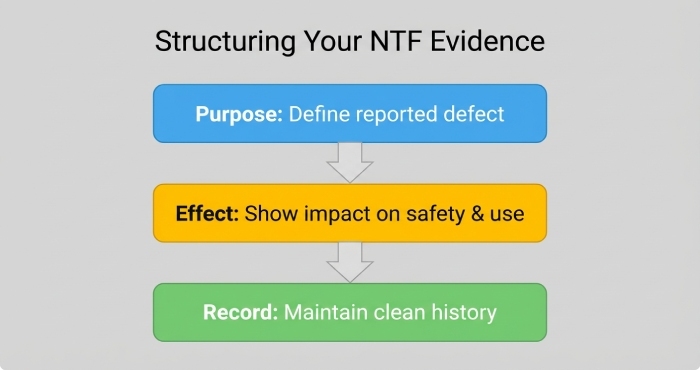
Lemon v. Kurtzman has been revisited in later cases, including Kennedy v. Bremerton School District, which refined how the Establishment Clause and the First Amendment are applied. Still, the vocabulary’s secular purpose, primary effect, and excessive entanglement remains a practical mnemonic for structuring evidence. Apply the same discipline to your NTF-heavy file: define the purpose of each visit, prove the effect through cumulative records, and prevent documentary entanglement.
Importantly, don’t conflate the constitutional doctrine about government and religion and state funding for non-public schools with consumer warranty standards; the analogy is about method, not legal authority. Your lemon case stands or falls on statutory elements like notice, attempts, days out of service, and persistent nonconformity not on church and state concerns or public funding debates about religious activities in a public school setting.
When to Call a Lawyer for NTF-Heavy Cases
If your service history shows multiple NTF entries for the same condition, escalating to counsel can help convert a scattered file into a persuasive claim. A knowledgeable Lemon Law Lawyer can audit your paperwork, align it with statutory presumptions, and prepare a demand that highlights both attempts and downtime.
Even when service records state “No Trouble Found,” they can still strengthen a lemon law claim by showing a clear pattern of ongoing complaints and repeated repair attempts. A Cadillac Lemon Law attorney San Diego can use these records to demonstrate that the issue persists despite multiple inspections, reinforcing the vehicle’s unreliability and supporting the argument that it fails to meet reasonable standards of quality and performance.