
When essential components for vehicles are put on an unending backorder, car owners may find themselves with inoperable vehicles and mounting financial strain. Lemon laws are designed to protect consumers from the lengthy repair hold-ups imposed by manufacturers. Knowing your rights can assist you in obtaining a refund, a replacement vehicle, or a satisfactory resolution when faced with unreasonably delayed repairs.
The parts-backorder problem and why it matters under lemon laws
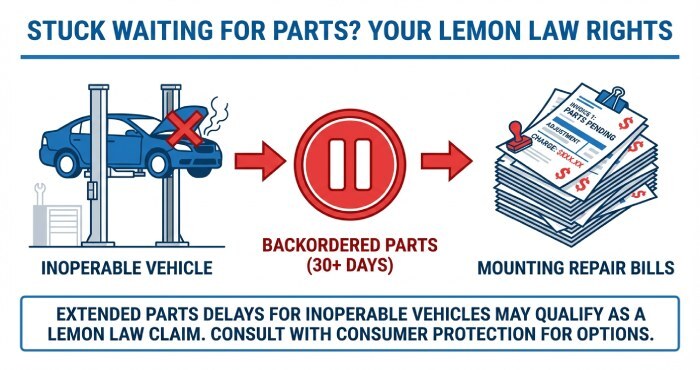
Backorders for essential vehicle parts have become a significant concern for car owners when crucial components fail, leading to long waits for replacements. This situation often renders vehicles inoperable, all while owners continue to make payments on loans and insurance. Most states have lemon laws that safeguard consumers, preventing manufacturers from evading accountability due to parts shortages.
Whether dealing with a transmission failure, an electric vehicle battery issue, or problems with a connectivity system, the pivotal legal consideration is whether the vehicle has undergone multiple repair attempts or experienced prolonged periods of inoperability while still under warranty. If either of these conditions is met, owners may be entitled to solutions such as a buyback, replacement, or financial compensation, even if delays stem from supply chain issues.
When delays count: days out of service and reasonable repair attempts during backorders
Every lemon law case is a unique case, but most statutes define two independent paths to relief:
- A set number of reasonable repair attempts for the same defect, or
- A threshold number of days out of service within the warranty period.
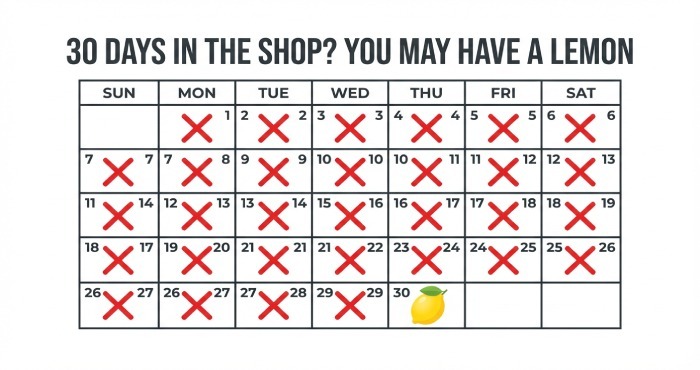
If a dealer opens a repair order, diagnoses the defect, and documents that the vehicle is undrivable pending a backordered part, those days usually count toward the out-of-service total—even if no wrench is turned. Manufacturer delay does not erase your lemon law rights. Some state laws, including the well-known California Lemon Law, specify hard numbers (for example, 30 cumulative days out of service or 2–4 repair attempts depending on severity). Others apply a “reasonable time” standard tied to consumer protection principles and safety.
Dealerships often argue that no “repair attempts” occurred until the part arrives. Courts and arbitrators typically reject that logic: a documented diagnosis and parts order is one of the repair attempts. Keep service history thorough, ensure the repair order notes “part on backorder,” and request a loaner. If the dealer refuses a loaner while your vehicle is grounded for safety or drivability, note that refusal in writing to strengthen any future complaint or arbitration claim.
Tracking out-of-service time vs. calendar time
- Out-of-service time generally begins when you tender the vehicle to the dealer and a repair order is opened.
- Time can continue to accrue while you wait at home if the dealer instructs you not to drive due to safety, or if the vehicle is inoperable.
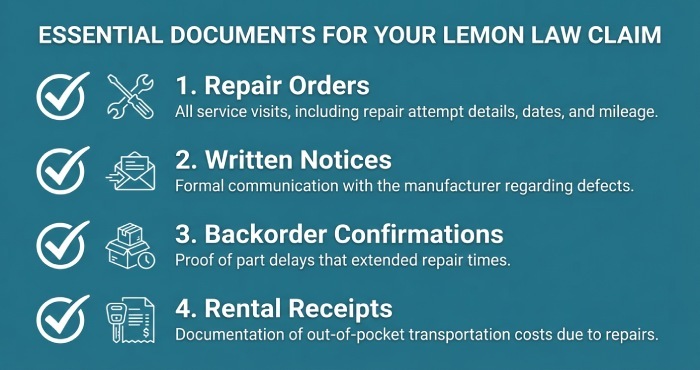
- Keep all documents: repair orders, parts backorder confirmations, emails, and any text messages from the dealership or manufacturer.
Your remedies if parts never arrive: buyback, replacement, reimbursements, and loaner coverage
If the delay crosses statutory thresholds, lemon law remedies come into play:
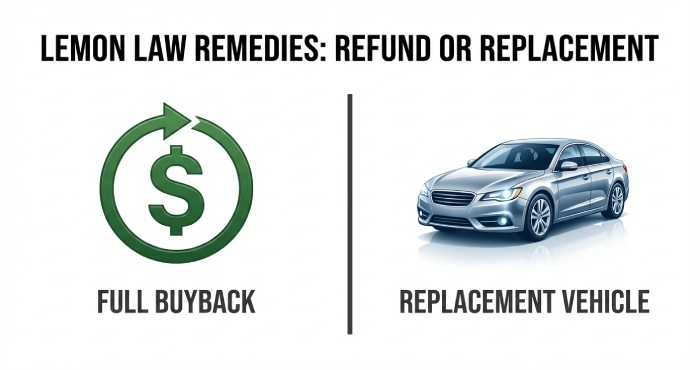
- Buyback (repurchase): The manufacturer refunds the purchase price (less a mileage offset in some jurisdictions), plus taxes, fees, and finance charges. A buyback is common where safety defects or powertrain failures persist.
- Replacement vehicle: Many statutes allow you to choose a comparable replacement vehicle rather than a refund. This can be attractive when market prices are high and ordering a new vehicle would otherwise take months.
- Reimbursements and incidental damages: You may recover towing, rental, loaner, and other out-of-pocket costs tied to the defective vehicle.
- Cash settlement: In some cases, parties agree to a cash settlement to compensate for diminished value and inconvenience, especially if repair becomes available near the threshold.
Manufacturers sometimes offer a goodwill refund or partial settlement to avoid litigation. Evaluate case posture carefully with an attorney before accepting; a hurried settlement can undercut stronger buyback or replacement rights.
What qualifies as a comparable replacement vehicle
Comparable generally means the same or similar model, trim, and equipment. If your SUV had advanced driver assistance, AWD, and a premium package, the replacement vehicle should match those features. If the exact build is unavailable, you may negotiate upgrades or a price adjustment to reach a fair resolution.
Loaner and rental coverage details
Ask the dealer for a loaner in writing and keep the response. Many warranties and internal policies require the dealer or manufacturer to provide a loaner or reimburse reasonable rental charges when the vehicle is unsafe or inoperable. If you pay out of pocket, save receipts to support reimbursement or to claim as incidental damages within a buyback or refund.
In a buyback or refund, ensure the settlement includes sales tax, title, registration, and reasonable incidental damages documented with receipts. Don’t overlook negative equity on a trade, GAP, or extended service contracts; these may be recoverable depending on the warranty terms and your state’s lemon law process.
Building a winning claim: documentation, notices, timelines, arbitration, and attorney fee-shifts
Strong claims rest on strong documents. Maintain:
- Service history and all repair orders
- Written notices to the dealer and manufacturer
- Parts backorder confirmations and estimated arrival dates
- Loaner/rental records and receipts
Many statutes require giving the manufacturer one final chance to fix the defective vehicle. Send a dated notice to both the dealership and the manufacturer’s customer care. Timelines matter: file a complaint, demand arbitration, or pursue civil action before statutes of limitation run.
Arbitration options vary. BBB AUTO LINE (administered by BBB National Programs) handles disputes for several automakers, including Ford and others, and is designed for quicker resolution through mediation and arbitration. If informal mediation fails, you may pursue litigation or a class action when many consumers face identical defects. Under fee-shifting provisions found in many state laws and the federal Magnuson-Moss Warranty Act, a prevailing consumer can recover reasonable attorney fees and costs making legal representation more accessible. That’s why consulting a lemon law attorney early is wise; many will evaluate case strength at no charge.
For tailored guidance, consider contacting a Portland lemon law lawyer or a regional advocate who knows local state attorney general guidance and court tendencies. If you are in Southern California, a skilled lemon law attorney can explain whether to press for buyback, a replacement vehicle, or a cash settlement. National directories such as the National Lemon Law Center, led by attorneys like Alex Simanovsky, can connect you to counsel nationwide.
Some consumers Wes, Jordan R., and Thomas B., to name examples commonly seen in public testimonials have reported faster resolution once counsel got involved. If you prefer to compare firms first, review organizations linked to BBB National Programs, though note that other divisions there, like NAD (National Advertising Division) and the National Advertising Review Board, handle advertising disputes rather than vehicle warranty claims.
For a quick primer or second opinion, you can also explore lemon law lawyers and general resources about the lemon law process and litigation steps before you proceed.
State-by-state nuances and edge cases: used vehicles, RVs, recalls, supply-chain excuses, and the Magnuson-Moss backup
- Used vehicles and RVs: Some state laws cover only new consumer products, but others extend lemon law protection to used vehicles or motorhomes with remaining warranty. Read your state’s statute closely.
- Recalls vs. individual defects: A recall-related fix on backorder can still count toward out-of-service days if it renders the vehicle unsafe or undrivable. The manufacturer cannot rely on a recall queue to indefinitely delay buyback or refund obligations.
- Supply-chain defenses: Manufacturers may argue force majeure or industry-wide shortages. Most lemon law frameworks focus on consumer protection and the warranty promise; chronic delay still supports a buyback or replacement vehicle once thresholds are hit.
- Magnuson-Moss Warranty Act: If state lemon law eligibility is unclear such as for used cars or when repair attempts span outside rigid timelines the federal Act provides a strong backup for breach of warranty claims, including attorney-fee recovery.
- Portland Lemon Law Lawyer and California specifics: Oregon and the California Lemon Law both recognize excessive out-of-service time. A Portland Lemon Law Lawyer will focus on Oregon’s notice and remedy triggers, while California practitioners emphasize statutory presumptions tied to 30 cumulative days. Either way, document multiple repairs and insist the dealer open a repair order every time you present the car.
If negotiations stall, you can file a lemon law claim, seek arbitration, or pursue legal action, though many cases settle after a formal demand letter.
When essential vehicle components are put on indefinite backorder, it can leave you stranded with unreliable transportation and no straightforward solution. This is where Lemon Law protections come into play holding manufacturers accountable for unreasonable delays that hinder your vehicle’s proper repair. Instead of enduring a prolonged wait, you’re entitled to seek a replacement or a refund if your car can’t be repaired in a timely manner
Engaging a skilled Lemon Lawyer San Diego can significantly assist you in managing these challenges. An experienced attorney knows how to document delays, demonstrate manufacturer non-compliance, and advocate for the compensation you are entitled to. Rather than managing this situation by yourself, Lemon Law empowers you to take action and confidently work toward a fair resolution, transforming a frustrating backorder issue into a just legal outcome.