
When individuals purchase a vehicle, they anticipate that it will be dependable, safe, and justifiable in terms of its price. However, if the car proves to be faulty — a “lemon” — it can result in frustration, ongoing repairs, and significant inconvenience, often affecting emotional well-being.
As a result, many people wonder if they can receive compensation for emotional distress under California Lemon Law. Although emotional suffering is acknowledged in various legal contexts, it typically isn’t directly claimable in Lemon Law cases, although it may still indirectly influence the overall situation.
Understanding California Lemon Law Remedies
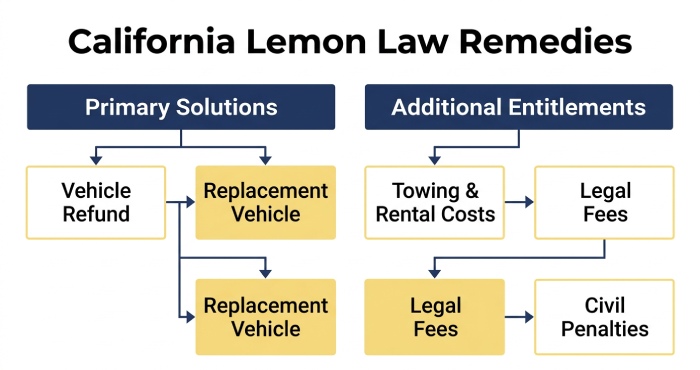
California’s Lemon Law, officially referred to as the Song-Beverly Consumer Warranty Act, aims to safeguard buyers and lessees of faulty vehicles. If a manufacturer fails to fix a defect after a sufficient number of attempts, the law generally offers two main solutions:
- Refund for the vehicle (buyback)
- A replacement vehicle
Furthermore, consumers are entitled to receive:
- Additional costs incurred (such as towing and rental fees)
- Legal fees and expenses
- Civil penalties in cases of intentional violations
These solutions primarily address financial losses, representing quantifiable economic damage associated with the defective automobile.
Emotional Distress: Recognized but Limited
In California, emotional distress is recognized as a significant type of non-economic damages, typically seen in personal injury or negligence lawsuits. This can encompass feelings such as anxiety, frustration, humiliation, and a diminished enjoyment of life.
On the other hand, claims under the Lemon Law are distinct. They stem from warranty breaches, categorizing them as contract claims rather than tort claims related to injuries. This difference results in a more restricted range of available damages.
General Rule: Not Recoverable
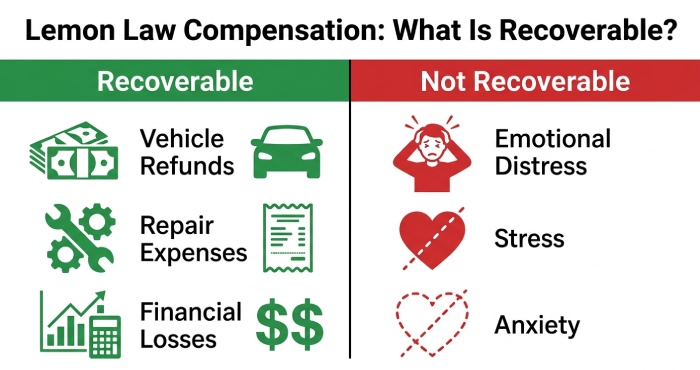
- California courts have consistently ruled that emotional distress damages are not recoverable under Lemon Law.
- Cases like Kwan v. Mercedes-Benz and Bishop v. Hyundai confirm that compensation is limited to financial losses and statutory remedies.
- You cannot receive extra compensation solely for stress, anxiety, or frustration caused by a defective vehicle.
- Emotional suffering alone does not increase the value of a Lemon Law settlement.
Why Emotional Distress Is Excluded
Emotional distress damages are generally not available under Lemon Law because it is based on warranty and contract principles, not personal injury. The economic loss rule limits recovery to financial losses unless there is physical injury or property damage. As a result, courts typically restrict compensation to remedies like refunds, replacements, or repair-related costs.
- Refunds
- Expenses related to repairs
- Financial losses associated with the defect
This ensures that Lemon Law is treated as a statute for consumer protection rather than a personal injury law.
The Indirect Role of Emotional Distress
Demonstrating “Substantial Impairment”
To win a Lemon Law case, a consumer must prove that the defect significantly limits the vehicle’s usability, worth, or safety. This requirement encompasses both objective facts and personal experiences. Courts permit consumers to share their personal accounts — including feelings of anxiety, inconvenience, and frustration — to illustrate how the defect has influenced their everyday lives.
For instance:
- A driver may completely refrain from using the car due to a fear of stalling on the highway.
- Frequent breakdowns can interfere with work obligations, family duties, or travel plans.
- A decline in trust toward the vehicle can lower its perceived value for the owner.
These emotional and practical effects aid in conveying the seriousness of the defect, even if they don’t qualify for distinct compensation.
Civil Penalties: A Potential Substitute
Although emotional distress cannot be compensated, California Lemon Law offers an effective solution through civil penalties. If a manufacturer intentionally neglects its responsibilities — like refusing to buy back an eligible vehicle — courts have the authority to impose penalties of up to twice the actual damages suffered by the consumer.
These penalties function similarly to punitive damages:
- They penalize unethical behavior
- They discourage manufacturers from disregarding consumer rights
In certain instances, the difficulties and frustrations faced by the consumer — though not directly compensable — can illustrate the manufacturer’s bad faith or intentional misconduct, thereby bolstering a claim for increased penalties.
Are There Any Exceptions?
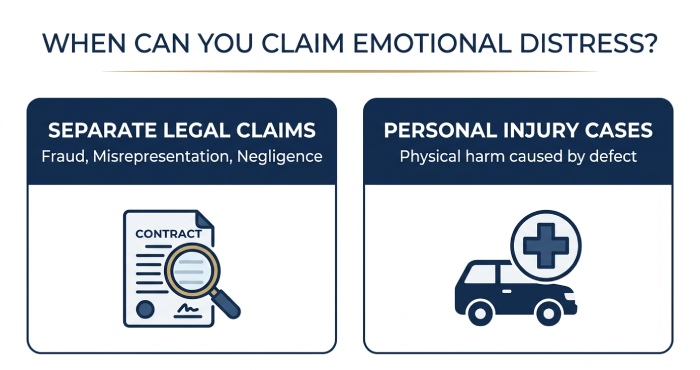
1. Separate Legal Claims
When a consumer files a Lemon Law claim and adds other allegations like fraud, misrepresentation, or negligence, they may be able to claim emotional distress damages based on those distinct legal grounds. For instance, if a manufacturer intentionally hid a serious defect, pursuing a fraud claim could allow for a wider range of damages, including emotional suffering.
2. Personal Injury Cases
When a vehicle defect leads to physical harm, the situation could transition from solely a Lemon Law issue to a personal injury case. In these instances, it may be possible to claim damages for emotional distress as part of suffering. Nonetheless, these occurrences are quite uncommon in typical Lemon Law cases.
Practical Implications for Consumers
What to Anticipate
- A refund or a replacement vehicle
- Reimbursement for personal expenses incurred
- Potential civil penalties for intentional violations
- Coverage of attorney fees by the manufacturer if you prevail
What to Avoid Expecting
- Specific compensation labeled as “emotional distress”
- Payment solely for inconvenience or frustration
That said, your personal experiences are still significant. The stress and disruptions caused by a faulty vehicle can bolster your case, even if they don’t directly lead to an increase in your financial compensation.
Strategic Considerations
Skilled Lemon Law lawyers frequently employ emotional appeal in a calculated manner, all while adhering to legal guidelines. They craft narratives that illustrate the real-life consequences of defects, emphasize the difficulties faced by consumers to strengthen their negotiating position, and argue instances of intentional wrongdoing by manufacturers. Thus, emotional suffering is utilized as a powerful persuasive element, rather than merely presenting a separate claim for damages.
Conclusion
So, is emotional distress ever compensable in California Lemon Law cases?
In most situations, the answer is no. Lemon Law claims are based on contract and warranty principles, not personal injury, so direct compensation for emotional distress is generally not available.
That said, emotional distress is not entirely irrelevant. It can still help:
- Show substantial impairment of the vehicle
- Support arguments of willful misconduct by the manufacturer
- Strengthen the overall case narrative
A skilled Lemon Law attorney San Diego CA can use these factors strategically. While you may not receive separate compensation for stress or frustration, the emotional impact of dealing with a defective vehicle can still meaningfully influence the outcome of your claim.