
When your car constantly breaks down and repairs don’t hold, it’s easy to start pointing fingers: should you blame the dealership for inadequate repairs or the manufacturer for creating a faulty vehicle? Lemon law cases frequently revolve around this dilemma, but identifying the responsible party isn’t always straightforward. Grasping the distribution of liability is crucial in determining whether your complaint will lead to a successful buyback or replacement, and this begins with understanding the underlying arguments and responsibilities involved.
The Lemon Law Blame Game: Who Really Owns the Defect—Dealer or Manufacturer?
The legal definition of responsibility under California Lemon Law
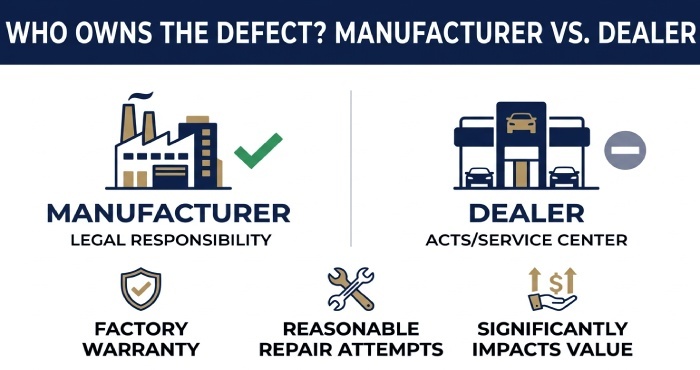
According to California Lemon Law, the manufacturer is typically held accountable for a faulty vehicle, rather than the dealer, as long as the problem occurs within the factory warranty period and remains unaddressed after several reasonable attempts to fix it. The legislation focuses on the entity responsible for the vehicle’s design and manufacturing, while dealerships primarily serve as authorized service centers.
Manufacturers may attempt to deflect responsibility by citing misuse, modifications, or mistakes made by dealers; however, they are generally liable if the defect significantly impacts the vehicle’s usability, value, or safety and is not resolved.
To qualify for protection under this law, you must have valid warranty coverage and well-documented, ongoing repair issues—not just general dissatisfaction with the vehicle—something a San Diego Lemon attorney will emphasize when evaluating your claim.
Where Liability Typically Lies Under Lemon Laws: Manufacturer vs. Dealer Roles
| Aspect | Manufacturer | Dealer |
| Role | Handles warranty defects | Performs repairs |
| Liability | Primary for factory defects | Only if negligent |
| Obligation | Fix within reasonable attempts | Repair properly |
| Remedies | Buyback, replacement, cash | Separate service claims |
| Key Point | Main responsible party | Secondary, limited role |
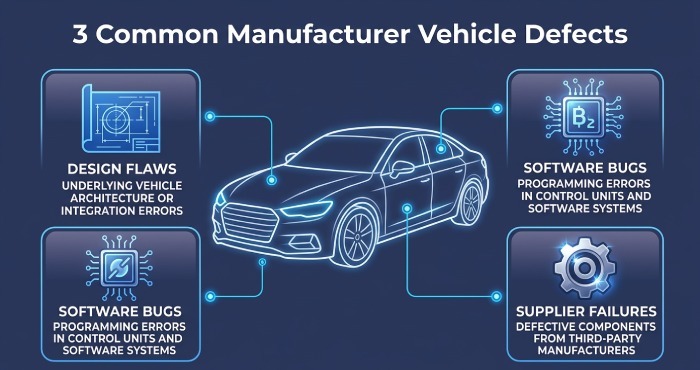
Common Manufacturer-Caused Defects: Design Flaws, Software/ECU Bugs, and Supplier Component Failures
How factory-origin problems show up in the real world
Many lemon law claims stem from defects seeded upstream. Design flaws can create chronic brake pulsation, premature battery drain, or structural issues that compromise crash performance—a clear safety hazard. Software or ECU bugs can cause erratic shifting, stalling, or sudden loss of power steering, again implicating safety and triggering warranty repairs. Supplier component failures—faulty fuel pumps, airbag inflators, or sensors—often generate TSBs and recalls that signal a widespread, factory-level problem rather than isolated dealer errors.
Red flags that suggest a manufacturer-caused defect
- Repeat symptoms after multiple repair attempts with the same or updated parts
- A cascade of related diagnostic trouble codes that persist despite software flashes
- Known issues documented across forums, TSBs, or regulatory databases
When these patterns appear under a valid factory warranty, the weight of liability shifts decisively to the manufacturer, regardless of which dealership performed the work.
TSBs, Recalls, and Engineering Case Files: Signals the Problem Starts at the Factory
Why TSBs and recalls matter in proving manufacturer responsibility
Technical Service Bulletins (TSBs) and recalls are powerful evidence in lemon law claims. They show that the auto manufacturer is aware of patterns of failure and has issued standardized fixes or safety interventions. TSBs and recalls connect a defective vehicle to a known factory-origin issue, bolstering arguments that the vehicle defect is not the result of car owner abuse or dealer-level mistakes. They also help establish substantial impairment and a safety hazard where the issue affects braking, steering, airbags, or drivetrain integrity.
Engineering case files and corporate knowledge
Manufacturers maintain engineering case files and field reports that track real-world failures, parts revisions, and software patches. Where available through discovery, these documents rebut manufacturer defenses by demonstrating knowledge of a systemic defect and repeated, unsuccessful warranty repairs or design iterations. Combined with your repair history, they can be pivotal in achieving a favorable outcome such as a vehicle buyback or replacement vehicle.
Building Your Claim: Documentation, Repair Attempts, and Evidence to Prove Manufacturer Responsibility
A step-by-step claim process anchored in evidence
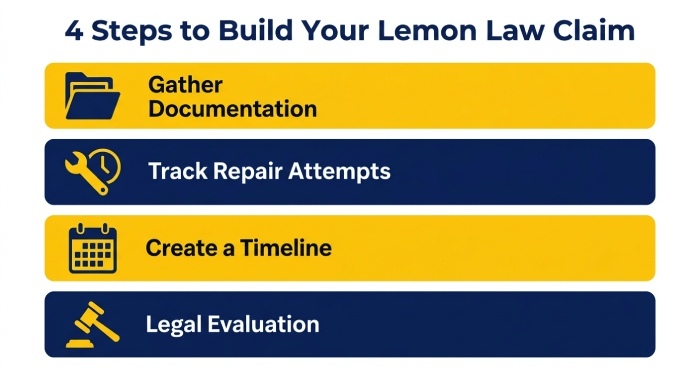
Lemon law claims succeed when you gather documentation thoroughly. Keep every work order, warranty repair invoice, and technician note. Track your failed repair attempts, nonconsecutive days in repair, and any safety hazard incidents such as sudden loss of power or brake failure. Create a chronology that ties the vehicle defect to the factory warranty period. If the warranty expired after you began pursuing repairs, highlight the earlier dates to preserve your rights under California consumer protections.
Early case evaluation and merit evaluation with a legal team can help you anticipate manufacturer defenses involving aftermarket modifications or alleged misuse. A seasoned Lemon Law attorney will align your facts with California lemon law criteria, ensure the legal definition of a qualifying defect is met, and prepare your claim for negotiation or litigation across big-ticket items like engine, transmission, steering, and brake systems.
Remedies and valuation: buyback, replacement vehicle, or cash settlement
If you meet lemon law eligibility, your legal remedy typically involves:
- Buyback (vehicle buyback): The manufacturer repurchases the car, accounting for vehicle value and a mileage offset.
- Replacement vehicle: A comparable new car, often appealing when inventory and options align.
- Cash settlement: Compensation to reflect diminished value and inconvenience, sometimes paired with extended warranty coverage.
Expect the auto manufacturer to raise manufacturer defenses—asserting that repair attempts were insufficient, that aftermarket modifications caused the issue, or that the problem doesn’t rise to substantial impairment. Your documented warranty repairs, TSBs, and recall evidence counter those narratives and support a favorable outcome.
Evidence checklist for a stronger claim
- All repair attempts and dates, including nonconsecutive days in repair
- Copies of TSBs/recalls matching your VIN and symptoms
- Photos/videos demonstrating the safety hazard or intermittent failure
- Proof that issues began under factory warranty
- Notes about any modifications, who performed them, and timing
- Communications with the dealership and manufacturer case numbers
For added guidance, consumers frequently turn to trusted resources and legal professionals throughout California, including Young & Young APC and Lemon Law Pro, as well as statewide organizations that provide clear explanations of California Lemon Law fundamentals. To better understand your situation, consider scheduling a case evaluation to explore your options with experienced lemon law attorneys.