
Purchasing a used police vehicle might initially appear to be a cost-effective choice, but these cars frequently come with significant mechanical and electrical issues due to extensive use. Factors like prolonged idling, harsh driving, frequent repairs, and degraded parts can result in defects that emerge shortly after acquisition. If these problems consistently impact the safety, value, or functionality of the vehicle, they could invoke rights under state lemon law provisions.
Why Former Police Cars Carry Higher Defect Risks
Former police cars may look affordable, but they often experience extreme wear from long idling hours, hard acceleration, aggressive braking, and constant use of electronic equipment. Even with low mileage, these vehicles may have hidden mechanical problems that affect safety, value, and reliability.
Whether a retired police vehicle qualifies under lemon law depends on state law and warranty coverage. If the car was sold with a manufacturer warranty, dealer warranty, or written warranty and develops repeated defects that cannot be repaired, buyers may still qualify for lemon law remedies such as a refund or replacement vehicle.
Common Hidden Mechanical and Electrical Problems in Retired Police Vehicles
Former police cars often develop problems that are not obvious at delivery date. A buyer may notice smooth performance at first, only to face repeated repairs weeks later. Common hidden issues include transmission slipping, cooling system failures, worn suspension components, premature brake wear, engine overheating, oil leaks, alternator failure, battery drain, and wiring faults left behind after removal of police equipment.
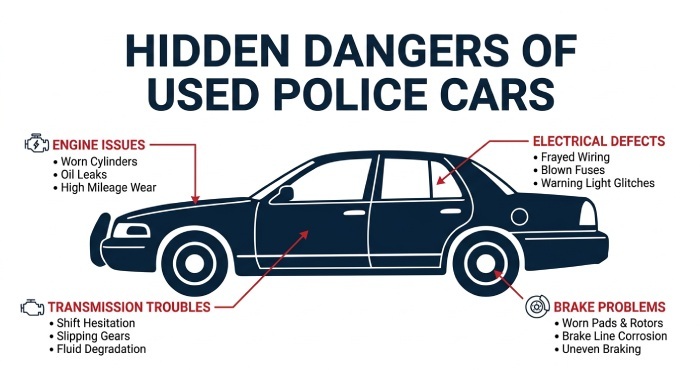
Electrical problems are especially common. Police vehicles may have been modified with light bars, sirens, radios, laptop mounts, spotlights, additional fuse panels, and aftermarket wiring. When these systems are removed, improper repairs can leave exposed wires, parasitic battery drains, warning lights, disabled airbags, malfunctioning sensors, or intermittent starting issues. A defect that appears minor can become a safety concern if the vehicle stalls in traffic or loses power steering.
A former police SUV may also have suffered from hard curb impacts, frame stress, damaged mounts, or excessive wear to steering and suspension systems. Even if the dealer advertises the vehicle as “well maintained,” fleet maintenance records may not reveal every repair period, repair bills, or the parts covered by prior service. Some buyers discover that prior repairs were temporary fixes rather than complete repairs.
How Prior Fleet Use, Modifications, and Repairs Can Affect Lemon Law Claims
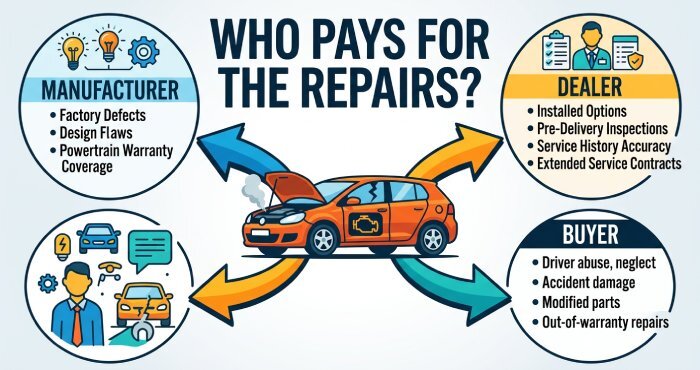
Prior fleet use can complicate a lemon law claim because the dealer, manufacturer, and buyer may disagree about what caused the defect. The manufacturer may argue that aftermarket police modifications caused the problem, while the dealer may say the issue is normal wear for a used car. The buyer, however, should focus on the written warranty, dealer warranty, manufacturer warranty, sales documents, repair order history, and whether the problem continues after repairs.
Warranty coverage and who may be responsible
A retired police car may still have a manufacturer warranty if it is relatively new and within mileage limits. In that situation, the manufacturer may be responsible for covered repairs and possibly a refund or replacement car if the lemon law requirements are met. If the vehicle was sold with a dealer warranty, the dealer may have specific obligations to repair the covered defect. A written warranty matters because many lemon laws require warranty-backed repair obligations.
If the purchase or lease involved a new car that was later discovered to have been used as a demonstrator, fleet vehicle, or prior service vehicle, additional consumer protection concerns may arise. A buyer should compare the purchase price, mileage, disclosure documents, and delivery date against what the dealer represented. Misrepresentation may support a complaint with an attorney general office, Consumer Frauds Bureau, Department of Motor Vehicles, or other consumer protection agency.
State-specific programs and case guidance
State consumer agencies and legal aid organizations provide guidance on lemon laws, warranty disputes, and arbitration programs such as BBB Auto Line®. If arbitration does not resolve the issue, buyers may pursue claims in civil court or Small Claims Court depending on state law. Some states also require a written complaint before formal legal action.
For California consumers, speaking with experienced lemon law lawyers can help determine whether a former fleet or police vehicle qualifies. A buyer in Southern California may also consult a lemon law attorney or contact San Diego Lemon Law Attorneys for case-specific guidance.
Steps to Take If a Former Police Car May Qualify for Lemon Law Protection
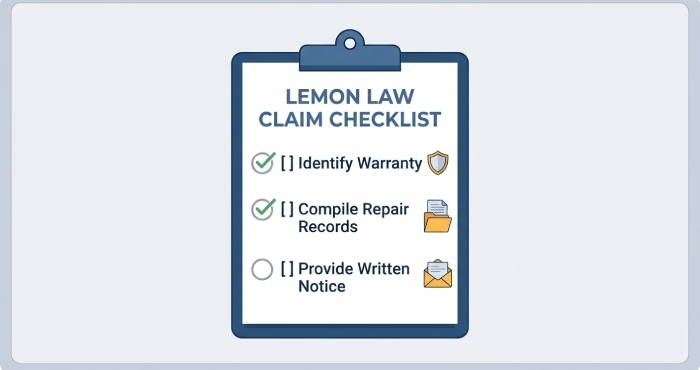
The first step is to identify the warranty source. Determine whether the used car came with a written warranty, dealer warranty, remaining manufacturer warranty, certified pre-owned coverage, or service contract. Review the parts covered, exclusions, mileage limits, and deadlines. A new car lemon law may differ from a used car lemon law, and some statutes also address a motor home differently from a regular motor vehicle.
Next, provide written notice to the dealer and manufacturer if required. A written complaint should identify the defect, list all repair attempts, attach repair order copies, and request appropriate relief. Depending on the facts, relief may include repairs, a refund, full refund, replacement car, or comparable replacement. If the dealer refuses to help, contact the manufacturer and ask for the claim number, contact information, and next steps for warranty review.
Escalation options if repairs fail
If the vehicle has been subject to a reasonable number of attempts or has been out of service for too long, consider filing through the applicable lemon law program. This may involve arbitration, lemon law arbitration, BBB Auto Line®, or an agency process through an Attorney General’s Office. In New York State, buyers can review materials from the Office of the New York State Attorney General. In Virginia, consumers in the Richmond area and elsewhere may contact the Office of the Attorney General of Virginia or the Consumer Protection Hotline; public officials such as Jay Jones have also been associated with consumer enforcement discussions in the Commonwealth of Virginia.
If informal resolution fails, the next step may be civil court, a civil lawsuit, or Small Claims Court, depending on the amount in dispute and the jurisdiction. A lawyer referral service, legal aid group, or state consumer protection office can help identify options. Buyers should act quickly because lemon laws often impose deadlines tied to the delivery date, repair period, mileage, or warranty expiration.