
Repeat brake failures can qualify California fleet vehicles for lemon law claims when the problem substantially affects vehicle safety, use, or value and the manufacturer or dealership cannot fix it after reasonable repair attempts. For a fleet manager, contractor, independent owner-operator, rideshare driver, or small business owner, a defective brake system is not a minor inconvenience—it can create serious operational risk, downtime, lost productivity, and liability exposure.
Under California Lemon Law, eligible commercial vehicles and business vehicles may be protected if they are covered by a manufacturer’s warranty and suffer persistent defects during the warranty period. The Song-Beverly Consumer Warranty Act is the primary consumer protection statute behind California Lemon Law, and it can apply to certain fleet vehicles, work trucks, delivery vans, and other commercial vehicles used by a California business.
How California Lemon Law Applies to Fleet and Business Vehicles
California Lemon Law is broader than many fleet operators realize. While the law is often associated with individual consumers, the Song-Beverly Consumer Warranty Act may also protect certain business vehicles and commercial vehicles, including a commercial truck, work truck, delivery van, or service vehicle purchased or leased for business use.
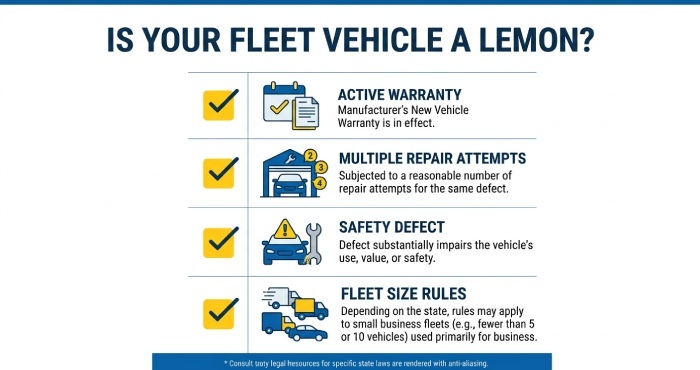
For business vehicles to qualify, several factors typically matter. The vehicle must usually be covered by the manufacturer’s warranty, the defect must arise during the warranty period, and the manufacturer or authorized dealership must be given reasonable repair attempts. In some cases, protections may apply to new vehicles and used vehicles if the used vehicle was sold with an active manufacturer’s warranty or certified warranty coverage.
The Song-Beverly Consumer Warranty Act also includes specific rules that may limit protection for businesses with large fleets. Because eligibility can depend on fleet size, vehicle weight, warranty status, and ownership structure, a lemon law lawyer or lemon law attorney can evaluate whether a California business, small business owner, truck owner, or independent owner-operator has a viable claim.
When Repeat Brake Problems May Qualify as a Lemon Law Defect
Brake problems may qualify as a substantial defect when they impair vehicle safety, reduce vehicle value, or interfere with the vehicle’s intended use. For fleet vehicles, brake failures can be particularly serious because the vehicles may be driven daily, carry tools or cargo, operate in traffic-heavy areas, or make frequent stops.
A lemon law defect may involve brake pedal sinking, grinding, premature brake wear, ABS warning lights, brake fluid leaks, repeated rotor warping, loss of stopping power, or recurring electronic brake control failures. If a dealership performs warranty repairs multiple times and the same brake system issue returns, the manufacturer may be responsible for a vehicle replacement, vehicle refund, vehicle buyback, buyback, or cash settlement.
Common Indicators That Brake Defects May Be Serious
A fleet manager should pay close attention when a brake issue appears alongside other persistent defects such as engine problems, transmission failures, steering defects, electrical system malfunctions, or HVAC breakdowns. Although a single brake repair may not establish a California Lemon Law claim, repeated repair attempts for a safety-related defect can strengthen the case.
Safety-Related Brake Failures Are Treated Differently
Because vehicle safety is critical under California Lemon Law, serious brake or ABS defects may strengthen a claim even with fewer repair attempts. A lemon law attorney may review repair history, recalls, defective parts, and technical service bulletins to determine whether the manufacturer had a fair chance to fix the problem.
Documentation Fleet Owners Should Keep After Brake Repairs
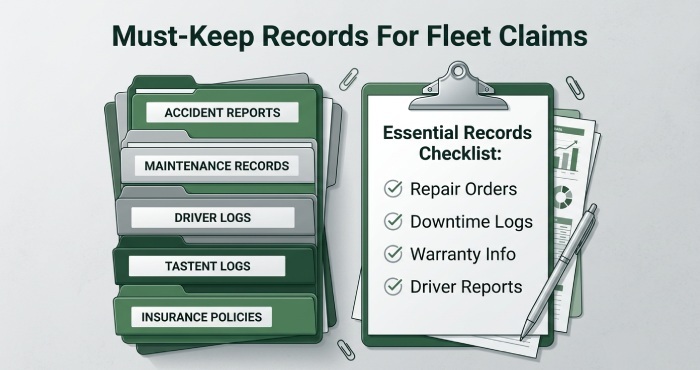
Strong documentation is essential in fleet vehicle claims. A fleet manager should keep every repair order, invoice, dealership communication, warranty repair summary, tow receipt, rental invoice, and internal fleet management record related to the defect. Repair documentation should clearly identify the complaint, mileage, date, diagnosis, parts replaced, and whether the dealership verified the issue.
Important repair records include:
- Initial purchase or lease documents
- Manufacturer’s warranty booklet and extended warranty information
- All warranty repairs performed by an authorized dealership
- Notes showing repeated brake complaints
- Emails or texts with the manufacturer or dealership
- Records of downtime and lost productivity
- Driver reports from employees, contractors, or an owner-operator
- Photos, videos, inspection reports, or telematics data showing brake warnings
- Records of arbitration, claim denial, or manufacturer correspondence
A business owner should also track how a brake defect affects daily operations. For example, a landscaping company may lose jobs when a work truck is unavailable, while an HVAC company may be unable to dispatch technicians. Similarly, a delivery van used for food delivery, package delivery, or local courier services can create measurable downtime when brake system problems keep the vehicle out of service.
The more complete the documentation, the easier it is for a lemon law lawyer or lemon law attorney to show that the manufacturer failed to fix the defect after reasonable repair attempts. Complete repair documentation can also help prove diminished vehicle value and support compensation for a vehicle refund, replacement vehicle, vehicle replacement, or cash settlement.
Manufacturer Defenses and Challenges in Fleet Vehicle Claims
Manufacturers may challenge fleet and commercial vehicle lemon law claims by blaming brake problems on driver abuse, heavy use, poor maintenance, modifications, overloading, or improper fleet management. They may also dispute warranty coverage, the Song-Beverly Act’s applicability, the defect’s severity, or whether repairs were successful.
Fleet operators should be prepared for defenses involving:
- Alleged lack of maintenance records
- Claims that brake wear is “normal” for a commercial truck
- Disputes over whether the defect affects vehicle safety
- Arguments that repair attempts were not reasonable repair attempts
- Claims that the vehicle was overloaded or misused
- Challenges based on mileage, vehicle age, or prior use
These defenses make legal guidance important for fleet and business vehicle owners. A California lemon law attorney can review dealership repair records, driver complaints, warranty documents, manufacturer communications, and inspection reports to determine whether repeated brake problems may support a Lemon Law claim. Fleet operators in San Diego can learn more about their options by consulting a lemon law attorney in San Diego, while businesses throughout California can explore their rights with a California Lemon Law lawyer. Businesses experiencing persistent defects in vehicles used for commercial purposes can seek legal guidance to understand their rights and potential remedies under California Lemon Law.