
What a Lemon Law Buyback Is and When a Calculator Can Help
A lemon law buyback is a remedy under vehicle lemon law that requires the manufacturer to repurchase or replace a defective vehicle after a warranty breach and reasonable but unsuccessful repair attempts. If your Audi, BMW, Chevrolet, Ford, Fiat, GM, Hyundai, Honda, Tesla, or Toyota has spent excessive time in the shop or needed multiple repairs for the same defect, you may qualify for a manufacturer buyback and a lemon law refund.
A buyback calculator or lemon law calculator can be useful early in the lemon law process to estimate a refund amount and help you decide whether to request buyback, negotiate a settlement offer, or escalate a lemon law claim. While no online tool can replace case-specific legal advice, a calculator helps you calculate buyback ranges by tallying key inputs (purchase price, mileage, and out-of-pocket expenses) and applying a mileage offset formula.
Under California lemon law (often referred to as the California Lemon Law), a qualifying manufacturer repurchase generally includes a refund of what you paid (subject to usage deductions), plus taxes, registration, and certain incidental costs. Other states have similar frameworks, but definitions of an eligible vehicle, the warranty period, and the lemon law statute of limitations vary. When in doubt, speak with a lemon law attorney for a free consultation to assess your vehicle repurchase or replacement options.
If you want a quick estimate, try a trusted tool like the lemon buyback calculator. Then discuss the results with a lemon law attorney to validate your numbers and strategy.
When a calculator is most helpful
- You need a preliminary refund calculation before contacting the manufacturer.
- You want to compare a dealer buyback or settlement offer against a likely manufacturer buyback.
- You plan to speak with a lawyer and want data ready for a free consultation.
- You own a new vehicle and suspect a warranty breach, or you want to see how used car lemon law might apply in your state.
The Inputs You Need: Purchase Details, Mileage, Repairs, and Expenses
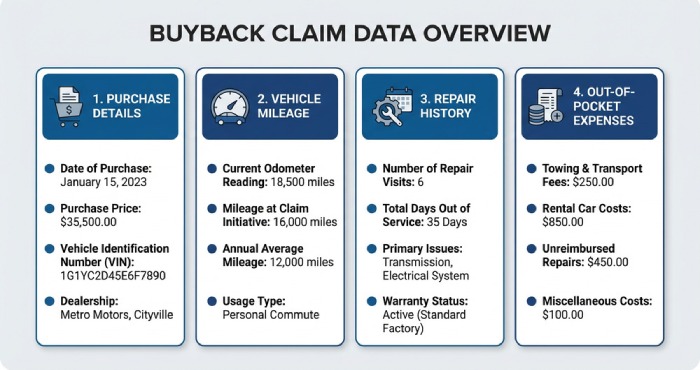
Accurate inputs are essential to calculate buyback estimates you can rely on. Most buyback calculators or a comprehensive lemon law calculator will ask for:
1) Purchase and finance details
- Purchase price or MSRP (also note the Msrp listed on your window sticker)
- Down payment and trade-in value
- Sales tax, title, registration, and official fees
- Finance charges paid to date (some states treat this differently in the refund calculation)
- Whether it’s a lease or finance agreement
2) Mileage and usage
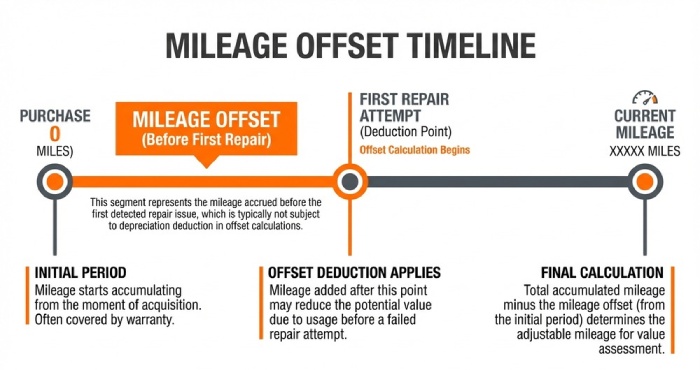
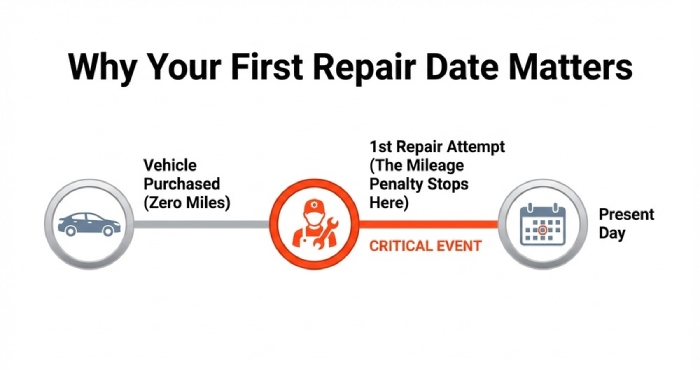
- Mileage at first repair attempt for the defect (key for the mileage offset)
- Current odometer reading
- In-service date and warranty period start date
- Days out of service due to repairs
3) Repair history and defects
- Number of repair attempts for the same nonconformity (multiple repairs often strengthen your claim)
- Work orders/invoices for each visit
- Nature of the defect (safety-related vs. non-safety)
- Whether the vehicle is a lemon vehicle by statutory criteria (e.g., substantial impairment)
4) Out-of-pocket and incidental expenses
- Towing, rental car, rideshare, and storage fees
- Diagnostic charges and other repair-related costs
- Any dealer add-ons or accessories paid at purchase
Be thorough. A single missing work order for your lemon car, or an incorrect mileage-at-first-repair entry, can skew a buyback formula and understate your potential refund amount under California lemon law or comparable statutes elsewhere.
How Buyback Calculations Work: Usage Offset, Refund Components, and Deductions
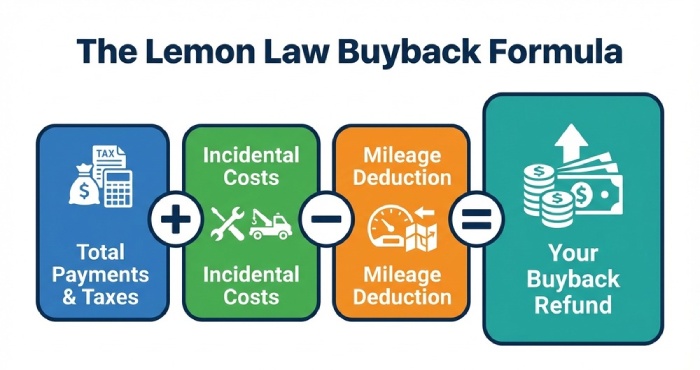
A solid buyback calculator applies a standard structure: total recoverable payments minus a usage deduction. While formulations differ by state, the core mechanics to calculate buyback are similar.
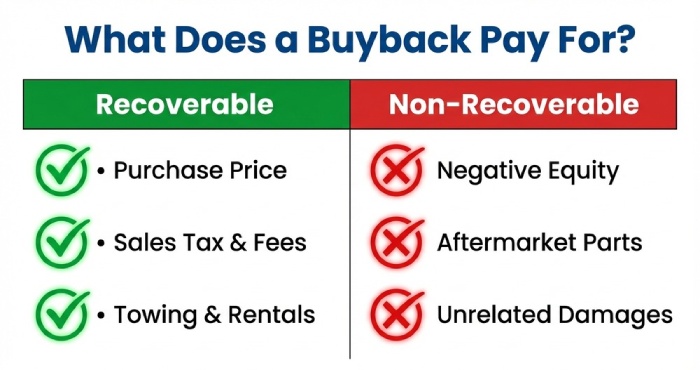
- Refund components typically include:
- Purchase price or capitalized cost
- Sales tax, title, license, registration
- Reasonable incidental and consequential damages tied to the defect (e.g., towing, rental, rideshare)
- Possibly certain finance charges already paid
- Deductions and offsets may include:
- Mileage offset (usage deduction) based on miles driven before the first qualifying repair attempt
- Negative equity from a trade-in
- Non-recoverable aftermarket add-ons or damage not related to the defect
Under California lemon law, the mileage offset is calculated using a statutory formula that prorates use based on miles driven before the first qualifying repair, divided by an assumed vehicle life. The California Civil Code governs the specifics, and the exact lemon law statute language controls your final numbers.
Attorney fees and statutory damages are special categories:
- Attorney fees are generally recoverable from the manufacturer when you prevail, so consumers often pay nothing up front to a lemon law attorney.
- Statutory damages (often up to two times actual damages in willful cases under certain statutes) are not included by a simple online lemon law calculator but may significantly increase value if a willful violation is proven.
A manufacturer repurchase is not always the only remedy. Some consumers may be offered a replacement vehicle or a “cash-and-keep” settlement offer, each with different valuation inputs. Always review settlement terms with a lemon law attorney during a free consultation before signing.
Example: Applying a common buyback formula
Assume:
- Purchase price: $40,000
- Miles at first qualifying repair: 3,000
- Current miles: 14,000
- Taxes/fees: $3,400
- Incidental costs: $600
A typical usage deduction might be calculated by multiplying the purchase price by a mileage factor (e.g., 3,000/120,000), yielding a mileage offset of $1,000. The preliminary refund calculation could be $40,000 + $3,400 + $600 − $1,000 = $43,000, before finance charge adjustments and any non-recoverable items.
Variables that change the math
- Lease vs. finance and how the contract allocates payments
- Whether the defect is safety-related (affecting eligibility thresholds)
- State-specific formulas and the applicable lemon law statute
Edge cases: negative equity, accessories, and aftermarket items
Negative equity from a trade-in and certain accessories may not be reimbursed. A calculator can flag these, but case law and local rules can shift outcomes—another reason to verify your numbers with counsel.
State-by-State Differences and Calculator Limitations to Watch For
Every state’s vehicle lemon law defines an eligible vehicle, qualifying defects, and remedies differently. California Lemon Law is consumer-friendly and explicit about the mileage offset and what a manufacturer buyback must include, but other states vary on:
- Whether used car lemon law protection applies
- The number of repair attempts or days out of service required
- Coverage for recreational vehicle lemon law or electric vehicle lemon law
- Treatment of finance charges, extended warranties, and add-on products
A buyback calculator offers useful estimates but has limitations:
- It may not account for state-specific attorney fees shifting, statutory damages, or bad-faith penalties.
- It may generalize taxes/fees or omit unique local charges.
- It cannot evaluate evidence quality, reasonableness of repair attempts, or whether a defect “substantially impairs use, value, or safety.”
For California lemon law in particular, nuances of the California Civil Code can change outcomes—especially on timing, notices, and the scope of recoverable expenses. If your vehicle is from Audi, BMW, Chevrolet, Ford, Fiat, GM, Hyundai, Honda, Tesla, or Toyota, brand-specific technical service bulletins and recall histories can also influence strategy. Use any online compensation calculator as a starting point, not the final word.
Comparing California to other states
- California emphasizes clear notice, documented repair attempts, and well-defined repurchase mechanics.
- Some states require more repair attempts or impose tighter time/mileage windows in the warranty period.
- Replacement vs. repurchase options and dealer buyback programs can be narrower or broader, depending on the jurisdiction.
Turning Your Estimate into Action: Evidence, Deadlines, and Filing/Negotiation Steps
Once you calculate buyback estimates with a lemon law calculator, turn the numbers into a plan.
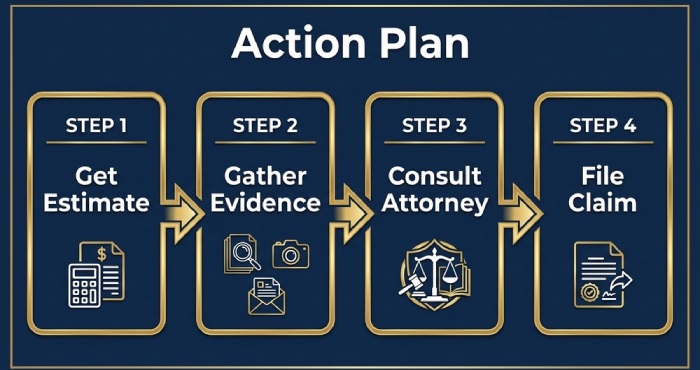
- Gather evidence:
- All repair orders, invoices, and communications documenting repair attempts and multiple repairs for the same defect
- Proof of purchase, financing/lease paperwork, and tax/fee receipts
- Records of towing, rental, or rideshare costs
- Mind deadlines:
- Track warranty period dates and any lemon law statute limitations applicable in your state.
- Note when the first qualifying repair occurred; mileage at that point affects your mileage offset and overall refund amount.
- Take action:
- Send a written request buyback to the manufacturer, referencing your lemon law claim and attaching key records.
- Evaluate any settlement offer against your calculator estimate and the potential value of statutory damages and attorney fees.
- Consider whether you prefer a full refund via manufacturer repurchase, a replacement, or a negotiated cash-and-keep.
- Leverage legal support:
- Consult a lemon law attorney early for a free consultation; most firms advance costs and seek fees from the manufacturer if you prevail.
- An attorney can validate your refund calculation, ensure compliance with notice requirements, and escalate to litigation if needed.
- In California lemon law matters, counsel will align your approach with the California Civil Code and any recent case law.
Practical tips:
- Don’t rely solely on a buyback calculator—use it to frame expectations, then refine with legal guidance.
- If a dealer buyback is offered, confirm whether it meets statutory criteria for a manufacturer buyback and covers all recoverable items.
- For EVs and RVs, confirm whether electric vehicle lemon law or recreational vehicle lemon law provisions apply, as remedies and timelines may differ.
- If you’re unsure whether your car qualifies as a lemon vehicle or lemon car, schedule a free consultation and ask the firm to calculate buyback ranges using your documents.
When you’re ready to estimate and compare scenarios, start with a reputable tool and then speak with counsel. For a quick estimate, try the linked [lemon buyback calculator], then follow up with a lemon law attorney to discuss next steps, from a formal request buyback to filing a lemon law claim and negotiating toward a manufacturer buyback or replacement.
If you need tailored guidance, contact an experienced firm like McMillan Law Group for a free consultation. Bring your estimates, repair history, and purchase documents so the team can calculate buyback options precisely, evaluate your vehicle repurchase eligibility, and navigate the lemon law process under your state’s lemon law statute.