
Buying a salvage title vehicle can be a cost-effective choice, but it also brings up crucial concerns regarding warranty coverage. A salvage title means the car was once deemed a total loss and then repaired. Although some manufacturer warranties might still be valid for specific parts, others might be completely voided. It’s essential for buyers to grasp which warranty protections are still in effect and which ones have lapsed, enabling them to make knowledgeable choices and steer clear of unforeseen repair expenses.
What a Salvage Title Means and Why It Changes Warranty Expectations
Understanding What a Salvage Title Means
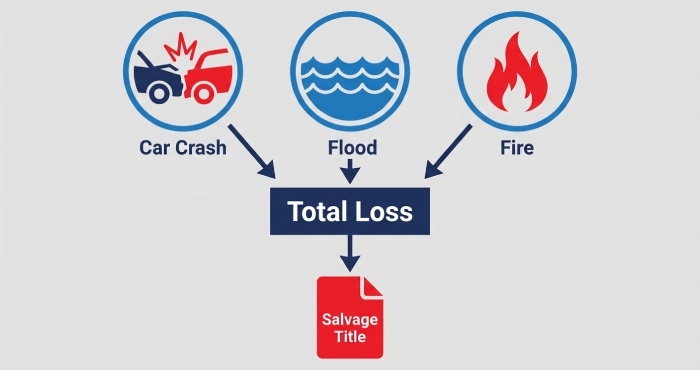
A salvage title is a legal title brand placed on a vehicle after it has sustained significant damage, often because an insurance company declared it a total loss. That decision usually means the cost to repair the car approached or exceeded its fair market value, or the vehicle had serious safety concerns such as structural damage, flood damage, water damage, fire damage, or major collision history. A salvage vehicle may later return to the road as a rebuilt salvage or repaired vehicle, but the prior title branding remains a critical warning sign.
How a Salvage Title Affects Warranty Expectations
A title brand is not just a label; it changes expectations for warranty coverage, resale value, financing, insurance, and vehicle registration. Depending on state regulations, a car may receive a junk title, reconstructed title, rebuilt salvage designation, or another branded title category. Because title definitions vary, buyers should confirm the meaning of the title brand with the relevant state agency, usually the department of motor vehicles or equivalent motor vehicle authority.
Title Branding Rules and the Risk of Title Washing
In California, for example, the California Department of Motor Vehicles handles title paperwork, title transfer, and title branding rules. Other states in the United States use different brand recognition systems, which creates risk when a vehicle moves across state lines. This is where title washing becomes a major concern. Title washing occurs when sellers attempt to remove or obscure a branded title by transferring the vehicle through jurisdictions with weaker reporting or different title definitions. A clean-looking title may still hide prior damage, prior rebuilt salvage status, or other hidden title brands.
Manufacturer Warranty Basics: Coverage That May Survive vs. Coverage Commonly Voided
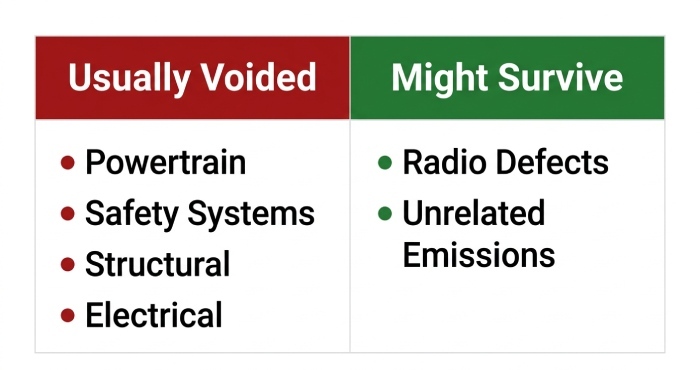
A manufacturer warranty is tied to the manufacturer’s written terms, mileage limits, and warranty period. In theory, some warranty coverage may survive a salvage title if the issue is unrelated to the loss event and the vehicle still meets the manufacturer’s eligibility requirements. For example, a radio defect or emissions component failure might still be considered if the damage history had no connection to that system.
In practice, however, a salvage title often causes major warranty limits. Many manufacturers reserve the right to deny coverage after a vehicle receives a branded title, especially where the claimed defect could be connected to accident repairs, flood damage, water damage, frame damage, airbag deployment, or improper reconstruction. A dealer may refuse a manufacturer repair if the vehicle’s prior damage makes diagnosis unreliable or if the automaker’s policy excludes rebuilt salvage vehicles.
The most commonly voided coverages involve powertrain, electrical systems, safety systems, corrosion protection, and structural components. If the car has mechanical problems after being rebuilt, the manufacturer may argue the issue resulted from the accident, repair quality, aftermarket parts, or post-repair issues, not a factory defect. If the vehicle is unsafe to drive, the manufacturer may also decline repairs until safety-related damage is corrected.
A key point is causation. A title brand does not automatically prove every later failure was caused by the prior loss, but it gives the manufacturer a strong basis to investigate and deny claims. Owners should keep detailed invoices, photographs, diagnostic reports, and owner disclosures. They should also verify the title paperwork and check whether the department of motor vehicles recorded the vehicle as salvage, rebuilt salvage, reconstructed title, or another branded title category.
Lemon Law Protections and Why Salvage Titles Often Complicate or Limit Claims
Lemon law protections generally focus on defects that arise during the applicable warranty and substantially impair use, value, or safety. But a salvage title can complicate a lemon law claim because the manufacturer may argue the defect was caused by damage, improper repairs, or prior use rather than a defect covered under the original warranty. A car with a title brand is harder to classify as a true lemon vehicle, especially if the history includes total loss records, rebuilt salvage repairs, or unresolved safety concerns.
Under the California Lemon Law, a consumer may have rights if the vehicle was sold with an active manufacturer warranty and the defect qualifies under the statute. Still, title branding creates factual disputes. If a vehicle was already a branded title car when purchased, the manufacturer may challenge consumer rights by pointing to the vehicle’s damage history. If the title was branded after purchase, the timing becomes important.
A buyer in San Diego, California, might consult McMillan Law Group or Julian McMillan for case-specific legal guidance, especially when the car was sold without proper disclosure. Consumers researching a Lemon Law Attorney, Lemon Law Lawyer, or California Lemon Law Lawyer should look for experience with branded vehicles, warranty denials, and dealer disclosure disputes. For example, someone near Cass St in San Diego may choose to contact a Lemon Law attorney San Diego to evaluate whether a manufacturer or seller has improperly denied warranty coverage.
An experienced lemon law attorney can help distinguish between a factory defect and damage-related failures. If the vehicle had repeated warranty visits before the salvage title was issued, the lemon law analysis may differ from a case where problems appeared only after reconstruction. When defects continue and the manufacturer denies coverage, a skilled California Lemon Law Lawyer can review repair records, warranty documentation, and title history to determine whether a valid Lemon Law claim may exist.
Key Documents to Review Before Buying or Repairing a Salvage Title Vehicle
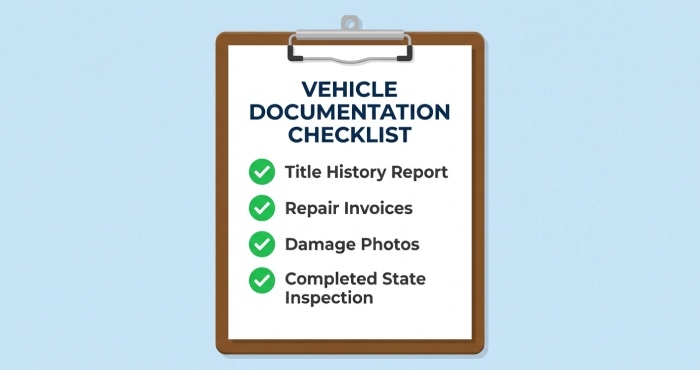
- Review the vehicle title and title history.
- Check repair records, invoices, and damage photos.
- Obtain a vehicle history report.
- Verify owner disclosures and mileage accuracy.
- Look for prior junk title or title washing issues.
- Confirm required state inspections were completed.
- Research warranty limitations before purchasing.