Numerous buyers acquire extended warranties with the belief that they provide thorough coverage, only to find out later that some repairs are not included when issues occur. Typical exclusions can encompass items affected by normal wear and tear, regular maintenance, pre-existing issues, and damage resulting from misuse or neglect. By being aware of these restrictions before agreeing to a warranty, consumers can prevent surprise expenses and make wiser choices regarding their coverage.
Wear-and-Tear Items and Routine Maintenance That Extended Warranties Usually Do Not Cover
An extended warranty is often marketed as purchase protection against expensive car repairs, but consumers frequently misunderstand what warranty coverage actually includes. Unlike a factory warranty or manufacturer warranty, which typically comes with a new vehicle purchase, an extended warranty is usually a service contract sold by a dealership, auto dealer, service plan company, or Private warranty provider after—or near the end of—the original warranty period.
Consumables, Maintenance, and “Normal Use” Parts
Most extended warranty plans exclude wear-and-tear items and routine maintenance. Brake pads, tires, wiper blades, belts, hoses, fluids, filters, spark plugs, alignments, and oil changes are rarely covered parts. Even when bumper-to-bumper coverage sounds broad, the warranty fine print may state that maintenance items are outside the service contract.
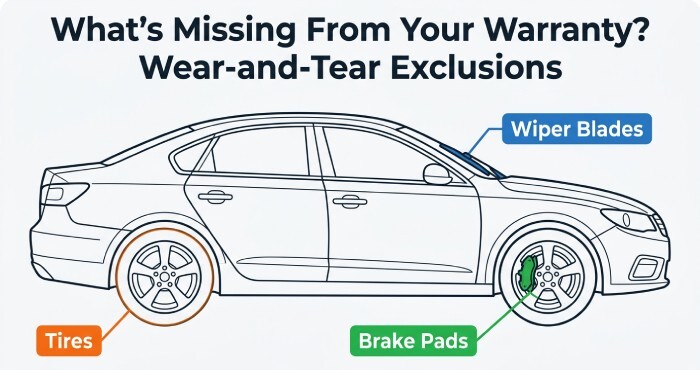
This is also true for many dealer warranty products, third-party warranty plans, and even some used car warranty agreements. A dealer warranty may cover specific mechanical failures, but it usually does not pay for predictable deterioration. Powertrain coverage, for example, may include engine coverage, transmission coverage, and drive axle coverage, but it will not usually cover clutch wear, fluid services, or damage caused by missed maintenance.
Why “Bumper-to-Bumper” Does Not Mean Everything
Bumper-to-bumper coverage can be misleading. A factory warranty may offer strong bumper-to-bumper coverage for a limited period, but an extended warranty version may include more warranty exclusions. The manufacturer warranty might cover defects in workmanship, while a third-party warranty may only cover listed failures of named components. Consumers should compare factory warranty terms, dealer warranty promises, and third-party warranty limits before assuming the warranty benefits are identical.
Pre-Existing Problems, Improper Repairs, and Maintenance Record Requirements
Maintenance Records and Claim Denials
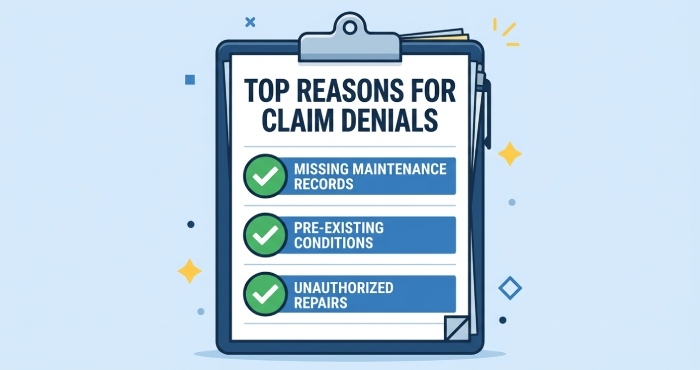
Extended warranty providers often require proof that the vehicle was maintained according to the manufacturer’s recommended service schedule. Missing records for oil changes, coolant flushes, or transmission services can lead to claim denials, particularly when engine, transmission, or drivetrain components fail.
Coverage may also be denied if prior repairs were performed improperly, non-OEM parts were used where required, or unauthorized repairs contributed to the breakdown. In addition, many warranty contracts require repairs to be completed at approved repair facilities or dealerships before reimbursement or coverage will be considered
Keep Written Proof Before and After Repairs
A written warranty, maintenance receipts, diagnostic reports, and repair invoices can be critical. A reputable provider will explain documentation requirements clearly, while a less transparent service contract provider may rely on vague language to deny repair bills. Consumers should also track repair attempts, mileage limitations, and any conversations with the warranty administrator.
Exclusions for Electronics, Software, Diagnostics, and “Non-Mechanical” Components
Modern vehicles depend heavily on software, sensors, modules, cameras, infotainment systems, hybrid systems, and advanced driver-assistance technology. Yet many extended warranty contracts still distinguish between “mechanical breakdown” and electronic, software, diagnostic, or non-mechanical failures.
Electronics and Diagnostics Are Often Limited
Factory warranties typically include coverage for electronic parts while the original warranty is in effect. However, extended warranties frequently do not cover certain items like screens, navigation systems, key fobs, wiring, software upgrades, and diagnostic services.
Additionally, battery coverage may be restricted, with distinct warranties available for various battery components. Since coverage levels can differ significantly, it is crucial for consumers to thoroughly examine the warranty details and manufacturer information to know what is included and what is excluded.

How Lemon Law Protections Differ from Extended Warranty Coverage and When Consumers Should Seek Legal Help
Lemon law protections are fundamentally different from an extended warranty. A factory warranty, manufacturer warranty, dealer warranty, third-party warranty, or service contract is simply a promise to repair or pay for certain covered components. By contrast, lemon law rights are legal remedies that may apply when substantial vehicle defects persist despite reasonable repair attempts. A California lemon law lawyer can evaluate the repair history, warranty coverage, and defect documentation to determine whether the consumer may be entitled to a refund, replacement vehicle, or other relief under California’s lemon law statutes.
Warranty Coverage vs. Statutory Rights
A lemon law claim usually focuses on defects covered during the original manufacturer warranty or factory warranty period. State lemon law rules vary, but many require repeated repair attempts, a serious safety defect, or the vehicle being out of service for a specified number of days.
In Oakland, California, consumers may also rely on federal protections under the Magnuson-Moss Warranty Act when a written warranty is breached, supporting claims involving warranty coverage disputes, repeated repair failures, and deceptive warranty practices.
An extended warranty may help pay for out-of-pocket repairs after the factory warranty expires, but it generally does not create the same refund eligibility, replacement rights, or statutory compensation available under lemon law. A third-party warranty denial may be a contract dispute, while a lemon law case may involve the car manufacturer’s failure to repair defects under the manufacturer warranty. Arbitration may be required in some programs, and some consumers may encounter an arbitration form from a car manufacturer or state agency.
A lemon law expert or Lemon Law attorney can help determine whether the consumer has a service contract dispute, a manufacturer warranty claim, or a true lemon law claim. In California, consumers may consult a San Diego lemon lawyer to evaluate their legal options and determine whether they qualify for remedies under the state’s lemon law protections.
If the issue involves repeated defects during the factory warranty, lemon law may offer stronger remedies than an extended warranty. If the dispute involves denied repair costs under a dealer warranty, third-party warranty, or customizable coverage plan, the consumer may need to challenge service claim restrictions, repair shop restrictions, or improper exclusions directly with the service contract provider.