
When a dealership fails to disclose that a vehicle has been involved in a prior accident, buyers may face unexpected repair costs, safety concerns, and a loss in vehicle value. California law protects consumers from deceptive sales practices, and dealerships may be held accountable for withholding important information about a car’s history. Understanding your legal rights can help you pursue compensation or other remedies if you discover undisclosed accident damage after your purchase.
Why Prior Accident Disclosure Matters in California
A prior accident can change far more than a vehicle’s resale price. Hidden collision damage may affect crashworthiness, steering, suspension, electronics, braking systems, airbag deployment, frame alignment, and long-term reliability. When a car dealership sells a used car, new car, truck, or SUV while concealing known accident history, the issue may involve auto fraud, dealership fraud, and serious violations of consumer rights.
In High Desert, California, vehicle buyers are not expected to uncover every hidden defect on their own. While the principle of “buyer beware” still applies, California consumer protection laws, warranty regulations, and fraud statutes may provide legal remedies when a dealership misrepresents a vehicle’s condition, conceals important facts, or uses deceptive sales practices during the transaction.
How Undisclosed Prior Accidents Affect Safety
Structural and Mechanical Risks
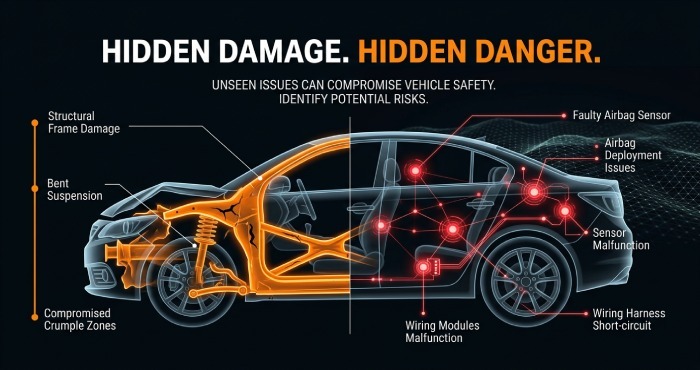
Frame damage, bent suspension components, misaligned wheels, weakened crumple zones, and poorly repaired body panels can all compromise safety. A car manufacturer designs vehicles to absorb crash energy in specific ways. If collision repairs were done improperly, the vehicle may no longer perform as intended in a second crash.
Airbags, Sensors, and Electrical Systems
Modern vehicles from Tesla, Acura, Audi, BMW, Chevrolet, Ford, Honda, Hyundai, and Kia rely heavily on sensors, cameras, wiring, and computer modules. Prior collision damage can create repeated problems with warning lights, driver-assistance features, airbags, seatbelt pretensioners, and braking systems. If those issues persist despite repair attempts, California lemon law protections may become relevant.
How Accident History Reduces Value and Reliability
A vehicle with undisclosed frame damage or major collision history is often worth significantly less than a comparable clean-title vehicle. Even if repaired, an accident vehicle may have diminished value, premature tire wear, water intrusion, alignment problems, paint failure, and recurring electrical faults.
Reliability Problems After a Vehicle Purchase
Many buyers discover problems only after the contract is signed. They may notice vibration at highway speed, uneven panel gaps, dashboard warnings, or water leaks. In more serious cases, there may be undisclosed flood damage, odometer fraud, or odometer rollback combined with hidden accident history. These issues can support claims for auto fraud, dealership fraud, or violations of warranty laws depending on the facts.
California Dealer Disclosure Duties
California dealers have legal duties not to misrepresent or conceal material facts about a vehicle. A car dealership may not lawfully advertise a vehicle as clean, safe, certified, or accident-free if the dealer knows or should know that the representation is false.
Dealers must also avoid dishonest sales practices involving pricing, financing, title history, vehicle condition, and prior use. If a dealer used a rewritten contract, backdating, inflated fees, or misleading add-ons, those facts may strengthen an auto fraud claim.
What Dealers Should Not Hide
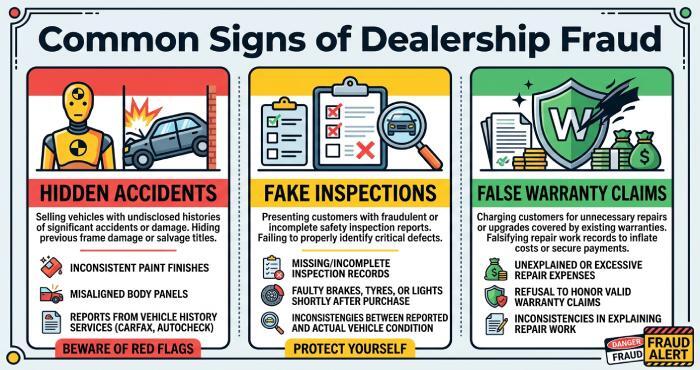
A dealer may create liability by failing to disclose:
- Known prior collision damage
- Structural or frame repairs
- Salvage, branded, or lemon history
- Prior rental, fleet, or commercial use
- Undisclosed flood damage
- Odometer fraud or odometer rollback
- Major mechanical defects known before sale
- Warranty limitations or exclusions
When a car dealership conceals these facts, it may be engaging in dealership fraud or unscrupulous business practices.
What May Qualify as Dealership Fraud
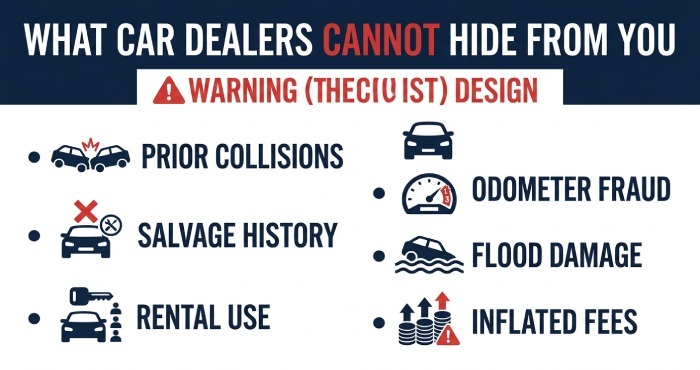
Dealership fraud occurs when a dealer misrepresents, conceals, or manipulates important information to persuade a consumer to buy or finance a vehicle. This can happen through spoken promises, written advertisements, inspection checklists, vehicle history representations, or dealer sales tactics.
Common Examples of Deceptive Sales Conduct
Examples of deceptive sales and auto fraud may include telling a buyer the vehicle was never in an accident, claiming a used car passed a rigorous inspection when it did not, or stating that the vehicle is covered under law or warranty when the dealer knows coverage is limited. A car dealership may also commit dealership fraud by hiding prior damage while charging a premium price.
If the dealer lied about condition, the buyer may have claims under California consumer rights laws, fraud statutes, and warranty laws. An auto fraud attorney or California attorney can evaluate whether the facts support rescission, damages, settlement, or other remedies.
How California Lemon Law May Apply
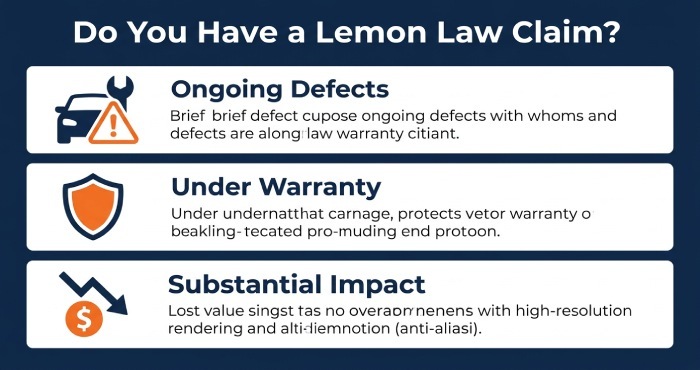
California lemon law may apply when a vehicle has serious defects that cannot be repaired after a reasonable number of attempts. If hidden accident damage causes ongoing problems—such as electrical issues, steering defects, water leaks, or airbag warnings—while the vehicle is under warranty, the owner may qualify for relief if the defect substantially affects the vehicle’s use, value, or safety.
When Accident Damage Leads to Recurring Defects
A vehicle may be both the subject of auto fraud and a lemon law claim. The dealer’s concealment can support dealership fraud, while failed warranty repair attempts can trigger California lemon law rights against the car manufacturer. In some cases, the car manufacturer may argue that the problems were caused by collision damage rather than factory defects. That is why documentation is critical.
A knowledgeable California Lemon Law Lawyer can analyze whether the facts point to dealer misconduct, a defective vehicle claim, warranty laws, or all of the above.
When to Contact a Lemon Law Lawyer in California
You should contact a lemon law lawyer promptly if you discover undisclosed accident damage, repeated warranty problems, or evidence that a car dealership misrepresented the vehicle’s history. Early legal advice can help preserve evidence, avoid damaging communications, and protect the rights of the buyer.
A qualified attorney can provide honest legal guidance, knowledgeable advice, and a case evaluation to determine whether your claim involves lemon law, California lemon law, auto fraud, dealership fraud, or violations of warranty laws. You may also consult a lemon law attorney for claims involving recurring defects and manufacturer warranty disputes. For brand-specific guidance, some consumers search for resources such as Lemon Law attorney San Diego
A lemon law lawyer can help resolve dealership fraud, evaluate claims against a car manufacturer, and determine whether the defective vehicle qualifies for relief under California lemon law and related warranty laws.