
When your car starts showing repeated issues, hearing “it’s normal” from a dealer can be both frustrating and misleading. Many consumers aren’t aware that these common responses are often used to delay or avoid legitimate warranty claims. This blog breaks down the most persistent Lemon Law myths and gives you practical tips to challenge them effectively. By understanding your rights and spotting these tactics early, you can take smarter steps toward getting the resolution you deserve.
Spot the Myth Playbook: “It’s Normal,” “They All Do That,” and Other Dodges—How to Test Claims on the Spot
Dealers often minimize flaws by claiming, “That’s typical,” or “They all behave this way,” or stating “No fault found,” but lemon law addresses actual defects rather than subjective assessments. Challenge their assertions by:
- Comparing your vehicle with a similar model
- Replicating the circumstances and recording evidence
- Requesting official bulletins or policies
- Emphasizing safety concerns and escalating the matter promptly
If they respond with “no fault found,” stand firm on your rights; lemon law eligibility hinges on persistent problems and repair attempts. If issues remain unresolved, you may be entitled to a refund or vehicle replacement under state regulations or the Magnuson-Moss Warranty Act.
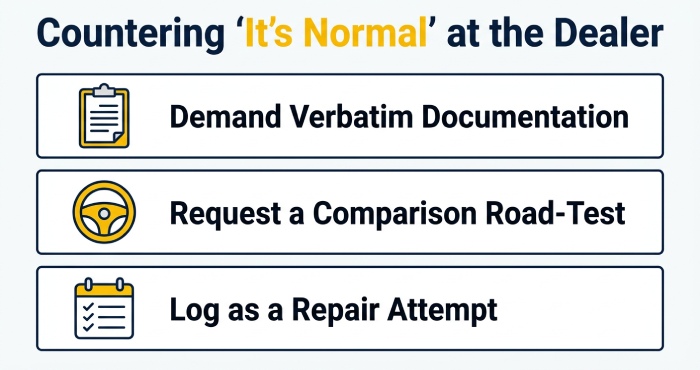
On-the-Spot Script to Counter “It’s Normal”
- “Please document verbatim that you consider this condition normal and non-repairable under the warranty.”
- “Let’s road-test this with a technician now and compare it to a similar vehicle.”
- “If you cannot verify today, I’ll schedule another visit; please note this is the third of my reasonable repair attempts.”
Know Your State’s Lemon Law: Defect Standards, “Reasonable Repair Attempts,” Days-Out-of-Service Thresholds, and Filing Deadlines
Lemon laws vary by state, but a San Diego Lemon attorney will generally define a “lemon” as a vehicle with serious defects that remain unresolved despite multiple repair attempts, often causing substantial downtime and inconvenience. Common indicators include:
- A defect covered by warranty that negatively affects the vehicle’s usage, value, or safety.
- A safety-related issue that continues after one or two repair attempts.
- An attempt to fix the same problem three to four times, or the vehicle being out of service for over 30 days.
Be aware of the deadlines and notification requirements; many states mandate written notifications and a final opportunity for the manufacturer to make repairs. It’s essential to keep all documentation related to your purchase, repairs, and communications well-organized.
In addition to state regulations, the Magnuson-Moss Warranty Act provides further protections, including the possibility of recovering attorney fees, often in conjunction with the implied warranties outlined in the Uniform Commercial Code for defective products.
Document Like a Pro: Service-Order Must-Haves, Symptom Logs, Photos/Video, and Communication Scripts That Box In Excuses
Successfully pursuing a lemon law claim hinges on thorough documentation. Start tracking everything from the beginning:
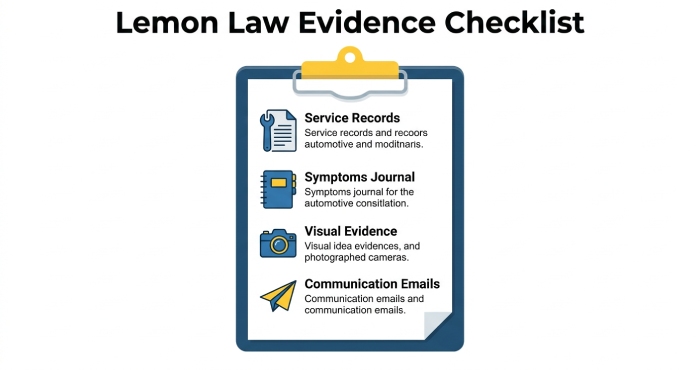
- Comprehensive service records: Clearly document the exact issues, how often they occur, the conditions under which they arise, warning lights, and steps to replicate the problem — avoid unclear language.
- Symptoms journal: Note the date, mileage, conditions, and length of time each issue persists, and link these notes to your repair appointments.
- Visual evidence: Take clear photos or videos of the problems, including the dashboard, when it’s safe to do so.
- Preserve all documents: Keep records of invoices, Technical Service Bulletins (TSBs), parts requests, and details about any loaner vehicles.
- Document your interactions: After each service visit, send emails summarizing what happened to maintain a record of communications.
- Utilize available resources: Refer to organizations and experts such as the Center for Auto Safety (CAS), Ralph Nader, auto safety guides like CAR BOOK and LEMON BOOK, Auto Safety, Kiplinger, and attorneys like Allen Stewart, Kevin R. Duck, and Scott M.
Make the Shop Work for You: Precise Write-Up Language, Road-Tests With a Tech, Repeat-Visit Strategy, and Escalation to Service Manager/Manufacturer
Utilize your warranty and consumer rights during each service appointment:
- Detailed documentation: Record specific details (speed, throttle response, mileage, frequency, and any safety concerns).
- Required test drive: Accompany a technician on a road test to validate the reported issue.
- Follow-up appointments: Ensure prompt scheduling for additional visits if the problem persists to demonstrate ongoing repair efforts.
- Escalation process: If there are 2-3 unsuccessful repair attempts, contact the service manager and file a case with the manufacturer along with written documentation.
- Arbitration inquiry: Verify whether the situation falls under manufacturer guidelines, BBB, or state regulations; participation might be voluntary.
- End objective: Pursue a refund, replacement, or monetary compensation through warranty and Magnuson-Moss Act protections (certain fees may be covered).
Engage qualified help when needed. An auto lemon lawyer or a seasoned lemon law lawyer can strengthen your recordkeeping, guide the notice requirement, and prepare you to file a claim efficiently. If you’re in California, a Lemon Law attorney can advise on the state’s robust consumer protection rules.
Close the Loop: Formal Notice, Manufacturer Case Files, Arbitration vs. Buyback vs. Replacement, Attorney Help, and Settlement Math
To convert strong repair records into relief, close the loop methodically:
- Draft a formal letter to the manufacturer that includes your case number, repair documentation, invoices, and a request for the final resolution or repair, ensuring you keep evidence of its delivery.
- Monitor the case by following up on each call and commitment via email, and keep a record of any missed repair obligations.
- Select a resolution approach, such as arbitration, a buyback (refund or replacement), or a negotiated agreement, depending on your circumstances.
- Be aware of how to calculate settlements, taking into account the purchase price, payments made, fees, mileage adjustments, and any additional costs.
If negotiations stall under California’s Lemon Law, your attorney may file a claim in the appropriate forum while also using complaints with state consumer protection agencies to increase pressure for resolution. For consumers in Santee, California, many cases demonstrate that consistent documentation, clear repair histories, and strong evidence of safety defects can significantly strengthen your position and improve the likelihood of a favorable outcome.
For localized guidance, consumers often rely on reputable legal directories and trusted financial publications to identify experienced California lemon law lawyers who can effectively pursue buybacks, replacements, or settlements.
Before moving forward, make sure to:
- Check the timelines specified by your state’s lemon laws and statute of limitations.
- Confirm that the issue was covered under warranty at the time the repairs were initiated.
- Ensure you have documented evidence of a significant defect, recurring symptoms, downtime, and well-documented procedures.
With solid documentation, appropriate notifications, and reference to the Magnuson-Moss Warranty Act and UCC, you can obtain a refund or replacement, often with legal fees included.