
How California Lemon Law Defines a Substantial Vehicle Defect
California Lemon Law, primarily grounded in the Song-Beverly Consumer Warranty Act, focuses on whether a defect substantially impairs the vehicle’s use, value, or safety. A substantial defect is not a minor annoyance or cosmetic flaw; it is a recurring or serious problem that affects how the vehicle performs, whether the vehicle owner can rely on it, or whether it presents a safety defect to the consumer, passengers, or others on the road.
A California Lemon Law claim may involve a new vehicle, used vehicle, certified pre-owned vehicle, demo vehicle, lemon car, or even a lemon RV, depending on the facts and whether there is an applicable vehicle warranty or active warranty. Warranty status matters because California Lemon Law generally requires that the defect arise during the warranty period and that the manufacturer or its authorized repair shop be given a reasonable opportunity to perform reasonable repairs.
Use, Value, and Safety as Legal Benchmarks
Courts analyzing a lemon law case often consider three practical questions:
- Does the defect interfere with ordinary operation?
2. Would the defect reduce resale or trade-in value?
3. Does the defect create a safety concern?
A manufacturer may argue that the vehicle remains drivable, but California Lemon Law does not require total breakdown. If a recurring defect undermines reliability, causes repeated visits to an auto shop, or creates a meaningful risk, a lemon law attorney can argue that the standard is satisfied.
Key California Lemon Law Precedents Shaping Consumer Claims
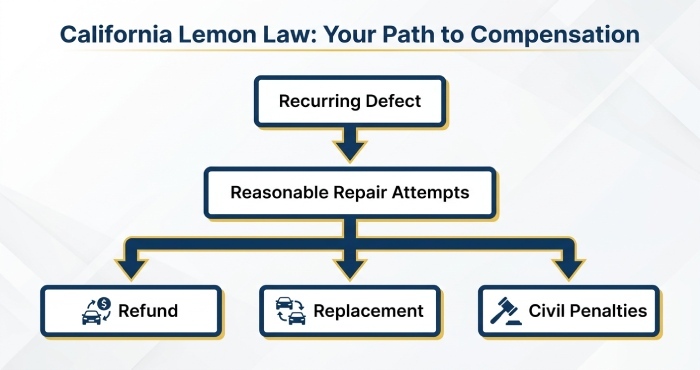
California Lemon Law precedents protect consumers when recurring defects or intermittent problems remain unresolved. If a manufacturer fails to repair a vehicle after a reasonable number of attempts, the consumer may qualify for a refund, replacement vehicle, or other compensation under applicable law.
Why Precedent Matters in a Lemon Law Case
Precedent helps define what counts as “reasonable” and what facts persuade a court/jury. A lemon law lawyer may use prior rulings to show that:
- The same recurring malfunction supports a lemon law claim even if temporarily repaired.
- Excessive days out of service may prove impairment.
- A denied claim does not end the matter if the evidence supports liability.
- A civil penalty may be available when the manufacturer willfully violates California consumer rights.
In some cases, civil penalties can significantly increase recovery, especially where internal manufacturer records show awareness of a defect pattern.
Reasonable Repair Attempts, Warranty Coverage, and Manufacturer Obligations
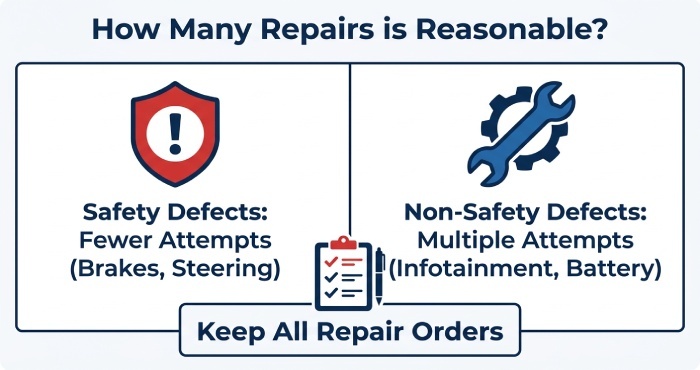
California Lemon Law does not require endless visits to the dealer. The statute focuses on whether the manufacturer had a reasonable opportunity to repair the defective vehicle. The number of required repair attempts depends on the severity of the issue. A braking failure, steering defect, sudden loss of power, or airbag malfunction may require fewer attempts than a non-safety-related defect.
A lemon law attorney will evaluate repair orders, diagnostic notes, warranty claims, rental records, and communications with the dealership. The attorney will also determine whether the vehicle was covered by a vehicle warranty, extended warranty, CPO warranty, or another qualifying warranty. For a new vehicle, this analysis may be straightforward. For a used vehicle or certified pre-owned vehicle, the inquiry may be more fact-specific.
Manufacturer Duties Under the Vehicle Warranty
A manufacturer must honor the vehicle warranty by repairing covered defects within a reasonable time. If the manufacturer cannot do so, California Lemon Law may require a purchase refund, replacement, or repurchase. Recoverable amounts may include down payment, monthly payments, registration, taxes, certain incidental expenses, and sometimes financing costs, subject to any lawful mileage limitation or offset.
What Counts as Reasonable Repairs?
“Reasonable repairs” depend on the defect, repair history, and the manufacturer’s conduct. A vehicle repeatedly returned for the same engine code, battery drain, infotainment failure, suspension issue, or transmission hesitation may support a lemon law case if the issue continues during warranty coverage.
When a Warranty Dispute Becomes a Claim
The dispute often becomes a formal lemon law claim when the consumer has repair documentation, repeated complaints, and evidence that the manufacturer failed to conform the vehicle to warranty after reasonable opportunities.
How a Lemon Law Lawyer in California Uses Precedents to Prove a Claim
A skilled lemon law lawyer applies precedent to the facts. The role is not merely to complain to the manufacturer; it is to build a legal argument that meets statute requirements, satisfies evidence requirements, and positions the consumer for settlement, negotiation, or litigation.
Consumers seeking a California lemon law lawyer should look for someone who understands how courts interpret substantial impairment, manufacturer obligations, and warranty defenses. A knowledgeable lemon law lawyer can evaluate whether a new vehicle, used vehicle, certified pre-owned model, or demo vehicle qualifies for lemon law protection.
Similarly, a lemon law attorney can identify whether a case should begin with a demand letter, proceed to arbitration, or move toward a lawsuit. For motorhome defects, a consumer may need an rv lemon law attorney because a lemon RV may involve chassis, drivetrain, electrical, plumbing, or habitation-system defects.
Building the Lemon Law Claim File
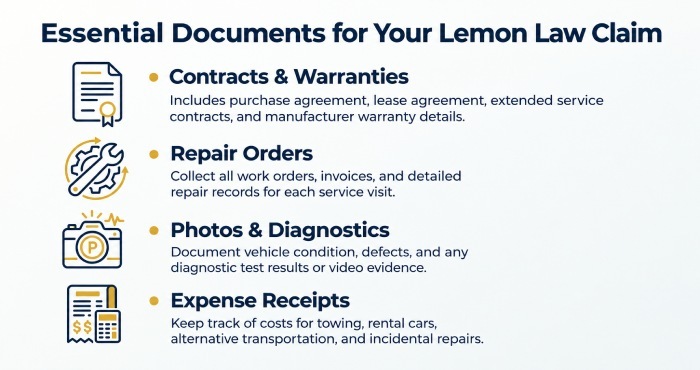
A strong lemon law claim usually includes:
- Purchase or lease contract
- Complete repair orders
- Warranty booklet and vehicle warranty terms
- Photos, videos, and diagnostic messages
- Communications with the dealer, manufacturer, or repair shop
- Towing, rental, rideshare, or out-of-pocket expense records
This documentation supports filing claim materials and allows a lemon law lawyer to present the history clearly. The lemon law process often turns on whether the attorney can connect recurring defects to warranty obligations and show that the manufacturer did not comply.
Legal Representation and Attorney Fees
California Lemon Law is especially powerful because prevailing consumers may recover attorney fees from the manufacturer. This fee-shifting structure supports access to legal representation and encourages manufacturers to resolve meritorious claims. Many firms also offer a free case review or case evaluation so a vehicle owner can understand whether a potential pre-owned lemon, new vehicle defect, or certified pre-owned issue qualifies.