
In the realm of lemon law claims, the specifics are crucial and often more significant than initially assumed, especially the service notes from the dealership, which provide invaluable insights into a vehicle’s history. These documents outline all diagnostic evaluations, repair efforts, and interactions with the dealer, serving as essential evidence for your case.
Gaps, inconsistencies, or absent records can undermine your position, whereas thorough, well-logged documentation can significantly strengthen your argument. Knowing how to efficiently collect, analyze, and utilize these notes can determine whether you achieve a favorable outcome or encounter obstacles in your lemon law journey.
The Lemon Law Basics: Why Service Notes Are Your Strongest Evidence
In a lemon law claim, your dealership service notes and repair orders are the contemporaneous record that proves recurring defects, reasonable repair opportunities, and the manufacturer’s inability to fix the problem. Judges and arbitrators weigh these notes heavily because they provide dates, mileage, customer complaints, technician findings, parts replaced, and outcomes. Think of them as the official transcript of your vehicle’s “legal proceedings.”
Courts place high importance on objective, time-stamped documentation. How your symptom is recorded, whether a test drive verified the problem, and whether a repair is noted as “could not duplicate,” “normal operation,” or “repaired” can determine a buyback or replacement outcome. An experienced lemon law lawyer will structure your claim carefully around this detailed paper trail.
Under the Lemon Law, thorough and accurate dealership service notes serve as your strongest evidence, increasing your chances of obtaining a full refund or a replacement vehicle.

Legal documentation parallels: what courts value everywhere
Beyond consumer law, thorough documentation often plays a crucial role in the outcomes of significant legal cases. In notable civil rights incidents following a protest at a Minnesota church, the Justice Department utilized comprehensive records including timelines, witness accounts, and video evidence much like judges review repair documentation in lemon law disputes.
Any inconsistencies during federal arraignments are open to examination by both prosecutors and defense attorneys, highlighting that meticulous, systematic records enhance a case’s validity.
Across various media platforms, from national outlets like CNN to local news, the emphasis on documented facts shapes the overall story. Federal laws, including the Freedom of Access to Clinic Entrances Act, depend heavily on accurate records of alleged disturbances. Similarly, in lemon law disputes, maintaining detailed service logs such as dates, mileage, and outcomes of repairs enables attorneys to effectively illustrate recurring issues and bolster their claims.
What a Solid Repair Order Looks Like: Dates, Mileage, Symptoms, and Outcomes
A high-quality repair order (RO) should consistently include:
- Visit date and in/out mileage
- Your verbatim complaint in plain language
- Conditions of occurrence (speed, temperature, terrain, fuel level, dashboard messages)
- Technician verification and diagnostic steps taken
- Codes pulled, test drive results, measurements (voltages, pressures), photos or videos
- Parts ordered/installed (with part numbers), software versions, and torque specs
- Final outcome and next steps (e.g., monitor, parts on backorder, escalation to field engineer)
- Warranty status and any cost entries (even $0) for transparency

1. How to write your complaint to help your attorney
- Be specific and reproducible: “Intermittent stall after 20–30 minutes of highway driving at 65–70 mph; RPM dips to 400; no check-engine light” beats “car died.”
- Tie to safety and use: “Loss of power when merging; near-miss on I-5” shows material impairment.
- Track frequency: “Occurs 3–4 times per week; began at 7,800 miles; persists after TSB 23-001.”
2. Technician verification and outcomes that matter
- Verified concern: “Confirmed shudder on 2–3 shift; TCM update performed; no change on retest.” This shows the issue exists and persists.
- Escalation: “Opened case with manufacturer; awaiting field engineer.” Escalation supports reasonableness of additional repair attempts.
- Repeat pattern: Same concern logged across multiple ROs shows substantial impairment under state lemon standards.

a. Attachments and data that elevate your case
- Telematics snapshots, OBD-II freeze-frame, photos of leaks, and videos of failures are persuasive.
- Ask that your media be referenced in the RO: “Customer provided video; attached to file.”
b. Service advisor notes vs. technician notes
Advisor notes summarize your words; technician notes capture diagnostics. You need both to show what you reported and what the dealer actually did. Judges often give the most weight to technician findings, so make sure concerns were verified or at least thoroughly investigated.
Phrases That Help vs. Hurt: How Wording in Notes Can Make or Break Your Claim
- Helpful phrasing:
- “Verified concern on test drive,” “duplicated symptom,” “repaired unsuccessfully,” “reoccurring despite prior repair,” “safety concern.”
- “Escalated to manufacturer; awaiting direction,” which ties the factory to the outcome.
- Harmfulphrasing:
-
- “No problem found (NPF),” “operating as designed,” “customer states but cannot duplicate,” “normal characteristic.”
- “Damage due to customer abuse or modification” (especially without evidence).

How courts and the media read language
In the same way civil rights charges arising from a protest at a Minnesota church turned on whether records described physical obstruction versus peaceful assembly at a place of worship, your RO language distinguishes a genuine defect from “normal.” During arraignment in federal court, when defendants plead not guilty, both the prosecution and the defense litigate the meaning of words in reports.
A journalist may spotlight a single line from court filings, and a civil rights attorney may dissect precise wording to argue intent; similarly, a knowledgeable lemon law attorney will carefully analyze and strategically interpret your dealership service notes to strengthen your claim.
Avoid ambiguity and absolutes
- Replace “noises sometimes” with “metallic rattle at 1,800–2,000 RPM under light throttle on uphill grade.”
- Avoid “always” or “never” unless you can demonstrate it; absolutes invite attack.
Avoiding Documentation Traps: NPFs, Software Updates, and “Goodwill” Repairs

Three documentation traps commonly weaken lemon claims:
- NPF or “cannot duplicate”
- Request a joint test drive so the technician can experience the issue. Ask that the RO state whether conditions were replicated.
- If intermittent, define conditions precisely. Persistence of NPFs over multiple visits can still prove a defect when supported by logs, videos, or codes.
- Software updates that “mask” symptoms
- Ensure the RO lists previous and new software versions, TSB numbers, and post-update test results. If the issue returns, the chronology shows recurrence after manufacturer-directed fixes.
- “Goodwill” or “customer pay $0” repairs
- While free, “goodwill” can look like non-warranty charity. Ask that warranty coverage be clarified if applicable, and that the defect, not the discount, headlines the RO. The fact of repeated repairs not the billing code moves the needle.
Steps to Take Now: Requesting Records, Organizing a Paper Trail, and Next Moves

- Request complete service histories”Ask for every RO, technician worksheet, diagnostic printout, alignment specs, and warranty claim submission. If parts were on backorder, get the dates. If a field engineer was involved, insist that the RO mention it.
- Create a chronology: Build a timeline of dates, mileage, symptoms, conditions, and outcomes. Note safety impacts. Include photos, videos, and any telematics or scan data you captured. A clean chronology makes it easy for your attorney to argue substantial impairment and reasonable repair opportunities.
- Control the language: Before signing, read the RO. If it misstates your complaint, ask for a correction. Add detail on driving conditions and safety concerns. Request that “verified” be used if a test drive reproduced the issue.
- Schedule strategic visits: If the issue is intermittent, book a morning appointment when the vehicle has sat overnight, or match the conditions that trigger it. Ask for a joint test drive. Recurrence across multiple visits is your leverage.
- Preserve communications: Save emails, texts, voicemails, and app messages with the dealer or manufacturer. These can corroborate delays, parts shortages, or escalation requests.
- Consult qualified counsel early: A seasoned attorney who understands your state’s lemon standards can shape the record from the start, just as counsel does in civil rights charges following a protest. Early guidance prevents sloppy documentation that later hurts at arbitration or in federal court if your case crosses jurisdictions.
Accurate and timely documentation is crucial not only in automotive disputes but in many other contexts as well. This is why top lemon law attorneys in San Diego prioritize thorough record-keeping. In national discussions surrounding immigration policies enforced by ICE, changes instituted during the Trump administration, or remarks from the White House, figures like communications director Karoline Leavitt, news organizations such as CNN, and independent voices depend on comprehensive records to construct narratives and ensure accountability.
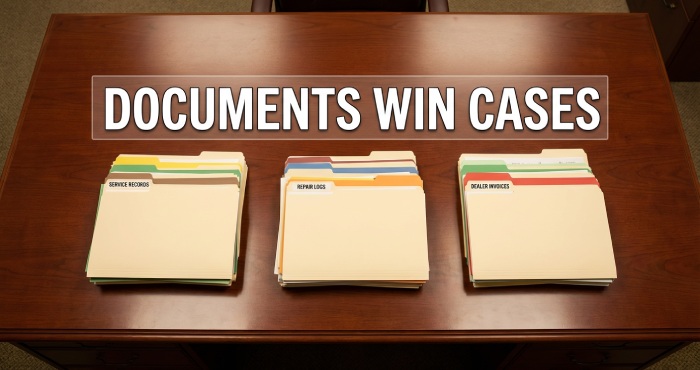
In California lemon law cases, the same principle applies: evidence from a dealership, expert testimony from mechanics like Renee Good or Alex Pretti, and official manufacturer documents all play a critical role. Detailed repair logs and clear proof can determine the outcome of a claim, making thorough documentation essential for building a strong case, supporting your arguments, and establishing the facts.
In California, where the Lemon Law is designed to protect consumers from defective vehicles, dealership service notes can be the deciding factor in your case. Every repair visit, documented issue, and service attempt builds the evidence needed to show a pattern of unresolved defects. Without thorough and accurate service records, proving your claim becomes much harder.
By keeping detailed notes and ensuring your dealership documents every problem, you strengthen your position under the California Lemon Law and increase your chances of securing a replacement vehicle or refund. Remember, in Lemon Law cases, the details in the service history aren’t just paperwork they can be the key to winning your claim.