Recreational vehicles (RVs) capture a sense of exploration – combining the liberty of traveling anywhere, the coziness of home, and the excitement of new experiences. Yet, when mechanical problems or manufacturing flaws occur, what was once an enjoyable journey can swiftly become a frustrating hassle. In California, the Lemon Law provides robust safeguards for RV owners facing persistent issues, leading to a frequent inquiry: Is it possible to apply Lemon Law protections to a loaner RV given to you while your RV is in the shop?
Under California’s Lemon Law, RVs may qualify for protection when major motorized components—such as the engine, transmission, or drivetrain—fail despite repeated repair attempts. A California Lemon Law lawyer can help clarify whether the chassis or drivetrain issues fall under warranty coverage, while coach features like plumbing or appliances are typically covered separately.
An RV is deemed a “lemon” if it has a major flaw that impacts its usability, safety, or market value, and this flaw persists despite a reasonable number of repair attempts within the warranty period. If these criteria are met, the RV owner may qualify for a refund, a replacement vehicle, or monetary compensation.
In Mount Laguna, the California Lemon Law protects RV owners by requiring manufacturers to repair or replace defective recreational vehicles that can’t be fixed after reasonable repair attempts.
The Role of a Loaner RV
What is a Temporary RV?
When an RV needs repairs due to warranty issues, manufacturers or dealerships often supply a temporary RV to allow the owner to continue their travel or camping plans without significant interruptions. The duration of this provision can vary, lasting from several days to months depending on how extensive the repairs are.
Why Are Temporary RVs Offered?
There are several reasons why temporary RVs are provided:
To keep customers satisfied during extended repair times.
To fulfill warranty requirements that ensure continuous access to the RV.
To demonstrate a commitment to customer service from the dealership or manufacturer.
However, while these temporary vehicles are designed to assist, they may sometimes pose new challenges, especially if the loaner experiences its own issues.
Can You Lemon Law a Loaner RV?
Lemon Law Eligibility: You generally cannot file a Lemon Law claim for a loaner RV since you are neither the buyer nor the lessee—the law only applies to vehicles you own or lease under warranty.
Ownership Requirement: California Lemon Law protections apply only if you have a valid purchase or lease agreement; loaner RVs provided during repairs don’t meet this criterion.
Warranty Responsibility: The loaner RV’s warranty belongs to the dealership or manufacturer, meaning any defects or issues are their responsibility—not the temporary user’s.
Your Rights and Protections When Using a Loaner RV
Your Rights as a Consumer
While a loaner vehicle may not qualify under the Lemon Law, a California Lemon Law attorney can help you understand the important consumer rights and protections you still have.
1. Safe and Operational Vehicle
The dealership or manufacturer is obligated to provide a loaner RV that is safe, compliant for road use, and in good working order. If the vehicle malfunctions or poses any safety concerns, you have the right to ask for a prompt replacement.
2. No Additional Fees for Loaner Usage
You should not incur extra charges for utilizing a loaner RV while your vehicle is under legitimate warranty repairs. Any applicable mileage limitations or fuel reimbursement details must be clearly outlined in writing.
3. Clear Documentation and Transparency
Dealers are required to give you written records detailing the terms for your loaner RV, including:
The period of use
Liability for damages or insurance
Conditions for returning the vehicle
Having a copy of this documentation is essential to safeguard your interests in case any disputes arise later on.
What Happens If the Loaner RV Has Defects?
Reporting Issues Immediately
If you encounter any issues with the rented RV while in your possession, contact the dealership immediately. This allows them to quickly address the problem and supply you with a suitable alternative.
The Importance of Quick Reporting
Timely notification helps establish documentation that you have acted diligently. This can be beneficial if you decide to pursue a Lemon Law claim for the original RV, as it shows that the manufacturer did not provide a dependable replacement vehicle.
Loaner RV Breakdowns and Safety Concerns
Mechanical Issues
In the event that the loaner has mechanical problems — like engine or brake failures — you have the right to request a different loaner and should not have to drive it until it’s deemed safe. You won’t face penalties or charges for declining to use equipment that is unsafe.
Problems with Living Conditions
If you encounter issues such as broken air conditioning, leaks, or electricity outages in the living area of the loaner, these should be reported and fixed without delay. While these problems may not fall under Lemon Law provisions, they can impact your comfort and usability. The dealership remains accountable for addressing these concerns.
How the Loaner Period Affects Your Lemon Law Claim
The duration of repairs is a vital factor in Lemon Law claims since the total days your RV is non-operational affects your eligibility. Even if you have a rental vehicle during repairs, that period is still counted against your claim. For example, if your RV is in the shop for over 30 total days due to warranty issues, it may be considered a lemon under California law.
To strengthen your claim, keep detailed records of every repair visit—such as service orders, receipts, and the dates your RV was unavailable. Also, document all communication with the dealer or manufacturer about any loaner vehicle. This thorough documentation can serve as vital evidence if you pursue compensation or a buyback later.
While you can’t directly Lemon Law a loaner RV, you’re still protected under California law. The loaner must be safe, functional, and free of extra costs, and the repair time for your RV still counts toward a potential Lemon Law claim. If your RV’s issues remain unresolved, contact the Best Lemon Law attorney in San Diego to explore your rights to a refund or replacement and stay protected on every journey.
When purchasing a vehicle, buyers often expect it to be dependable and safe. However, even cars with high mileage may experience ongoing problems, no matter how thoroughly they were inspected. Lemon laws exist to safeguard consumers from significant, unresolved issues, but the specific criteria for these protections can differ by state. Familiarizing yourself with these regulations can help you assess whether your vehicle meets the requirements, which could ultimately save you both time and money.
00:00
Step 1: Understand the Basics of Lemon Law
Understanding Lemon Law
Lemon law serves as a consumer protection measure aimed at assisting individuals who buy vehicles that have significant defects. These flaws usually affect the vehicle’s usability, safety, or worth, and manufacturers must fail to fix these issues after making a reasonable number of tries.
Important Considerations
Lemon law generally pertains to new cars, and in certain states, it may also cover used vehicles.
Vehicles with high mileage can qualify if the defects are serious and ongoing.
Keeping thorough documentation and evidence of repair attempts is crucial.
Why High-Mileage Cars Are Different
Vehicles with high mileage frequently encounter distinct issues. The age of components, signs of usage, and past maintenance records can make claims more complex. Nonetheless, if a defect arises from a manufacturing fault instead of typical deterioration, lemon law protections could still be relevant.
Step 2: Confirm Your Vehicle Is Covered
Not every vehicle qualifies for protections under lemon laws, so it’s essential to determine eligibility first.
Examine Warranty Status
Generally, lemon laws stipulate that the vehicle must be covered by the manufacturer’s warranty. This can be tricky for high-mileage vehicles, as warranties typically have limits based on either time or mileage.
How to Check Warranty
Find the original warranty paperwork or reach out to the manufacturer for information.
If you bought the vehicle used, ensure that any transferable warranties apply.
Confirm that the specific issue you are facing is included in the warranty coverage.
Recognize Relevant State Regulations
Lemon laws differ greatly from one state to another. While some states provide coverage for used vehicles or those with high mileage, others restrict claims to new automobiles.
Key State Differences to Consider
Some states specify that defects must arise within certain time frames or mileage thresholds.
The interpretation of what constitutes a “reasonable number of repair attempts” can vary.
Defects related to safety might be treated with additional scrutiny.
Step 3: Document All Defects and Repairs
Thorough documentation is crucial for a successful claim.
Maintain Comprehensive Records
Document every trip to a repair shop, noting dates, services rendered, and any communications with the dealer or manufacturer.
Essential Elements for Your Records
Repair orders and receipts
Logs of correspondence (emails, texts, or letters)
Photos of the defect, if available
Observations on how the defect impacts your vehicle’s performance
The Importance of Documentation
Without adequate documentation, it’s challenging to demonstrate that the issue is ongoing and that the manufacturer has failed to resolve it despite reasonable efforts.
Step 4: Evaluate the Severity of the Defect
Lemon laws do not encompass all car issues. For a defect to be eligible, it needs to considerably impact the vehicle’s functionality, safety, or market worth. Think about whether the issue hampers your ability to drive safely or comfortably and if it endangers essential components such as brakes, steering, or airbags.
Typical defects that may qualify involve failures in the engine or transmission, brake failures, serious electrical issues impacting safety, and problems with steering or suspension. Moreover, the defect should be ongoing, continuing even after repair attempts; a small, isolated issue typically won’t meet the criteria.
Step 5: Track Repair Attempts
Even a high-mileage vehicle may need multiple repairs, but California Lemon Law focuses on repeated attempts to fix the same persistent problem. A California Lemon Law attorney can help you determine whether those recurring issues qualify your vehicle as a lemon.
Establishing a “Reasonable” Number of Repairs
While there isn’t a standardized figure, numerous states view 2 to 4 failed repair attempts as reasonable. For defects involving safety, just one unsuccessful repair may be sufficient for qualification.
Illustrations
A transmission that fails twice after being serviced could be eligible.
An airbag that continues to malfunction despite a single repair might be considered a critical safety issue.
Engage with the Manufacturer
It’s essential to inform the manufacturer about persistent problems. Documenting these interactions can significantly bolster your case.
Step 6: Seek Professional Evaluation
Seeking expert assistance can streamline your experience and enhance your likelihood of achieving a favorable outcome.
Reach Out to a Lemon Law Lawyer
Lemon law lawyers have expertise in state-specific laws and often operate on a contingency fee basis, meaning you only pay if you are successful in your case.
Advantages of Legal Support
Precise evaluation of eligibility for claims
Help with required documentation and repair history
Advocacy during negotiations or in court if necessary
Utilize Third-Party Mechanics for Objective Assessments
Hiring an independent mechanic can yield an impartial report verifying that the issue is related to manufacturing defects rather than normal wear and tear.
Step 7: Prepare for Resolution Options
If your vehicle with high mileage meets the criteria for lemon law coverage, there are a few possible results:
The manufacturer might agree to buy back the car and return the original purchase price, deducting a fair amount for usage based on how many miles you’ve driven.
Replacement Car
If possible, the manufacturer may provide a replacement vehicle. It would be a similar model to the original.
Financial Settlement
You may also reach a financial agreement that could include reimbursement for repair costs, loss of value, or other related expenses.
Be informed about the approximate costs for repairs and defects.
Clearly express the resolution you desire.
Vehicles with high mileage may develop issues, but you don’t have to endure persistent manufacturing defects. By understanding lemon law, documenting every problem, and tracking repair attempts, you can determine whether your vehicle qualifies for protection. With guidance from a San Diego lemon law lawyer, you strengthen your chances of securing a buyback, replacement, or fair settlement.
Recreational vehicles (RVs) offer the perfect mix of comfort and adventure, giving travelers freedom on the open road. Many buyers find their dream RVs at expos or shows, where numerous models and special deals make the experience exciting. However, amid the excitement, one crucial question often goes unnoticed: what if the RV turns out to have defects? Understanding how California Lemon Law Lawyer—and similar laws in other states—apply to RVs purchased at expos can help you make informed choices and protect your rights if problems arise after the purchase.
00:00
Understanding Lemon Law Protections for RV Buyers
What Lemon Law Covers
The Lemon Law protects buyers and lessees of vehicles that fail to meet performance or quality standards after multiple repair attempts. It generally applies to new and used cars sold with warranties and, in some cases, to RVs and motorhomes. For RVs, coverage typically includes the chassis, engine, and drivetrain, while living areas like appliances and electrical systems may fall under separate warranties.
RVs Purchased at Expos or Shows
Buying an RV at an expo or trade show provides the same consumer protections as purchasing from a dealership. These protections, including Lemon Law coverage, depend on the warranty type, state laws, and how the RV is classified — as a vehicle or a dwelling.
Key Lemon Law Considerations for RV Expo Purchases
Understanding Warranty Obligations
The basis of any Lemon Law case lies in the warranty. When purchasing an RV at an expo, it’s important to clarify who offers the warranty — whether it’s the manufacturer, the dealer, or potentially both.
Types of RV Warranties
Warranty from the manufacturer: Protects against flaws in materials or construction for designated parts such as the engine, transmission, and chassis.
Manufacturer’s Guarantee: Offered by the RV maker, this warranty encompasses essential living features, including air conditioning, water systems, and slide-out mechanisms.
Extended Service Plans or Dealer Warranties: These options, provided by the seller, might offer extra protection, but they can vary greatly from the warranties given by the manufacturer.
Maintain thorough documentation of all warranty agreements and materials obtained at the expo. Lack of proper paperwork may hinder your chance to file a claim in the future.
When Lemon Law Applies to RV Expo Purchases
New vs. Used RVs
In most states, Lemon Laws primarily protect new RVs. However, in California, used RVs with a valid written warranty may also qualify if problems occur during the warranty period. When purchasing an RV labeled as “new” or “demo,” especially at a show, ensure the contract clearly reflects its true condition.
New RVs
If you’ve purchased a new RV from an expo and it repeatedly encounters safety, usability, or value problems — yet the manufacturer or dealer is unable to resolve these issues after several reasonable attempts — it could be classified as a lemon.
Used RVs
Lemon Law protections for used RVs are relevant only if a written warranty was given at the time of purchase. Generally, sales between private parties without warranties are ineligible, but the federal Magnuson-Moss Warranty Act could still offer some safeguards.
Electrical issues affecting lights, heating, or cooling
Documenting Recurring Problems:
Record each service visit and repair attempt
Note specific issues and their frequency
Keep all service requests and dealership communications
Maintain organized records as key evidence for Lemon Law claims
Challenges in Lemon Law Cases for RV Expo Purchases
Multiple Manufacturers and Warranties
Recreational vehicles typically incorporate components and systems produced by various manufacturers. For instance, the engine might be sourced from one brand, the chassis from another, and the appliances from yet a different supplier.
Complex Warranty Coverage
As a result, the warranty from each manufacturer might cover various components of the RV. This separation of accountability can make Lemon Law claims more complex, requiring consumers to engage with several parties to achieve a resolution.
Geographical Complications
Expos draw in customers from various states, often quite distant from the RV dealer or manufacturer’s location. If any issues arise after returning home, obtaining warranty service or filing a claim might necessitate traveling or coordinating with repair facilities located out of state.
Cross-State Warranty Enforcement
If a transaction took place in one state and the issue emerged in a different one, the relevant Lemon Law might rely on the location where the purchase agreement was signed or where the RV is registered.
How to Protect Yourself When Buying at an RV Show
Pre-Purchase Precautions
Prior to completing a purchase at an expo, be sure to follow these steps:
Investigate the exhibitor to confirm that they are certified dealers or approved manufacturers.
Examine the RV Carefully: Inquire about its previous usage, total miles driven, and any history of demonstrations.
Examine All Insurance Policies: Get a documented clarification on what is included, the duration of coverage, and the provider responsible.
Ask for a copy of the Purchase Agreement: Avoid signing any documents that are unclear or unfinished.
Checking for Hidden Conditions
Certain sales at expos might contain specific conditions like “as is” statements, which can restrict your rights. Be sure to verify if such clauses are present in your purchase agreements.
Post-Purchase Steps
Once you’ve made your purchase, check all systems promptly. If you encounter any problems, contact the manufacturer or dealer right away and arrange for warranty repairs. Keeping thorough records early on will bolster your potential Lemon Law case if issues continue.
Purchasing an RV at the Arcadia, San Diego Expo offers great deals and variety, but buyers should ensure warranty coverage and understand Lemon Law protections before finalizing their purchase.
Purchasing an RV at an expo or trade show can be exciting and cost-effective, but it’s essential to remember that these deals are still covered by the same protections as traditional dealerships. In California, Lemon Law applies if your RV comes with a valid warranty and meets the legal definition of a “lemon.” To safeguard your investment, keep detailed records and consult a San Diego Lemon Law lawyer for guidance—ensuring your travels remain worry-free.
Purchasing a vehicle is a major financial commitment, and buyers generally anticipate that their cars will be dependable, secure, and perform well. Sadly, some automobiles may have serious issues despite extensive research and careful choosing. This is where lemon laws and repair rights become essential. Such protections guarantee that consumers aren’t burdened with faulty cars and can take action if manufacturers do not fulfill their responsibilities.
Understanding Lemon Laws
Lemon laws exist to safeguard consumers who buy new or, in some instances, used cars that consistently fall short of established quality and safety standards. While these laws differ from one state to another, their fundamental aim is to provide assistance to vehicle owners facing ongoing defects that severely impact the car’s functionality, safety, or market value.
Criteria for Classifying a Vehicle as a “Lemon”
For a vehicle to be classified as a lemon under the majority of state regulations, it must fulfill specific conditions:
Serious Defects
A vehicle is typically labeled a lemon if it possesses significant flaws that compromise its safety, reliability, or overall performance. Common examples include recurring engine failures, brake issues, or electrical malfunctions that hinder the car’s intended operation.
Numerous Repair Attempts
The manufacturer must be afforded a “reasonable chance” to fix the defect. While some states outline a specific number of attempts for repairs, generally, if a major problem persists after two to four repair efforts, the vehicle can be deemed a lemon.
Timeframe of the Defect
The defect should arise within a particular timeframe, commonly within the first 12 to 24 months or after 12,000 to 24,000 miles since purchase, although the exact rules can vary by state.
The Role of Repair Rights
Repair rights play a vital role alongside lemon laws by giving consumers the chance to have a problematic vehicle repaired before they can request a buyback or a replacement. It’s essential to be aware of your repair rights to effectively handle lemon law claims. If you’re unsure how to navigate the process, a Lemon Law attorney can guide you and protect your rights every step of the way.
The Importance of Documentation
Thorough documentation serves as the foundation for any lemon law case. Keeping meticulous records can determine the success of your claim.
What to Document
Repair Efforts: Retain all receipts, invoices, and work orders from authorized repair centers or dealerships.
Communication Records: Document every email, phone call, and letter exchanged with the dealer or manufacturer.
Issues and Consequences: Keep track of when the issues arise, how they impact your driving experience, and any associated safety concerns.
The Reasonable Repair Opportunity
Manufacturers must legally receive a fair opportunity to address ongoing problems with their products. This “fair opportunity” often involves several repair efforts for minor defects, but could be limited to just one for critical safety concerns like brake malfunctions or steering failures.
Key Considerations:
Defect Severity: Issues posing a risk to life or safety typically require urgent attention.
Repair Attempts: Although there is no set standard, several failed repair attempts can bolster your claim.
Downtime: Prolonged periods when your vehicle is being repaired could strengthen your case under lemon law provisions.
How Lemon Laws Protect You
Lemon laws provide powerful protections to help consumers recover from purchasing defective vehicles. Their purpose is to return buyers to their original financial position and prevent losses caused by faulty cars. If you’re facing ongoing vehicle issues, a Lemon Law Lawyer in California can help you understand your rights and secure the compensation you deserve.
Vehicle Buyback or Exchange
A key solution provided by lemon laws is the option for either a buyback or replacement of the vehicle.
Buyback Procedure
Should your car meet the criteria of a lemon, the manufacturer might be obligated to buy it back at the initial purchase price, inclusive of taxes, fees, and any other associated expenses.
Replacement Options
Alternatively, the manufacturer may give you a comparable vehicle that has similar features and value instead of executing a buyback.
Monetary Compensation
Besides options for buyback or replacement, certain states permit compensation for the following:
Repair Expenses: Costs incurred for addressing the defect.
Reduced Value: The decrease in the vehicle’s worth as a result of the issue.
Legal Fees: In some instances, expenses for legal representation can also be claimed.
Steps to Protect Yourself
Taking initiative can greatly impact your approach to potential lemon law situations.
Step 1: Understand Your Local Regulations
Lemon laws and repair entitlements vary by state. It’s important to educate yourself about specific deadlines, necessary paperwork, and what constitutes a defect.
Step 2: Keep Comprehensive Records
From the first sign of a problem, document every repair attempt, communication with the dealer, and any symptoms observed.
Step 3: Communicate Effectively with the Manufacturer
Inform the manufacturer about the persistent issue, providing them a chance to fix it. Written communication is recommended for keeping evidence of your notice.
Step 4: Get Legal Advice
Seeking assistance from a lawyer who specializes in lemon law can help you understand complex rules and enhance your chances of a successful outcome.
Lemon laws and repair rights play a crucial role in protecting consumers, ensuring that those who purchase vehicles aren’t left with unsafe or defective cars. With guidance from a California Lemon Law attorney in San Diego, staying informed about your rights, keeping detailed records of issues, and taking timely action can help you secure solutions such as refunds, replacements, or compensation. These protections reinforce the standard of safety and reliability every car buyer deserves.
Having a lemon — a car that has ongoing issues that the manufacturer fails to resolve — can be both frustrating and costly. California boasts one of the most robust lemon laws in the country; however, rising claims and changing regulations mean consumers need to approach the situation with care and strategy. Working with a California lemon law lawyer can help you navigate these challenges more effectively. Here are five effective tactics, complete with actionable steps and the latest data, to assist you in handling conflicts with manufacturers in California.
00:00
Strategy 1 — Document everything
Why documentation matters
The more compelling your evidence is, the simpler it becomes to demonstrate that the issue is persistent and that the manufacturer neglected to remedy it. Courts and arbitration officials place significant reliance on records created at the time of the incidents.
The Song-Beverly Consumer Warranty Act in California, often referred to as the “lemon law,” typically mandates that manufacturers be allowed a fair number of repair opportunities to address a significant defect that affects the vehicle’s usability, value, or safety.
Actionable Steps
Track Repair Attempts and Downtime: The chance of a successful buyback often relies on the total count of repair attempts or the length of time the vehicle has spent in the shop.
Be Aware of Deadlines and Arbitration Options: Keep an eye on procedural deadlines and whether arbitration is mandatory or discretionary. Updates in legislation for 2024-2025 may have altered the pathways for filing claims; verify the latest deadlines prior to submitting any filings.
Strategy 3 — Communicate strategically with the manufacturer and dealer
Open, clear, and written communications reduce excuses
Whenever possible, communicate in writing to keep a clear record. Written communication helps avoid misunderstandings and ensures accountability. If you need to make a phone call, take detailed notes during the conversation. Afterward, send a follow-up email summarizing what was discussed and any agreed-upon actions.
Key communication moves
Draft a brief letter outlining the defect history, relevant dates, and the remedy you seek. Mail this using certified mail to the lemon-law claims department of the manufacturer.
If the dealership declines to perform repairs or provides an unsatisfactory solution, ask for your case to be escalated to the manufacturer. Retain all correspondence.
Utilize the repair records to advocate for a buyback or a replacement once the defect satisfies the legal requirements.
Strategy 4 — Use recalls and safety bulletins as leverage
Recalls strengthen your position
If the issue is linked to a manufacturer recall or is under investigation by the NHTSA, be sure to include the recall number and safety bulletin in your request. Manufacturers tend to be more responsive when safety matters are involved. With millions of vehicles currently affected, it’s essential to review any open recalls associated with your VIN.
How to use recall information
Look up the VIN on the NHTSA website and gather information about any recall repair efforts.
If those repairs were either insufficient or did not resolve the issue, be sure to note that and include it in your claim.
Strategy 5 — Consult a lemon-law attorney early (but intelligently)
When to get a lawyer
While it’s not required to hire a lawyer to start a claim, a California Lemon Law attorney can help you distinguish between strong and weak cases, estimate potential remedies, assist with accurate buyback calculations, and manage the settlement or arbitration process. Considering the delays in the court system and evolving regulations, having a lawyer can guide you in selecting the quickest and most efficient route to resolution.
What to expect and ask
Inquire about contingency fees, as numerous lemon-law attorneys operate on this basis.
Request an example of a buyback calculation specific to your vehicle, which should include the total refund plus any incidental damages, such as towing and rental fees, minus the mileage allowance.
Take into account arbitration clauses: your attorney can assess whether arbitration or court proceedings would be more advantageous in light of the recent legislative updates in California.
Sample timeline you can follow (practical guide)
Short form steps
Day 0: Initiate repair efforts – create a folder.
For every repair: gather necessary documents, capture images, and record dates and mileage.
If there are 2 to 4 failed repair attempts or extended periods of being out of service, issue a formal notice to the manufacturer.
Should the manufacturer deny a solution, seek legal advice or consider filing a claim or arbitration.
New rules and reforms are changing where/how claims are resolved; procedural deadlines may be tighter.
5
State consumer complaint counts (yearly regional reports: dozens to hundreds)
Local complaint reporting can be used as supporting evidence and to show patterns with a dealer/manufacturer.
Be swift, organized, and evidence-driven
In recent years, the landscape of California’s Lemon Law has become increasingly active and complex, particularly in regions like San Diego. Between 2022 and 2023, filings surged, vehicle recalls remained high, and procedural updates reshaped how disputes are handled. To improve your chances of a favorable outcome, it’s essential to act promptly, keep detailed records, monitor recall information, and seek guidance from an experienced San Diego Lemon Law lawyer. As data shows a rising number of consumers turning to Lemon Law protection, working with a skilled attorney can help you navigate this growing trend and secure the compensation you deserve.
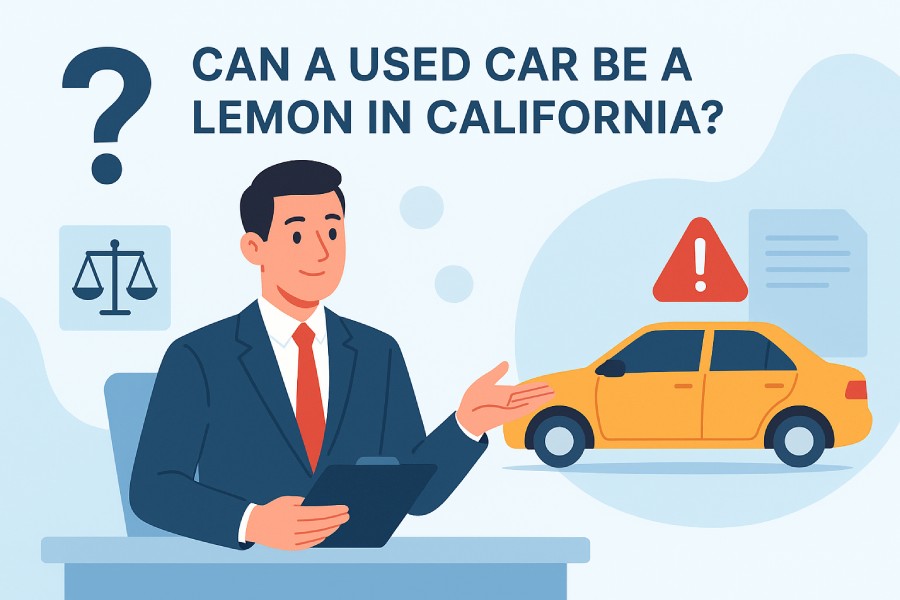
Purchasing a pre-owned vehicle can be a savvy financial decision — unless it frequently experiences issues. Some buyers mistakenly believe that California’s Lemon Law is limited to brand-new cars, but that’s a misconception. The situation is more complex. In certain scenarios, used vehicles may be deemed “lemons” under California law, granting buyers certain protections and the possibility of compensation. Let’s delve into the specifics of this law, the criteria needed to qualify, and how to successfully manage the process.
00:00
Understanding California Lemon Law
California’s Lemon Law, formally referred to as the Song-Beverly Consumer Warranty Act, safeguards buyers and lessees of vehicles that are found to be defective. Although it mainly applies to new cars, it is also relevant for select used and certified pre-owned (CPO) vehicles.
Overview of the Lemon Law
The essence of the Lemon Law is straightforward: If a vehicle has a significant defect that affects its usability, value, or safety, and the manufacturer or dealer does not manage to fix it after a reasonable number of attempts, the consumer may be eligible for a refund or a replacement.
Consumer Protection Under the Law
The manufacturer is obligated to repair the vehicle as per warranty terms.
If they fail to rectify the issue after several attempts, they are required to either buy back the vehicle or provide a replacement.
Additionally, consumers are entitled to claim for related expenses, including costs for towing or rental cars.
Can Used Cars Qualify Under California Lemon Law?
Used Vehicles with Active Manufacturer Guarantees
Yes, pre-owned vehicles can be eligible, provided specific criteria are satisfied. If a used vehicle is still under its original manufacturer warranty or is paired with a certified pre-owned (CPO) warranty, it may be protected by the Lemon Law.
Conditions for Lemon Law Application on Used Vehicles
The defect arose during the validity of the warranty.
The problem significantly impacts the vehicle’s performance, safety, or worth.
The manufacturer or dealer made a reasonable number of attempts to rectify the issue but failed.
Ultimately, the applicability of coverage is based not on whether the vehicle is considered “new” or “used,” but rather on the status of the warranty at the time when the repairs were attempted.
Example Scenario
Picture buying a certified pre-owned SUV that is two years old and still under the manufacturer’s warranty of three years or 36,000 miles. Should it experience a persistent transmission problem and the dealership is unable to fix it after multiple tries, you could be safeguarded by Lemon Law, similar to a new vehicle owner.
Certified Pre-Owned (CPO) and Dealer Warranties
A lot of consumers in Oakland, California choose Certified Pre-Owned (CPO) vehicles because they come with limited warranties and have undergone thorough inspections. Nevertheless, even these “certified” cars can still have defects.
How CPO Coverage Works
A Certified Pre-Owned (CPO) warranty is generally issued by either the dealer or the manufacturer, offering coverage for certain components over a defined time frame. Should a defect occur within this warranty timeframe and continue despite repair attempts, Lemon Law provisions may be relevant.
Important Elements for CPO Lemon Law Claims
The issue needs to fall under the coverage of the CPO warranty.
All repairs should be performed at approved service facilities.
It’s crucial to keep records of each repair visit to demonstrate ongoing issues.
Dealer Warranties
Certain dealerships offer pre-owned vehicles accompanied by a limited dealer warranty, typically lasting 30 days or covering 1,000 miles. Despite its brevity, this warranty may still invoke Lemon Law protections if there are major defects that remain unresolved during the warranty timeframe.
What Types of Defects Qualify?
Substantial vs. Minor Defects
Not all problems make a vehicle a lemon. Legal definitions differentiate between serious defects and slight annoyances.
Make sure the repair order clearly details the exact issue you reported. Ambiguous notes can undermine your position should you need to make a claim later.
2. Inform the Manufacturer
If the issue continues, it’s essential to inform the manufacturer or authorized dealership. This official notification gives them one last opportunity to resolve the issue before you proceed with a Lemon Law claim.
3. Obtain Legal Help
Given the complexities of used car lemon claims, it’s wise to seek the advice of a California Lemon Law attorney. These legal professionals are familiar with manufacturer strategies and will help safeguard your rights.
Why Legal Help Matters
Legal professionals are equipped to manage negotiations with manufacturers.
A number of lawyers operate on a contingency fee structure, meaning manufacturers typically cover legal fees should you achieve a victory.
They can assist you in seeking extra funds to cover any inconvenience or expenses incurred.
Protecting Your Rights as a Used Car Buyer
In California, a pre-owned vehicle may qualify as a lemon if it remains under warranty and continues to have ongoing, unresolved issues. The California Lemon Law safeguards the rights of both new and used car owners against enduring mechanical failures and unfair practices by manufacturers. If you find yourself facing such challenges, consulting a Lemon Law attorney in San Diego can assist you in defending your rights and seeking a just outcome.