
Why Expedited Depositions Happen in California Lemon Law Cases
When speed becomes necessary
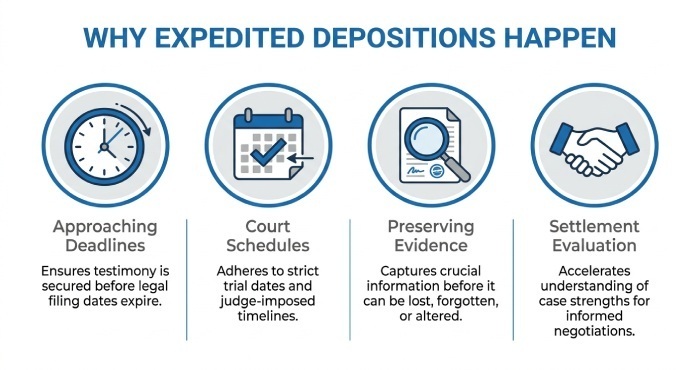
Expedited depositions in California Lemon Law cases may be necessary when deadlines are approaching, court schedules are limited, or testimony is needed quickly. They help clarify vehicle defects, repair attempts, warranty coverage, and manufacturer responsibilities. Early testimony can also help preserve important evidence and evaluate potential settlement options.
Why manufacturers and consumers use depositions
Both consumers and manufacturers use depositions to understand the facts of a case. Vehicle owners can explain how recurring defects affected their vehicle’s safety, use, and value, while manufacturers can review complaints, service records, mileage, and repair history. These statements may help determine whether a settlement, replacement, or refund is appropriate.
Legislative and court-system context
Changes in California Lemon Law procedures and court requirements can influence deposition schedules and litigation strategies. When legal deadlines, discovery requirements, or arbitration issues arise, timely testimony can help clarify disputes, protect consumer rights, and keep cases moving forward.
How to Prepare: Documents, Repair History, and Key Facts to Review
Gather the core documents
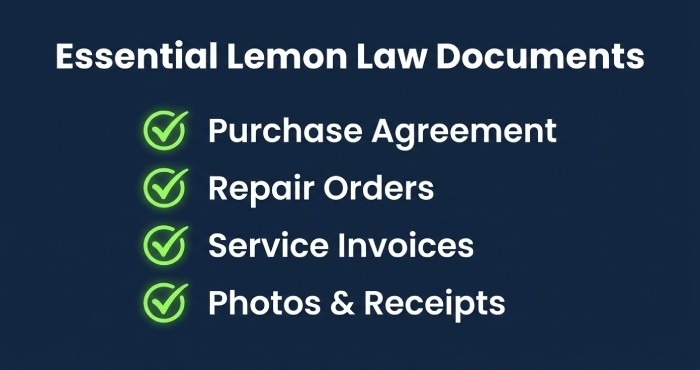
Preparation starts with documents. In a California Lemon Law lawsuit, the most important records usually include the purchase or lease agreement, vehicle warranty booklet, repair orders, service invoices, recall notices, correspondence with car dealerships, and communications with the manufacturer. If the lemon vehicle was serviced repeatedly for the same issue, those repair orders are critical.
Car buyers should also gather text messages, emails, photos, videos, dashboard warning light images, towing receipts, rental car invoices, and notes about conversations with service advisors. These materials help establish whether defective vehicles suffered serious warranty defects and whether the manufacturer had a reasonable number of attempts to fix them.
Repair timeline and mileage chart
A simple timeline can be extremely valuable. List each repair visit, the date, mileage, complaint, diagnosis, parts replaced, and number of days the vehicle was out of service. This helps your attorney connect warranty claims to the vehicle warranty and identify inconsistencies in the manufacturer’s records.
Recall and technical service information
If a vehicle had a recall, software update, or technical service bulletin, document when you learned about it and whether the repair fixed the problem. This information can help establish recurring defects, unresolved repair issues, and manufacturer responsibilities in a California Lemon Law claim.
Review the facts, not memorized answers
A deposition is not a memory test, but accuracy matters. Review the facts of your California Lemon Law claim before testifying. Know when the problems started, how often they occurred, how they affected vehicle reliability, and whether you asked for a buyback, replacement or refund. If you do not remember something, it is acceptable to say so.
Car buyers should avoid guessing. Auto manufacturers often compare deposition answers against repair records, consumer complaints, Department of Consumer Affairs materials, and communications with the California Department of Consumer Affairs or California Department of Justice. If your vehicle is an RV or motor home, a specialized rv lemon law attorney may help identify additional documentation unique to larger vehicles.
What Happens During the Deposition: Questions, Participants, and Timeline
Who attends the deposition
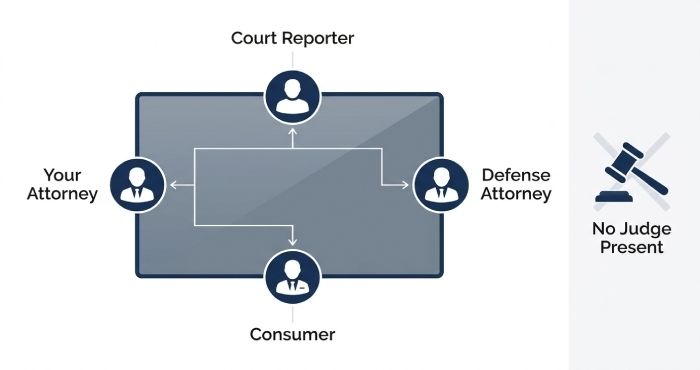
An expedited deposition usually includes the consumer, the consumer’s attorney, the manufacturer’s defense attorney, a court reporter, and sometimes a videographer. In some lemon law cases, a representative for the auto manufacturers may attend remotely. The judge is not typically present, but the testimony is given under oath and can be used in the lawsuit.
The court reporter creates an official transcript. That transcript may later support motions, settlement demands, trial preparation, or challenges to court filings. Because the deposition is sworn testimony, car buyers should treat it seriously.
How long it usually takes
An expedited deposition may last one to several hours, depending on the number of defects, repair attempts, and disputed facts. Some depositions are shorter when the warranty claims are straightforward. Others take longer when defective vehicles have multiple systems involved, such as engine failure, braking problems, electrical malfunctions, battery defects, or safety-related serious defects.
The typical question format
The manufacturer’s attorney will ask questions about the purchase price, financing, ownership history, service visits, and communications with car dealerships. You may be asked why you believe the vehicle is a lemon vehicle, whether you reviewed the vehicle warranty, and what outcome you are seeking. In California Lemon Law cases, common outcomes include a replacement or refund, civil penalties, or refund purchase price relief when legal requirements are met.
A consumer may also be asked about arbitration, whether they received an opt out notice, whether they contacted the Department of Consumer Affairs, and whether they complained directly to the manufacturer. If you are represented by a lemon law attorney san diego, your attorney can object when questions are improper and help preserve consumer rights during the deposition.
Common Topics Covered: Vehicle Defects, Repair Attempts, Warranties, and Manufacturer Conduct
Vehicle defects and safety concerns
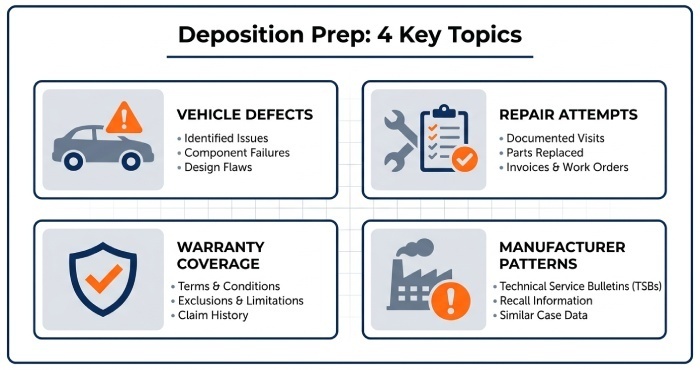
The attorney may ask when the defect started, how often it occurred, and whether it affected the vehicle’s safety, value, or usability. Be prepared to explain how the problem impacted your daily driving.
Repair attempts and dealership conduct
Expect questions about repair visits, dealership responses, and whether problems returned after repairs. Service records and repeated unsuccessful repairs can help support your lemon law claim.
Warranty coverage and manufacturer responsibility
The deposition may cover warranty terms, maintenance history, and manufacturer responses. Be ready to explain whether the defect occurred under warranty and how the manufacturer handled your complaints.
Broader manufacturer patterns
Attorneys may examine recurring defects, recalls, and technical issues involving different manufacturers. Such patterns can help establish whether manufacturers knew about vehicle problems before your repair visits.