Purchasing a new or pre-owned vehicle is often a thrilling experience, filled with visions of road trips, weekend getaways, and dependable transportation. Yet, when your car frequently malfunctions, that thrill can swiftly transform into frustration. California’s Lemon Law was established to safeguard consumers from faulty automobiles and guarantee they receive the necessary compensation or a replacement vehicle.
00:00
Unfortunately, certain car dealerships take advantage of gaps in the legislation to evade their obligations. Being aware of these strategies is crucial for safeguarding yourself and ensuring that your faulty car doesn’t burden you with ongoing repair costs.
Misclassifying the Problem as “Wear and Tear”
A prevalent strategy employed by dealers involves asserting that the problems with your vehicle are merely a result of typical wear and tear, rather than indicative of a defect.
How It Functions
Dealers might argue that issues such as noisy brakes, slight engine sounds, or cosmetic flaws are standard for the vehicle’s age or mileage. By categorizing these concerns as “normal wear,” they aim to evade the implications of the Lemon Law, which is designed to address significant defects that impact the safety, usability, or value of the car.
Why You Should Stand Your Ground
It’s crucial to maintain comprehensive records of all repairs and issues encountered. Documentation from a mechanic or invoices from the dealership can help illustrate that the problems are persistent and not simply a result of regular wear. Being persistent and gathering solid evidence is vital to establishing that the defect is significant enough to warrant protections under the Lemon Law.
Claiming the Car Was Not Properly Maintained
A frequent strategy employed by dealers involves arguing that your Lemon Law claim is invalid due to a failure to adhere to the manufacturer’s maintenance guidelines. They often examine service records closely for any minor oversights, potentially using even a single missed oil change as a rationale to argue that the defect is due to neglect rather than a manufacturing fault.
To combat this, it is essential to strictly follow the manufacturer’s maintenance schedule and maintain thorough documentation, including receipts, invoices, and service logs. Maintenance performed at independent repair shops is acceptable as long as it is properly recorded. Consistent maintenance documentation strengthens your position and makes it more challenging for dealers to reject your claim under California’s Lemon Law.
Delaying Repairs or “Fixing” the Vehicle Ineffectively
The Waiting Game
Dealers may schedule multiple repair appointments without effectively solving the issue, assert that parts are unavailable, or only partially rectify the defect. Their intention is to exhaust the consumer’s patience, hoping you will accept superficial fixes rather than pursuing a comprehensive Lemon Law claim.
Safeguarding Yourself
Maintain a meticulous record of each repair visit, noting dates, reported issues, and the duration the vehicle spent in the shop. Capturing images or videos of ongoing problems can bolster your case. If the issue continues after several attempts at repair, this documentation can serve as compelling evidence for a buyback or replacement.
Exploiting Time and Mileage Limits
California’s Lemon Law outlines clear criteria regarding the number of repair attempts, duration of repairs, and mileage limits necessary for a claim to be valid. However, some dealerships may exploit these guidelines to reject your claim.
Understanding the Strategy
Dealers might contend that you delayed too long in notifying them about the issue or that your vehicle has surpassed the permitted mileage. They may also assert that the repair records were not submitted within the legal timeframe. Such technicalities are frequently used to unjustly invalidate legitimate claims.
Recommended Actions
From the outset, maintain detailed records. Document the purchase date, every issue encountered, and each repair attempt made. Reporting issues promptly and keeping thorough documentation can help prevent dealers from taking advantage of these loopholes. It’s advisable to consult a Lemon Law attorney early in the process to ensure your case adheres to all legal timeframes.
Downplaying the Severity of the Defect
Certain dealers may minimize defects by framing significant issues such as engine, transmission, or electrical failures as mere trivialities, which can diminish the urgency of your claim. This tactic might influence service managers, insurance adjusters, and even judicial outcomes if the severity of the problem is not adequately recorded.
To combat this strategy, it’s essential to collect compelling evidence illustrating how the defect impacts your everyday life — such as unexpected stalls, safety hazards, repair costs, and lost work time. Evaluations and comprehensive reports from independent mechanics are particularly valuable in proving that the issue is serious rather than a simple inconvenience.
InBorrego Springs, some dealers may downplay the severity of a vehicle defect, portraying serious issues as minor inconveniences to avoid Lemon Law claims.
Protect Yourself from Lemon Law Loopholes
Although these strategies might appear overwhelming, a California Lemon Law lawyer can help guide you through the process. California’s Lemon Law is specifically established to shield consumers from such misleading practices. Here are some actions you can take to improve the likelihood of your claim being accepted:
Keep Detailed Records: Make sure to document all issues, repairs made, interactions with the dealership, and your vehicle’s maintenance history.
Adhere to Maintenance Guidelines: Follow the manufacturer’s recommended service intervals and keep all related receipts.
Understand Your Rights: Familiarize yourself with the necessary timelines, repair attempts, and documentation stipulated by California’s Lemon Law.
Seek Advice from a Lemon Law Attorney: Skilled lawyers are aware of how dealers take advantage of loopholes and can assist you in negotiations, formal requests, and legal proceedings.
Stay Determined: Do not settle for repeated justifications or temporary solutions. A committed and informed approach will enhance your chances of a successful outcome.
Car dealerships frequently employ inventive methods to sidestep their responsibilities under Lemon Law, such as mislabeling issues or taking advantage of legal gray areas. It’s essential for consumers to recognize these tactics and maintain thorough records.
A Lemon Law attorney in San Diego can assist motorists in overcoming these challenges, revealing dealer deceptions, and obtaining the compensation or vehicle replacement they are entitled to, preventing a defective car from turning into an ongoing hassle.
Purchasing a vehicle is often seen as a new beginning, yet for many individuals, the thrill can diminish rapidly due to ongoing repairs that transform their new acquisition into a source of frustration. California’s Lemon Law is designed to safeguard these consumers; however, the situation doesn’t always conclude positively. Numerous defective cars find their way back onto the market via dealerships or private transactions, highlighting the importance of comprehending how Lemon Law transfers operate for both purchasers and sellers.
00:00
Understanding California’s Lemon Law
The Song-Beverly Consumer Warranty Act, commonly known as California’s Lemon Law, safeguards the interests of individuals who purchase or lease new automobiles that are found to have defects. Should a manufacturer fail to resolve a major issue after a “reasonable number” of attempts, they are obligated to either replace the vehicle or provide a refund to the buyer.
This legislation is relevant to new cars and leases in California that come with a warranty and exhibit defects that impact safety, functionality, or overall worth. Vehicles that are returned frequently reappear on the market, but this is subject to stringent disclosure requirements.
What Happens to Lemon Buybacks?
In California, if a manufacturer buys back a faulty vehicle, it must be permanently labeled as a “Lemon Law Buyback.” This label is not merely procedural; it becomes part of the vehicle’s title and remains with it throughout its lifetime, ensuring that any potential future owners are informed about its prior problems.
Sellers of buyback vehicles are required to give written notification about the buyback, detail the issue that caused it, and place a sticker inside the driver’s door frame. These regulations promote clarity, enabling purchasers to make knowledgeable choices and possibly secure a favorable bargain, even with the vehicle’s repair background. Lemon buybacks often re-enter the market with a branded title, and aLemon Law attorney in San Diego can guide buyers on the risks and disclosures involved.
Can Lemon Law Protections Transfer to a New Owner?
This is where it gets intriguing. Lemon Law protections are typically reserved for the initial buyer — the individual who either bought or leased the vehicle new and dealt with the ongoing defect. After the manufacturer has reacquired the car and sold it again, the situation for the new owner changes.
Lemon Law claims cannot be passed on. The subsequent purchaser is not able to initiate a Lemon Law lawsuit for the same issue that led to the vehicle’s buyback.
However, warranty coverage may still be in effect. If the vehicle is sold again with an existing manufacturer’s or dealer warranty, the new owner retains rights under that warranty.
Additionally, disclosure regulations provide safeguards. Should a dealer neglect to inform the buyer about the vehicle’s buyback status, the buyer can seek legal recourse, including fraud allegations.
Thus, while Lemon Law protections are not transferable, California ensures that buyers of branded vehicles still have some level of protection.
In Stockton, California, Lemon Law protections can transfer to a new owner, ensuring continued legal safeguards for vehicles previously repurchased as lemons.
The Upside: Bright Deals on Lemon Buybacks
It may seem surprising, but certain buyers intentionally look for Lemon Law buybacks. The reason? These vehicles frequently offer significant savings.
Take this scenario:
A car that was returned because of a recurring infotainment issue could be completely fixed and sold for a price that is considerably lower than its market value.
Additionally, a buyback vehicle might still have some of its original factory warranty intact, providing reassurance at a reduced cost.
For those who are aware of the potential downsides and conduct thorough research, lemon buybacks can present excellent opportunities — affordable options to acquire higher-end models or newer vehicles without exceeding their financial limits.
The Downside: Bitter Wheels and Hidden Risks
Not every lemon car purchase ends with a bargain; buyers should be aware of several risks. Repairs may fail to fully resolve the original issues, leaving new owners to face the same persistent problems. Additionally, vehicles repurchased under California Lemon Law Lawyer carry a branded title, which can reduce resale value and complicate future sales.
Financing and insurance can also be more challenging, as some lenders hesitate to finance branded cars and insurers may offer lower payouts. For these reasons, prospective buyers should approach Lemon Law buybacks cautiously and come prepared with a thorough checklist to navigate potential pitfalls.
Navigating Lemon Law Transfers Like a Pro
Scrutinize the Title Thoroughly: Make sure to check if the vehicle has a branded title. In California, the phrase “Lemon Law Buyback” should be clearly visible on both the title and registration documents.
Insist on Complete Transparency: Dealers in California are obligated to provide a disclosure statement that details any defects, repair attempts, and whether those issues have been addressed. Be sure to review this documentation carefully.
Examine Repair Histories: Request the service and repair records for the vehicle. Look out for recurring problems or indications that the defect was not adequately fixed.
Obtain an Objective Inspection: Prior to making a purchase, hire a reputable mechanic to examine the vehicle. They might uncover ongoing issues or unrelated concerns.
Clarify Warranty Details: Inquire if the vehicle is still under any factory warranty or if there is an additional warranty offered by the dealer. This information can significantly influence your decision.
Think About Your Future Resale Plans: If you intend to hold onto the car for an extended period, concerns about resale value might be less significant. However, if you plan to sell or trade it within a few years, it’s worth reconsidering.
From Sour to Savvy
In California, Lemon Law buybacks come with both risks and advantages. While a branded buyback may signal prior issues, it can also provide the chance to purchase a reliable vehicle at a more reasonable price. The key is doing thorough research — carefully reviewing titles, checking disclosures, and consulting a Lemon Law attorney or other professionals when needed. By taking these steps, buyers can move forward with confidence, supported by California’s Lemon Law, which ensures greater transparency in the buying process.
For many adventurers, a motorhome is both home and freedom, but when mechanical issues keep arising, the question of protection becomes critical. Under California Lemon Law, coverage for custom-built motorhomes often depends on whether the defect impacts the motorized chassis or the living quarters. Since the rules aren’t always straightforward, consulting an experienced Lemon Law Lawyer California can help you understand these distinctions and determine whether your RV qualifies as a lemon.
00:00
Understanding Lemon Law and Its Purpose
Lemon Laws are designed to safeguard consumers who buy faulty vehicles. These regulations mandate that manufacturers either repair, replace, or provide a refund for vehicles with major defects that cannot be resolved after a reasonable number of attempts. The fundamental principle is straightforward: buyers shouldn’t have to deal with a “lemon.”
While most state Lemon Laws apply to cars, trucks, and SUVs, the situation is more intricate for motorhomes. Since an RV serves as both a vehicle and a living area, various components may be governed by different regulations. This complexity increases further if the RV is custom-made, involving multiple manufacturers or specialized builders in its assembly.
The Lemon Law in Warner Springs, California, is designed to protect consumers by ensuring they receive fair remedies when their vehicles, including motorhomes, have persistent defects.
Understanding How Lemon Law Applies to Motorhomes
In numerous states, the protections offered by Lemon Laws typically encompass the motorized components of a motorhome, such as the chassis, engine, transmission, and drivetrain. However, the living area — which includes plumbing, electrical systems, furniture, and appliances — often does not receive the same coverage.
For instance:
Included Parts: Engine malfunctions, transmission defects, or problematic steering systems.
Typically Excluded: Roof leaks, malfunctioning refrigerators, or air conditioning failures in the living space.
This differentiation is significant because a custom motorhome may feature specific layouts, appliances, or design elements added by an RV manufacturer or specialty builder, rather than the original chassis producer. As a result, these components may be covered by different warranties rather than being part of a single Lemon Law claim.
Custom-Built Motorhomes: Who’s Responsible?
Custom recreational vehicles (RVs) are typically assembled by multiple entities, each handling specific elements of the build. The manufacturer of the chassis provides the base vehicle along with the engine and drivetrain, while the RV constructor focuses on creating the living quarters. Afterward, customizers can enhance the RV with unique features like solar energy systems, high-end interiors, or advanced technology.
When problems arise, determining fault is essential. Engine issues are typically covered by the chassis manufacturer’s warranty, while water damage or interior defects often fall under the responsibility of the RV builder or customizer. Since multiple warranties may apply, Lemon Law claims are usually stronger when the defect involves the vehicle’s motorized components.
Can You Lemon Law a Custom-Built Motorhome?
The short answer is yes—you can Lemon Law a motorhome, but there are important limitations. If the defect impacts drivability, safety, or the motorized portion of the vehicle, Lemon Law protections generally apply. However, when the problem is in the “house” portion, remedies may depend on state law, extended warranties, or breach-of-contract claims instead of Lemon Law.
It’s also worth noting that some states exclude motorhomes from Lemon Law coverage altogether, while others allow claims but with specific restrictions. For example, repeated transmission failures could give you a strong Lemon Law case, but issues like a faulty entertainment system or a leaking skylight may require different legal routes.
Key Steps if Your Custom Motorhome Breaks Down
Keep Thorough Records
It’s essential to maintain a detailed written account of every repair attempt, noting the dates and specifics of the issues encountered. Retain all invoices, work orders, and receipts connected to your motorhome. These documents are vital if you need to file a claim under Lemon Law.
Understand the Repair Attempts Requirement
Most Lemon Laws stipulate that a defect must continue to exist despite multiple repair efforts. This usually means there should be at least 3–4 unsuccessful attempts or that the vehicle has spent more than 30 days in the repair shop. Familiarizing yourself with this requirement can help you determine if your case qualifies as a “lemon.”
Review State-Specific Regulations
Lemon Law protections vary by state. Some jurisdictions may cover both the driving and living aspects of a motorhome, while others might not. For example, California’s legislation applies to new motorhomes but differentiates between the chassis and the living area.
Claims under RV Lemon Law can be intricate due to various technicalities. A qualified Lemon Law attorney can assess your situation and identify applicable laws or warranties. With expert support, you increase your chances of achieving a favorable outcome.
Challenges Unique to Custom-Built Motorhomes
Custom motorhomes, unlike mass-manufactured vehicles, pose distinct difficulties in Lemon Law disputes:
Various Warranties: You might have to file claims against several different entities.
Unique Components: Custom modifications frequently involve specialized parts, complicating the argument that defects significantly diminish “use, value, or safety.”
Differences Among States: Certain states lack clarity on whether custom RVs fall under the definition of “motor vehicles” in Lemon Law statutes.
As a result, owners of custom motorhomes frequently encounter greater challenges compared to traditional car purchasers.
Why Legal Guidance Matters
A motorhome serves as both a vehicle and a mobile residence, offering a sense of freedom. However, persistent mechanical issues can jeopardize that experience. In California, the Lemon Law differentiates between problems related to the motorized chassis and those concerning the living space when it comes to custom-built motorhomes. Recognizing this difference is essential for determining if your RV meets the criteria of a lemon.
Your motorhome is more than just a vehicle—it’s your home and your adventure, so repeated breakdowns can be overwhelming. While Lemon Laws may apply to motorhomes, custom-built RVs create unique challenges, making it essential to know whether the problem lies in the chassis or the living area. A San Diego Lemon Law attorney can review your case, explain your rights under state and federal laws, and guide you toward the best path for relief.
The sun-drenched roads and shiny vehicles of California mask a troubling reality: auto fraud. Some sellers engage in deceitful practices, such as altering odometers and concealing accident records, transforming what should be a dream car into a source of distress. Fortunately, California is home to dedicated “auto fraud avengers” — a team of regulators, attorneys, and consumer advocates — who are committed to safeguarding buyers and ensuring fairness on the roads.
00:00
The Many Faces of Auto Fraud
Auto fraud encompasses a range of complex issues, employing both blatant and subtly deceptive strategies. One prevalent scheme is known as title washing, in which sellers alter a vehicle’s history report to eliminate records of accidents, flood damage, or previous lemon law buybacks. As a result, buyers may think they are purchasing a pristine vehicle on paper, only to face unexpected and expensive repairs down the line.
Odometer fraud is another widespread concern, where sellers reduce the mileage on a vehicle to artificially boost its value. The National Highway Traffic Safety Administration reports that this kind of odometer manipulation impacts thousands of cars annually, causing buyers to pay top dollar for vehicles that have seen significant wear and tear.
Additionally, undisclosed defects and violations of Lemon Laws worsen the situation. Vehicles that should have been repurchased under California’s Lemon Law can sometimes be resold without proper disclosure. Without clear information, buyers risk inheriting both the mechanical issues and financial burdens of someone else’s problematic vehicle, highlighting the importance of consulting a Lemon Law lawyer California foreign cars to protect their rights.
Who Are California’s Auto Fraud Avengers?
California Department of Motor Vehicles (DMV):
In addition to overseeing vehicle registrations, the DMV is responsible for enforcing title laws, probing odometer tampering cases, and guaranteeing transparency regarding a vehicle’s history.
Bureau of Automotive Repair (BAR):
The Bureau of Automotive Repair (BAR) addresses consumer grievances related to deceptive vehicle repairs and faulty components. They oversee that auto repair facilities adhere to California’s Lemon Law standards. By enforcing these regulations, BAR safeguards motorists from undisclosed safety risks and potential financial setbacks.
Private Lemon Law Attorneys:
These lawyers focus on holding auto manufacturers and dealerships accountable when vehicles do not comply with California’s rigorous consumer protection standards. They serve as both investigators and advocates, utilizing their knowledge to identify concealed defects, arrange buybacks, and secure compensation for affected customers.
Consumer Advocacy Groups:
Consumer advocacy organizations are non-profit entities focused on raising awareness about automotive fraud and protecting consumer rights. They offer resources for reporting fraudulent activities and assist individuals in managing their complaints efficiently. Furthermore, these organizations advocate for enhanced legislation and regulations to bolster protections for drivers in California.
Collectively, these organizations operate as a unified defense mechanism, revealing fraudulent activities and ensuring that dishonest sellers are unable to take advantage of loopholes in the regulatory framework.
Tools of the Trade: How Auto Fraud Is Exposed
The “auto fraud avengers” utilize a blend of advanced technology, investigative skills, and legal resources to expose fraudulent activities. Vehicle history platforms such as Carfax and AutoCheck provide an essential starting point, allowing for the identification of discrepancies in accident reports or title information. Nonetheless, relying solely on technology is insufficient, as many scammers can manipulate data or obscure details from automated systems.
Legal investigations and inspections are often crucial in these cases. A California Lemon Law attorney, working alongside skilled investigators, may conduct detailed mechanical inspections, analyze repair histories, and review DMV and insurance records to build a strong case. Such meticulous reviews can uncover hidden flood damage, undisclosed structural repairs, or previous Lemon Law buybacks.
Furthermore, initiatives aimed at raising public awareness and whistleblower programs are critical components of the effort. California legislation encourages individuals who observe fraudulent practices to come forward, fostering a sense of accountability and vigilance. This integration of technology, skilled human intervention, and legal strategies creates a formidable barrier against fraudulent schemes.
What Buyers Can Do to Protect Themselves
Although state agencies and legal representatives serve as the initial safeguard, it is crucial for buyers to take an active part in fighting against auto fraud. Here are some practical measures to consider:
Perform Comprehensive Research: Always review vehicle history reports, service documentation, and Lemon Law status prior to making a purchase.
Hire Certified Inspectors: Getting a pre-purchase inspection from a licensed mechanic can reveal hidden issues that sellers may try to hide.
Request Written Disclosures: California regulations mandate the disclosure of Lemon Law buybacks, past accidents, and any structural damage. Relying solely on verbal promises is not advisable.
Seek Legal Advice from a Lemon Law Attorney: If you have suspicions of fraud, consulting with an attorney can assist you in recovering expenses, obtaining necessary repairs, or enforcing buyback agreements.
Informed and proactive buyers can significantly reduce their risks and steer clear of the traps set by less honest sellers in the state.
Vigilance on the Road Ahead
California’s roads represent more than just travel—they symbolize freedom and opportunity. Yet, beneath the glossy finish of some vehicles hides a world of fraud and deception. Thankfully, with the guidance of the Best Lemon Law attorney San Diego, consumers have expert allies ready to uncover hidden defects, hold dishonest sellers accountable, and protect their rights.
Combining legal expertise, investigative skill, and public awareness, these attorneys help drivers navigate the complex landscape of auto fraud. With vigilance and the support of top Lemon Law professionals, Californians can confidently pursue fair and transparent vehicle transactions.
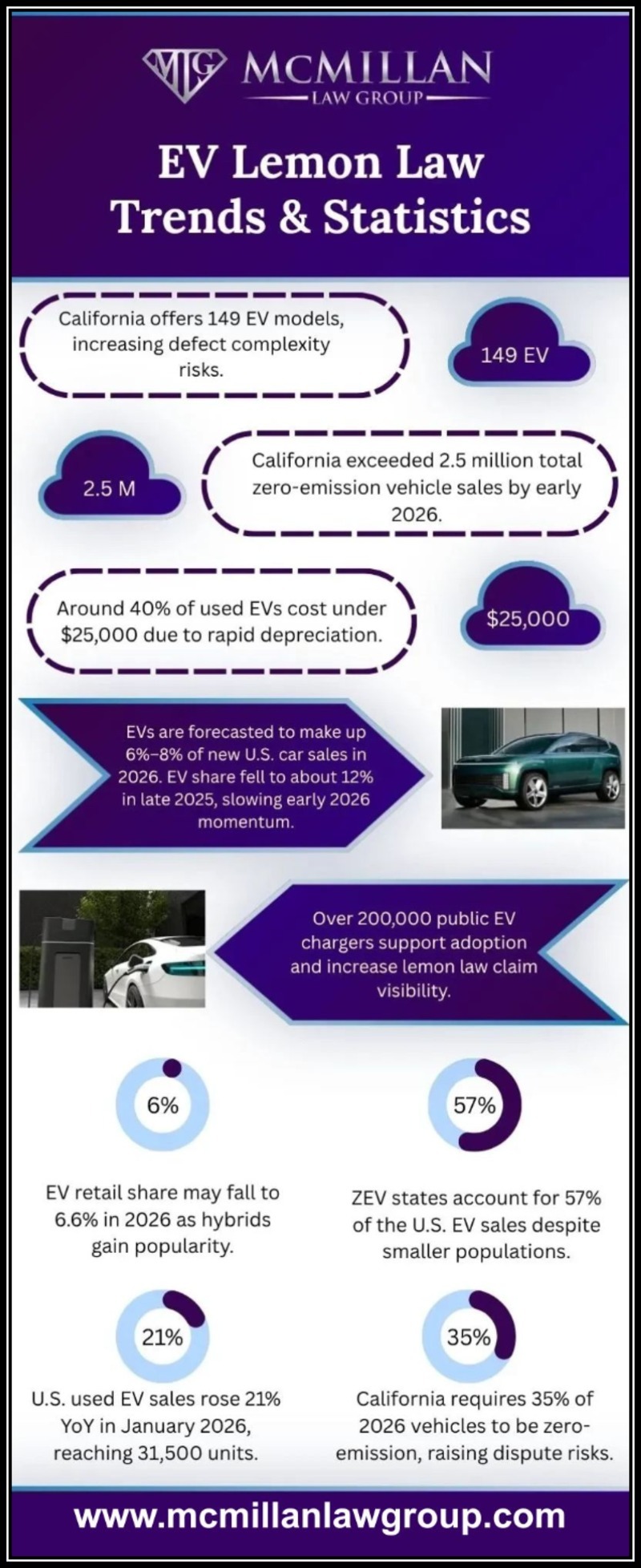
The emergence of electric vehicles (EVs) has transformed the concept of car ownership, making them not only mechanical entities but also sophisticated software platforms and battery systems. While this evolution brings significant advantages, it has also led to legal complications when owners make modifications to their EVs.
00:00
In California, which boasts some of the strongest consumer protection laws in the country, particularly the Song-Beverly Consumer Warranty Act — often referred to as the “lemon law” — alterations to batteries, charging systems, or software have resulted in an increasing “gray area” regarding the retention of full lemon-law protections for owners.
Why EVs change the legal conversation
Conventional lemon-law cases typically focused on mechanical issues, such as problems with engines and transmissions. However, electric vehicles introduce different types of failures, including battery decline, reduced driving range, charging port issues, and software bugs that can impact drivability.
In California, courts and Lemon Law Lawyer California specialists are increasingly recognizing software performance and battery issues as potential “substantial defects” under the law, particularly when they impact safety, usability, or market value. This evolving interpretation broadens the scope of issues covered by lemon laws and increases the likelihood that consumers who modify their vehicles could face disputes with manufacturers over the root cause of these problems.
Modifications don’t automatically kill a lemon-law claim — the federal backstop
One of the fundamental laws that safeguards consumers is the Magnuson-Moss Warranty Act. This legislation stipulates that a manufacturer cannot arbitrarily void a warranty just because the owner has utilized parts or services from third parties. According to federal regulations, the manufacturer is required to demonstrate that the use of aftermarket modifications directly led to the defect in order to refuse warranty coverage. This requirement for proof is vital in disputes related to lemon laws that involve modifications.
Where the gray area forms: causation, attribution, and technical complexity
Real disputes can be complicated, even when governed by federal regulations. Manufacturers often claim that modifications made by owners — such as installing an aftermarket fast-charger, using a non-original equipment manufacturer (OEM) battery module, tuning the engine control unit (ECU), or employing an aggressive app to extend range — have changed the system’s performance and led to failures.
Given the close integration of hardware and software in electric vehicles (EVs), establishing a clear causal relationship can require advanced forensic analysis, including examining telematics data, battery condition records, software update logs, and engineering evaluations. The technical complexities involved in these disputes tend to make them costly and unpredictable, leading many parties to seek resolution through private negotiations or arbitration instead.
Practical scenarios that trigger disputes
Replacement of batteries or use of non-original equipment manufacturer (OEM) modules. When an owner substitutes cells or a module, manufacturers might claim that these new components disrupt thermal management and lead to performance decline.
Use of aftermarket rapid chargers or modified charging methods. Charging at higher speeds or with altered profiles can hasten battery deterioration; manufacturers may cite this as a potential justification for issues.
Modifications to software and the installation of third-party applications. Adjustments affecting power delivery, regenerative braking, or thermal parameters could be blamed for subsequent failures.
Physical alterations (such as lift kits or changes to suspension) that impact unrelated systems but are argued to contribute to malfunctions.
In all these cases, the essential question remains consistent: did the modification significantly lead to the nonconformity? If the answer is no, protections under lemon laws should still apply.
The manufacturer’s toolbox: defenses and procedural changes
For a considerable time, manufacturers have relied on various justifications, such as asserting that the defect lacks “substantiality,” blaming the owner for misuse, or claiming there were inadequate chances for repairs.
In Del Sur, California, recent legislative changes (including updates to the Song-Beverly Act and associated legislation) have transformed the processes related to claims, evidence gathering, and timelines, creating a more organized pre-litigation phase in some areas. These procedural adjustments can affect strategies in cases involving vehicle modifications, as early technical data and comprehensive documentation of repair efforts have become increasingly essential.
What EV owners should do (practical guidance)
Maintain Detailed Documentation
Ensure you keep all invoices for repairs, logs of charging activity, receipts for software updates, and records of any modifications. Data from telemetry and the history of charging stations can be vital in substantiating your claims. The more evidence you gather, the more challenging it becomes for manufacturers to contest your assertions.
Refrain from Additional Modifications
After noticing a defect, avoid making any further alterations. New modifications may muddle the issue of whether the defect originated from the manufacturer or resulted from your actions. By keeping the vehicle unchanged, you bolster your position legally.
Seek Expert Assistance
Always obtain written diagnostic reports from the service center and retain all pertinent vehicle information. Request official written diagnostics from the manufacturer as well. It’s advisable to consult with a Lemon Law attorney who specializes in electric vehicles to fully understand your rights and potential risks.
EV Lemon Law at a Glance: Stats and Insights
Statistic
Value / Insight
Relevance
1. EV Problems vs Gas
EVs show 79% more issues (Consumer Reports, 2025)
EVs show 79% more issues (Consumer Reports, 2025)
2. Lemon Law Success
99% success rate in CA; resolved in 3–6 months
Strong protection, but mods may raise disputes.
3. EV Repair Estimates
EVs = 2.4% of CA repairs (2022)
High repair volume increases lemon-law exposure.
4. OEM Reporting Rules
Report if claims > 2% or 50 vehicles (CARB)
Scrutiny on EV defects; mods blur fault lines.
5. Filing Rate (2018–21)
34,397 cases out of 7.6M sales (<0.5%)
Rare but significant, rising with EV adoption.
The emergence of electric vehicles brings new challenges that can obscure who is responsible when problems occur. Although California’s lemon law continues to safeguard consumers, the presence of batteries, charging systems, software, and aftermarket changes complicates the resolution of disputes.
To secure a favorable result, it is crucial to maintain thorough documentation, refrain from making additional modifications once issues are detected, and promptly consult with a knowledgeable Lemon law Lawyer in San Diego, CA, to effectively manage this changing legal environment.
Recreational vehicles represent the essence of freedom, exploration, and the coziness of home while traveling, serving as a lifestyle choice for both families and retirees. However, ongoing issues and frequent trips to the repair shop can swiftly interfere with this way of life. Since motorhomes function as both transportation and living spaces, they exist in a distinct legal gray area. Therefore, it is vital for owners to grasp how Lemon Law protections work in order to protect their rights and investments.
00:00
The Lemon Law Basics
Most states in the U.S. have enacted Lemon Laws to safeguard consumers who buy or lease faulty vehicles. Typically, if a manufacturer fails to fix a significant defect after several reasonable attempts, the buyer may be eligible for either a new vehicle or a refund. These laws aim to ensure that consumers are not left with unreliable or hazardous products.
The main factors that usually indicate a vehicle qualifies as a lemon include:
The defect significantly affects the vehicle’s usability, safety, or market value.
The issue continues to exist despite numerous repair efforts.
The vehicle is in the repair shop for a long duration (often 30 days or more during the first year or warranty period).
However, the situation becomes more complex when it involves motorhomes.
Motorhomes: Vehicles or Dwellings?
A motorhome differs significantly from a typical car, as it serves both as a vehicle and a living space. Its chassis, engine, and drivetrain classify it as a vehicle, whereas the amenities like plumbing, electrical systems, appliances, and furniture designate it as a home. This hybrid identity leads to legal complexities since various states may not uniformly regard the residential aspect of an RV in relation to its vehicular components.
For instance:
Subject to Lemon Law: In several states, the driving system, chassis, and powertrain of a motorhome enjoy protections similar to those afforded to conventional vehicles.
Potentially excluded: The living area, along with its furnishings and appliances, might not be protected under the Lemon Law. Instead, these elements could be covered by distinct warranties provided by the RV manufacturer or other third-party companies.
This separation compels motorhome owners to be vigilant about which elements of their RV are malfunctioning and what forms of protection are available to them.
When Does an RV Qualify as a Lemon?
Issues with the Drivetrain or Chassis
Most state Lemon Laws explicitly include the operational components of the RV. If your motorhome frequently suffers breakdowns related to the engine, transmission, or brakes, you may be eligible to file a claim.
Significant Impact
For a defect to qualify, it must interfere with the RV’s usability, safety, or overall worth. For instance, while a defective air conditioning unit may not meet the criteria alone, a brake system failure would definitely qualify.
Sufficient Repair Opportunities
Generally, manufacturers are required to have a specific number of attempts (usually three to four) to fix the defect before you can pursue a claim.
Duration of Inoperability
If your motorhome is in the repair shop for a total of 30 days or more during the warranty period, it might be classified as a lemon.
Variability in Living Quarters Protection
Some states extend Lemon Law coverage to the living areas of an RV, while others exclude them. In those situations, owners often must rely on written warranties for appliances and fixtures—making it wise to consult a Lemon law lawyer California for guidance.
If your state’s Lemon Law does not provide complete protection for your motorhome, you still have options under federal law. The Magnuson-Moss Warranty Act safeguards consumers across the country by mandating that manufacturers uphold their written warranties. Should defects covered by an RV’s warranty remain unresolved after a reasonable number of repair attempts, you could be eligible for compensation, which may include the recovery of legal costs.
This legislation can be particularly beneficial for motorhome owners dealing with problems related to the living aspects of their RV, like malfunctioning appliances or plumbing leaks, in situations where state Lemon Law does not apply.
Steps to Take If Your RV Becomes a Lemon
If you think your RV might be a lemon, it’s crucial to take a thoughtful approach. Here are some essential actions to consider:
Keep Thorough Records
Maintain comprehensive documentation of all issues, repair attempts, invoices, work orders, and any communication with the dealer or manufacturer. This record-keeping is vital for building a strong case.
Familiarize Yourself with Your Warranty
Examine the warranty provided by the motorhome manufacturer, as well as any additional warranties for appliances or living areas. Understanding what is covered will help you decide your next steps.
Provide the Manufacturer with an Opportunity to Resolve Issues
Most Lemon Laws require giving the manufacturer or an authorized dealer multiple opportunities to fix the defects. Skipping this step could weaken your case, making it vital to consult a California lemon law attorney for proper guidance.
Seek Advice from a Lemon Law Attorney
Cases involving motorhome Lemon Laws can be intricate due to their mixed nature. An attorney specializing in RV-related claims can assess your eligibility and assist you throughout negotiations or legal proceedings.
Understand Your Options
Depending on the situation’s outcome, you may be eligible for:
A complete refund of your purchase price (after accounting for reasonable use).
A new replacement motorhome.
Monetary compensation for any loss in value.
Challenges RV Owners Face
Despite the availability of certain safeguards, owners of recreational vehicles frequently encounter substantial challenges. Manufacturers might minimize issues or redirect responsibility to outside suppliers, and varying state regulations can lead to uncertainty about coverage. Considering that motorhomes are significantly more expensive than standard vehicles, the financial implications are considerably higher, underscoring the importance of tenacity and robust legal support.
Having a motorhome is meant to provide a sense of adventure and liberty, rather than a never-ending cycle of repairs. While they occupy a unique space between vehicles and homes, motorhomes can be deemed defective under specific circumstances. Typically, state Lemon Laws address the mechanical aspects, while federal regulations may safeguard the living quarters. With the right documentation and the support of an experienced Lemon lawyer San Diego, you can pursue justice, recover your losses, and return to enjoying the open road.