When buying a car, whether it’s brand new or pre-owned, buyers look for dependability, openness, and integrity. Regrettably, not every car transaction is seamless. Issues with faulty vehicles and unethical sales tactics are prevalent. This highlights the importance of knowing the distinctions between Lemon Law and Auto Fraud. While both legal protections are designed to defend consumers, they have different functions and are relevant in various circumstances.
00:00
What Is Lemon Law?
Lemon Laws are designed to protect consumers who unknowingly purchase defective vehicles, often referred to as “lemons.” These cars suffer from serious issues that affect their safety, value, or functionality, and the problems persist despite repeated repair attempts. Understanding the Lemon Law lawyer California process is essential for pursuing compensation or a replacement when you’re stuck with a faulty vehicle.
Key Aspects of Lemon Law:
Coverage for New and Certain Used Vehicles: In California and various other states, Lemon Law protections apply primarily to new cars still under the manufacturer’s warranty. Additionally, some states, including California, extend these protections to used vehicles under specific conditions.
Requirement for Repair Attempts: Typically, the law mandates that manufacturers or dealers must attempt to fix the defect several times. If the problem persists after a designated number of repair attempts, or if the vehicle is out of commission for a specified duration, the consumer may be eligible for compensation.
Available Remedies: Should your vehicle be classified as a lemon, the manufacturer might be obligated to either replace it or issue a full refund, covering taxes, registration fees, and even costs for towing or rental vehicles.
What Is Auto Fraud?
Auto fraud encompasses dishonest or unethical actions taken by dealerships or sellers throughout the car purchasing experience. Unlike problems related to mechanical failures, auto fraud focuses on fraudulent practices and deliberate misrepresentation aimed at deceiving buyers.
Typical instances of auto fraud include rolling back odometers to make a vehicle seem less driven, not revealing a car’s accident history or salvage title, and employing bait-and-switch strategies where a car is listed at one price but sold under different conditions. This type of fraud can also involve falsifying documents or altering loan contracts without the buyer’s complete awareness.
While Lemon Laws deal with defective vehicles that do not meet acceptable quality standards, auto fraud pertains specifically to deceitful practices during the sale process. Although both can affect car buyers, they pertain to distinct legal concerns and solutions.
If you’ve bought a vehicle that is still covered by the manufacturer’s warranty and you’re facing ongoing mechanical or electrical problems after several repair attempts, you may be eligible for a Lemon Law claim. It’s crucial to act promptly and be aware of your legal rights.
To safeguard your claim, maintain detailed documentation of all service visits, receipts, and any correspondence with the dealership. Be aware of your state’s particular time or mileage restrictions — California, for instance, usually permits claims within 18 months or 18,000 miles. Seeking advice from a Lemon Law attorney can make the process easier, and many offer free consultations to evaluate your situation.
When to Pursue an Auto Fraud Case
If you find that a dealer has provided false information regarding the condition, history, or financing details of your vehicle, you might have grounds for an auto fraud claim.
Here are some indicators to look out for:
The mileage on the odometer does not align with the maintenance logs.
Reports from CarFax or VIN checks show prior accidents that the dealer failed to mention.
You come across forged documents or deceptive loan terms.
Here’s what you should do next:
Collect Evidence: Keep all sales agreements, correspondence, and reports from third parties.
Submit a Complaint: You can lodge a complaint with your state’s attorney general, the Department of Motor Vehicles (DMV), or a consumer protection organization.
Seek Legal Advice: Consulting with a fraud attorney can assist in recovering financial damages and potentially securing punitive compensation if fraud is established.
How to Protect Yourself Before Buying
Understanding the details is your primary safeguard. Here’s how to secure your investment:
Conduct a VIN Check: Utilize services such as Carfax or AutoCheck to uncover information about the vehicle’s accident history, title status, and previous ownership.
Arrange for a Pre-Purchase Inspection: Always have a reliable mechanic evaluate the vehicle before you finalize any agreements.
Examine Contracts Thoroughly: Avoid signing any blank forms. Carefully go through all terms and ensure that any promises made are documented.
Confirm the Odometer Reading: Make sure the mileage aligns with the title and service records.
Inquire and Record Responses: If a dealer makes assertions regarding the car’s condition or background, request written confirmation.
Grasping the distinctions between Lemon Law and auto fraud is essential for safeguarding your rights and avoiding costly mistakes. Lemon Law provides protection when you’ve purchased a vehicle with persistent, unfixable issues, while auto fraud laws guard against dishonest or deceptive practices by car sellers. If you suspect you’re dealing with either situation, it’s crucial to consult an experienced Lemon Law attorney San Diego without delay. Staying informed and proactive helps you protect your investment and ensures that negligent sellers or manufacturers are held accountable.
California’s Lemon Law serves as a robust safeguard for consumers burdened with faulty cars, granting them options for reimbursement, replacement, or legal compensation. Although the law delineates clear rights and processes, actual success stories resonate more than the statutes themselves. This piece showcases how typical residents of California transitioned from disappointment to triumph, illustrating the emotional and legal significance of their Lemon Law successes.
00:00
Understanding the Journey: Why Testimonials Matter
Listening to the experiences of individuals who have successfully navigated Lemon Law issues can be incredibly uplifting. Their stories highlight the emotional struggles and tenacity required, while also providing motivation and affirmation. These accounts serve as a reminder to consumers — particularly those who may feel overwhelmed by large corporations — that with perseverance and adequate support, achieving justice is attainable.
Recurring Patterns in California Lemon Law Success Stories
Each success story under California’s Lemon Law is distinct, yet there are recurring themes found in numerous testimonials. These commonalities assist consumers in understanding what lies ahead and how to adequately prepare.
Initial Disappointment and Powerlessness
Prior to submitting a Lemon Law claim, many individuals encounter persistent vehicle malfunctions, rejected repair requests, or delays from dealerships. The lack of reliability in a car that was intended to provide ease leads to stress and financial hardship. Many testimonials resonate with this feeling of powerlessness.
“Every visit to the mechanic felt fruitless.” This sentiment is shared by numerous individuals who eventually achieved resolution.
The Turning Point: Seeking Legal Assistance
A significant turning point in many narratives is the choice to reach out to a California Lemon Law attorney. This decision often marks a shift from uncertainty to a sense of empowerment.
Consumers frequently express relief upon discovering their rights and realizing how swiftly a legal expert could address their concerns. The journey from doubt to confidence stands out as one of the most impactful aspects of these accounts.
The Importance of Awareness and Representation
Knowledge truly is empowering, and Lemon Law attorneys offer both legal insight and emotional support. Many consumers were initially unaware that legal fees covered by manufacturers were part of the law or that they wouldn’t need to pay for representation upfront.
Once they gain an understanding of the process, individuals start to feel a sense of backing. Testimonials often highlight how lawyers manage negotiations, alleviating stress and allowing clients to concentrate on their daily lives while seeking justice.
Key Outcomes That Resonate in Testimonials
Financial Compensation
For numerous individuals, receiving a refund or a replacement vehicle was a transformative experience. Some had been burdened with payments on a car that frequently required repairs. Recovering their money or applying it toward a dependable vehicle provided more than mere financial restitution — it restored their sense of security.
Renewed Trust in the Legal Process
A common sentiment among consumers is their astonishment at successfully winning their claims. Many testimonials reflect a revitalized faith in the judicial system and an affirmation that ordinary people can prevail against large corporations.
“I never believed I could win against a car manufacturer. I was mistaken.” Such remarks illustrate how victories under the Lemon Law do more than just resolve automotive issues — they rejuvenate belief in justice.
Personal Empowerment
Numerous accounts demonstrate how standing up for their rights empowered consumers. By taking action, they not only addressed their own challenges but also became advocates for themselves and others.
Some even choose to share their stories with friends, family, or online platforms, motivating others to consider their legal options.
The Role of Community and Support
Testimonials of California Lemon Law victories in Encinitas highlight the strength of community and support, showing how local residents found justice through shared experiences and trusted legal guidance.
Internet Communities: Websites such as Reddit and niche consumer advocacy forums provide practical guidance and emotional backing from others who have faced similar Lemon Law challenges.
Facebook Communities: California-specific Lemon Law Facebook groups enable participants to discuss their cases, suggest attorneys, and keep informed about the latest legal developments.
Consumer Support Organizations: These groups assist individuals in determining if their circumstances meet the criteria set by the law before seeking legal counsel.
Neighborhood Legal Services: Local legal clinics frequently offer complimentary consultations and help individuals navigate the early stages of their claims.
Non-Profit Legal Aid Groups: Organizations like legal aid societies support low-income clients in grasping and asserting their rights under Lemon Law.
Overcoming Challenges Along the Way
Although the California Lemon Law Lawyer aims to safeguard consumers, achieving justice can often be challenging. Numerous individuals recount experiences of encountering pushback from manufacturers who postpone or reject legitimate claims, hoping that consumers will give up. Nevertheless, these accounts also highlight how enlisting the help of a proficient attorney helped navigate these obstacles and compelled companies to accept accountability.
Another recurring theme is the emotional strain involved. Being without a dependable vehicle can interfere with work, family obligations, and daily activities, contributing additional stress to an already difficult circumstance. Yet, many people express that the sense of relief and fulfillment that comes with a favorable resolution made all the struggles worthwhile.
A Message to Other California Consumers
Testimonials serve as a reassuring reminder to individuals facing car troubles that assistance is at hand and that they have rights. It’s crucial to take action promptly, which includes keeping detailed records of issues, saving repair documents, and contacting a San Diego Lemon Lawyer without delay.
While many individuals may initially feel uncertain, they often find themselves thankful in the end. By placing their confidence in the process and collaborating with an experienced lawyer, they frequently achieve outcomes that surpass their expectations.
From Frustration to Justice, and Beyond
Success stories from California Lemon Law cases highlight how regular consumers can transform their frustrations into rightful justice when equipped with the appropriate guidance and knowledge. These accounts demonstrate that advocating for your rights can yield tangible outcomes, even when dealing with major automobile manufacturers. If you’re struggling with ongoing vehicle problems, keep in mind that many others have experienced similar challenges and have successfully obtained what they were entitled to.
The automotive sector has been revolutionized by autonomous and advanced technology vehicles that depend significantly on intricate software for operation. However, when this technology malfunctions — whether from glitches or bugs — it can lead to significant safety and reliability concerns for drivers. In California, purchasers of these vehicles might find solace under the Lemon Law, which can cover defects related to software.
00:00
The Rise of High-Tech and Autonomous Vehicles
In the past few years, the automotive sector has undergone a dramatic transformation with the rise of automation and AI technology. Modern vehicles are now fitted with advanced systems that can automatically brake, maintain lane position, self-park, and even operate without human input in certain situations. Companies such as Tesla, Waymo, and GM’s Cruise are advancing the development of autonomous driving systems, ranging from Level 2 to Level 4.
Although these innovations provide added convenience, improved efficiency, and enhanced safety, they also bring forth a new set of challenges: software errors. Unlike conventional cars that experience failures due to physical wear, autonomous vehicles can encounter issues stemming from faulty programming, defective sensors, or unsuccessful software updates.
Common Software Glitches in Self-Driving Cars
Like all technologies reliant on software, technical hiccups are unavoidable. Nevertheless, when software governs a hefty 3,000-pound vehicle, the stakes become significantly higher, potentially resulting in serious or fatal outcomes. Frequent problems include:
Unexpected acceleration or deceleration
Abrupt shutdown of autopilot functions
Errors in lane detection causing the vehicle to veer
Malfunctions in sensors such as lidar, radar, or cameras
Even small software issues can trigger a chain reaction, impairing vital driving capabilities and rendering vehicles unpredictable or hazardous on the roads.
A software glitch can be grounds for a Lemon Law claim.
Lemon Laws have long been in place to safeguard consumers from cars that have serious flaws affecting their safety, value, or functionality, particularly when these problems persist despite multiple repair attempts. In California, this legislation also applies to issues related to software.
Under the Song-Beverly Consumer Warranty Act, a vehicle may be considered a lemon if a major warranty-covered defect isn’t fixed after reasonable repair attempts and affects its use, value, or safety. Persistent software issues in key systems like braking or navigation can meet this criteria.
Challenges in Proving a Lemon Due to Software Issues
Absence of physical proof:
Unlike mechanical faults, software glitches often do not present visible evidence such as a damaged component. Their symptoms can be sporadic, complicating the process of reproducing them at a dealership.
Over-the-air updates and resets:
Manufacturers frequently implement over-the-air software updates intended to rectify problems. While these updates are convenient, they may only provide a temporary fix, failing to address the underlying issue entirely.
Access to data logs and proprietary systems:
Identifying software-related problems may necessitate access to internal data logs that only the manufacturer can access or analyze, resulting in an unequal dynamic between the consumer and the automaker.
Ambiguous repair documentation:
Service centers might record vague terms like “updated firmware” or “system reset” without detailing the specific issues addressed, which can hinder efforts to track repair history.
Given these obstacles, it is essential to meticulously document every detail, including dates, symptoms, notes on updates, service appointments, and all interactions with the manufacturer or dealership.
The Manufacturer’s Responsibility
Auto manufacturers are legally required to ensure their vehicles meet safety and performance standards. If a software glitch prevents your car from functioning as intended and remains unresolved after reasonable repair attempts, the manufacturer must provide a remedy.
In Fallbrook, California, you may be entitled to a full refund (buyback), a replacement vehicle, or cash compensation if your car is still functional but has lost value. A Lemon Law attorney in Fallbrook can guide you through the legal process and help determine the best option for your situation.
The Role of a Lemon Law Lawyer in High-Tech Claims
Given the intricate nature of software malfunctions, enlisting the help of a skilled Lemon Law attorney is frequently crucial. These experts can:
Analyze manufacturer warranties and relevant state regulations
Gather supporting documentation, such as technical information and service history
Liaise with manufacturers for you
Facilitate negotiations for settlements or take legal action when required
Additionally, they are well-versed in the subtleties of emerging legislation aimed at addressing issues related to autonomous vehicles, which may change swiftly as the technology advances.
Tips for Consumers Facing High-Tech Vehicle Issues
Maintain comprehensive documentation:
Keep a record of every visit to the dealership, all occurrences of the issue, and any communications related to them. This will help establish a clear sequence of events. Having precise documentation bolsters your Lemon Law case.
Request comprehensive service summaries:
Always ask the technician for a written account detailing what repairs or updates were made. Ambiguous descriptions can undermine your position. Well-defined service records are crucial in demonstrating ongoing repair failures.
Address repairs without delay:
Tackle issues as they come up without hesitation. A series of repair attempts is essential for meeting Lemon Law qualifications. Any delays can complicate your ability to demonstrate a recurring defect pattern.
Understand your entitlements:
California Lemon Law Lawyer provides robust consumer protections, though these protections may differ from state to state. Make sure you are aware of the regulations that pertain to your situation. Knowing your rights enables you to take informed action.
Seek legal advice:
Technical defects can be intricate and challenging to substantiate. A lawyer who specializes in Lemon Law can assist with your case and manage negotiations on your behalf. Having legal representation often significantly impacts the likelihood of a successful resolution.
High-Tech Doesn’t Mean Problem-Free
While self-driving vehicles offer exciting advancements, software errors can lead to persistent annoyances. If your advanced car in San Diego continues to experience these issues, you might be entitled to protections under California’s Lemon Law. A skilled lemon lawyer San Diego can help you pursue a refund, a replacement vehicle, or fair compensation — don’t settle for ongoing problems with your car.
Luxury motorhomes offer a blend of opulence and independence, equipped with amenities such as top-of-the-line kitchens, sophisticated entertainment setups, and climate-controlled environments. However, if these pricey RVs encounter persistent mechanical or structural issues, the ideal experience can swiftly transform into an expensive ordeal. Thankfully, California’s Lemon Law extends beyond regular vehicles to safeguard purchasers of high-end motorhomes dealing with faulty units.
00:00
The Appeal of Luxury Motorhomes
Investing in a luxury RV is more than just a means of transportation; it represents a daring lifestyle decision. Prestigious manufacturers such as Newmar, Tiffin, Prevost, and Airstream produce models that resemble high-end hotel suites on wheels, with prices exceeding $2 million. These vehicles offer unparalleled comfort, attracting retirees, remote workers, and thrill-seekers in search of opulence while traveling.
Nonetheless, these aspirational vehicles often come with significant challenges. Despite their premium designs, luxury RVs are prone to defects and reliability issues — sometimes even more so than their less expensive counterparts. The sophisticated technology and intricate systems found in these models increase the likelihood of malfunctions.
Common Defects in High-End Motorhomes
Even the most esteemed brands can face significant defects. High-end RV owners often encounter a variety of common issues, including:
Failures in electrical systems, affecting lights, heating and cooling, and entertainment options.
Problems with plumbing and sewage, such as ongoing leaks or faulty water heaters.
Malfunctions with slide-outs, where parts of the RV do not extend or retract correctly.
Engine and drivetrain complications, particularly in Class A diesel motorhomes.
Delamination and water damage, which are frequent and costly structural concerns.
Breakdowns of inverters or generators, resulting in power loss when off-grid.
Frequent failures of dashboards or instrumentation that compromise safe driving.
While any single issue can be annoying, recurring or irreparable problems can greatly reduce the vehicle’s value and functionality, potentially qualifying the owner for a Lemon Law claim.
How the California Lemon Law Applies to Motorhomes
Many consumers in California might not realize that the state’s Lemon Law, which is part of the Song-Beverly Consumer Warranty Act, applies to motorhomes as well as passenger vehicles. If your motorhome has a defect affecting its safety, value, or functionality and it is still under warranty, you could have legal protection.
The law specifically covers components like the drivetrain, chassis, and chassis cab when they fall under a manufacturer’s warranty. Additionally, it encompasses interior elements such as appliances, plumbing, and electronics if these were sold with their own warranties. In San Ysidro, California, both new and pre-owned motorhomes may be eligible, provided their warranties are still valid.
However, navigating a Lemon Law claim for a motorhome can be quite complex. Since motorhomes are often produced by various manufacturers — one for the chassis and another for the living area — figuring out who is accountable for repairs can be challenging. This fragmentation frequently results in delays or refusals of warranty services, necessitating careful legal handling.
Real-Life Luxury RV Nightmares
Numerous accounts exist of owners of luxury motorhomes finding themselves stuck in repair shops for extended periods, having to cancel their travel plans, and engaging in disputes with manufacturers over persistent issues. For instance, a couple from California invested more than $600,000 in a customized motorhome but encountered problems like engine overheating, malfunctioning slide-outs, and a faulty leveling system within just six months of use. Despite multiple attempts to fix these issues, the problems continued, leading them to file a Lemon Law claim to compel the manufacturer to buy back the vehicle.
In another case, a buyer suffered significant water damage caused by inadequate roof sealing. Although the dealer made several repair attempts, the issue recurred, resulting in mold growth and substantial financial losses. Initially, their warranty claim was rejected due to allegations of “misuse,” but after pursuing legal action under California’s Lemon Law, they were able to achieve a favorable resolution.
These examples highlight the critical need for consumers to be aware of and advocate for their rights, particularly when investing in high-end products that fail to meet expectations.
Key Challenges in Filing a Luxury Motorhome Lemon Law Claim
Complicated Warranties and Ambiguous Legal Issues
Luxury motorhomes typically come with various warranties that cover the chassis, coach, and numerous appliances, each provided by different manufacturers. This situation can lead to confusion regarding who holds legal responsibility in case of a malfunction. Compounding this issue is the unclear legal definition of what constitutes a “reasonable number of repair attempts.”
Delays in Service and Incomplete Documentation
Repairs can be hindered by parts shortages and extended service times in the aftermath of COVID-19, yet these delays might not be attributed to the manufacturer. Moreover, many owners fail to keep thorough records of repairs, which can greatly undermine their Lemon Law claims.
The Importance of an Experienced California Lemon Law Attorney
A knowledgeable California Lemon Law attorney San Diego can skillfully navigate the tactics used by manufacturers to delay resolutions, clarify liability, and help you build a strong case. With professional legal support, your chances of securing a refund, replacement vehicle, or financial compensation increase significantly.
Protecting Yourself: Best Practices for RV Buyers
To reduce the likelihood of encountering a Lemon Law conflict, purchasers of luxury RVs should take the following steps:
Conduct comprehensive research on the reliability of various brands and model years prior to making a purchase.
Perform a detailed inspection upon delivery and record any minor issues in writing.
Keep a detailed record of all repairs and correspondence with the dealer or manufacturer.
Request warranty repairs in written form; do not depend solely on verbal promises.
Respond promptly if defects continue, as delays may impact your eligibility for Lemon Law protections.
Luxury Shouldn’t Come with Legal Battles
Purchasing a luxury motorhome should guarantee both comfort and dependability, rather than facing ongoing issues such as malfunctioning slide-outs or unreliable generators. When manufacturers fail to deliver, California Lemon Law Lawyer offers a solution. If your upscale RV has turned into more of a burden than a refuge, a Lemon Law attorney can advocate for the compensation and tranquility you rightfully seek.
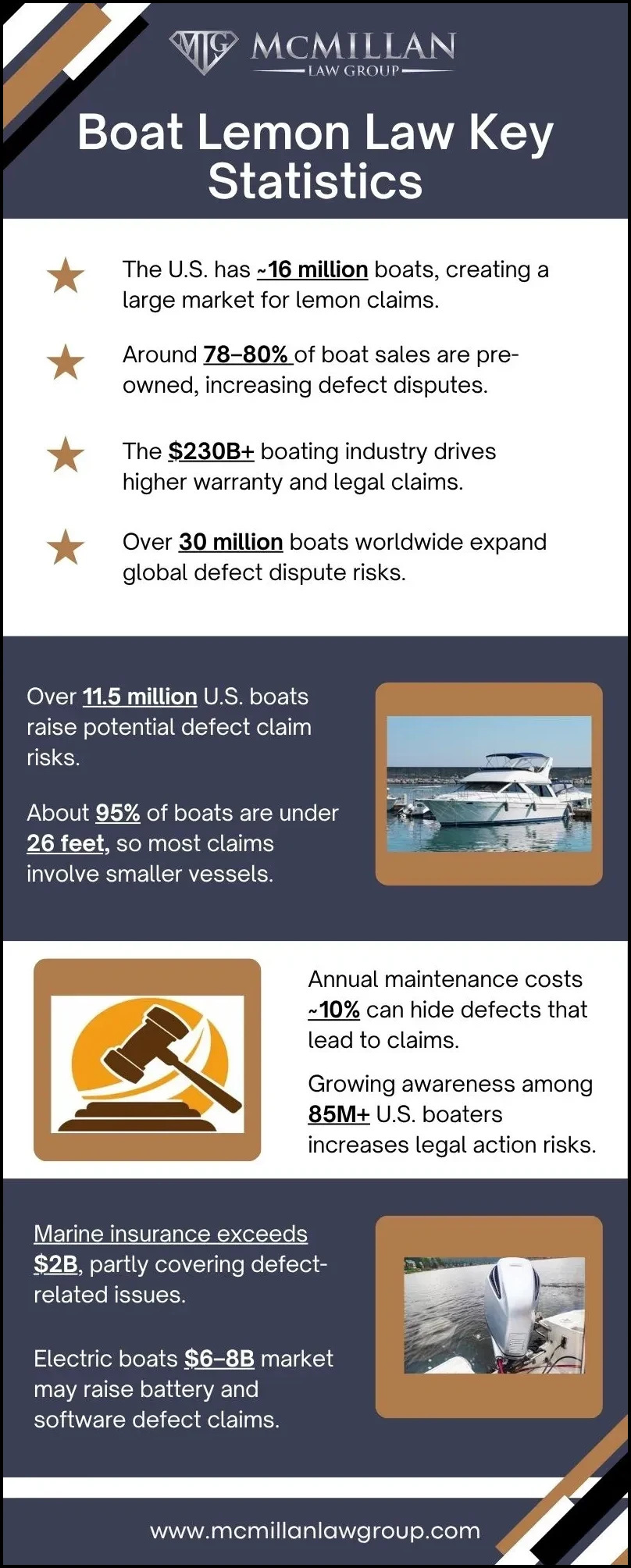
For numerous individuals, the aspiration of boat ownership symbolizes liberation and leisure; however, this ideal can turn disappointing if significant flaws or ongoing mechanical problems occur soon after the acquisition. Although they are not as commonly acknowledged as lemon laws for automobiles, Boat Lemon Laws are gradually emerging to safeguard purchasers from the woes of defective vessels.
00:00
What Is Boat Lemon Law?
Boat Lemon Law provides legal protection for consumers who purchase defective boats or watercraft. While the federal Magnuson-Moss Warranty Act covers boats under warranty, state-specific lemon laws vary, and not all states have dedicated boat lemon laws. Where they exist, these laws often mirror auto lemon laws in terms of consumer rights and procedures.
In states like California without boat-specific statutes, consumers can still pursue claims under warranty laws and the Uniform Commercial Code (UCC). California Lemon Law Lawyer may also apply if the boat was sold with a warranty and fails to meet promised standards.
Types of Watercraft Typically Included Under Lemon Law
The following categories of watercraft are usually included under Boat Lemon Law or similar warranty protections:
Generally, coverage is applicable only to vessels purchased as new or those still under the original manufacturer’s warranty. Some extended warranties may also provide a basis for legal action if repairs are not honored by the dealer or manufacturer.
Common Boat Defects That May Qualify
For a boat to be deemed a “lemon,” the defect must generally be significant enough to impact its functionality, safety, or worth. Common issues that may qualify include:
Frequent engine breakdowns or stalling
Failures in the electrical system
Leaks or cracks in the hull
Problems with the steering mechanism
Issues with transmission or gears
Water entering cabin spaces
Defects in the fuel system
Ongoing overheating problems
Typically, these defects must persist despite multiple repair attempts and occur within a specific timeframe or mileage limit—criteria that a Best Lemon Law Attorney can help you interpret and navigate based on your local laws and warranty terms.
In situations where the Boat Lemon Laws of individual states are inadequate, the Magnuson-Moss Warranty Act provides an essential federal alternative. This legislation mandates that manufacturers must fix any defective products covered by a warranty within a reasonable number of attempts. Should they neglect to fulfill this obligation, consumers might be eligible for:
Reimbursement for incidental costs (like storage fees or loan payments)
Legal fees in certain circumstances
This federal statute is frequently employed alongside state regulations to enhance consumer protection and increase the chances of recovery.
Filing a Lemon Law Claim for a Boat
Document Everything
Comprehensive record-keeping is crucial. Ensure you retain all purchase agreements, warranty documents, invoices for repairs, diagnostic assessments, and any correspondence with the dealer or manufacturer. Moreover, gather photographic or video proof of the defect. This extensive documentation can significantly bolster your position should you need to take legal steps.
Allow Reasonable Repair Attempts
Generally, laws stipulate that the manufacturer or an authorized dealer must be afforded a reasonable opportunity to rectify the defect, usually ranging from three to four attempts. Additionally, if the boat remains unusable for a considerable period, such as a total of 30 days within a year, it could also be classified as a lemon.
Notify the Manufacturer in Writing
If your repair efforts have been unsuccessful, provide the manufacturer with a formal written notice detailing the ongoing problems and asserting your rights as outlined in the warranty and lemon laws.
Seek Advice from a Lemon Law Lawyer
Due to the intricate nature of both state and federal regulations surrounding boats, it’s best to consult with the Best Lemon Law Attorney San Diego, who specializes in boat lemon law cases. Many top legal firms offer free consultations and may work on a contingency fee basis—meaning they only get paid if you win your case.
Possible Outcomes of a Successful Boat Lemon Law Claim
Should your claim be approved, you could be eligible for various solutions. These might include a buyback or refund of the purchase amount (after deducting a usage fee reflecting the duration you utilized the boat prior to noticing defects), a substitution with a similar boat, or reimbursement for all repair expenses and associated costs if you decide to retain the vessel. Additionally, in certain situations, the manufacturer might also have to pay for your legal fees.
What If You Bought a Used Boat?
When it comes to lemon law protection, used boats can present more challenges. Nevertheless, you might still have legal avenues available if:
The boat came with an unexpired manufacturer’s warranty
The seller provided misleading information or did not disclose known issues
The boat does not comply with the essential criteria outlined in the UCC
In such situations, buyers may be able to file claims for breach of warranty, fraud, or misrepresentation.
States with Notable Boat Lemon Laws
Although the federal Magnuson-Moss Act is applicable across the country, various states provide extra protections for boats under their lemon laws. For example, Florida includes specific boats under its automobile regulations, Connecticut has provisions for vessels exceeding 19 feet, Ohio implements consumer sales regulations, and Texas partially applies automobile lemon laws to boats. It’s advisable to check with your state’s consumer protection agency for the most current information.
Tecate, California, while a small border town, falls under the broader jurisdiction of California’s robust Lemon Laws, which provide notable protections for boat owners dealing with defective watercraft.
Lemon Laws for boats safeguard owners against faulty watercraft by providing legal options like refunds, replacements, or financial compensation. By being aware of your entitlements, maintaining thorough records, and obtaining legal advice, you can effectively address problems and enjoy stress-free experiences on the water once again.
Military members sacrifice greatly to serve the nation, often facing personal and logistical hardships. In response, California offers a robust set of legal protections to shield active duty personnel, reservists, and veterans from exploitation in areas like employment, housing, and consumer rights. Notably, California’s Lemon Law grants enhanced protections to military members dealing with defective vehicles.
00:00
Unique Legal Status of Military Members in California
California honors the sacrifices of military personnel by offering extra legal protections beyond federal laws like the SCRA. These state-specific safeguards cover consumer rights, housing, employment, vehicle warranties (including Lemon Law), and access to legal help. They apply to active duty members, reservists, and often veterans, ensuring service members aren’t unfairly burdened by their military duties or time away from civilian responsibilities.
California Lemon Law: Extra Shield for Military Personnel
Broadened Coverage:
Active duty service members stationed in California are covered by this Lemon Law, regardless of whether they purchased or leased their vehicle in another state. For example, a member stationed at Camp Pendleton or Edwards Air Force Base is still protected under California law, even if their vehicle was acquired in Texas.
Assumption Rule:
The law automatically considers a vehicle a lemon if it meets any of the following criteria:
It has undergone at least two repair attempts for a significant safety concern;
It has been out of commission for more than 30 days;
It has had four or more attempts to rectify the same issue within the first 18 months or 18,000 miles.
Manufacturer Responsibilities:
Under this law, manufacturers are required to either replace the defective vehicle or issue a full refund of the purchase price, which includes down payments, monthly payments, and any relevant taxes and fees.
This law serves as an invaluable resource for military families, who often depend on dependable transportation and may lack the time or means to navigate protracted repair processes due to their frequent relocations and deployments.
3. Understanding Your Rights as a Military Consumer
Below is a quick summary of key rights for military personnel in California:
Contract Termination Rights: According to California Civil Code Section 1806.5 and the federal Servicemembers Civil Relief Act (SCRA), military members have the ability to cancel automobile leases, housing agreements, and cell phone contracts without incurring penalties upon receiving deployment or PCS orders.
Job Protection Rights: The California Military and Veterans Code enhances the federal protections available under the Uniformed Services Employment and Reemployment Rights Act (USERRA), ensuring that employers cannot terminate, demote, or deny benefits to reservists or National Guard personnel due to their military duties.
Educational Benefits: California provides tuition assistance and grants in-state tuition status to service members and their dependents, even if they haven’t established residency in the state.
Civil Relief Rights: The California Military Families Financial Relief Act offers certain protections from the SCRA, such as lowered interest rates and safeguards against eviction or foreclosure.
Being knowledgeable about these rights enables military personnel to make educated choices and take necessary action if their legal rights are compromised.
Finding the Right Legal Support
Legal Assistance Offices on Military Bases
Most military installations throughout California have Judge Advocate General (JAG) offices that offer legal support to active duty members and their families. These JAG officers can assist with a variety of issues, including:
However, it’s important to note that JAG officers typically cannot represent clients in civilian courts. For complicated situations, such as a Lemon Law claim against a manufacturer, it’s advisable to hire a civilian attorney who specializes in Lemon Law.
Specialized Attorneys for Lemon Law Cases
In Coronado, California, attorneys who specialize in Lemon Law and support military clients often work on a contingency fee basis—meaning they only get paid if you win your case. Under California’s Lemon Law, the manufacturer typically covers your attorney fees if you prevail, making legal help more accessible for service members.
When selecting an attorney, consider one who:
Has prior experience working with military clients
Understands the nuances of purchasing vehicles from out-of-state
Provides free initial consultations
Recognizes the time constraints associated with military duties
5. Common Scenarios Where Military Members May Need Legal Protection
Out-of-State Vehicle Acquisition While Assigned in California
A Marine assigned to Twentynine Palms might have purchased a vehicle in North Carolina prior to moving to California. Should the car develop issues, the California Lemon Law Lawyer is still applicable, regardless of where the purchase took place.
Termination of Lease Due to Deployment
When a soldier receives deployment orders for the Middle East but has a 12-month lease for an apartment in San Diego, California law allows for the lease to be terminated without any penalties.
Civil Legal Actions During Active Duty
If a sailor faces a lawsuit while deployed, California courts provide safeguards, including the ability to delay civil proceedings until the service member returns home.
6. How to Take Action if Your Rights Are Violated
If you feel that your rights as a military service member have been compromised — whether due to issues with a malfunctioning vehicle, conflicts with a landlord, or retaliation from an employer — consider the following actions:
Keep Thorough Records: Maintain detailed documentation of contracts, attempts at repairs, correspondence, and deployment orders.
Consult JAG: Begin by seeking legal guidance from the on-base legal assistance office to explore your options.
Reach Out to a Civilian Lawyer: For more complicated issues, particularly those involving civil lawsuits or disputes with manufacturers, find an experienced Lemon Law attorney.
Submit a Complaint: You can lodge complaints with California’s Department of Consumer Affairs or the Department of Fair Employment and Housing if you are facing discrimination.
Service members require robust legal safeguards to protect their rights within the intricate civilian legal landscape. California provides one of the most extensive support systems, particularly with its Lemon Law. Regardless of whether you are stationed or on temporary duty, being aware of your rights and securing a knowledgeable San Diego Lemon Law attorney can significantly impact your ability to advocate for yourself justly and successfully.