
How California Lemon Law Applies to New Cars With Intermittent Safety Defects
California Lemon Law may protect consumers who buy or lease new vehicles that develop recurring safety-related defects covered by the manufacturer’s warranty. Intermittent failures can be particularly frustrating because a problem may not appear every time the vehicle is inspected by a dealership. However, the fact that a defect occurs intermittently does not necessarily prevent a vehicle from qualifying for Lemon Law protection. Eligibility depends on the nature of the defect, its impact on the vehicle’s use, value, or safety, and the manufacturer’s efforts to repair the problem.
Under California Lemon Law, a manufacturer may have an obligation to repurchase or replace a vehicle when it is unable to repair a warranty-covered defect after a reasonable number of repair opportunities, depending on the circumstances. Covered defects may involve braking systems, steering components, airbags, cameras, radar sensors, lane-keeping technology, or other safety-related systems. A recurring safety defect may support a Lemon Law claim even when a dealership says it “could not duplicate” the problem during an inspection. The vehicle’s repair history, documented complaints, diagnostic information, and other evidence can help establish the nature and persistence of the defect.
Safety Defects May Qualify Even When They Are Intermittent
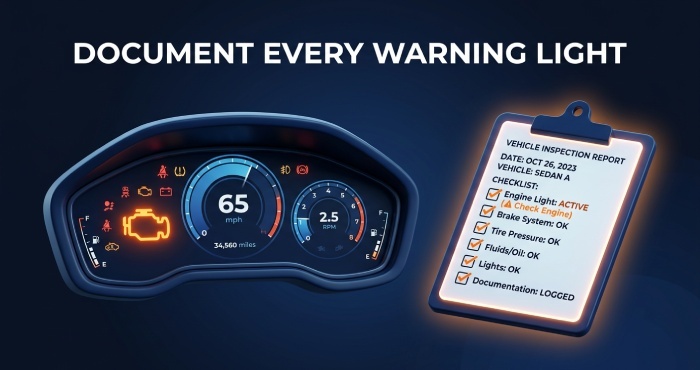
A lemon law case involving an intermittent safety defect often turns on documentation. The problem may appear unpredictably, but if it substantially impairs the use, value, or safety of the new car, California lemon law protection may apply.
Why “could not duplicate” does not end the claim
Dealers often write “no problem found” or “could not duplicate concern” on repair orders. That does not automatically defeat a lemon law claim. A lemon law attorney can evaluate whether repeated visits, consumer complaints, diagnostic trouble codes, software updates, or service bulletins support the lemon law case.
The warranty period matters
Most claims depend on whether the issue arose while the vehicle was still covered by warranty. A Breach of warranty theory may also apply when the manufacturer or vehicle manufacturer failed to honor its repair obligations.
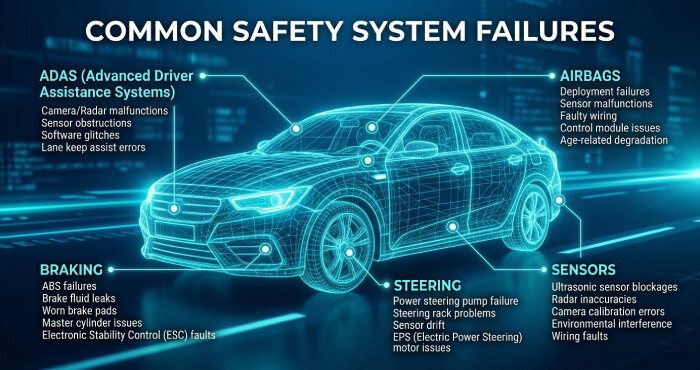
Common Intermittent Safety Feature Failures: ADAS, Braking, Steering, Airbags, and Sensors
Modern vehicles increasingly rely on complex electronic safety systems. These systems can experience intermittent failures because of software glitches, wiring problems, sensor misalignment, calibration issues, defective modules, or communication errors between vehicle components. When these problems repeatedly affect a vehicle’s safety or operation and cannot be properly repaired, they may become relevant to a California Lemon Law claim.
Advanced Driver Assistance Systems
Advanced driver assistance systems (ADAS) can be the source of intermittent safety-related defects in modern vehicles. Features such as adaptive cruise control, automatic emergency braking, blind-spot monitoring, forward collision warnings, and lane departure warnings may malfunction, activate unexpectedly, or fail to operate as intended. When an ADAS problem is covered by the vehicle’s warranty and the manufacturer cannot adequately repair it after a reasonable number of repair opportunities, the defect may be relevant to a California Lemon Law claim.
Examples of ADAS problems
A new car may brake suddenly with no obstacle ahead, fail to warn of a vehicle in the blind spot, or drift out of its lane despite lane-keeping assistance being enabled. These symptoms can support a lemon law claim when the manufacturer cannot provide a reliable fix.
Braking, Steering, and Airbag Concerns
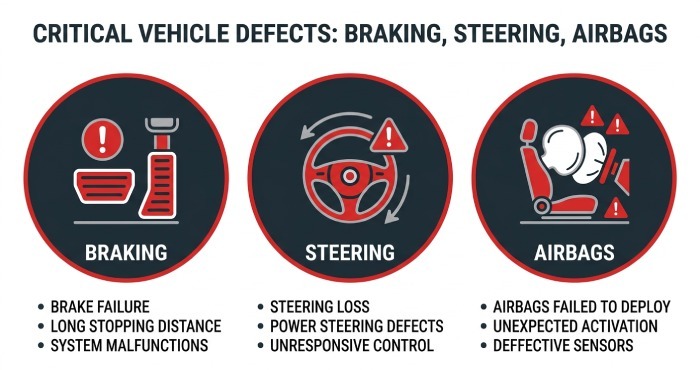
Intermittent braking and steering problems are among the most serious warranty defects. A defective vehicle may experience a soft brake pedal, delayed braking, sudden emergency braking, power steering loss, steering pull, or warning lights that come and go.
Airbag and restraint system warnings
Airbag lights, seatbelt sensor warnings, and occupant detection failures should be taken seriously. If a manufacturer or auto manufacturer cannot repair these issues, the consumer may be entitled to lemon law compensation.
Cameras, Radar, Lidar, and Parking Sensors
Sensor failures can affect parking assistance, rear cross-traffic alerts, collision warnings, and autonomous safety features. Dirt or weather may occasionally interfere with sensors, but repeated warnings, calibration failures, or module replacements may indicate a deeper defect.
Software updates are not always enough
An automaker may attempt to resolve intermittent failures through software updates. If the new car continues to malfunction after updates, the lemon law process may become necessary.
Proving an Intermittent Problem: Repair Orders, Video Evidence, Diagnostics, and Dealer Communications
A strong lemon law case depends on evidence. Because intermittent defects may not appear during a short test drive, owners should build a detailed record from the first sign of trouble. This helps a lemon law lawyer show that the defective vehicle has a recurring, safety-related problem.
Repair Orders and Service Records
Every dealership visit should produce a repair order. The repair order should clearly list the consumer’s complaint, mileage, dates, symptoms, warning messages, and the dealer’s findings. If the dealer minimizes the issue, ask that your exact complaint be included.
What to document on each visit
Track when the defect happens, weather conditions, driving speed, road type, dashboard warnings, and whether passengers witnessed the failure. These details can make a lemon law claim more credible.
Video Evidence and Photos
Video evidence can be powerful in a California lemon law claim. Safely recorded footage of warning lights, malfunction messages, unintended braking, steering alerts, or sensor failures can help prove the defect exists.
Use safe documentation methods
Never record while driving if doing so creates danger. Ask a passenger to record, use a mounted camera, or document the issue after pulling over safely.
Diagnostics, Codes, and Dealer Communications
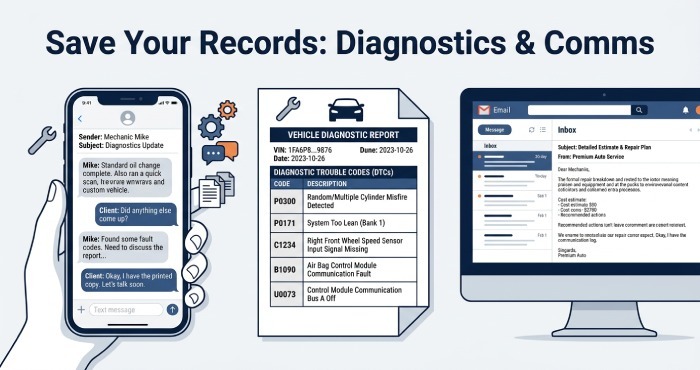
Diagnostic trouble codes, calibration records, module replacement notes, and software update logs can help lemon law experts determine whether the manufacturer has been unable to repair the new car. Save emails, text messages, voicemails, and service appointment confirmations.
Communications can reveal delay
If the dealer says parts are unavailable, engineers are reviewing the issue, or the manufacturer has no fix, those communications may support the lemon law case.
When to Contact a Lemon Law Lawyer in California for a New Car Claim
A consumer should contact a lemon law lawyer when a new car has repeated safety failures, multiple repair visits, extended time in the shop, or a defect the dealer cannot duplicate. Waiting too long can make filing a claim harder, especially if records are incomplete.
A qualified lemon law attorney can review repair orders, warranty terms, vehicle history reports, and communications with the manufacturer. Many attorneys offer a free consultation or lemon law consultation to determine whether the consumer may qualify for lemon law protection.
Why Legal Representation Helps
An experienced lemon law attorney understands how manufacturers defend intermittent defect cases. The manufacturer may argue that the defect is normal, caused by driver error, repaired, or not substantial. Legal representation helps counter those arguments with evidence and legal strategy.
Consumers often search for a california lemon law lawyer when a dealer repeatedly fails to repair a dangerous vehicle issue. Drivers in San Diego may also look for a lemon law attorney san diego for local guidance. Although this article focuses on a new car, motor home owners may need an rv lemon law attorney for similar warranty disputes.