
In California, vehicle owners can still benefit from lemon law protections even if the title has been transferred, depending on the warranty conditions and the vehicle’s repair history. It’s often surprising for many buyers to discover that manufacturers can still be held accountable for faulty vehicles after ownership shifts. Knowing how lemon law rights are affected by such transfers can help both buyers and sellers sidestep expensive errors.
Core Rules After a Vehicle Ownership Transfer
California lemon law is designed to protect consumers who are stuck with defective vehicles that cannot be repaired within a reasonable number of repair attempts during the applicable warranty period. A vehicle ownership transfer does not automatically erase every legal right connected to a car, truck, SUV, or other covered motor vehicles—but it can change the strength, timing, and proof required for compensation claims.
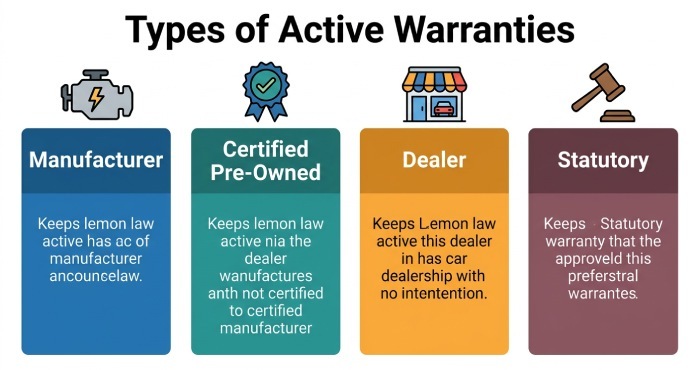
In California, the key issue is usually whether the transferred vehicle remains covered by a manufacturer’s express warranty, certified pre-owned warranty, dealer warranty, or another statutory warranty at the time the defect is reported. Manufacturer liability generally depends on whether the defect arose during the warranty period and whether the manufacturer or its authorized dealer had a fair opportunity to repair it.
What a Vehicle Title Transfer Means Under California Lemon Law
A vehicle title transfer changes the legal ownership of a vehicle through the California DMV, but it does not remove manufacturing defects or cancel manufacturer liability under California lemon law. If the vehicle is still under warranty and the defect affects its use, value, or safety, repair records and ownership documents remain important evidence.
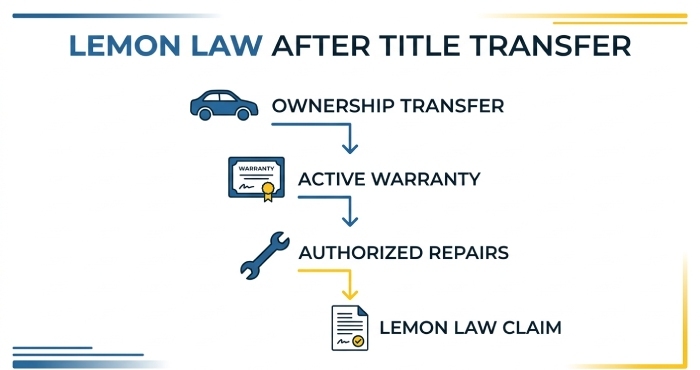
This is why buyers of transferred defective vehicles should review:
- The original in-service date
- The remaining warranty period
- Prior repair receipts
- Purchase agreements and title documents
- Dealer inspection reports
- Any manufacturer communications
- Whether the vehicle was sold as certified pre-owned or “as is”
A Lemon Law Lawyer can help evaluate whether a vehicle ownership transfer affects compensation claims, especially when ownership issues, warranty coverage, or prior repair attempts are disputed.
When Lemon Law Rights May Transfer to a New Owner
Lemon law rights may transfer if the manufacturer warranty transfers with the vehicle. Since most warranties follow the vehicle, a new owner may still have legal rights if covered defects continue after the ownership transfer.
A transferred claim is stronger when:
- The defect started during the warranty period
- Multiple repair attempts were made
- The defect affects safety, use, or value
- Complete repair records are available
- The warranty is still active
Manufacturer liability is stronger when the same unresolved defect—such as engine, electrical, or braking problems—continues despite repeated repair attempts.
Limits, Sales Context, and Warranty Coverage
Key Limits: Used Cars, Private Sales, and Warranty Coverage
One major limitation after a vehicle ownership transfer is warranty coverage, because California lemon law does not protect every used car problem. If the vehicle is out of warranty or purchased through a private sale without warranty coverage, legal protections may be limited, and buyers may need to rely on fraud, misrepresentation, or contract-related claims if defects were intentionally hidden.
Used cars may still qualify when:
- The original manufacturer warranty remains active
- A certified pre-owned warranty applies
- A dealer warranty or statutory warranty is included
- The defect was reported during the warranty period
- The manufacturer failed to complete reasonable repair attempts
Buyers should be careful with “as is” vehicle sales because they may still have legal rights for fraud, hidden salvage history, or warranty-related defects. An Experienced California lemon law attorney can review whether the used vehicle still qualifies for compensation claims.
Building and Pursuing a Strong Post-Transfer Claim
Documents Needed to Support a Lemon Law Claim After Transfer
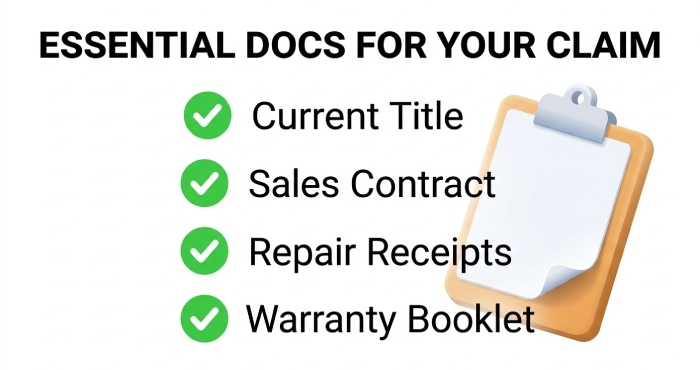
After a title transfer, strong documentation helps prove warranty coverage and defect history under California lemon law.
Important documentation includes:
- Current title and vehicle registration
- Sales contract or purchase agreements
- Warranty booklet and in-service date
- Certified pre-owned documents, if applicable
- Repair receipts from authorized dealers
- Diagnostic reports and inspection records
- Written complaints to the dealer or manufacturer
- Emails, text messages, and call logs
- Loan or lease records from financial institutions
- Any prior owner repair history
Repair receipts help prove repeated repair attempts and recurring defects. Records of long dealer downtime or serious safety issues may strengthen a lemon law claim.
For consumers needing California-specific guidance, a California Lemon Law attorney San Diego can review the warranty period, repair records, and title history to determine whether the transferred vehicle may qualify.
Steps to Take if a Transferred Vehicle Has Ongoing Defects
- Confirm warranty coverage immediately.
Check the original sale date, mileage limits, certified pre-owned coverage, and any statutory warranty that may apply. - Use an authorized dealer for repairs.
Manufacturer liability is easier to prove when repair attempts are made through authorized facilities. - Describe the defect consistently.
Use the same clear language each time. For example, “engine stalls while driving,” “transmission slips,” or “brake warning light returns.” - Keep all repair receipts.
Every visit should include the complaint, diagnosis, repair performed, mileage, and dates out of service. - Submit a written claim.
A formal claim submission to the manufacturer can begin the refund process or replacement or refund evaluation. - Avoid informal side deals.
Dealer cooperation is helpful, but undocumented promises can create ownership issues and weaken legal rights. - Escalate if repairs fail.
If the manufacturer refuses to act, consumers may pursue arbitration, court claims, or civil action depending on the facts.
A vehicle title transfer does not automatically eliminate California lemon law rights if the defect occurred during an active warranty period and repair attempts were unsuccessful. Strong documentation, including repair records and warranty details, is critical to proving manufacturer liability after ownership changes. Consumers dealing with ongoing defects in transferred vehicles should act quickly to protect their rights and evaluate potential compensation claims.