
Today’s vehicles are not just dependent on traditional engines and mechanical parts. By 2026, a large number of cars function like advanced computers, using software to manage everything from braking and battery efficiency to touchscreens and driver-assist features. As these software-driven cars gain popularity, there has been a significant rise in California lemon law claims concerning digital issues, unsuccessful over-the-air (OTA) updates, and electronic glitches.
For consumers in California, it is crucial to grasp how the state’s lemon law addresses software-related issues. Many drivers mistakenly believe that lemon law protections are limited to engine and transmission failures. However, under California law, software defects that significantly affect a vehicle’s usability, worth, or safety can also be grounds for a claim.
How California Lemon Law Applies to Software Defects
The Song-Beverly Consumer Warranty Act serves as the foundation for California’s lemon law, which aims to safeguard consumers when a manufacturer fails to fix a serious defect after several reasonable repair attempts during the warranty timeframe.
Starting in 2026, this law will increasingly cover:
- Inoperative OTA software updates
- Crashes of the infotainment system
- Failures in battery management software
- Issues with autonomous driving features
- Errors in driver assistance systems
- Problems with EV charging systems
- Defects in the software for electronic steering or braking
- Recurring dashboard alerts
- Connectivity problems that hinder essential vehicle functions
Courts and legal professionals are now more frequently acknowledging that software is critical for the operation of vehicles. If faulty software hampers safe driving, charging, navigation, braking, or other essential functions, it could be classified as a lemon law defect.
 buyback-value-6326.jpg” alt=”software defects” width=”700″ height=”370″ />
The Defect Must Substantially Affect the Vehicle
Not all frustrations with software are grounds for a lemon law claim. Under California regulations, a defect must significantly impact the vehicle’s:
- Usability
- Worth
- Safety
For instance, small issues with Bluetooth connectivity may not meet the criteria. In contrast, software malfunctions that render backup cameras inoperative, cause unintended braking, disrupt battery charging, or lead to abrupt power failure could fulfill the necessary legal requirements.
Cases in 2026 increasingly center around advanced driver-assistance systems (ADAS) and software for electric vehicles (EVs). Vehicles that consistently lose charging ability, freeze while in motion, or suffer failed over-the-air updates could raise significant safety issues.
Reasonable Repair Attempts Still Matter
Under California Lemon Law, there’s no fixed number of repairs required in every case. Instead, manufacturers must be given a “reasonable number” of opportunities to fix the issue before a California Lemon Law Lawyer can help consumers pursue compensation or a vehicle buyback.
Typically, the following circumstances can bolster a claim:
- Multiple visits for the same software issue
- Repeated unsuccessful software updates
- Over-the-air (OTA) updates that fail to fix the problem
- Extended wait times for dealership repairs
- Frequent warning lights or system failures
- Several module replacements without resolving the issues
For defects related to safety, fewer repair attempts may be necessary compared to other problems. If a software issue impacts critical functions like steering, acceleration, braking, or crash-avoidance, even just two failed attempts at repair can serve as strong evidence.
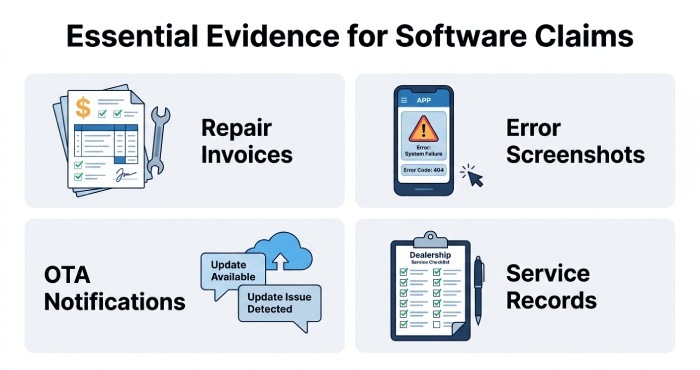
Consumers in California should diligently keep the following documents:
- Repair invoices
- Notes from the dealership
- Notifications on OTA updates
- Screenshots of error messages
- Records of service appointments
- Correspondence with the manufacturer
Having proper documentation is essential for claims involving software-related lemon law issues.
OTA Updates Have Become a Major Lemon Law Issue
In 2026, over-the-air (OTA) updates have emerged as a rapidly expanding cause of lemon law conflicts. Car manufacturers are increasingly utilizing these updates to address issues remotely, eliminating the need for customers to visit dealerships. However, these updates don’t always resolve the core issue.
Sometimes, OTA updates can inadvertently lead to new complications, such as:
- Decreased battery performance
- Disabled vehicle functionalities
- Charging issues
- Blank screens
- Loss of connectivity
- Errors in sensor calibration
- Unexpected system restarts
In certain cases, software updates may merely conceal a more significant hardware issue rather than provide a lasting solution.
Consumers are expressing their dissatisfaction online regarding frequent OTA failures and unexplained software modifications. For instance, some Reddit users have reported that their vehicles underwent undocumented software changes following dangerous driving experiences or recurrent mechanical failures.
Electric Vehicles Face Unique Software Challenges
The rise of electric vehicles (EVs) has significantly increased the incidence of software-related lemon law cases in California. Unlike conventional cars, EVs rely extensively on software for various functions, including:
- Battery management
- Charging systems
- Thermal control
- Regenerative braking
- Range estimation
- Power distribution
Consequently, any software malfunctions can seriously impact the vehicle’s functionality. In 2026, common software-related issues reported by EV owners include:
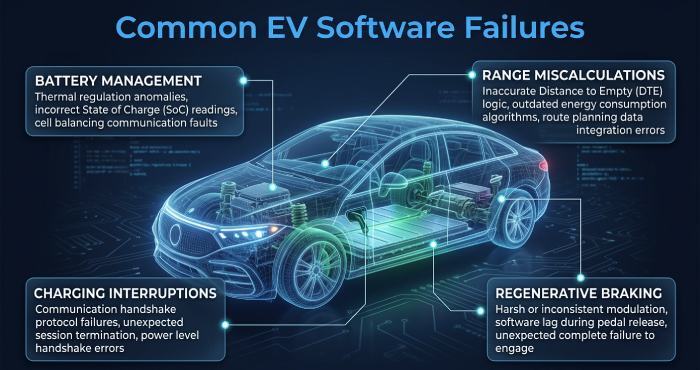
- Interruptions during charging
- Sudden battery drainage
- Incorrect battery alerts
- Miscalculations of range
- Performance drops following over-the-air updates
- Failures in driver-assistance features
- Unresponsive touchscreen interfaces
Additionally, many EV owners face prolonged repair times because dealerships often struggle to diagnose software issues and may have to wait for engineers from the manufacturer to provide necessary updates.
Long Repair Delays Can Strengthen a Claim
The lemon law in California takes into account the duration a vehicle is out of commission. Typically, if a vehicle spends a total of 30 days or more in the dealership undergoing warranty repairs, this could strengthen a lemon law case. This holds true even if the dealer frequently states that their software engineers are still looking into the problem. A skilled California Lemon Law Attorney can help determine whether you qualify for a refund, replacement, or compensation.
Issues related to software can lead to particularly lengthy wait times, as dealerships often do not have direct oversight of the repair processes. Manufacturers may necessitate approval from their engineering teams before any software components can be replaced or reprogrammed.
By 2026, numerous consumers have reported delays of weeks or months for software-related repairs that fail to completely fix the problem.
Final Thoughts
California lemon law requirements in 2026 now cover more than mechanical defects, with many claims involving OTA updates, infotainment failures, battery software issues, and advanced driving technology problems. Drivers experiencing repeated digital malfunctions should speak with the Best Lemon Law Attorney San Diego to understand whether their software-related defects qualify under California lemon law.
Manufacturers may describe recurring software failures as temporary “glitches,” but ongoing problems that affect a vehicle’s safety, use, or value could still support a valid lemon law claim. Keeping repair records, saving update notifications, and taking early legal action can help consumers protect their rights in today’s software-driven automotive industry.