How California Lemon Law Generally Applies to Vehicles and Consumers
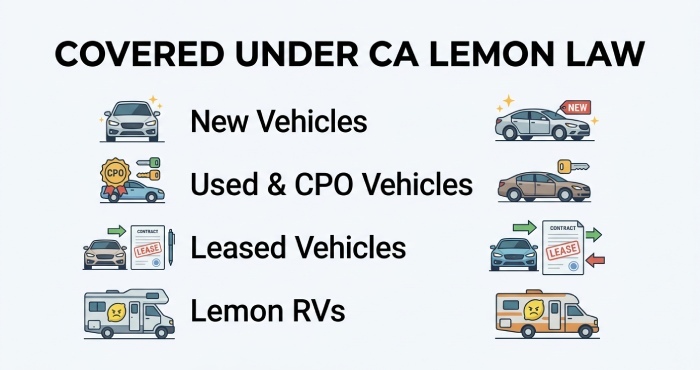
California Lemon Law primarily protects consumers who buy or lease a motor vehicle that has substantial defects the manufacturer or authorized repair shop cannot fix within a reasonable number of repair attempts. In a typical lemon law claim, the vehicle is a new car, leased vehicle, certified pre-owned vehicle, or sometimes a used car sold with an active warranty or remaining manufacturer warranty.
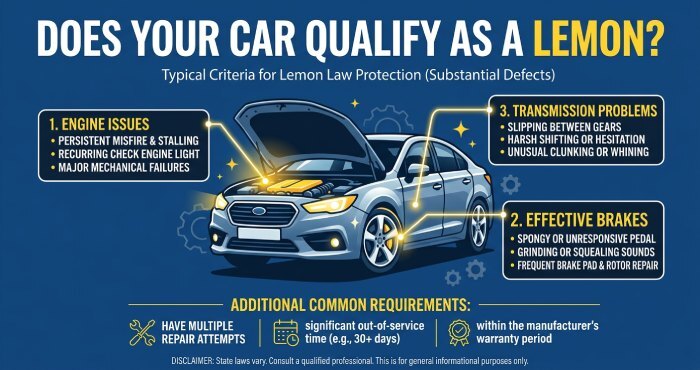
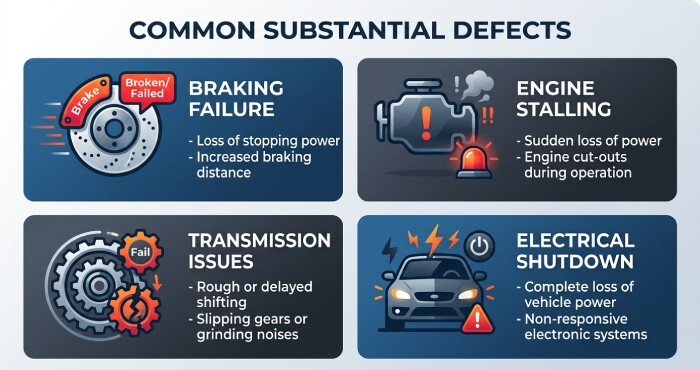
Under California consumer law, a lemon vehicle may qualify for remedies when the defect substantially impairs the vehicle’s use, value, or safety. These substantial defects may involve braking issues, steering failures, electrical malfunctions, transmission problems, engine defects, or other safety defects. If the manufacturer fails to meet its obligations after multiple repair attempts, the consumer may seek a refund, purchase refund, loan/lease payoff, vehicle replacement, or other compensation.
Core protections under California Lemon Law
California Lemon Law protects buyers of defective vehicles that cannot be repaired under the manufacturer’s warranty. If a vehicle qualifies as a lemon, the owner may be entitled to a buyback, replacement, or reimbursement, and a lemon law attorney can help evaluate the repair history, warranty coverage, and evidence needed to pursue a claim.
Consumers often contact lemon law attorneys after repeated visits to a dealership or repair shop involving the same unresolved problem. A lemon law lawyer may also evaluate cases involving Mini Cooper, Mercedes, BMW, truck, sport utility vehicle, family vehicle, recreational vehicle, lemon RVs, and demo vehicles or a demonstration vehicle sold with warranty coverage. For RV-specific issues, a consumer may also consult an rv lemon law attorney.
Rental Cars vs. Purchased or Leased Vehicles: Key Legal Differences
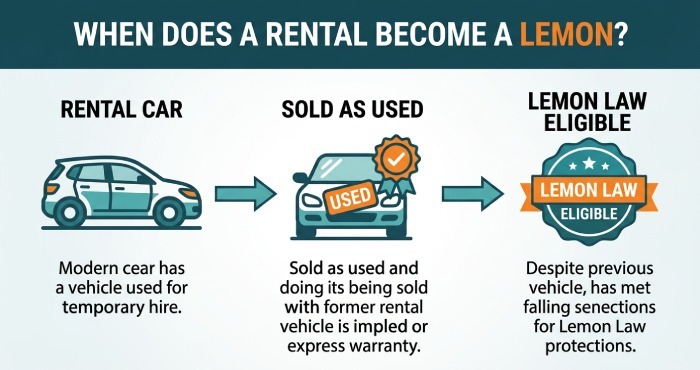
Rental cars are generally not covered by California Lemon Law for the renter because the renter does not own or lease the vehicle or hold the manufacturer’s warranty rights. Instead, the rental company typically has the legal relationship with the manufacturer and may be the party eligible to pursue a Lemon Law claim if the vehicle qualifies as a lemon.
Why the rental agreement matters
A rental agreement gives you temporary use of a vehicle, not ownership, so California Lemon Law usually does not apply directly to renters. Instead, if a defective rental car causes injury, expenses, or other losses, the renter may have legal claims based on negligence, contract law, or consumer protection laws rather than a traditional Lemon Law buyback or replacement claim.
Exceptions and unusual situations
There may be unusual circumstances where rental cars later become sold vehicles. If a former rental car is sold as a used car or certified pre-owned vehicle with an active warranty, and it continues to experience substantial defects after the sale, the buyer may have a viable lemon law claim. In that scenario, a lemon law lawyer can assess whether the manufacturer warranty applies, whether there were multiple repair attempts, and whether the vehicle qualifies as a lemon vehicle.
What Counts as a Known Defect in a California Rental Car
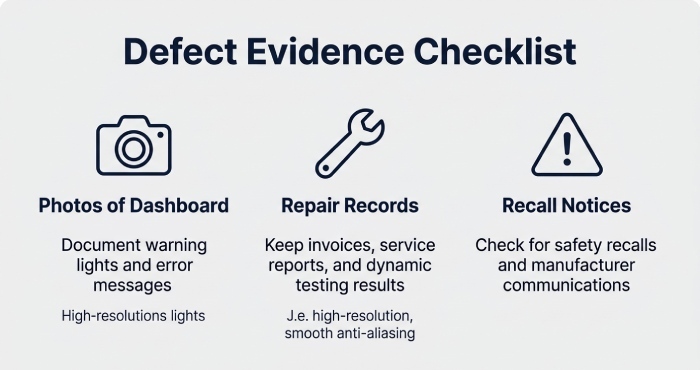
A known defect is a problem that the rental company, manufacturer, or dealership knew—or should have known—about before renting the vehicle. Evidence such as repair records, prior complaints, recall notices, or maintenance documents can help show the defect existed beforehand and may support a claim if the unsafe vehicle was still rented out.
Legal Options for Renters Injured or Inconvenienced by Defective Rental Cars
If a renter is injured or suffers losses because of a defective rental car, they may have legal options beyond California Lemon Law. Depending on the circumstances, they may be able to recover compensation for medical expenses, lost wages, towing, property damage, or other losses through negligence, product liability, rental company liability, or manufacturer claims.
Potential remedies beyond a standard lemon law claim
Depending on the facts, legal options may include:
A refund of rental charges
Reimbursement for hotel, rideshare, or transportation expenses
Insurance claims for injuries or property damage
A settlement with the rental company
A product liability claim against the manufacturer
Claims based on unfair business practices
A lemon law claim by a later purchaser if the rental car is sold with warranty coverage
A renter should document everything immediately. If the rental company offers a replacement vehicle, the renter should still preserve evidence of the defective vehicle and any costs incurred. A replacement vehicle may solve the immediate travel problem, but it does not automatically eliminate a claim for compensation. A california lemon law lawyer can help distinguish between lemon cars, rental fleet disputes, warranty disputes, and injury-related claims.
When to Contact a Lemon Law Lawyer in California About a Rental Car Defect
If a rental car defect causes safety issues, accidents, or repeated problems, consult a lemon law lawyer. In Glendale, California, an attorney can evaluate your legal options. If you later buy that vehicle and it has recurring warranty defects, you may also qualify for a Lemon Law claim.
What to bring to a case evaluation
For a free consultation or case evaluation, gather:
The rental agreement
Photos and videos of the defect
Repair shop or towing documents
Emails, texts, and complaint records
Accident reports, if any
Medical records, if injured
Warranty information, if you purchased the vehicle later
Any manufacturer recall or service bulletin
A lemon law attorney will evaluate whether California Lemon Law applies, whether the manufacturer warranty is active, whether there were multiple repair attempts, and whether the facts support compensation, civil penalties, or another remedy. If the facts involve a purchased defective vehicle, the attorney may pursue a refund, purchase refund, vehicle replacement, or settlement.
For renters in San Diego or elsewhere in California, contacting a lemon law attorney san diego can be especially important when the defect involves safety, significant inconvenience, or disputed responsibility. The right lemon law team can explain the legal process, preserve evidence, and determine whether your case is a rental dispute, personal injury matter, warranty claim, or California Lemon Law case involving a true lemon vehicle.
Understanding California Lemon Law and How It Protects Vehicle Buyers
California Lemon Law protects consumers when a defective vehicle cannot be repaired after a reasonable number of attempts. If a vehicle covered by the manufacturer’s warranty has a defect that substantially affects its use, value, or safety, the manufacturer may be required to provide a refund, replacement vehicle, or other compensation.
The law may apply to new, used, certified pre-owned, leased, and certain demonstration vehicles with qualifying warranty coverage. A lemon law attorney can review your purchase documents, repair records, and warranty to determine whether you have a valid claim and help pursue compensation if the manufacturer fails to resolve the defect.
For drivers in San Diego, California, speaking with a lemon law attorney san diego can be a practical first step when repair delays or repeat repairs are disrupting daily life.
Vehicles and Defects Commonly Covered
California Lemon Law protections can apply when a substantial defect causes substantial problems with drivability, safety, electronics, engine performance, transmission function, braking, steering, air conditioning, or other vehicle defects. The defect must generally arise during the vehicle warranty period, and repairs under warranty should be documented by a dealership, repair facility, or vehicle repair shop.
What Counts as a Reasonable Number of Repair Attempts in California
Why “Reasonable” Depends on the Defect
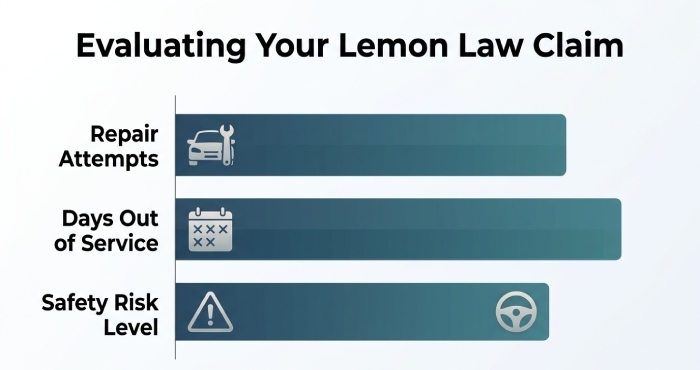
Reasonable repair attempts are judged in context. A defective radio is inconvenient, but a braking failure, stalling engine, steering malfunction, fuel leak, or electrical shutdown creates a different level of risk. When a defective vehicle cannot be safely driven, the manufacturer may have less room to argue that more repair attempts are needed.
A consumer protection attorney can also determine whether the manufacturer’s refusal to offer a purchase refund, replacement vehicle, or other compensation supports civil penalties. In some cases, civil penalty exposure may increase the settlement value if the manufacturer knowingly failed to comply with California Lemon Law.
Documents That Help Prove Repair Attempts
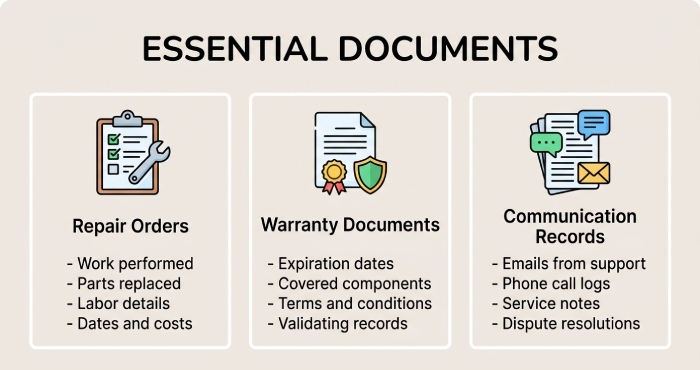
Strong evidence often includes:
Each repair order from the dealer or repair shop
The repair record showing dates in and out of service
Notes about repeated symptoms
Warranty coverage and manufacturer’s warranty documents
Photos, videos, recall notices, and towing records
An experienced attorney uses this evidence to build the lemon law claim and calculate the refund amount, loan/lease payoff, or value of a replacement vehicle.
Repair Delays: When Your Vehicle Spends Too Much Time in the Shop
The 30-Day Out-of-Service Issue
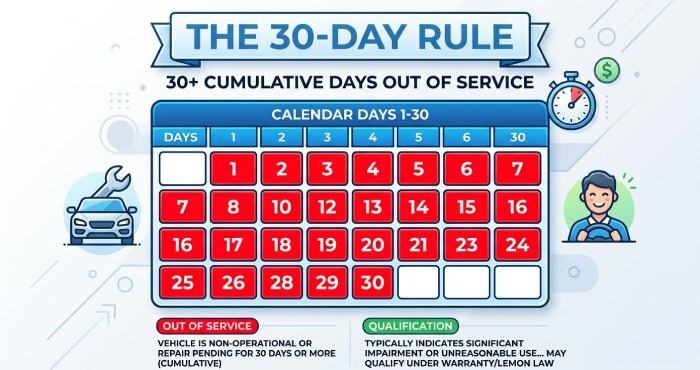
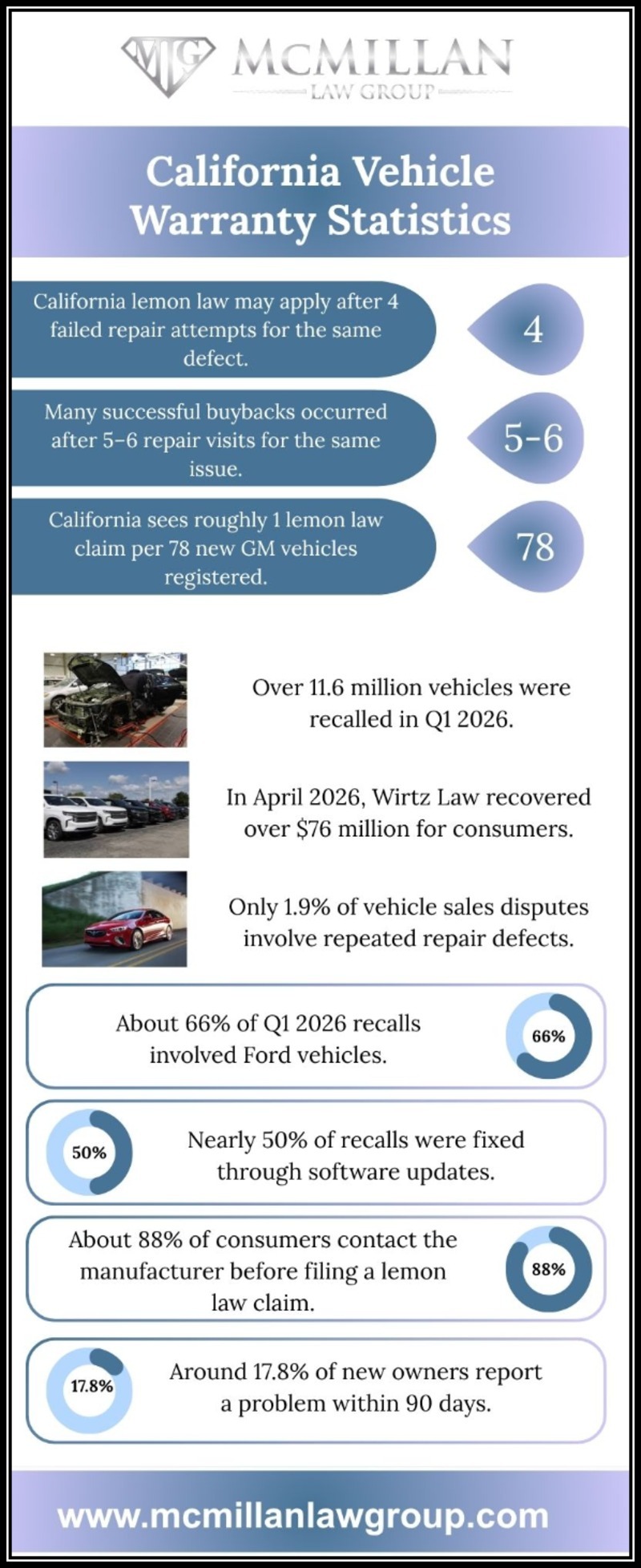
Many California consumers hear about the “30-day rule.” While every case depends on the facts, a vehicle that is out of service for a total of 30 or more days for warranty repairs may raise serious CA Lemon Law concerns. Those days do not always need to be consecutive. If your used vehicle, certified pre-owned vehicle, lemon car, or lemon RV keeps returning to the repair facility, the cumulative downtime matters.
A lemon law lawyer can review whether delays were caused by the dealership, parts shortages, manufacturer approval problems, or repeated failed diagnostics. If the vehicle was under vehicle warranty and repairs under warranty did not restore it, compensation, a refund, or a replacement vehicle may be available.
Delays Caused by Parts or Diagnostics
Manufacturers sometimes argue that parts delays are unavoidable. However, California Lemon Law focuses on the consumer’s loss of use and whether the manufacturer honored its obligations. If your defective vehicle is parked at a repair facility while the manufacturer waits for parts, the delay may still count against the manufacturer.
A california lemon law lawyer can provide a case evaluation, discuss attorney fees, and explain whether a free consultation is available before you pursue the legal process.
Repeat Repairs for the Same Problem: A Major Lemon Law Warning Sign
When the Vehicle Is “Fixed” but the Problem Returns
If the same defect returns after a repair, your vehicle may still qualify for protection under California Lemon Law. Repeated temporary fixes, software updates, or “no problem found” findings do not necessarily resolve the manufacturer’s responsibility. Recurring problems may support a claim for a vehicle buyback, replacement, refund, or other available compensation.
Used Vehicle and Certified Pre-Owned Claims
Used and certified pre-owned vehicles may qualify for California Lemon Law if they were covered by a qualifying manufacturer or express warranty. Repeated warranty repairs for the same defect can support a claim, even if the vehicle was purchased used. An experienced lemon law attorney can evaluate your records and determine whether you may be eligible for a refund, replacement vehicle, or other legal remedies.
Safety Defects and Why Fewer Repair Attempts May Be Enough
Why Legal Help Matters Early
An attorney can act as your advocate, communicate with the manufacturer, organize evidence, and push for compensation without letting the manufacturer control the process. A lemon law lawyer understands how to present a lemon law case, respond to manufacturer refusal, and pursue a settlement or trial when necessary.
For RV owners, a rv lemon law attorney can evaluate complex warranty issues involving a lemon RV, chassis defects, coach systems, and repairs split between multiple facilities. Members of the U.S. Armed Forces stationed in California may also have specific concerns about where the vehicle was purchased, registered, or repaired.
Documentation You Need to Prove Repair Attempts and Delays
Repair Orders, Invoices, and Service Records
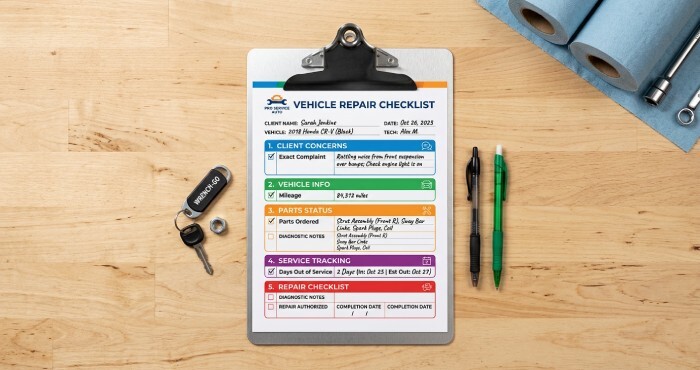
Keep every repair order, invoice, and service record from each dealership or authorized repair visit, even if the repair was unsuccessful or marked “could not duplicate.” These records document the reported defect, repair attempts, warranty work, and the amount of time your vehicle was out of service. Complete service records can provide valuable evidence when pursuing a California Lemon Law claim.
Warranty, Purchase, Loan, and Lease Documents
Save all warranty documents, purchase or lease agreements, financing records, registration paperwork, recall notices, and communications with the manufacturer or dealership. These documents help establish warranty coverage and confirm your ownership or lease terms. They are essential for determining whether your vehicle qualifies for protection under California Lemon Law.
Tracking Days Out of Service and Delays
Maintain a timeline that records repair dates, dealership visits, vehicle downtime, and when the defect returned. Also keep receipts for rental vehicles or other transportation expenses caused by warranty repairs. A detailed timeline helps demonstrate excessive repair delays and supports a stronger California Lemon Law case.
Key Takeaways
Keep every repair order, warranty document, purchase contract, and communication with the manufacturer or dealership.
A used vehicle, certified pre-owned vehicle, leased vehicle, lemon RV, or new vehicle may qualify if warranty coverage and legal requirements are met.
Contact a lemon law lawyer before accepting a refund, replacement vehicle, or cash settlement.
California Lemon Law remedies may include a manufacturer buyback, replacement vehicle, compensation, civil penalties, and attorney fees.
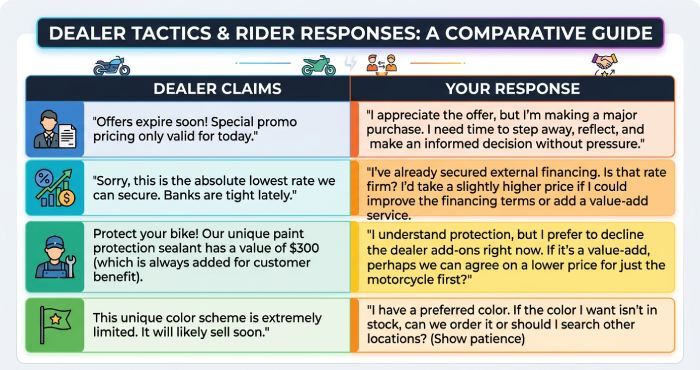
Way #1: Claiming the Motorcycle Defect Is “Normal”
Dealers commonly say a vibration, stalling condition, battery drain, onboard computer warning, ABS fault, fuel injection system hesitation, catalytic converter smell, or braking system noise is “normal for that model.” This is often used to discourage a motorcycle lemon law claim before the rider realizes the California lemon law may apply.
Respond by documenting symptoms in detail. Take videos, save dashboard warnings, photograph leaks or damaged parts, and compare the bike with similar models at the same authorized dealership or another authorized facility. If the dealer says the problem is normal, request that explanation in writing on the repair order.
Way #2: Blaming Rider Error or Abuse
Another tactic is blaming the rider. The dealer may allege improper shifting, hard riding, missed maintenance, overloading, track use, or abuse—especially when the motorcycle defects involve transmission issues, suspension problems, brake malfunctions, or engine malfunctions.
Respond with maintenance records, riding history, photos, and expert inspection evidence. If you followed the motorcycle warranty schedule and used the bike for personal use rather than commercial racing or excluded off-road motorcycles activity, say so clearly. Keep receipts for oil changes, tires, battery service, and inspections.
Way #3: Saying Aftermarket Parts Voided the Claim
Show the Modification Did Not Cause the Defect
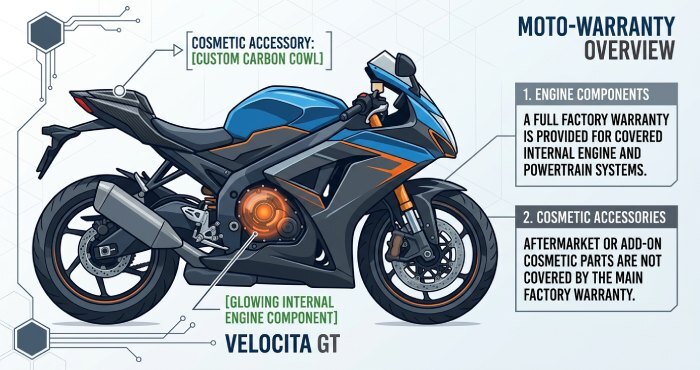
If the issue is ABS failure, an onboard computer fault, a defective steering mechanism, or cooling system failures, a cosmetic accessory may have nothing to do with it. Ask the dealer to identify exactly how the aftermarket part caused the specific substantial defect. A lemon law attorney can help analyze whether the manufacturer or dealer has a valid defense.
Keep the Original Parts and Installation Proof
Save invoices, installer notes, photos, and original equipment. This documentation can help a lemon law lawyer argue that the defective motorcycle remains covered by the manufacturer warranty and that the motorcycle warranty was not properly denied.
Way #4: Arguing the Bike Has Not Had Enough Repair Attempts
A dealer may say, “You need more repair attempts,” even after the bike has repeatedly been out of service. The California lemon law does not always require endless visits. The Song-Beverly Consumer Warranty Act looks at whether the manufacturer or its authorized dealership had a reasonable number of attempts to fix the defect.
Respond by tracking every repair visit, repeat complaint, mileage, dates in and out, and days out of service. Document repairs even when the dealer says it “could not duplicate” the concern. Repair records showing repeated safety issues, stalling, brake malfunctions, electrical system malfunctions, or steering malfunctions can support a repurchase, replacement, refund, or other compensation.
Way #5: Calling the Problem a Minor Inconvenience
Dealers may describe the issue as minor: a warning light, intermittent stall, hard start, fuel system concerns, or unstable handling. But a “minor inconvenience” can still qualify if it affects safety, value, or usability.
Respond by explaining the real-world impact. Does the bike stall in traffic? Does the ABS light disable braking assistance? Does the battery fail after sitting overnight? Does the fuel injection system surge during turns? Does the defect make the motor vehicle unsafe or unreliable?
Way #6: Refusing to Put Repair Findings in Writing
Demand Complete Repair Orders
Always request a complete repair order before leaving the authorized facility. It should include your exact complaint, mileage, diagnosis, parts ordered, test ride results, and whether the defect was duplicated.
Save Every Communication
Keep texts, emails, voicemails, service portal screenshots, tow receipts, and notes from conversations. A lemon law lawyer or lemon law attorney can use these records to show persistent issues and a reasonable number of attempts under the California lemon law.
Way #7: Delaying Repairs Until the Warranty Expires
A dealer may delay appointments, wait on parts, or repeatedly say the motorcycle manufacturer has not approved repairs. Then, once the mileage limit or warranty end date passes, the dealer may claim the manufacturer warranty has expired.
Respond by proving the issue began during the manufacturer warranty period. Save the first complaint date, appointment requests, repair records, and communications showing you tried to obtain service before expiration. The motorcycle warranty timeline is critical.
Way #8: Saying the Manufacturer, Not the Dealer, Is Responsible
Dealers often say, “That’s between you and the manufacturer.” While a repurchase or replacement is usually the manufacturer’s obligation, the dealer’s records are essential evidence. The authorized dealership is typically the place where the manufacturer gets its reasonable number of attempts to repair the defective motorcycle.
Preserve dealer records, service invoices, and communications. Then contact a lemon law lawyer California motorcycles clients trust. For broader lemon law information, many consumers start by reviewing resources from a california lemon law lawyer, especially when comparing motorcycle lemon law issues with other motor vehicle claims.
Way #9: Offering a Low Settlement or Trade-In Instead of a Buyback
A dealer may suggest a trade-in, small cash payment, extended service plan, or discounted replacement instead of a formal repurchase. These offers may be far less than the recovery available under the California lemon law.
Respond by calculating potential recovery before signing anything. A proper motorcycle lemon law analysis may include refund of payments, down payment, registration, incidental costs, payoff of the loan, replacement, replacement vehicle options, attorneys’ fees, costs, and possible civil penalties. A repurchase may be better than a trade-in because it is based on legal rights, not dealer negotiation.
A lemon law lawyer can also explain deductions such as mileage offset or mileage limit issues. If you own other covered vehicles, separate advice may be needed; for example, an rv lemon law attorney handles different facts than a motorcycle lemon law matter, though both may involve the Song-Beverly Consumer Warranty Act.
Way #10: Discouraging You From Hiring a Lawyer
Finally, a dealer or manufacturer representative may say hiring a lawyer will “slow things down” or “reduce your recovery.” Be cautious. Under the Song-Beverly Consumer Warranty Act, a prevailing consumer may recover attorneys’ fees from the manufacturer, which means qualified legal representation may not require paying hourly fees out of pocket.
Before signing a release, trade-in agreement, settlement, or repair waiver, consult a California motorcycle lemon law attorney. A skilled lemon law attorney can determine whether the defective motorcycle qualifies for repurchase, refund, replacement, compensation, or a lemon lawsuit. Many firms offer a free consultation, including options such as a lemon law attorney san diego for California consumers seeking guidance.
Many modern vehicles now include subscription-based features that control functions such as navigation, driver assistance, and remote connectivity. When these features stop working, owners may wonder whether the issue is covered by the vehicle’s warranty and whether it could qualify under California Lemon Law. Understanding how subscription-based technology affects your legal rights can help you determine the next steps if a defect remains unresolved.
How Subscription-Based Vehicle Features Work and WhyThey Matter to California Drivers
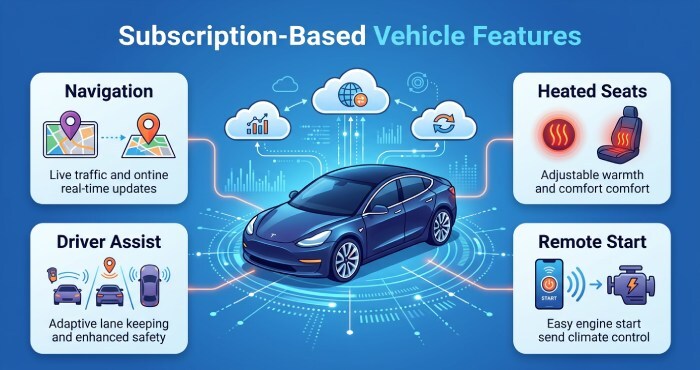
Subscription-based vehicle features are software-enabled functions that a vehicle manufacturer, car manufacturer, or dealer may activate, deactivate, update, or restrict through an app, server connection, embedded modem, or account-based platform. These features can include heated seats, driver-assistance systems, navigation, remote start, enhanced charging, hands-free driving, performance modes, connectivity packages, or safety alerts in cars, SUVs, trucks, vans, motor homes, and even some commercial vehicles.
Why Paid Features Are Different From Traditional Options
Traditional vehicle options are physical components installed when the vehicle is built. Paid subscription features often rely on software, cloud connectivity, or ongoing service plans. Whether a failure is covered under California Lemon Law depends on the warranty, how the feature was sold, and whether the manufacturer had a chance to repair it.
Why California Drivers Should Pay Attention
Drivers should keep records of subscription purchases, warranty documents, repair orders, invoices, and other related paperwork. These records can help support a California Lemon Law claim if a paid feature repeatedly fails. If the malfunction affects the vehicle’s safety, reliability, value, or performance, a lemon law attorney can evaluate whether it may qualify as a warranty defect.
Manufacturer Warranties vs. Paid Feature Subscriptions: What Is Actually Covered?
The Role of the Written Warranty
A written warranty promises that certain vehicle parts and systems will function properly for a specific time or mileage. In California, including High Desert, consumers may have rights if a manufacturer cannot repair a warranty-covered defect after a reasonable number of attempts. Factory-installed software and hardware are generally covered under the original warranty.
Express Warranty Language Matters
The express warranty explains which vehicle components and features are covered. It may include factory-installed software, infotainment systems, driver-assistance features, and over-the-air updates. If a covered feature repeatedly fails during the warranty period, it could support a California Lemon Law claim.
Subscription Terms Can Create Confusion
Subscription agreements may distinguish between digital services and vehicle defects. However, California Lemon Law protections may still apply when a manufacturer-installed feature repeatedly malfunctions under warranty. Whether the issue is covered depends on the warranty terms and the nature of the defect.
Practical Example
If a driver pays monthly for advanced navigation but the app login fails once, that may be a service dispute. If the central display repeatedly crashes, disables climate controls, and prevents safety alerts despite repair attempts, the issue may support a lemon law case.
When Software-Enabled Features Create Defects Under California Lemon Law
When a Subscription Problem Becomes a Lemon Law Problem
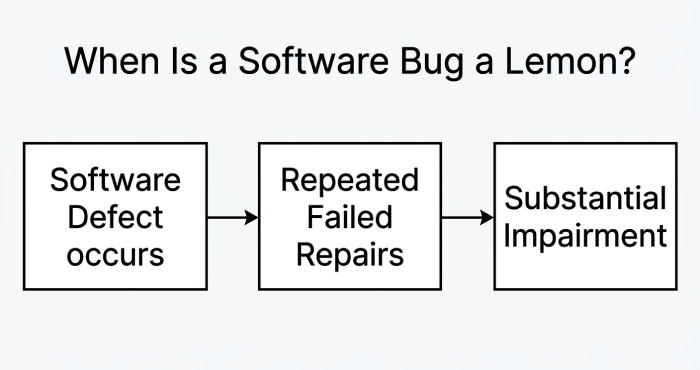
A subscription feature may raise California Lemon Law issues if its malfunction substantially impairs the vehicle’s use, value, or safety. If the defect occurs during the warranty period and cannot be repaired after a reasonable number of attempts, the law may provide consumer protections.
Examples may include:
Driver-assistance systems that disengage without warning
Repeated infotainment failures affecting backup cameras or safety alerts
Failed over-the-air updates that disable essential vehicle functions
Remote start or charging software that repeatedly fails in electric vehicles
Subscription-based safety systems that cannot be activated despite payment
A lemon law lawyer may also review technical service bulletins, service bulletin history, update logs, and internal repair notes to determine whether the vehicle manufacturer knew about a recurring defect.
Used Vehicles, Demonstrators, and Business Vehicles
The used car lemon law analysis can be more complex. A used vehicle may qualify if it was sold with remaining original manufacturer warranty coverage or a qualifying written warranty. The used car lemon law may also apply to demonstrator vehicles, dealer loaners, or certain certified pre-owned vehicles if the defect is covered.
Commercial vehicles may qualify in some situations, especially for a small business owner with a limited fleet. Motor homes may also raise special issues involving the chassis, Chassis cab, living-area components, or coach manufacturer. For recreational vehicles, consulting an rv lemon law attorney may be especially useful.
When to Contact a Lemon Law Lawyer in California About Warranty or Subscription Feature Issues
Warning Signs That Legal Help May Be Needed
Contact a lemon law lawyer if a paid or software-enabled feature repeatedly fails during the warranty period, especially when the issue affects safety, drivability, charging, visibility, braking, steering assistance, or the vehicle’s resale value. You should also speak with a lemon law attorney if the dealer says the issue is “normal,” cannot duplicate the problem, or repeatedly installs updates without fixing the defective vehicle.
A california lemon law lawyer can review whether the Song-Beverly Consumer Warranty Act, used car lemon law, or Magnuson-Moss Warranty Act applies. In many California Lemon Law matters, the fee-shifting provision may require the vehicle manufacturer to pay attorney’s fees when the consumer prevails, which allows many consumers to pursue a legal claim without paying attorney’s fees upfront.
Any settlement offer, mediation notice, or arbitration board paperwork
An attorney may calculate potential compensation, including eligible purchase costs, fees, and any applicable mileage offset. If the manufacturer cannot repair the defect after a reasonable number of attempts, the consumer may qualify for a refund, replacement vehicle, or other available compensation.
Arbitration, Settlement, and Filing Deadlines
Consumers should review arbitration or settlement offers carefully before accepting them, as they may affect important warranty rights. Filing deadlines also matter, so consulting a qualified California lemon law attorney early can help protect a potential claim and ensure repair records are properly documented.
A consumer may consult a qualified lemon law attorney san diego to understand their warranty rights. Whether the issue involves subscription-based features or other vehicle defects, the key question is whether the manufacturer fulfilled its warranty obligations under California law.
Understanding Lemon Law Buybacks and How Loan Balances Fit In
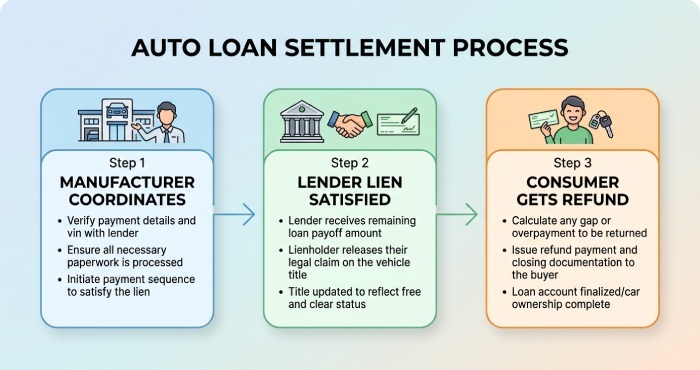
A lemon law settlement involving a financed vehicle is more than a simple cash payment. When a manufacturer agrees to a buyback, it must first address the outstanding car loan by coordinating with the lender. Only after the loan payoff is calculated can any remaining refund be paid directly to the consumer.
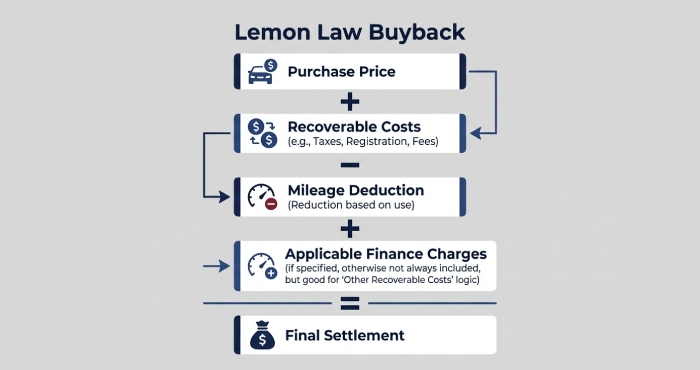
In a typical lemon law claim, the buyback amount may include the purchase price or eligible payments made by the consumer, less any lawful mileage deduction and plus certain recoverable costs. The manufacturer works with the bank or finance company to obtain the current payoff amount before completing the settlement.
Because the lender holds a lien on the vehicle, the loan must generally be satisfied before ownership can be transferred back to the manufacturer. Reviewing the payoff amount, accrued interest, and any remaining loan balance is an important step, and a lemon law attorney can help ensure the settlement is calculated correctly.
What Happens to Principal vs. Interest in a Lemon Law Settlement
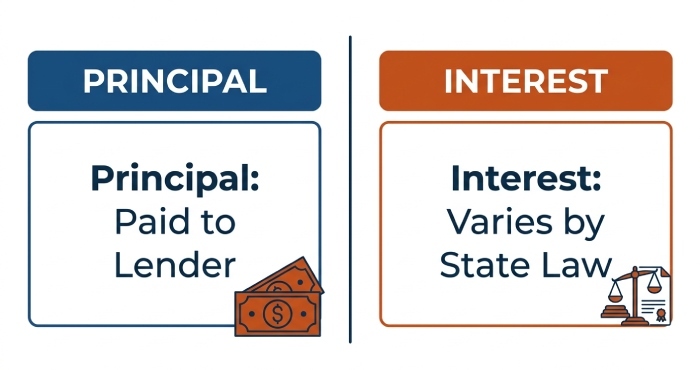
The principal on a car loan is the amount borrowed to purchase the vehicle, while interest is the cost of borrowing that money. In a lemon law settlement, the loan principal is usually resolved through the lender payoff so the loan can be satisfied and the vehicle title transferred.
Whether a consumer can recover interest already paid depends on the applicable state law and the terms of the settlement. Under the California Lemon Law, many purchase-related payments may be recoverable, but finance charges are not always reimbursed and may be treated differently depending on the loan agreement and the specific facts of the case.
Principal Usually Follows the Payoff
The remaining loan principal is usually shown on the payoff statement. If the buyback exceeds the payoff amount, the consumer may receive the remaining balance as a refund.
Interest Is Reviewed Differently from Principal
Loan interest is not always treated the same as principal in a buyback. Whether it is reimbursed depends on the settlement terms and the specific case.
Review the Retail Installment Contract
The retail installment contract outlines the loan details, finance charges, and any add-on products. Reviewing it helps identify costs included in the vehicle financing.
Compare Payment History to Payoff
Your payment history shows how much was applied to principal and interest over time. Comparing it with the final payoff helps verify that the settlement is accurate.
When Interest Paid May Be Reimbursed or Excluded
Interest paid on a loan for a defective vehicle may be recoverable if it is directly tied to the consumer’s finance payments and permitted under the applicable state lemon law. In many successful lemon law claims involving repeated warranty repairs, reimbursement of eligible finance charges may increase the consumer’s recovery beyond the payoff of the remaining loan principal.
However, interest is not always fully recoverable. If the loan includes negative equity from a prior trade-in or financing for optional add-on products, the manufacturer may argue that the related interest should not be included in the refund because those amounts are not directly attributable to the defective vehicle.
Common reimbursement and exclusion issues
A buyback scenario can involve several categories of money:
Payments made toward principal and interest on the car loan
Current loan balance and lender payoff
Registration, taxes, and official fees
Out-of-pocket expenses for towing, rental cars, or diagnostics
Optional products such as GAP Insurance, service contracts, or maintenance plans
Lease payments and obligations under lease agreements
Prior negative equity rolled into the purchase
A manufacturer may agree to manufacturer reimbursement for some finance charges but classify others as excluded costs. The dispute often turns on statutory language, settlement negotiation, and documentation. Firms such as McMillan Law Group, led by Julian McMillan, and other consumer firms such as
Consumers in Southern California may also consult a lemon law attorneysan diego for localized guidance, while statewide claims may warrant speaking with a california lemon law lawyer. For motorhomes and recreational vehicles, a specialized rv lemon law attorney may be appropriate because RV financing, warranties, and repair histories can be more complex.
How Mileage Offsets, Fees, and Payoff Amounts Affect Your Recovery
The mileage offset can significantly reduce the amount a consumer receives in a manufacturer buyback because it accounts for the vehicle’s use before the first qualifying repair attempt. A large usage deduction may reduce the refund enough that it no longer covers the remaining loan payoff, potentially leaving the consumer with negative equity unless the manufacturer agrees to pay the difference.
Consumers should also review settlement terms carefully when a replacement vehicle is offered. A replacement does not automatically eliminate the existing loan or lease obligations and may involve new financing, taxes, registration costs, or other fees. Confirming how the loan payoff, lease balance, and any remaining financial obligations will be handled is essential before accepting the settlement.
Practical Steps for Documenting Auto Loan Interest and Protecting Your Settlement
To protect your lemon law recovery in Rancho Palos Verdes, organize your financial records before settlement negotiations begin. Strong documentation makes it easier to prove the interest you’ve paid, identify any negative equity, and challenge an incomplete refund calculation, helping ensure you receive the full compensation you may be entitled to under the law.
Start by collecting:
The purchase contract or lease agreement 2. The complete car loan payment history 3. Current payoff statement from the finance company 4. Records of all repair attempts and repair orders 5. Warranty documents from the manufacturer and warranty provider 6. Receipts for out-of-pocket expenses 7. Documents for GAP insurance, service contracts, and other add-ons 8. Any communications with the dealer, manufacturer, lender, or insurance company
Information found on Google, YouTube, Facebook, LinkedIn, X (Twitter), WhatsApp, or Pinterest can provide general background but should not replace legal advice for your specific lemon law claim. A free consultation with a qualified lemon law attorney can help determine whether interest is recoverable, whether the manufacturer buyback properly addresses your loan balance, and whether a replacement vehicle or cash refund is the better option.
Before signing a release, confirm the settlement states who pays the lender, when the payoff will be made, whether per diem interest is included, and whether the loan balance will be fully satisfied. Also verify how the settlement treats usage deduction, negative equity, interest paid, optional add-ons, and any remaining obligations that could affect your rights, credit score, or future financing.