
When Parts Delays or Discontinued Components Become a Warranty Problem
Parts delays can become serious RV warranty issues when a manufacturer or dealer cannot repair a defective motorhome, fifth wheel, or travel trailer within the warranty period. Because RVs contain complex mechanical, electrical, plumbing, and structural systems, unavailable parts can leave the vehicle unusable for weeks or months.
A parts shortage does not automatically eliminate the manufacturer’s warranty responsibilities. Repeated delays involving engine or transmission failures, water leaks, mold, roof separation, or faulty slide-outs may support a lemon law claim if the defects substantially affect the RV’s use, value, or safety.
California Lemon Law Protections for Recreational Vehicles
California Lemon Law provides strong consumer rights for owners and lessees of qualifying recreational vehicles. The primary statute is the Song-Beverly Consumer Warranty Act, often discussed in a California Lemon Law Guide and frequently cited by California courts. The song-beverly consumer warranty act may apply when a new RV or certain used RV vehicles are sold with a warranty and contain a substantial defect that the manufacturer or dealer cannot fix.
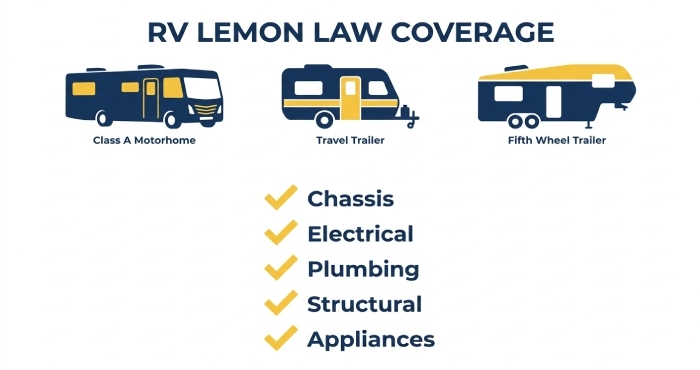
RV lemon law protections may cover a Class A Motorhome, Class B Motorhome, Class C Motorhome, travel trailer, fifth wheel trailer, or other qualifying recreational vehicles, depending on how the vehicle was sold, used, and warranted. A lemon RV may involve a vehicle defect in the chassis, coach systems, electrical components, plumbing, appliances, or structural construction.
How RV Lemon Law Differs From Ordinary Warranty Service
Ordinary warranty service focuses on fixing the problem. RV lemon law focuses on what happens when the repair process fails. If the manufacturer or dealer has had repeated repair attempts, or if the RV has spent excessive time out of service during the warranty period, California Lemon Law may allow the consumer to seek refund or replacement, vehicle replacement, a cash settlement, or other remedies.
This is why a timely lemon law claim matters. Waiting too long can create a claim deadline issue, especially if the warranty period has expired or records become harder to obtain. A lemon law attorney can evaluate whether delays caused by unavailable parts count toward the manufacturer’s failure to repair the defective RV.
Covered Defects Must Be More Than Minor Annoyances
A small cosmetic flaw may not be enough. A material defect or substantial defect generally must affect the RV’s use, value, or safety. Examples include persistent water leaks, mold, electrical failures, engine problems, transmission problems, braking concerns, steering issues, generator failures, slide-out defects, and structural defects that make the recreational vehicle unreliable or unsafe.
Can a Manufacturer Deny an RV Warranty Claim Due to Unavailable Parts?
A manufacturer usually cannot deny an otherwise valid warranty claim merely because replacement parts are unavailable. If the defect is covered and arose during the warranty period, the manufacturer still has obligations under the express warranty and, when applicable, California Lemon Law. The dealer may be the service point, but the manufacturer is typically responsible for ensuring warranty repairs are completed properly.
That said, manufacturers sometimes argue that supply-chain disruptions, discontinued components, or third-party vendor problems are beyond their control. They may also attempt to push arbitration, offer temporary repairs, or suggest that the RV owner wait indefinitely. These positions should be reviewed carefully because lemon law obligations may still apply even when the cause of delay is parts availability.
Manufacturer Denial vs. Manufacturer Delay
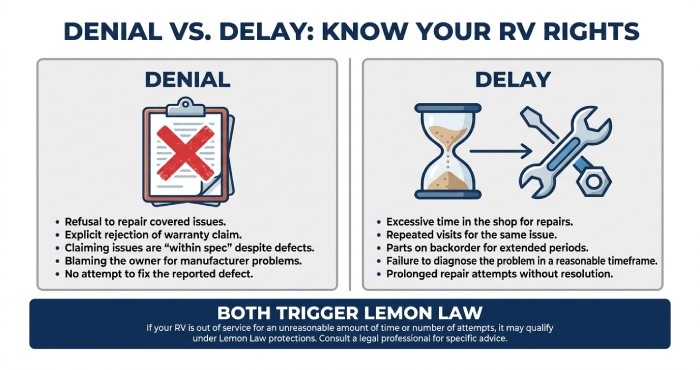
A denial occurs when the manufacturer or dealer refuses coverage. A delay occurs when they accept coverage but cannot complete repairs. Both can create legal issues. If the defective RV is stuck at the dealer for an unreasonable amount of time, or if repair attempts repeatedly fail because the correct parts are unavailable, the owner may have a valid RV lemon law claim.
What RV Owners Should Document During Repair Delays
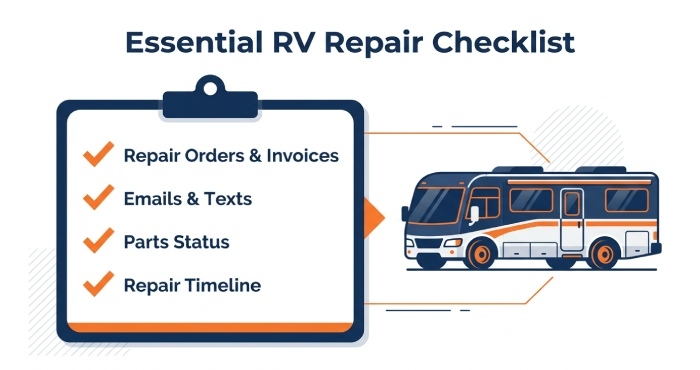
RV owners should document everything from the first sign of a defect. Strong repair records often determine whether a lemon law claim succeeds. Keep copies of every repair order, invoice, diagnostic report, email, text message, voicemail, and warranty communication with the dealer and manufacturer.
The repair records should show the date the RV was dropped off, the date it was returned, the mileage, the complaint, the dealer’s findings, parts ordered, parts unavailable, and whether the problem was verified or duplicated. If the dealer says parts are discontinued, ask for that statement in writing. If the manufacturer promises a future repair date, save the communication.
Essential Evidence for a Lemon Law Attorney
A lemon law attorney may review purchase agreements, warranty documents, repair records, photos, receipts, and correspondence to assess an RV claim. Owners should also maintain a timeline of recurring defects, repair attempts, and time out of service to help evaluate their consumer rights.
When to Contact a California Lemon Law Lawyer for an RV Warranty Dispute
RV owners should consider contacting a California Lemon Law lawyer when the manufacturer or dealer cannot repair a defective RV within a reasonable time, denies warranty coverage, blames unavailable parts, or repeatedly returns the RV with the same issue unresolved. A free consultation or case evaluation can help determine whether the owner may qualify for refund or replacement, vehicle replacement, cash settlement, or other relief.
If you are in Southern California, speaking with a lemon law attorney san diego may help you understand how local California Lemon Law procedures apply. RV owners statewide may also consult a California lemon law lawyer, especially when a manufacturer refuses to honor warranty obligations. For motorhome-specific disputes, an experienced rv lemon law attorney can review repair attempts and determine whether the RV lemon law applies.
Many California Lemon Law firms handle qualifying matters on a contingency fee basis, meaning the consumer may not pay attorney’s fees upfront if the case is accepted. A lemon law attorney can also respond to manufacturer arguments, evaluate arbitration demands, identify auto fraud concerns, and protect deadlines for a timely lemon law claim.
The sooner an RV owner seeks legal guidance, the easier it is to preserve evidence, organize repair records, and challenge the manufacturer’s position. If unavailable parts have left a defective RV unusable during the warranty period, California Lemon Law may provide remedies even when the dealer insists that nothing more can be done.