
Understanding California Lemon Law Filing Deadlines and Statutes of Limitations
California Lemon Law claims are governed by the Song-Beverly Consumer Warranty Act, which generally provides a four-year statute of limitations for breach of warranty claims. The filing deadline may depend on when the consumer discovered or reasonably should have discovered the vehicle defect and the manufacturer’s inability to repair it within a reasonable number of attempts. Warranty coverage, repair history, and defect notification are important factors in determining eligibility.
The warranty period and statute of limitations are different. Warranty coverage determines whether a defect qualifies for protection, while the statute of limitations establishes the time allowed to file a lawsuit. California Lemon Law may also involve express and implied warranties, depending on the vehicle and circumstances. Reviewing repair records, warranty documents, and the vehicle’s service timeline helps determine applicable deadlines and potential legal remedies.
What Tolling Means During Vehicle Repair Periods
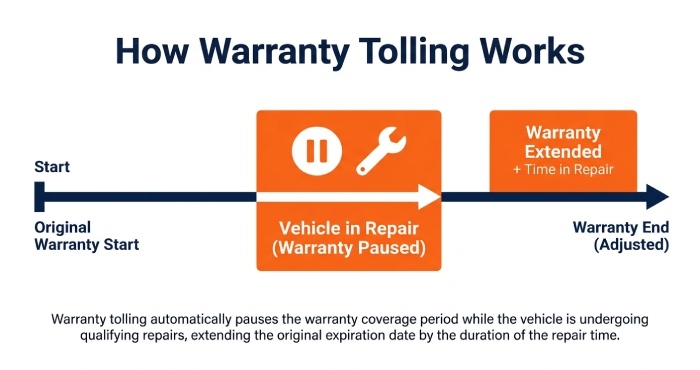
In California Lemon Law, tolling refers to pausing or extending certain deadlines under specific circumstances. Warranty tolling may extend warranty coverage when a vehicle is unavailable due to covered repairs or remains with the dealer or manufacturer for diagnosis, parts, or repair authorization. These protections help prevent consumers from losing warranty benefits because of repair delays.
Tolling becomes particularly important when a vehicle approaches its warranty expiration date or mileage limit. For example, if a vehicle enters the dealership near the end of its warranty period for a transmission problem and remains there for several weeks awaiting repairs, tolling may help preserve warranty protection. Maintaining accurate repair orders, service dates, and mileage records can help establish whether warranty tolling applies and support a California Lemon Law claim.
Warranty Tolling vs. the Statute of Limitations
Warranty tolling and the statute of limitations serve different purposes under California lemon law. Warranty tolling may extend the auto warranty or express warranty period for days when the vehicle is unavailable for covered car repairs, while the statute of limitations determines the deadline for filing a lawsuit. Continued repair attempts may provide evidence of the defect and the manufacturer’s failure to fix it, but they do not automatically restart the filing deadline. Consumers should review the complete repair history to determine when the defect first became apparent and whether the legal claim remains timely.
How Repair Attempts, Warranty Coverage, and Dealer Delays Affect Deadlines
Repair history plays an important role in California Lemon Law claims. Under the Song-Beverly Consumer Warranty Act, manufacturers must repair covered defects within a reasonable number of attempts. When repeated repairs fail, consumers may qualify for vehicle repurchase or replacement. California’s lemon law presumptions may also apply when a vehicle undergoes repeated repairs for the same issue or remains out of service for an extended period, particularly when safety-related defects are involved.
Dealer delays, including parts shortages, technician availability, and manufacturer approval issues, may affect warranty coverage and filing deadlines. Repair orders documenting defect complaints, mileage, and service dates help establish whether problems occurred within the warranty period. Consumers should maintain accurate service records and verify repair invoices to support their claims and determine applicable legal deadlines.
Common Timing Triggers in Lemon Law Cases
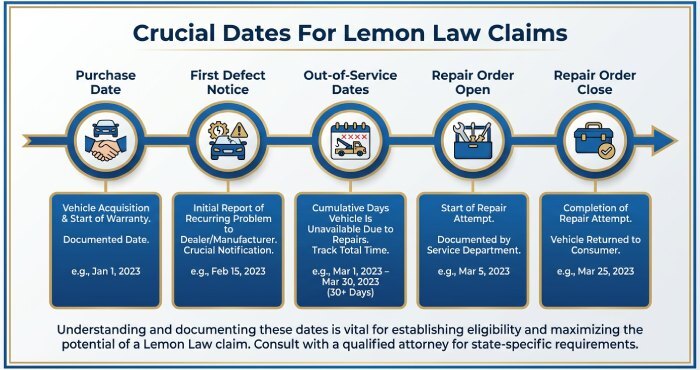
Several dates should be reviewed carefully:
- The purchase date or lease signing date
- The vehicle delivery date
- The first dealer notification of the defect
- Each repair order opening and closing date
- The dates the vehicle was out of service
- Any written notice sent to the manufacturer, dealer, or warranty provider
- Any pre-suit notice required by contract, warranty terms, or dispute resolution program
Why the Date of Each Repair Order Matters
Repair orders document repair dates, mileage, reported defects, diagnostic findings, and warranty coverage, helping establish when a vehicle was presented for repairs and whether the manufacturer had an opportunity to fix the defect. Consumers should retain both opening repair orders and final invoices, as initial records, appointment confirmations, and electronic service records may establish earlier repair dates relevant to California lemon law warranty tolling provisions.
Special Issues for Used Cars, Leased Vehicles, RVs, and Service Contracts
Used cars may qualify for California lemon law protection if they are covered by a remaining manufacturer warranty, certified pre-owned warranty, or another qualifying written warranty. The purchase date, mileage, and warranty terms can affect eligibility. Leased vehicles may also qualify under the Song-Beverly Consumer Warranty Act, with lease payments, fees, and mileage potentially affecting repurchase calculations.
RVs and motor homes can involve multiple warranties covering the chassis, appliances, electrical systems, and living components. Service contracts and extended warranties also differ from original manufacturer warranties and do not automatically extend lemon law deadlines. Reviewing the applicable warranties, repair records, and responsible parties is important when evaluating these claims.
Practical Steps to Preserve Lemon Law Rights During Repairs
Consumers should clearly describe recurring vehicle problems during every repair visit and request a repair order, even when the dealer cannot duplicate the issue. Keeping copies of repair orders, emails, rental receipts, and towing invoices can help establish the repair history and document how long the vehicle remained out of service.
Consumers should also review settlement offers, releases, and cash-and-keep agreements carefully before signing. Tracking repair dates and investigating filing deadlines early can help protect lemon law rights, especially when the manufacturer warranty is nearing expiration or the manufacturer has denied responsibility.
When to Speak With a California Lemon Law Attorney About Timing Issues
Consumers should consult a California Lemon Law attorney when repeated repairs, warranty expiration, or filing deadlines become concerns. An attorney can review repair records, warranty coverage, and tolling provisions to determine whether the vehicle qualifies for repurchase or replacement. Understanding applicable deadlines early can help protect legal rights and prevent unnecessary delays.
A California Lemon Law attorney can also explain procedural requirements, pre-suit notices, mediation, and settlement options. For Southern California consumers, a lemon law attorney San Diego can evaluate repair timelines and potential claims. Vehicle owners seeking statewide assistance can consult a California Lemon Law lawyer or an RV Lemon Law attorney for guidance on warranty disputes, repurchase, replacement, and applicable filing deadlines.