
What an EV Battery State-of-Health Report Measures
An EV battery state of health report measures how an electric vehicle battery compares with its expected performance when new. In simple terms, state of health, or SOH, reflects the battery condition relative to its original capacity, usable battery capacity, charging behavior, voltage balance, and ability to support normal vehicle performance.
A battery health report may include battery readings from the battery management system, estimated capacity loss, charge cycles, charging activity, temperature exposure, and diagnostic trouble codes. These reports can help identify whether battery degradation is ordinary battery aging or evidence of a defect affecting the electric vehicle battery.
Core SOH Metrics Owners Should Understand
Important SOH indicators often include:
- Current usable battery capacity compared with original capacity
- Estimated capacity loss over time
- Degradation rate across mileage and age
- Charging patterns, including fast charging and high-speed charging
- Battery condition during hot or cold weather
- Range performance compared with manufacturer claims
- Thermal management system performance
- Battery management system alerts or fault codes
A strong EV battery state of health analysis looks beyond one reading. It uses real-world data over time to show whether battery degradation is abnormal, whether capacity loss is accelerating, and whether the electric vehicle battery is failing to deliver expected driving range.
Why Battery SOH Matters in California Lemon Law Claims
California Lemon Law claims involving EVs may rely on battery state-of-health (SOH) reports to demonstrate abnormal battery degradation, reduced driving range, charging issues, and recurring defects. These reports provide objective evidence of battery condition and help distinguish excessive capacity loss from normal wear or charging-related issues.
Owners seeking guidance from a california lemon law lawyer can use SOH reports, repair orders, and charging records to help evaluate whether the defect is legally significant.
Key Diagnostic Evidence Owners Should Collect
The strongest lemon law evidence usually combines owner records, service center documentation, and independent diagnostic reporting. A single battery health report can be helpful, but multiple reports over time are better because they show trends in battery degradation, capacity loss, and SOH.
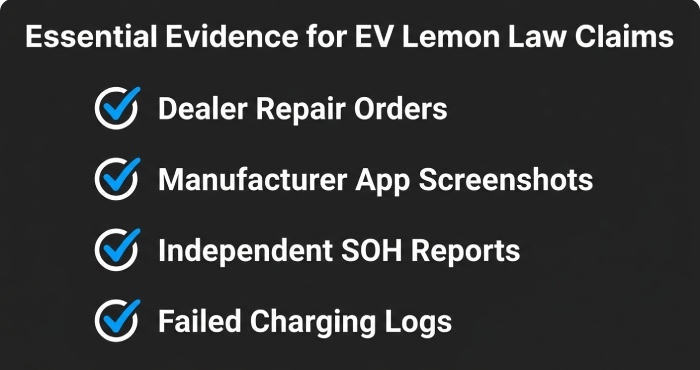
Owners should collect:
- Dealer repair orders and warranty invoices
2. Manufacturer app screenshots showing range estimate and charging limits
3. Battery health report data from independent platforms or service tools
4. Photos of warning messages and charging interruptions
5. Logs of fast charging, high-speed charging, and failed charging sessions
6. Notes about driving habits, charging habits, and operating conditions
7. Any battery replacement recommendations or software update history
Service Records and Dealer Statements
Repair orders should identify the complaint, mileage, diagnostic steps, battery readings, software updates, and whether the technician verified the issue. If the dealer states the battery condition is “normal,” ask what SOH percentage or capacity measurement supports that conclusion.
How to Interpret SOH Data, Range Loss, and Charging Problems
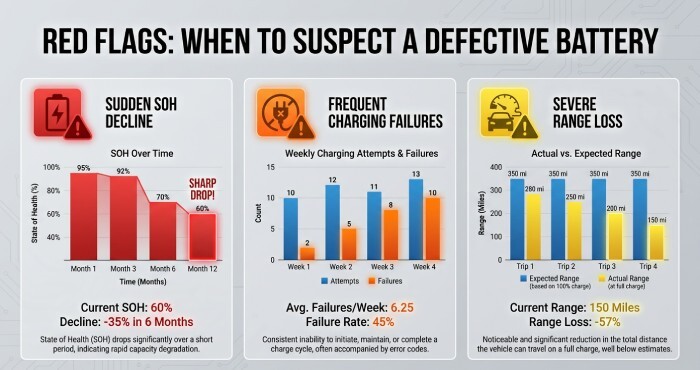
Interpreting SOH requires context. A low state of health number may indicate capacity loss, but the reason matters. Battery degradation can be influenced by charge cycles, charging patterns, heat, cold, software limits, cell imbalance, or a malfunctioning thermal management system. Still, repeated charging problems and declining battery capacity may show more than normal battery aging.
Red Flags in Battery Health Reports
Owners should pay close attention to:
- Sudden SOH decline
- Large gap between advertised range and real-world driving range
- Frequent charging session failures
- Battery management system warnings
- Excessive capacity loss after software updates
- Reduced fast charging speed without explanation
- Repeated “unable to charge” or “service battery” messages
A well-documented battery health report should connect these problems to real-world data. If the report shows ongoing battery degradation, reduced battery performance, and abnormal capacity loss, it may support the argument that the electric vehicle battery is defective.
Using Battery Health Reports to Support a Buyback, Replacement, or Settlement
A battery health report can help support a buyback, vehicle replacement, cash settlement, or battery replacement when it shows a persistent defect. The report should be tied to repair history, warranty coverage, and the manufacturer’s response. In California, the strength of the claim often depends on whether the defect substantially impairs use, value, or safety and whether the manufacturer had a reasonable opportunity to repair it.
Owners in Southern California who need help organizing diagnostic evidence may consult a lemon law attorney san diego to review whether SOH, repair orders, and capacity loss records support a claim.
How SOH Evidence Strengthens Negotiations
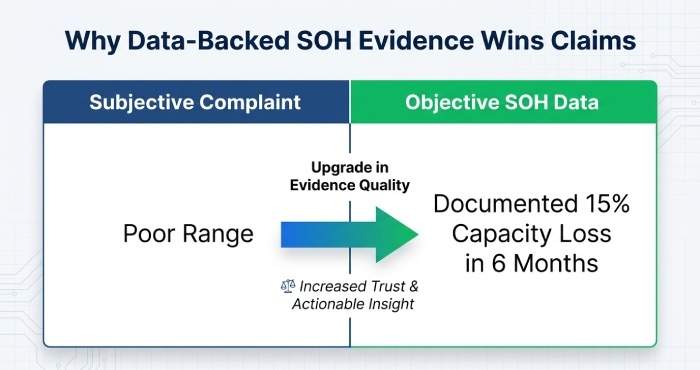
SOH evidence can make negotiations more concrete. Instead of arguing generally about poor driving range, owners can show:
- The EV battery state of health percentage
- The battery health report date and mileage
- The pattern of battery degradation
- The measured capacity loss
- The impact on vehicle performance and resale value
- The manufacturer’s repair attempts or refusal to act
This type of data-backed evidence can be persuasive because it connects the owner’s complaints to measurable battery conditions. If the SOH continues declining despite service visits, the report may support a stronger demand for a buyback or replacement.
Special Considerations for RVs, Fleet Vehicles, and Multi-Purpose EVs
Although many EV lemon law claims involve passenger cars, battery condition evidence can also matter for electric vans, multi-purpose vehicles, and RV-related electric platforms. Larger vehicles may place different demands on energy density, charging habits, thermal control, and service life. Fleet managers often rely on automation, battery monitoring, and telematics data to evaluate battery health, fleet confidence, and operating costs.
For recreational vehicles with recurring defects, owners may need guidance from an rv lemon law attorney if battery performance, charging failures, or electrical system issues affect usability.