
Buying a car is a major investment, and most owners expect their vehicle to remain reliable and safe. But when a car develops repeated mechanical or safety problems that continue despite multiple repairs, its resale value can drop significantly, creating both financial loss and frustration for the owner.
Ongoing defects can reduce trade-in offers, discourage buyers, increase repair costs, and even create safety risks. Fortunately, consumers may have legal options to recover these losses through lemon laws, warranty claims, or diminished value lawsuits related to persistent vehicle defects.
How Ongoing Defects Reduce Vehicle Value
Vehicles inherently decrease in worth over time due to depreciation. Yet, cars with ongoing defects tend to lose value at a much steeper rate. Prospective buyers are generally wary of cars that have a track record of frequent repairs or unresolved mechanical problems.
Even after fixes are made, the presence of a defect history is usually noted on vehicle history reports like CARFAX or AutoCheck. This raises red flags for both dealerships and individual buyers, leading them to perceive the vehicle as potentially unreliable or unsafe. Research indicates that documented accidents or defects can significantly lower resale values, even post-repair.
Some common defects that adversely impact a car’s market value include:
- Engine breakdowns
- Transmission issues
- Electrical failures
- Brake problems
- Steering malfunctions
- Battery issues in electric cars
- Ongoing warning indicators
- Water leaks or mold concerns
- Software glitches that affect drivability
Luxury and newer vehicles frequently experience even steeper declines in value since buyers often expect them to have superior reliability and pristine histories.
Understanding Diminished Value
“Diminished value” describes the loss in worth of your car resulting from defects or damage. Even with proper repairs, the lingering perception of the vehicle’s issues can lower its resale potential.
There are typically three main types of diminished value:
1. Inherent Diminished Value
This is the most prevalent form, representing an automatic reduction in market value because the vehicle has a history of defects or repairs. Potential buyers may shy away from the car, irrespective of how well the repairs were done.
2. Repair-Related Diminished Value
This type arises from subpar repairs. Examples include discrepancies in paint color, non-original replacement parts, misaligned body panels, or ongoing problems after the repair work is completed.
3. Immediate Diminished Value
This reflects the drop in value that occurs right after the defect or incident happens, prior to any repair efforts.
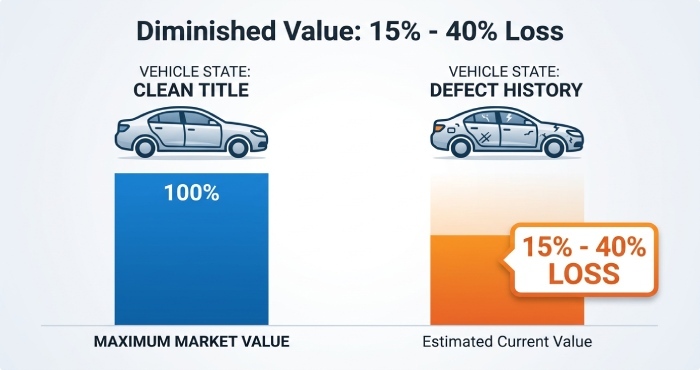
Over time, if issues persist for months or years, the loss in value can become significant. Some estimates suggest that vehicles with a history of lemon-law buybacks might experience a decline in value of 15% to 40% when compared to comparable cars with clean titles.
What Is a Lemon Vehicle?
A “lemon” refers to a vehicle that has significant defects that the manufacturer or dealership fails to fix after a reasonable number of attempts.
While lemon laws differ by state, they typically include the following criteria:
- The defect greatly impacts the vehicle’s functionality, safety, or worth.
- The manufacturer has had several chances to address the issue.
- The problem arose within the warranty period.
- The defect continues to exist despite attempts at repair.
Common types of defects covered by lemon laws include:
- Frequent engine stalling
- Transmission issues
- Brake failures
- Electrical malfunctions
- Problems with steering
- Ongoing battery issues
- Faulty airbags
Generally, states determine that three to four unsuccessful repair attempts for the same problem are enough to activate lemon-law protections, although serious safety concerns may allow for quicker qualification.
Signs Your Vehicle May Qualify for Legal Action
Many consumers delay contacting a lemon law attorney, hoping the vehicle issues will eventually be resolved on their own. However, recurring repairs, persistent defects, or ongoing safety concerns are often clear signs that it may be time to seek legal assistance and explore a potential lemon law claim.
You might have a legitimate case if:
- Your vehicle consistently requires repairs for the same issue.
- The fixes do not rectify the problem.
- The car has been unavailable for use for a long time.
- The manufacturer disclaims any liability.
- The defect impacts safety or drivability.
- Your car’s resale or trade-in value has drastically decreased.
- Dealers reject fair trade-in offers based on your repair history.
It’s crucial to document these issues promptly.
Legal Options Available to Consumers
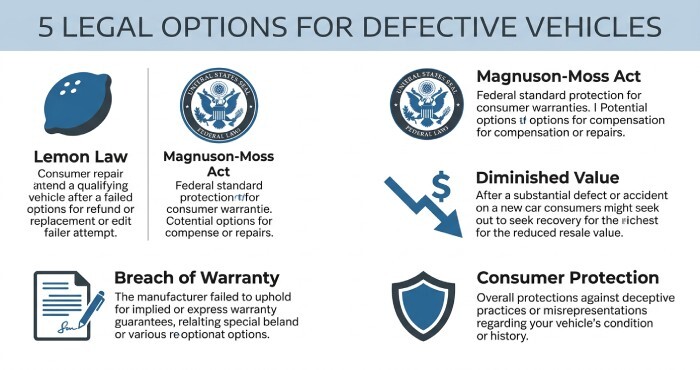
1. Lemon Law Claims
Lemon laws provide strong protections for consumers dealing with defective vehicles. If your car qualifies under state lemon laws, you may be eligible to file a lemon law claim seeking a refund, replacement vehicle, or financial compensation for the ongoing defects.
- A complete refund
- A replacement vehicle
- Reimbursement for repair expenses
- Coverage for legal fees
- Additional costs like towing or rental services
Generally, the manufacturer is required to either buy back the vehicle or provide a similar model. In many states, these protections mainly apply to new cars, though some states extend benefits to used cars that are still under warranty. Federal protections may also be relevant through the Magnuson-Moss Warranty Act.
2. Magnuson-Moss Warranty Act Claims
The Magnuson-Moss Warranty Act is a federal statute that safeguards consumers when manufacturers neglect to uphold warranties. This act can cover:
- Used vehicles
- Certified pre-owned cars
- Consumer goods with written warranties
If a manufacturer continuously fails to fix issues covered by the warranty, you may be entitled to:
- Costs of repairs
- Loss in vehicle value
- Legal expenses
- Refunds or replacement vehicles in certain situations
This federal regulation is particularly advantageous when state lemon laws do not fully apply.
3. Diminished Value Claims
Vehicle owners may file diminished value claims to recover the loss in value between a vehicle’s worth before a defect and its diminished resale price. Such claims are often seen after accidents but can also result from ongoing defects or unresolved repair histories. To substantiate a diminished value claim, owners typically provide:
- Vehicle appraisals
- Trade-in estimates from dealers
- Market comparisons
- Documentation of repair histories
- Expert evaluations
Insurance companies often challenge these claims, making thorough documentation essential.
4. Breach of Warranty Lawsuits
Consumers may initiate breach of warranty lawsuits when manufacturers do not address defects covered by warranties. These cases assert that the manufacturer has failed to fulfill the obligations stipulated in the warranty. Potential compensation may include:
- Reimbursement for repairs
- Reduction in vehicle value
- Refunds
- Legal fees
5. Consumer Protection Claims
Certain states allow individuals to sue dealerships or manufacturers for misleading business practices. Examples include:
- Concealing known defects
- Misrepresenting repair effectiveness
- Failing to reveal prior buyback history
- Selling faulty vehicles without proper disclosure
In cases of fraud or deceptive practices, additional damages may be sought.
How to Strengthen Your Case
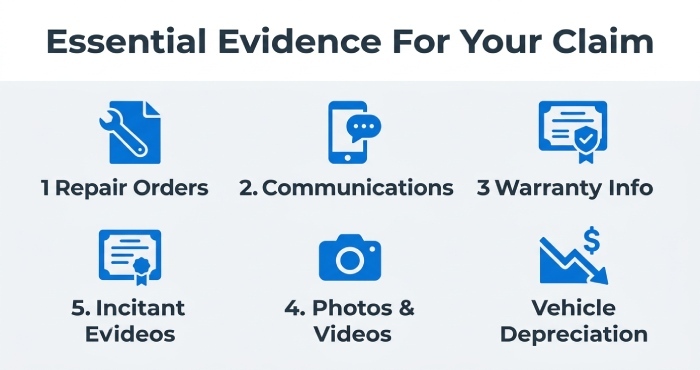
Thorough documentation can significantly impact the outcome of a claim. Key records to keep include:
- Repair Orders: Maintain all repair invoices and service logs, even for minor visits. These records demonstrate the frequency of repairs and any unsuccessful attempts to fix issues.
- Communication Records: Preserve emails, texts, and letters exchanged with dealerships or manufacturers.
- Warranty Information: Keep copies of all warranty agreements and maintenance documentation.
- Photos and Videos: Collect visual proof of warning indicators, leaks, or malfunctioning components to bolster your case.
- Evidence of Vehicle Value: Obtain trade-in quotes and appraisals that illustrate the depreciation in the vehicle’s value due to defects.
Additionally, many consumers choose to hire independent automotive specialists to assess the vehicle and provide official reports.
The Role of Vehicle History Reports
Vehicle history reports are crucial in cases involving diminished value. When a vehicle is associated with multiple repairs, recalls, or significant issues, buyers often steer clear of it, as indicated by reports such as CARFAX. As a result, dealerships tend to lower their trade-in offers, anticipating challenges in reselling the vehicle.
Industry conversations suggest that even cars that have been repaired flawlessly can still see a substantial decrease in value due to the lasting record of defects linked to their VIN. This enduring negative perception contributes to the rise in diminished value claims.
How Long Do You Have to File a Claim?
Deadlines differ based on the state and the type of claim being filed. Certain lemon laws stipulate that claims must be submitted within specific timeframes, which could include:
- A designated number of months following the purchase
- The duration of the warranty
- A predetermined mileage threshold
Warranty and diminished value claims may also be subject to statutes of limitations that can range from two to four years, and in some cases even longer depending on state laws and the nature of the claim. Because these deadlines vary, consumers should act quickly after noticing recurring vehicle problems. Consulting experienced lemon law lawyers early can help protect legal rights, preserve important evidence, and improve the chances of securing compensation for repair costs, reduced vehicle value, or a replacement vehicle.
Final Thoughts
Ongoing vehicle defects can create serious financial and emotional stress for car owners. Frequent repairs, repeated dealership visits, and declining resale value often leave consumers frustrated and burdened with unexpected losses. When a vehicle develops a history of unresolved issues, its market value can drop significantly, making it harder to sell or trade in the future.
Fortunately, consumers may have legal remedies available through lemon laws, warranty protections, and diminished value claims. A qualified San Diego Lemon Law Attorney can help vehicle owners pursue compensation, a replacement vehicle, or even a full refund depending on the circumstances. Acting quickly, maintaining detailed repair records, and understanding your legal rights are key steps toward recovering losses caused by a defective vehicle.