
How DEF and Emissions Systems Work—and Why Failures Trigger Limp Mode
Modern diesel trucks rely on a complex diesel emissions package designed to reduce soot, nitrogen oxides, and particulate pollution while keeping the engine compliant with EPA regulations and, in some states, CARB emissions coverage. When the DEF system or broader after-treatment system fails, the truck may display a check engine light, store a fault code, and enter reduced-power mode or limp mode to protect the engine and force emissions compliance.
Key Components in the Diesel After-Treatment System
The core emissions control components usually include the selective catalytic reduction system, diesel exhaust fluid tank, DEF pump, NOx sensor, SCR catalyst, EGR valve, and diesel particulate filter. The diesel particulate filter traps soot, while DPF regeneration burns accumulated particulate matter. The selective catalytic reduction process uses diesel exhaust fluid to convert NOx emissions into nitrogen and water vapor.
When the DEF system malfunctions, the after-treatment system may interpret the failure as an emissions defect. Common causes of diesel emissions-system warnings include NOx sensor malfunctions, DEF pump or injector problems, DEF contamination or crystallization, DPF restriction, and SCR catalyst faults. Depending on the vehicle’s diagnostic system and manufacturer-specific programming, these problems may trigger warning messages, reduced-power operation, or a countdown to a no-start condition.
Why Derate, No-Start Warnings, and Limp Mode Matter
A derate is not merely an inconvenience. A truck stuck in limp mode may be unable to tow, haul, merge safely, or complete a job route. Some trucks also display countdown warnings that lead to a no-start condition if the DEF system is not repaired. Depending on the circumstances, repeated derating or limp-mode events may substantially affect the vehicle’s use, value, or safety. The impact depends on the severity of the malfunction, the driving conditions, and whether the vehicle remains safe and reliable to operate.
Common Diesel DEF System Faults That May Indicate a Lemon
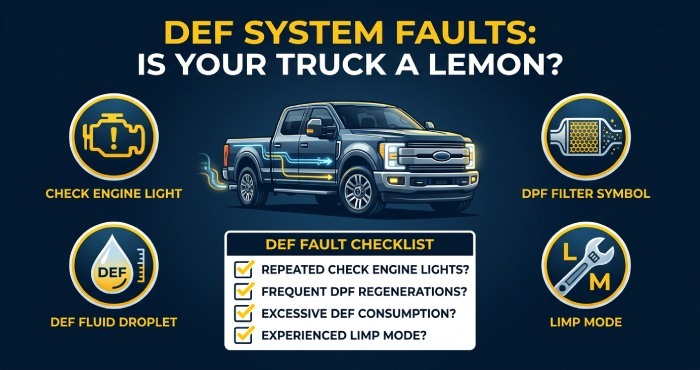
Fault Patterns in Diesel Pickups and SUVs
Diesel pickups and SUVs may experience recurring problems with DEF systems, selective catalytic reduction (SCR), diesel particulate filters (DPF), and repeated regeneration cycles. These issues can trigger warning lights, reduced engine performance, limp mode, and unexpected repair costs.
A sensor failure, DEF malfunction, or DPF blockage may indicate a warranty-related defect. When these problems continue despite repeated repair attempts, vehicle owners may have grounds to explore their lemon law rights and available legal remedies.
Warning Signs That the Truck May Be a Lemon
A diesel truck may be a potential lemon when:
- The same DEF system warning returns after multiple repairs.
- The after-treatment system repeatedly triggers limp mode.
- The diesel particulate filter clogs or fails despite normal use.
- The selective catalytic reduction system requires recurring parts replacement.
- The check engine light returns with related emissions control fault codes.
- The truck spends excessive time at the Dealer during the warranty period.
- The Manufacturer issues an emissions recall, but the recurring emissions fault continues.
A lemon law Attorney can review whether warranty coverage or state and federal laws protect owners after a Manufacturer’s denial.
Repair Attempts, Downtime, and Documentation Needed for a Truck Lemon Law Claim
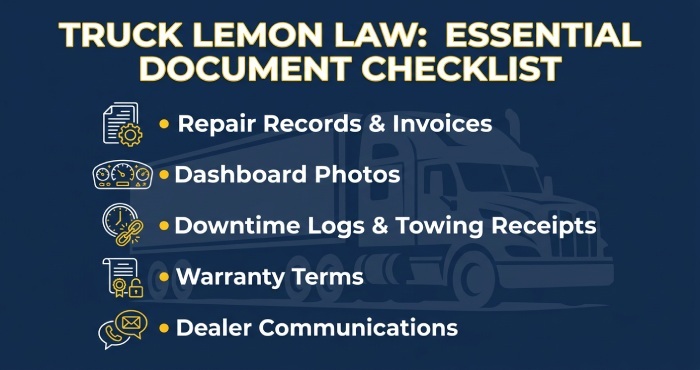
Building the File: Work Orders, Repair Records, and Communications
Each work order should accurately describe the symptoms: limp mode, reduced-power mode, no-start warning, DEF system message, DPF regeneration problem, diesel particulate filter restriction, selective catalytic reduction fault, or after-treatment system failure. If the Dealer writes only “customer states check engine light,” ask that the work order include the actual drivability complaint and emissions warning.
Owners should keep:
- Purchase paperwork and financing documents.
- Warranty booklet, emissions warranty terms, and extended warranty contract.
- All repair records and dealer repair invoices.
- Photos of dashboard warnings and DEF system countdowns.
- Communications with the Dealer, Manufacturer, and Warranty Administrator.
- Towing invoices, rental receipts, and downtime logs.
Repeated repair attempts are central to many lemon law cases. Some state statutes focus on the number of repair attempts; others focus on cumulative days out of service. The Magnuson-Moss Warranty Act may also apply when a warrantor fails to repair a covered defect within a reasonable opportunity. Because the Magnuson-Moss Warranty Act includes fee-shifting, successful consumers may recover attorney’s fees in qualifying cases.
How Lemon Law Protections Apply to Diesel Pickups, Work Trucks, and Commercial Vehicles
Lemon law coverage varies by state, vehicle type, weight rating, and use. Some state statutes protect personal-use vehicles more clearly than business-use trucks, while others may cover certain commercial vehicles if they meet statutory requirements. A California lemon law lawyer can evaluate how California rules apply to a diesel pickup, and owners in Southern California may also consult a lemon law attorney in San Diego for local claim evaluation.
Diesel pickups used for towing, contracting, delivery, and other business purposes may qualify for California Lemon Law protections when they meet the applicable statutory requirements, including the vehicle’s gross vehicle weight and the number of vehicles registered to the business. Heavy-duty trucks that fall outside the Song-Beverly definition may require a separate evaluation of applicable warranty and other legal remedies. The Magnuson-Moss Warranty Act may provide additional remedies for qualifying consumer products when a warrantor fails to honor applicable written or implied warranty obligations. However, the Act has its own consumer-product requirements and does not automatically extend federal consumer warranty protections to every commercial or heavy-duty truck.
Commercial and specialty vehicles require extra attention. A heavy-duty truck, motorhome, or RV may involve chassis warranties, emissions warranty terms, and separate component manufacturers. For motorhome-related diesel emissions failures, an rv lemon law attorney may assess whether the DEF system, SCR catalyst, DPF, or other after-treatment system components are covered.
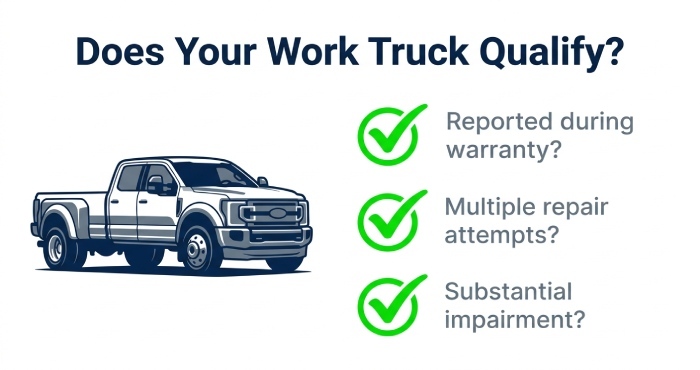
Claim eligibility often turns on several questions: Was the defect reported during the warranty period? Did the Manufacturer have repeated repair attempts? Did the emissions defect substantially impair use, value, or safety? Did the truck spend excessive days out of service? Were the repairs performed by an authorized Dealer? Was there an arbitration clause or dispute program requirement before filing suit?
Legal Remedies for Trucks Stuck in Limp Mode: Repurchase, Replacement, or Cash Compensation
When a vehicle qualifies under applicable lemon law protections, the owner may be entitled to a manufacturer repurchase or replacement, depending on the applicable statute and circumstances. Other potential remedies may be available for qualifying warranty claims. In qualifying cases, applicable consumer warranty laws may also allow the recovery of reasonable attorney fees and legal costs, subject to statutory requirements.
Owners should keep records of all DEF system failures, emissions fault codes, dealer repairs, and limp mode warnings. An attorney can review this evidence to determine whether a lemon law claim, Magnuson-Moss Warranty Act claim, or settlement is appropriate.