8 Roadside Assistance Records That Can Support a California Lemon Law Claim

8 Roadside Assistance Records That Can Support a California Lemon Law Claim

Roadside assistance records can help document what happened before a vehicle reached a dealership or repair shop. California Lemon Law may protect consumers whose qualifying vehicles have defects covered by an applicable manufacturer’s warranty that substantially impair the vehicle’s use, value, or safety. Coverage depends on the vehicle, warranty, purchase or lease circumstances, and applicable law. Used vehicles and recreational vehicles may require additional analysis to determine which protections apply.


Record #1: Towing Dispatch Logs Showing When and Where the Vehicle Became Inoperable

Towing dispatch logs can show when a lemon vehicle breaks down or becomes unsafe. They may include the date, location, vehicle details, reason for towing, and destination. In a California Lemon Law case, these records can support evidence of actual vehicle failures.

When combined with diagnostic reports, repair orders, and manufacturer communications, towing logs may help establish a pattern of defects. They can also support a lemon law lawyer’s response to claims that a problem was intermittent or could not be duplicated. However, towing logs alone do not prove a defect or manufacturer notice.
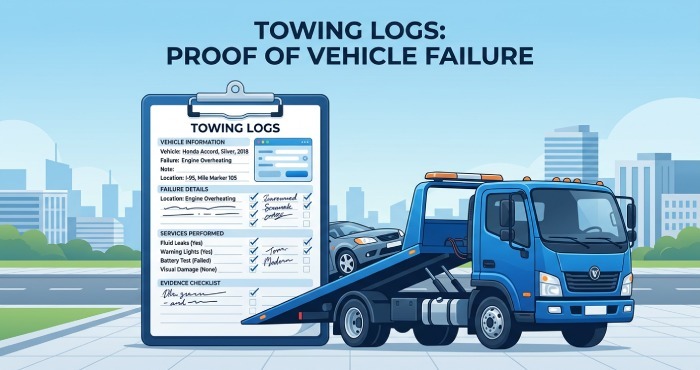
 

Towing Dispatch Logs


Record #2: Roadside Assistance Service Reports Describing the Reported Defect

Roadside assistance reports may document driver complaints, technician observations, and issues such as engine failure, brake problems, warning lights, or electrical defects. In a lemon law claim, these records provide timely evidence of a breakdown and help a lemon law attorney establish the repair timeline and show that the vehicle experienced problems while covered by the manufacturer warranty.

California Lemon Law claims may depend on whether the manufacturer or its authorized repair facility had a reasonable opportunity to repair a qualifying defect. If a roadside report describes the same symptoms documented in later repair orders, it may help establish a consistent timeline. However, a roadside assistance event does not automatically qualify as a manufacturer repair attempt. A california lemon law lawyer can review the evidence to assess potential remedies under applicable law. 


Record #3: Jump-Start Records That Document Repeated Battery or Electrical Problems

Jump-start records may help support a California Lemon Law claim when repeated battery failures point to deeper vehicle defects involving the charging system, alternator, starter, or electrical components. A lemon law lawyer can compare these records with repair orders and diagnostic notes from the dealer to show recurring problems covered by the manufacturer warranty. 

These records may also show incidental expenses, missed work, rental needs, finance costs, and inconvenience caused by the defective vehicle. If you are seeking a case evaluation from a lemon law attorney san diego, bring jump-start logs, roadside assistance invoices, repair records, and communication with manufacturer representatives. A lemon law attorney can decide whether the documentation fits the lemon law process and the Song-Beverly Consumer Warranty Act.
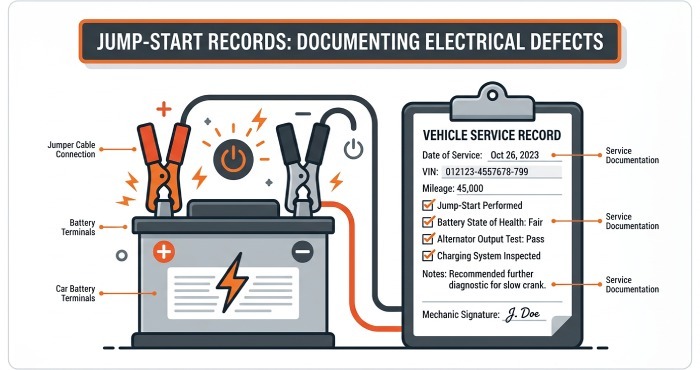
 

documenting electrical defects


Record #4: Flatbed Tow Receipts Connecting Breakdowns to Dealership Repair Visits

Flatbed tow receipts can show that a vehicle broke down and needed transport to a dealership. In a California Lemon Law claim, these records may help prove that the vehicle became inoperable.

When combined with repair orders, tow receipts can document the breakdown, inspection, and repair attempts. A lemon law attorney may use them during settlement negotiations or in Court to support evidence of recurring vehicle defects and loss of vehicle use.


Records #5 and #6: Safety, Reliability, Mileage, and Timeline Evidence


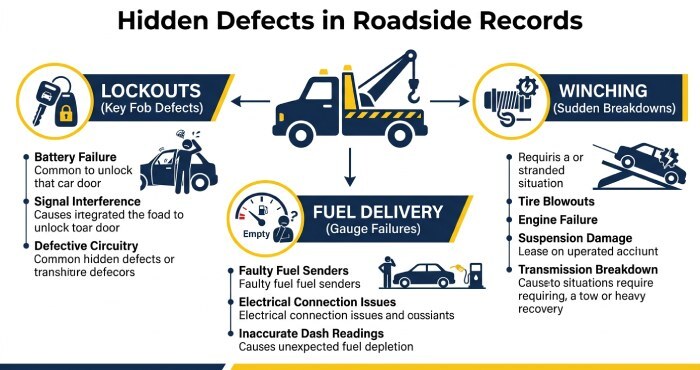
Record #5: Lockout, Fuel Delivery, or Winching Records That Reveal Safety or Reliability Issues

Lockout, fuel delivery, and winching records may reveal recurring vehicle reliability or safety issues, such as defective key fobs, fuel gauge problems, or sudden breakdowns. A lemon law attorney can compare these records with repair orders and manufacturer warranty coverage to determine whether the incidents relate to recurring defects reported to the authorized dealership. 

For RV owners, roadside records may be especially important because a lemon RV can involve drivetrain, electrical, plumbing, slide-out, or safety systems. An rv lemon law attorney can assess whether the documentation shows reasonable repair attempts under California Lemon Law.
 

Roadside records


Record #6: Mileage and Date Stamps That Help Establish a Lemon Law Repair Timeline

Mileage and date stamps can help establish the chronology of a California Lemon Law claim. Warranty dates, repair attempts, and applicable filing deadlines may all matter. Roadside assistance records may show the mileage when a problem occurred, but warranty coverage should be verified against the warranty terms, purchase or lease documents, and other relevant records.

A lemon law attorney may build a timeline using the purchase or lease documents, roadside assistance logs, repair orders, diagnostic reports, and service history. This timeline can help assess the frequency of reported problems, the repair history, and the manufacturer’s response. Whether the evidence establishes the legal requirements for a claim depends on the specific facts and applicable law. 


Records #7 and #8: Complaint Details and Out-of-Pocket Losses


Record #7: Customer Notes and Complaint Summaries Recorded by the Assistance Provider

Customer notes can preserve the driver’s original description of a vehicle problem before the Dealer shortens it in repair orders. These notes may record issues such as engine shutdowns, brake failures, transmission problems, or warning lights with power loss. This information can help document defects in a California Lemon Law claim.

A lemon law attorney may compare customer notes with repair orders to identify missing details or inconsistencies. These records may help show what the Consumer reported and how the Manufacturer or repair shop responded. Keeping clear, reliable documentation of warranty coverage, repair attempts, and vehicle defects can support the claim.


Record #8: Payment Receipts and Membership Records That Help Verify Out-of-Pocket Losses

Payment receipts and roadside membership records can help document expenses caused by a defective vehicle. These may include towing charges, roadside service fees, rental costs, rideshare expenses, hotel stays, and other related expenses. In a California Lemon Law claim, certain costs may be recoverable depending on the circumstances and applicable law.

Some Lemon Law attorneys offer contingency-fee agreements. California law may also allow eligible buyers to recover reasonable attorney fees and costs when legal requirements are met. Refunds, replacement vehicles, and civil penalties are subject to specific rules and are not automatic. A California lemon law lawyer can review the records, explain potential recovery, and assess how the warranty and applicable legal requirements affect the claim.

What Happens to Attorney Fees After a California Lemon Law Appeal?

What Happens to Attorney Fees After a California Lemon Law Appeal?

How California Lemon Law Fee-Shifting Works Before and After an Appeal

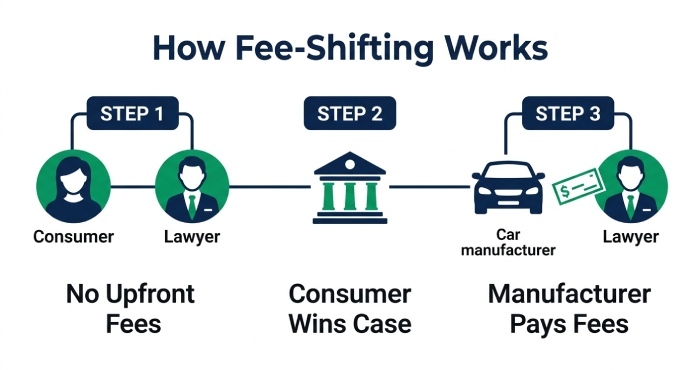
The California Lemon Law, formally part of the Song-Beverly Consumer Warranty Act, includes a powerful fee-shifting rule: when a Consumer wins a lemon law claim, the manufacturer—not the Consumer—is generally responsible for paying reasonable attorney fees and costs. 


Why Fee-Shifting Matters in a Lemon Law Claim

In a typical lemon law claim, the Plaintiff alleges that a new vehicle, used vehicle, certified pre-owned vehicle, truck, SUV, motor vehicle, Recreation Vehicle (RV), or even certain demonstration vehicles had defects covered by a vehicle warranty or manufacturer’s warranty. If the manufacturer or dealership cannot complete reasonable repairs after enough repair attempts, the Consumer may pursue compensation, a refund, purchase refund, replacement vehicle, or replacement value.

Fee-shifting helps make that legal process practical. A lemon law lawyer can take a case with “no fees unless you win” because, if the claim succeeds, the manufacturer pays our fees through a court-approved award. This is why consumers often seek a lemon law attorney after repeated visits to a repair shop or Dealership.


Fee-Shifting works


What Changes After an Appeal?

An appeal does not automatically erase attorney fees. If the Consumer remains the prevailing party after the appeal, appellate attorney fees may also be recoverable. That means the work performed by a lemon law lawyer to defend a verdict, protect a judgment, or challenge an unfair ruling can become part of the total compensation-related recovery.

Consumers may consult a qualified California Lemon Law attorney for a case evaluation or review after a trial, judgment, or appeal. 


What Happens if the Manufacturer Wins or the Case Is Reversed on Appeal


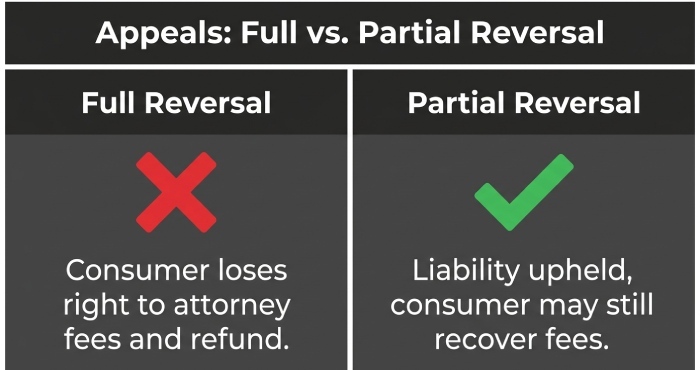
Full Reversal Versus Partial Reversal


If the appellate court fully reverses a judgment for the Consumer and directs judgment for the manufacturer, the Consumer may lose the right to recover attorney fees. In that situation, the lemon law claim may no longer support compensation, refund, purchase refund, civil penalties, or fee recovery.

A partial reversal is different. For example, the appellate court may uphold liability under the California Lemon Law but reduce civil penalties or require recalculation of damages. In that case, a lemon law attorney may still argue that the Consumer prevailed because the defective vehicle claim remained successful.


Full Reversal Versus Partial Reversal


Manufacturer Fee Requests Are Different

Manufacturers often ask for costs after winning an appeal, but they generally do not receive attorney fees under the same consumer-friendly standard. The California Lemon Law is designed for consumer protection, not to punish a Consumer for bringing a good-faith lemon law action.

Reversal and Remand

If the case is sent back for a new trial, the attorney fee issue may be postponed. The trial court may wait to see who ultimately prevails after remand. A lemon law lawyer with appellate legal expertise will monitor deadlines and preserve the fee request until the legal process is complete.


How Courts Calculate Reasonable Fees for a Lemon Law Lawyer in California Appeals

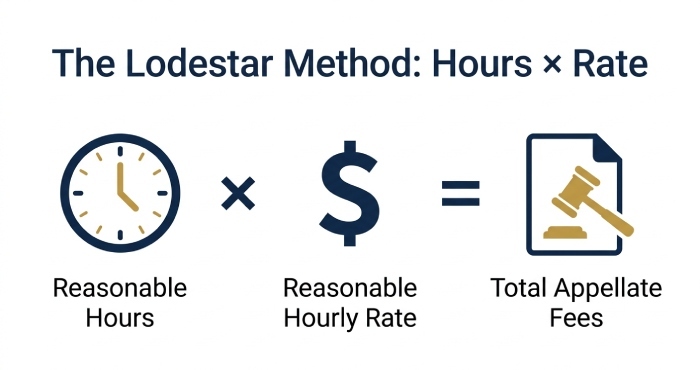
Courts usually calculate appellate attorney fees using the lodestar method: reasonable hours multiplied by a reasonable hourly rate. This applies whether the Consumer hired a solo attorney, a Lemon Law Team, or a specialized California lemon law lawyer.

The Lodestar Method

The court reviews the time spent on the appeal and decides whether the hours were reasonably necessary. A strong fee motion should show what the lemon law lawyer did, why the work mattered, and how it helped protect the lemon law claim.


The Lodestar Method


Reasonable appellate work may include:

  • Studying the trial record and vehicle warranty documents
  • Reviewing repair attempts, dealership records, and repair shop invoices
  • Researching California Lemon Law authorities
  • Preparing briefs regarding defects, compensation, Civil Penalty issues, and manufacturer obligations
  • Opposing arguments raised by the Defendant
  • Appearing for oral argument


Hourly Rates, Skill, and Complexity

Courts consider the lawyer’s experience, local market rates, and the complexity of the case. Appeals involving a used car dealership, a manufacturer’s warranty dispute, a lemon purchase, or a high-value replacement vehicle may require significant legal expertise.

Consumers searching for a california lemon law lawyer should ask whether the attorney has handled appeals, not just pre-suit negotiations or case settlement discussions.


Practical Steps for Protecting Your Right to Attorney Fees After an Appeal

Protecting fee rights begins before the appeal is filed. A lemon law attorney should build a record showing that the defective vehicle had a covered substantial defect, that the dealership or manufacturer had enough repair attempts, and that the Consumer acted reasonably.


Preserve the Record Early

Keep every repair order, vehicle warranty booklet, dealership communication, tow receipt, rental invoice, and written complaint. These records support the lemon law claim and help prove that compensation is justified. They also help the lemon law lawyer explain why appellate work was necessary.

Track Appellate Deadlines

After an appeal, fee motions often depend on strict deadlines tied to the appellate decision and remittitur. Missing a deadline can jeopardize recovery. A California lemon law lawyer should calendar all post-appeal deadlines and prepare a detailed fee motion supported by billing records and declarations.

Get a Focused Post-Appeal Case Review

A free consultation or case review can help determine whether appellate attorney fees are available. An RV lemon law attorney can help consumers understand whether attorney fees may remain recoverable after an appeal involving a defective recreational vehicle. The analysis should address whether the Consumer remains the prevailing party, whether the manufacturer’s appeal changed the judgment, and whether additional compensation, refund, replacement value, or civil penalties remain intact.

The best lemon law advocates also evaluate practical settlement options. Sometimes the manufacturer may agree to resolve the remaining attorney fee dispute after the appeal rather than continue litigation. In other cases, a formal motion is necessary to obtain full payment for the lemon law attorney’s appellate work.

For members of the U.S. Armed Forces, California residents who bought from a dealership, or consumers dealing with a used car dealership, the same principle applies: if the California Lemon Law claim succeeds and the defective vehicle qualifies for lemon law protection, the manufacturer may be required to pay reasonable attorney fees so the Consumer’s compensation is not consumed by the cost of enforcing the law.