When your car constantly breaks down and repairs don’t hold, it’s easy to start pointing fingers: should you blame the dealership for inadequate repairs or the manufacturer for creating a faulty vehicle? Lemon law cases frequently revolve around this dilemma, but identifying the responsible party isn’t always straightforward. Grasping the distribution of liability is crucial in determining whether your complaint will lead to a successful buyback or replacement, and this begins with understanding the underlying arguments and responsibilities involved.
00:00
The Lemon Law Blame Game: Who Really Owns the Defect—Dealer or Manufacturer?
The legal definition of responsibility under California Lemon Law
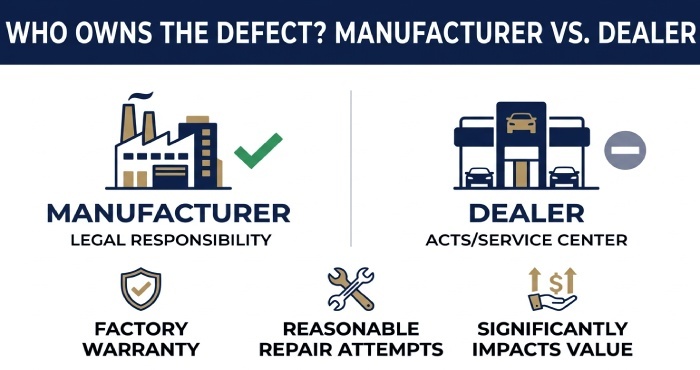
According to California Lemon Law, the manufacturer is typically held accountable for a faulty vehicle, rather than the dealer, as long as the problem occurs within the factory warranty period and remains unaddressed after several reasonable attempts to fix it. The legislation focuses on the entity responsible for the vehicle’s design and manufacturing, while dealerships primarily serve as authorized service centers.
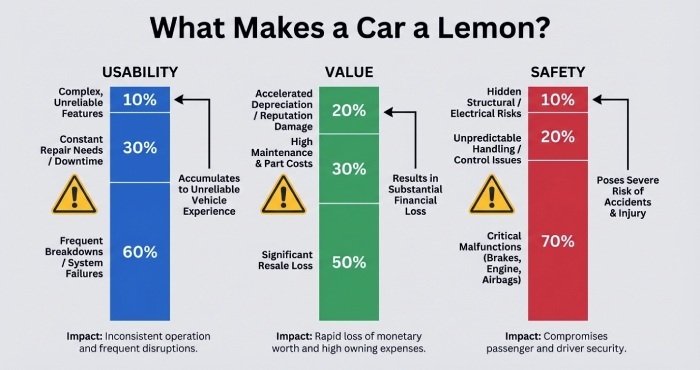
Manufacturers may attempt to deflect responsibility by citing misuse, modifications, or mistakes made by dealers; however, they are generally liable if the defect significantly impacts the vehicle’s usability, value, or safety and is not resolved.
To qualify for protection under this law, you must have valid warranty coverage and well-documented, ongoing repair issues—not just general dissatisfaction with the vehicle—something a San Diego Lemon attorney will emphasize when evaluating your claim.
Where Liability Typically Lies Under Lemon Laws: Manufacturer vs. Dealer Roles
Aspect
Manufacturer
Dealer
Role
Handles warranty defects
Performs repairs
Liability
Primary for factory defects
Only if negligent
Obligation
Fix within reasonable attempts
Repair properly
Remedies
Buyback, replacement, cash
Separate service claims
Key Point
Main responsible party
Secondary, limited role
Common Manufacturer-Caused Defects: Design Flaws, Software/ECU Bugs, and Supplier Component Failures
How factory-origin problems show up in the real world
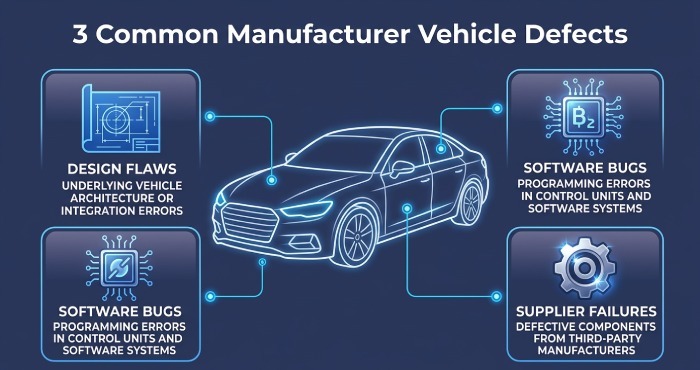
Many lemon law claims stem from defects seeded upstream. Design flaws can create chronic brake pulsation, premature battery drain, or structural issues that compromise crash performance—a clear safety hazard. Software or ECU bugs can cause erratic shifting, stalling, or sudden loss of power steering, again implicating safety and triggering warranty repairs. Supplier component failures—faulty fuel pumps, airbag inflators, or sensors—often generate TSBs and recalls that signal a widespread, factory-level problem rather than isolated dealer errors.
Red flags that suggest a manufacturer-caused defect
Repeat symptoms after multiple repair attempts with the same or updated parts
A cascade of related diagnostic trouble codes that persist despite software flashes
Known issues documented across forums, TSBs, or regulatory databases
When these patterns appear under a valid factory warranty, the weight of liability shifts decisively to the manufacturer, regardless of which dealership performed the work.
TSBs, Recalls, and Engineering Case Files: Signals the Problem Starts at the Factory
Why TSBs and recalls matter in proving manufacturer responsibility
Technical Service Bulletins (TSBs) and recalls are powerful evidence in lemon law claims. They show that the auto manufacturer is aware of patterns of failure and has issued standardized fixes or safety interventions. TSBs and recalls connect a defective vehicle to a known factory-origin issue, bolstering arguments that the vehicle defect is not the result of car owner abuse or dealer-level mistakes. They also help establish substantial impairment and a safety hazard where the issue affects braking, steering, airbags, or drivetrain integrity.
Engineering case files and corporate knowledge
Manufacturers maintain engineering case files and field reports that track real-world failures, parts revisions, and software patches. Where available through discovery, these documents rebut manufacturer defenses by demonstrating knowledge of a systemic defect and repeated, unsuccessful warranty repairs or design iterations. Combined with your repair history, they can be pivotal in achieving a favorable outcome such as a vehicle buyback or replacement vehicle.
Building Your Claim: Documentation, Repair Attempts, and Evidence to Prove Manufacturer Responsibility
A step-by-step claim process anchored in evidence
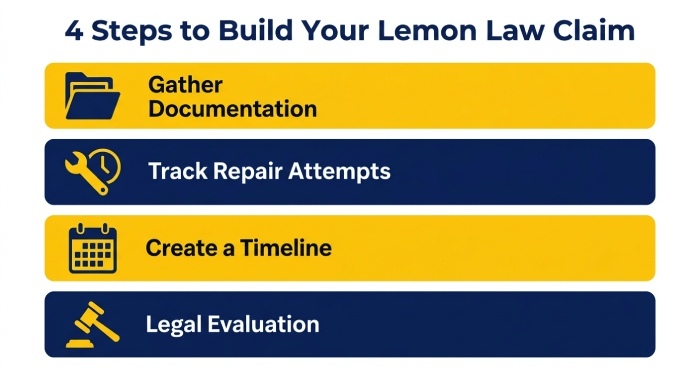
Lemon law claims succeed when you gather documentation thoroughly. Keep every work order, warranty repair invoice, and technician note. Track your failed repair attempts, nonconsecutive days in repair, and any safety hazard incidents such as sudden loss of power or brake failure. Create a chronology that ties the vehicle defect to the factory warranty period. If the warranty expired after you began pursuing repairs, highlight the earlier dates to preserve your rights under California consumer protections.
Early case evaluation and merit evaluation with a legal team can help you anticipate manufacturer defenses involving aftermarket modifications or alleged misuse. A seasoned Lemon Law attorney will align your facts with California lemon law criteria, ensure the legal definition of a qualifying defect is met, and prepare your claim for negotiation or litigation across big-ticket items like engine, transmission, steering, and brake systems.
Remedies and valuation: buyback, replacement vehicle, or cash settlement
If you meet lemon law eligibility, your legal remedy typically involves:
Buyback (vehicle buyback): The manufacturer repurchases the car, accounting for vehicle value and a mileage offset.
Replacement vehicle: A comparable new car, often appealing when inventory and options align.
Cash settlement: Compensation to reflect diminished value and inconvenience, sometimes paired with extended warranty coverage.
Expect the auto manufacturer to raise manufacturer defenses—asserting that repair attempts were insufficient, that aftermarket modifications caused the issue, or that the problem doesn’t rise to substantial impairment. Your documented warranty repairs, TSBs, and recall evidence counter those narratives and support a favorable outcome.
Evidence checklist for a stronger claim
All repair attempts and dates, including nonconsecutive days in repair
Copies of TSBs/recalls matching your VIN and symptoms
Photos/videos demonstrating the safety hazard or intermittent failure
Proof that issues began under factory warranty
Notes about any modifications, who performed them, and timing
For added guidance, consumers frequently turn to trusted resources and legal professionals throughout California, including Young & Young APC and Lemon Law Pro, as well as statewide organizations that provide clear explanations of California Lemon Law fundamentals. To better understand your situation, consider scheduling a case evaluation to explore your options with experienced lemon law attorneys.
The landscape of consumer protection in the auto industry has evolved considerably due to federal laws, state regulations, and significant court rulings. Buyers of cars that consistently malfunction — often referred to as “lemons” previously had limited recourse when repairs fell short. However, over the years, legal rulings have bolstered vehicle owners’ rights by outlining manufacturers’ obligations, specifying what constitutes a lemon, and broadening the options for redress.
Currently, a mix of federal warranty legislation and state lemon laws provides enhanced safeguards for consumers dealing with ongoing vehicle issues.
The Federal Backbone of Lemon Law Protection
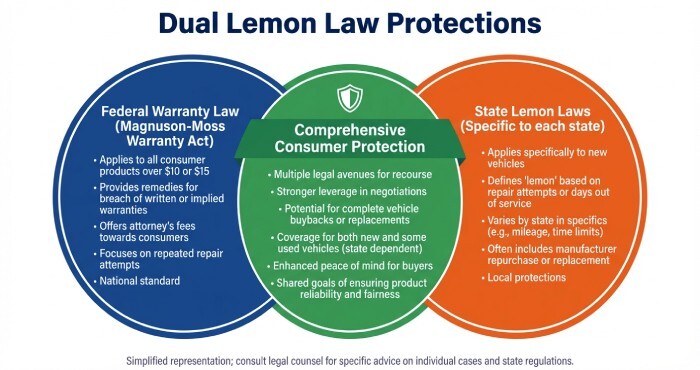
The Magnuson–Moss Warranty Act serves as a key pillar for contemporary warranty-related conflicts. Introduced to enhance clarity and fairness in consumer warranties, this federal legislation delineates essential obligations for manufacturers that provide written warranties on items, such as cars.
According to this law, manufacturers are required to transparently present warranty conditions and adhere to their repair commitments throughout the warranty duration. Should issues remain unresolved despite warranty repairs, consumers have the right to initiate a federal lawsuit for breach of warranty.
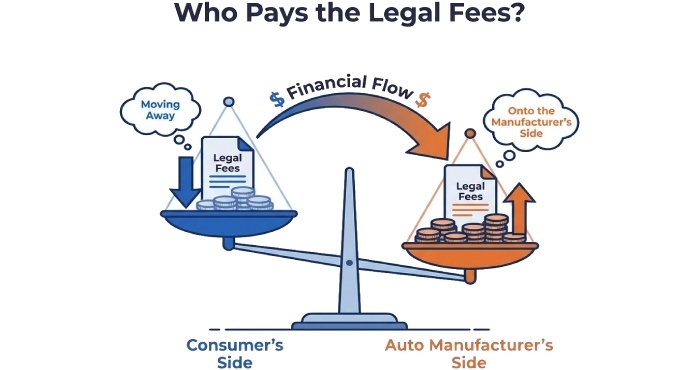
An important feature of this legislation is its provision for shifting fees. When consumers win their cases, a Lemon Law attorney is entitled to collect reasonable legal fees and court expenses from the manufacturer. This enables vehicle owners to file claims without facing substantial legal costs. As a result, it facilitates consumers in securing effective legal assistance and striving for justice in lemon law cases.
How Federal Law Works With State Lemon Laws
Federal warranty law does not take the place of state lemon laws; rather, they work in conjunction with each other. Numerous states have implemented laws specifically targeting defective vehicles, offering clear solutions for consumers.
A notable illustration is the Song-Beverly Consumer Warranty Act, commonly referred to as the California Lemon Law. This legislation mandates that manufacturers either replace or buy back vehicles if they are unable to be fixed after a reasonable number of attempts.
Courts have consistently determined that federal warranty law enhances, rather than replaces, the protections offered by state lemon laws. As a result, consumers frequently file claims under both legal systems at the same time. This strategy of merging federal and state claims can bolster a consumer’s legal stance and expand the remedies available in court.
Arbitration and Warranty Dispute Procedures
Manufacturers occasionally choose to settle conflicts via arbitration programs instead of going through conventional court processes. Although arbitration can lead to quicker outcomes, courts pay careful attention to whether these methods adhere to federal warranty regulations.
According to federal law, manufacturers are required to clearly communicate the details of their dispute-resolution programs and make certain that they are equitable and accessible for consumers. Courts often assess if arbitration methods uphold consumer rights and ensure unbiased decision-making.
If these arbitration systems do not meet legal standards, courts may permit consumers to skip the arbitration process and directly file their claims in the justice system.
Defining a “Lemon” in Appellate Court Decisions
In many cases handled by a lemon law attorney, courts determine a vehicle is a lemon when its defect substantially affects the car’s usability, value, or safety.
Significant Compromise of Usability, Value, or Safety
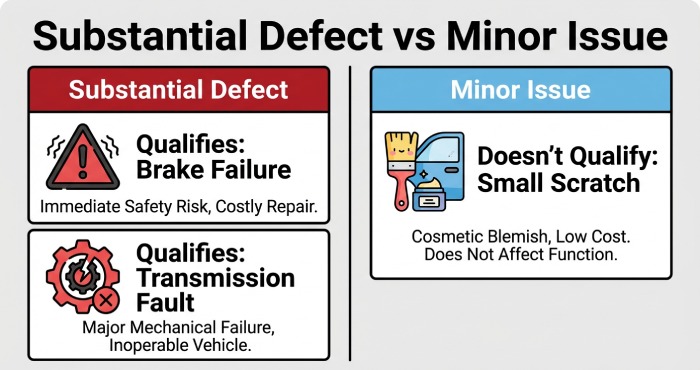
Appellate rulings highlight that not all defects are sufficient to qualify. Minor aesthetic issues or infrequent minor problems usually fall short of the required legal standard. Courts look into whether the defect notably disrupts normal operation or diminishes the vehicle’s dependability.
Instances of defects that may be considered substantial include:
Even sporadic problems may be deemed significant if they pose safety hazards or detract from the vehicle’s reliability.
What Counts as a Reasonable Number of Repair Attempts
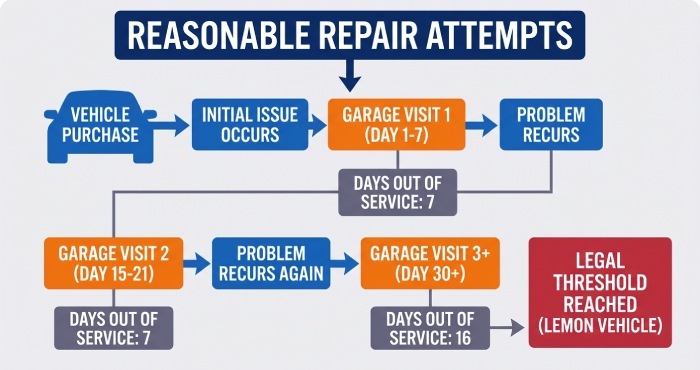
A crucial aspect of lemon law cases is whether the manufacturer was given a fair chance to fix the problem. Courts assess this criterion individually for each case, yet typical benchmarks include:
Several attempts to fix the same issue
A reduced number of attempts when the defect poses significant safety concerns
An extended duration during which the vehicle is inoperable
Additionally, judges review whether the manufacturer acted swiftly and offered adequate repair assistance via authorized service centers.
Evidence Courts Consider in Lemon Law Cases
Effective lemon law claims usually hinge on comprehensive documentation. Courts frequently highlight the necessity of well-organized records that showcase the timeline of defects and repair efforts. Key forms of evidence can encompass:
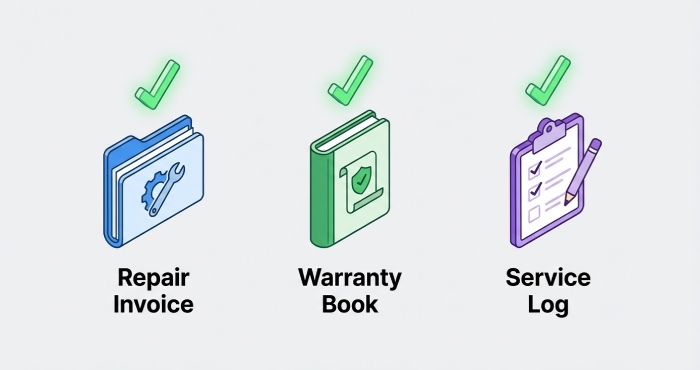
Service invoices and repair orders
Warranty papers
Correspondence with dealerships, such as emails or letters
Consumers who keep detailed records tend to bolster their legal standing, facilitating the court’s assessment of repair timelines.
Attorney’s Fees and Civil Penalties
Fee-shifting clauses have emerged as a significant asset in lemon law litigation. When consumers win warranty disputes, courts frequently mandate that manufacturers cover the legal fees of Lemon Law Lawyers. This allows vehicle owners to seek justice from large manufacturers without the burden of legal costs.
In instances of intentional wrongdoing, courts may levy civil penalties on manufacturers. This is applicable when companies are found to willfully breach warranty commitments or purposely postpone buybacks or replacements.
Typically, the burden of proof lies with the consumer, who must establish that the defect arose within the warranty period and that the manufacturer had a fair chance to fix it.
The Continuing Evolution of Lemon Law Consumer Protection
Key legal precedents in lemon laws have significantly enhanced consumer safeguards within the automotive industry. By providing clear guidelines on warranty responsibilities, identifying major defects, and broadening available solutions, the judiciary has established a framework that empowers consumers to contest faulty vehicles more efficiently.
The synergy between federal warranty regulations and state lemon laws now offers a thorough approach for addressing conflicts. As cars evolve with increasing technology, it is expected that courts will further develop these legal standards.
At its core, the main goal of lemon law is unchanged: it aims to guarantee that consumers obtain dependable vehicles and appropriate solutions when manufacturers do not fulfill their warranty commitments. An experienced Lemon Law Lawyer in San Diego can assist vehicle owners in asserting these rights and seeking either compensation or a replacement when ongoing issues are not addressed.
A lot of car owners have misconceptions about lemon laws, which can hinder them from exercising their rights when they face ongoing issues with their vehicles. By clarifying the prevalent myths surrounding lemon laws, consumers can better identify when they might have a legitimate case and pursue the appropriate legal solutions.
00:00
Why these lemon law myths persist—and what they cost consumers
Misunderstandings surrounding Lemon Law can result in car buyers wasting time, money, and essential legal protections. Although these laws differ by state, their primary purpose is to safeguard consumers when a malfunctioning vehicle remains unfixable despite reasonable efforts.
Research from Consumer Reports and initiatives like Let ABC15 Know point out frequent issues related to repairs and warranties. In addition, legal firms like McMillan Law Group work to dispel myths and assist consumers with understanding their eligibility, necessary documentation, and potential resolutions such as buybacks, replacements, or financial compensation.
Myth 1: Lemon laws apply only to brand-new purchases
A common misconception among consumers is that lemon law is applicable solely to new cars. However, it also extends to leased vehicles and, in certain states, can include certified pre-owned or used cars that are still covered by the manufacturer’s warranty or fall within a specified lemon period, based on either time or mileage.
Key points:
Coverage typically turns on whether the vehicle’s non-conformity arose and was presented for vehicle repairs during the manufacturer’s warranty.
Certified pre-owned and leased vehicles can be eligible if defects are reported within the applicable warranty period and statutory windows.
Dealer responsibilities often include disclosing prior repair history and ensuring accurate vehicle inspection and vehicle condition statements at the dealership.
Because eligibility is state-specific, directories of the best lemon law Lawyers and consumer resources can help you confirm if your state’s lemon law protections extend to your situation. Reputable firms, whether national brands or local counsel, can provide legal advice tailored to your facts.
Myth 2: Any defect or inconvenience makes a vehicle a lemon
How states define substantial defect and non-conformity
A substantial defect is more than a squeak or minor cosmetic issue. Examples include recurring brake failures, transmission malfunctions, steering problems, or electrical faults that raise safety concerns. A non-conformity typically means the vehicle does not conform to the manufacturer’s warranty—i.e., the automaker promises a level of performance or quality that the vehicle repeatedly fails to meet.
Why documentation matters: repair history and consumer reporting
Judges and arbitrators place significant importance on documentation, so it’s crucial to retain all repair invoices, service records, dealer orders, and tow receipts. Maintaining a detailed record of repairs made during the warranty can help demonstrate recurring problems, which can be further supported by recall information, NHTSA campaign numbers, and your personal inspection notes.
Myth 3: You can wait until the warranty ends or keep driving indefinitely
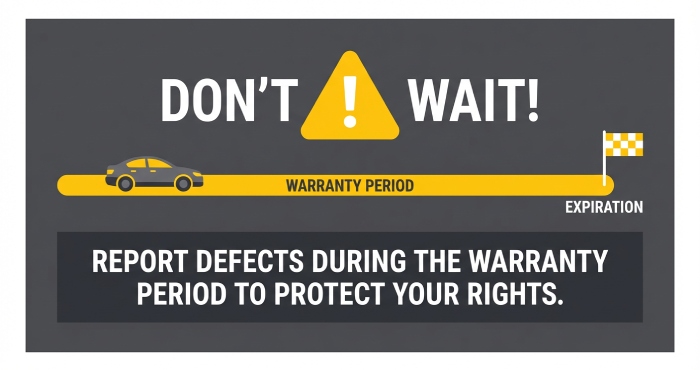
Many people mistakenly believe that they can delay action under lemon laws; however, these laws typically mandate that defects be reported and repair efforts initiated within the warranty period or designated lemon timeframe. Although repairs may carry on after the warranty has lapsed, eligibility usually hinges on when the issue was first noticed and if it was reported in a timely manner. Therefore, it is crucial to document issues promptly and have the vehicle inspected without delay.
Practical tip: Escalate when repair attempts stack up, the vehicle condition remains unsafe, or days out of service accumulate beyond statutory thresholds. Early legal advice from an attorney or lawyer experienced in lemon law can prevent missed deadlines and preserve remedies.
Myth 4: You must go to court and pay out of pocket
A common misconception among vehicle owners is that pursuing lemon law claims involves expensive legal battles. However, several laws contain fee-shifting clauses that obligate manufacturers to cover the attorney fees for consumers who win their cases.
Fee-shifting, arbitration, and manufacturer programs
Fee-shifting: If you prevail, the automaker typically pays your legal fees; you do not need to front full litigation costs to vindicate your rights.
Alternatives: State-sponsored arbitration, private mediation, or a manufacturer’s dispute resolution program may deliver remedies faster than trial—though outcomes vary.
Strategy: Evaluate whether negotiation, arbitration, or filing suit best positions your claim based on repair history, safety risks, and state-specific proof standards for substantial defect and non-conformity.
When in doubt, consult a seasoned Lemon Law attorney to assess notice requirements, eligibility windows, and refund options. If you need local guidance, a Lemon Law attorney San Diego can help you navigate California-specific rules on vehicle reacquisition and mileage offsets.
.
Myth 5: A lemon guarantees a free new car or full refund
Many people erroneously believe that proving a vehicle is a lemon automatically entitles them to a new car or a total refund. However, the options available can differ from state to state, and might include a buyback, a replacement vehicle, or monetary compensation.
How it works in practice:
Buyback vs. replacement: You may choose between a replacement vehicle or refund options, subject to state law and availability. Replacement usually requires a substantially similar model.
Refund components: Refunds often include the purchase price, taxes, and certain incidental damages (towing, rental cars), less usage. Some states also consider finance charges.
Valuation and offsets: Usage deductions may be informed by odometer readings and, in negotiations, by market references such as Kelley Blue Book (Blue Book) values—though statutory formulas control.
Many vehicle owners hesitate to exercise their rights or pursue legitimate claims due to misunderstandings surrounding lemon laws. By clarifying these prevalent myths, consumers can better identify when they are eligible for protection and compensation. Being knowledgeable about warranty details, repair obligations, and legal deadlines empowers vehicle owners to make informed choices and take suitable actions if they encounter problems with a faulty vehicle.
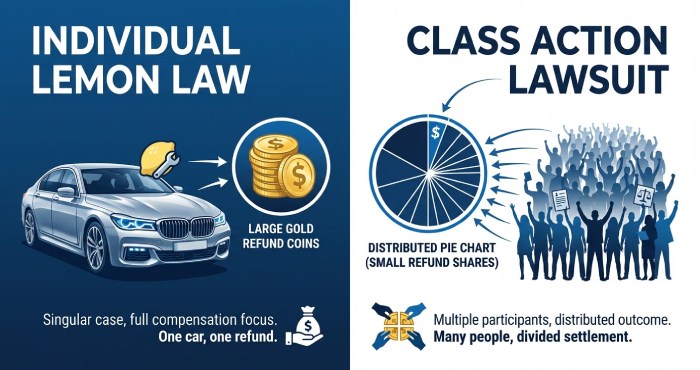
These major class actions have not only secured compensation for drivers but also strengthened transparency and accountability across the auto industry. If you’re facing similar issues, consulting a San Diego lemon lawyer can help you understand how these legal precedents may support your claim.
From Lemon Laws to Class Actions: How Individual Defects Became Systemic Fights
How a single repair order can spark a movement
The contemporary lemon law framework was established to tackle disputes over vehicles when multiple repair attempts prove ineffective. According to the Song-Beverly Consumer Warranty Act, consumers in California are entitled to a refund, replacement, or other remedies if a new or certified used vehicle exhibits ongoing defects. Initially, what were thought to be standalone lemon law claims have unveiled more widespread, recurring issues affecting specific vehicle models.
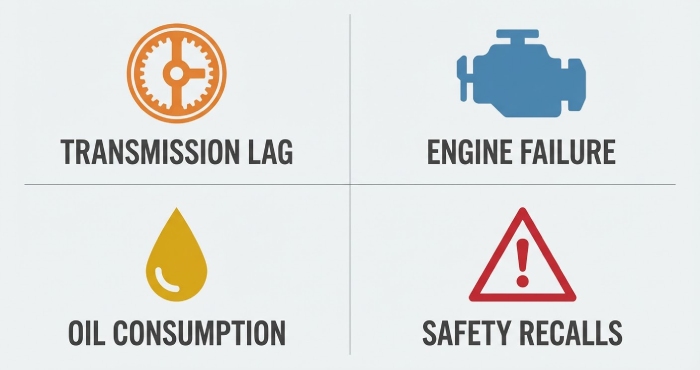
When a defect such as failure of the transmission or stalling of the engine — manifests in numerous vehicles, individual cases can progress into class action lawsuits. These collective actions address shared defect concerns on a larger scale, while California lemon laws continue to safeguard individual rights. In combination, lemon law solutions and class actions offer personal restitution as well as the possibility of accountability across the industry.
From personal buyback claims under California’s Lemon Law to extensive class action lawsuits targeting major automobile manufacturers, instances that begin in places like Palomar Mountain illustrate how localized vehicle issues can escalate into widespread systemic legal confrontations.
Landmark Cases That Moved the Needle (Ford DPS6, Nissan CVT, Hyundai/Kia Engine, Subaru Oil Consumption)
Ford Motor Company DPS6 Dual-Clutch Transmission Issues
Class action lawsuits regarding the DPS6 transmission in Ford Focus and Fiesta vehicles cited issues such as shaking, lag in acceleration, and early wear. Owners’ repair records contributed to the evidence of widespread problems. Settlements offered various forms of compensation, including extended warranties, cash payouts, and buyback options for eligible vehicles based on local regulations and individuals’ claims history.
Nissan Motor Co. CVT Transmission Issues
Lawsuits concerning Nissan models equipped with CVTs, like the Sentra, Altima, and Rogue, alleged problems such as overheating, sluggish acceleration, and premature transmission failure. Settlements frequently included extended warranty coverage, reimbursements for repairs, and occasionally options for vehicle repurchase, with some owners seeking more robust solutions under state lemon laws.
Hyundai Motor Company / Kia Corporation Engine Issues and Subaru Corporation Oil Consumption Problems
Hyundai and Kia dealt with class actions and recalls linked to engine bearing failures and fire hazards, while Subaru faced claims regarding high oil consumption in certain engine models. Settlements generally featured extended powertrain warranties, reimbursements for repairs, and monitoring initiatives, leading some vehicle owners to weigh the benefits of class action relief against potential buyback options under individual lemon laws.
What These Settlements Deliver: Buybacks, Extended Warranties, Reimbursement, and Monitoring
The Variety of Solutions and When Buyback Programs Are Appropriate
Automotive class action lawsuits frequently provide long-term warranties for future security, along with reimbursements for previous repair expenses, occasionally including buyback options. In California, the Song-Beverly Consumer Warranty Act may offer more favorable outcomes, such as refunds or replacements, if repair documentation strongly supports a lemon law claim.
Management, Reimbursements, and Compliance Oversight
Successful settlements depend on clear communication, straightforward claim procedures, and rigorous monitoring to ensure that manufacturers meet their obligations and make timely payments. Vehicle owners should also take into account mileage adjustments and potential tax implications when comparing payouts from class actions with recoveries under California’s lemon law.
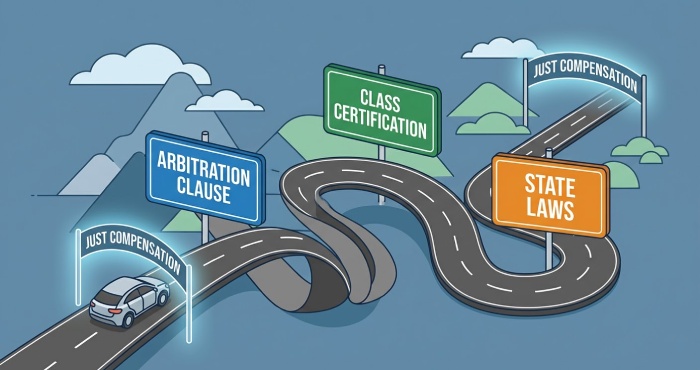
Procedural Potholes: Certification Hurdles, Arbitration Clauses, and State‑by‑State Variations
Key roadblocks that shape outcomes
Class certification requires common questions to predominate no small feat when vehicle usage, maintenance, and dealer practices vary. Manufacturers often argue that individual issues swamp common ones, while plaintiffs emphasize uniform design flaws. Arbitration clauses can divert cases from court; some class action lawsuits navigate this with opt‑out windows or arguments that public‑injunction claims are non‑arbitrable.
Meanwhile, state‑by‑state variations matter: California lemon laws are among the strongest, but other states may limit remedies, affecting leverage in settlement negotiations. Knowing when to proceed in a class action versus pursuing individualized lemon law claims is a strategic call best informed by a lemon law attorney who understands both the class landscape and the statutory lemon law process.
Owner Playbook: Documenting Defects, Joining or Opting Out, and Maximizing Relief
Practical steps to protect your claim and choose the right forum
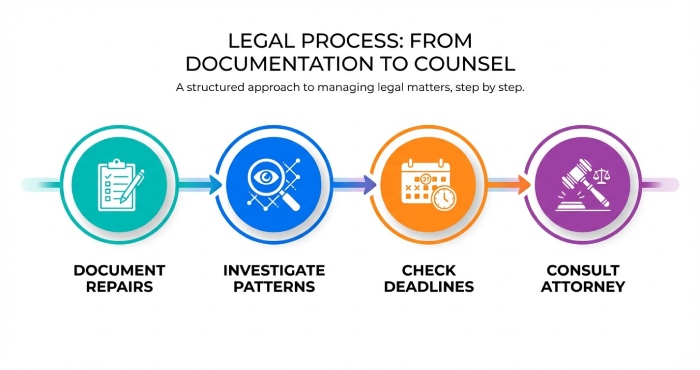
Document Everything: Maintain comprehensive records of repair invoices, service updates, and technician observations to reinforce your lemon law or class action case.
Investigate Discussions: Assess whether pursuing a class action or an individual claim under the Song-Beverly Consumer Warranty Act might yield a quicker resolution or greater compensation.
Be Aware of Deadlines: Keep a close eye on settlement notifications and filing schedules to ensure you don’t miss your opportunity for reimbursement.
Align Problems with Patterns:Vehicle owners affected by Ford DPS6 issues, Nissan CVTs, General Motors truck defects, Tesla software or battery problems, or Stellantis transmission issues should explore both class action suits and state lemon law remedies.
Consider Your Location and Resources: Collaborate with specialized firms like California Lemon Law Guys or knowledgeable local attorneys who are well-versed in California lemon laws and national class action proceedings.
Choose representation wisely: Why hire a lemon law attorney? Because aligning the lemon law process with class action timing, settlement terms, and buyback program criteria takes experience. For guidance from top lemon law lawyers, consider interviewing multiple firms to compare strategy.
Latest statistics and major class action
Point
Latest Statistic (Brief)
Volkswagen Diesel Settlement (2016)
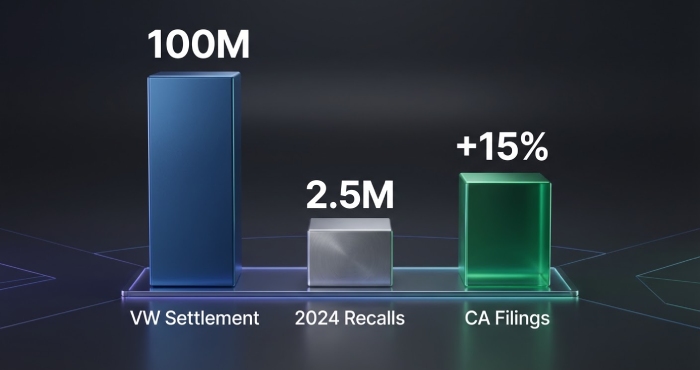
$15.3B paid; ~475K owners compensated%
Auto Defect Class Actions
$800M+ recovered from major automakers
California Lemon Law Filings (2024)
50%+ increase year-over-year
U.S. Vehicle Recalls (2024)
~29 million vehicles recalled
Consumer Awareness
60–70% buyers unaware of lemon rights
Manufacturers like General Motors (including GMC and Chevrolet), Ford, Nissan, Chrysler, Dodge, Jeep, Ram, and Tesla face evolving scrutiny as class action lawsuits and lemon law claims continue to surface. The intersection of settlements, monitoring provisions, and the statutory remedies available through California lemon laws gives owners multiple avenues to secure relief. With the Lemon law attorney calibrating strategy taking into account certification hurdles, arbitration clauses, and the comparative value of a buyback program drivers can turn individual frustrations into enforceable consumer rights.
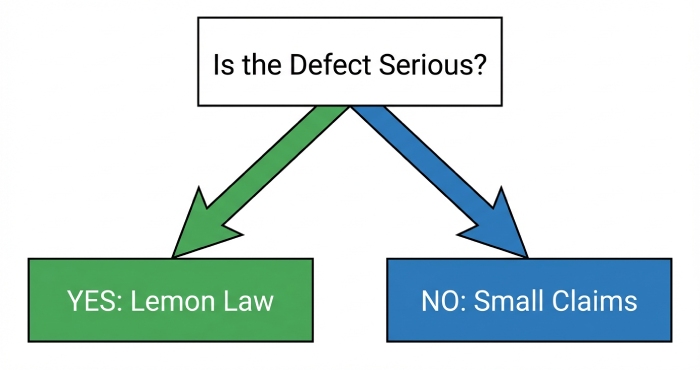
If you’re facing issues with a faulty car in California, reaching out to knowledgeable attorneys who specialize in the Song-Beverly Consumer Warranty Act often referred to as California Lemon Law lawyers can assist you in determining whether to file a claim under the Lemon Law or seek compensation via Small Claims Court.
Although both pathways can potentially result in a refund or buyback, Lemon Law attorneys can provide guidance through the more expedited and effective legal protections offered by the statute, allowing you to reclaim your money with reduced stress and increased accountability from the manufacturer, unlike managing a Small Claims case by yourself.
Eligibility and proof standards in California
Criteria for California’s Lemon Law
To qualify under California’s Lemon Law, your vehicle should still be covered by the original or certified pre-owned warranty when the defect arises, and this defect must notably influence its usability, worth, or safety. If the manufacturer fails to resolve the issue after a reasonable number of attempts, you may be entitled to a refund or a replacement.
Requirements and Monetary Limits for Small Claims
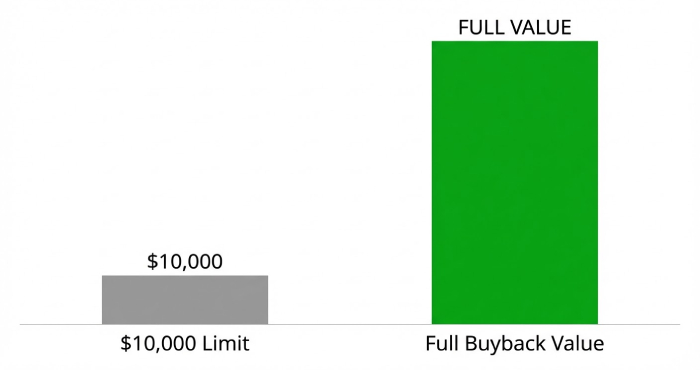
In California’s small claims court, individuals can typically seek up to $10,000, while businesses face lower thresholds. You need to accurately identify the defendant, make a prior request for payment, and supply clear documentation such as contracts and repair records.
Evidence of Warranty Breach
To demonstrate a breach of warranty, you must provide repair orders, diagnostic evaluations, and service logs that indicate the issue remained unresolved during the warranty period. It is essential to show that repairs were attempted while the warranty was active to bolster your case.
Impact of Significant Defects on Safety
You must establish that the defect has a considerable impact on the vehicle’s operation, value, or safety. Providing supporting documentation such as photographs, videos, and a comprehensive repair history can enhance your argument.
Step-by-step processes and timelines
Lemon law pathway (what accelerates it)
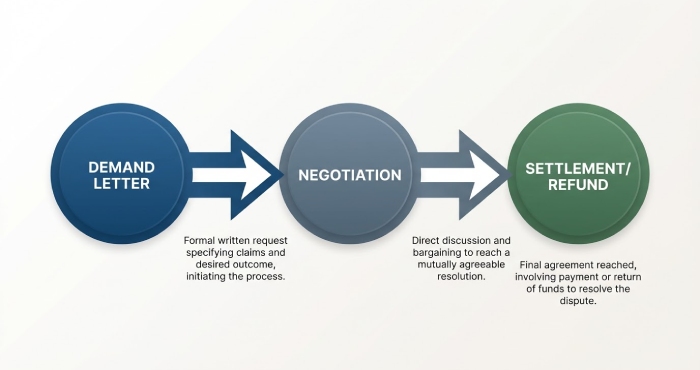
Demand letter: Send a detailed written demand to the manufacturer outlining the defective vehicle history, repair attempts, and requested refund or replacement. This triggers consumer protection review internally.
Arbitration or early settlement: Some manufacturers offer arbitration. If well-documented, arbitration can shorten time and cost; however, evaluate pros/cons before agreeing.
Settlement negotiations:Strong breach of warranty evidence can prompt buyback offers quickly. Mileage offsets and tax/registration credits are calculated at this stage.
Litigation (if needed): Filing a claim in superior court can lead to broader legal remedies, including civil penalties for willful violations and recovery of attorneys’ fees under California lemon law.
Speed boosters:
Complete repair process records, prompt demand, and a clear request for refund or replacement. Delays often stem from missing paperwork or unclear defect descriptions.
Small claims pathway (what accelerates it)
Filing a claim: Prepare the claim form, attach key exhibits (purchase agreement, warranty booklet, repair orders, communications), and pay filing fees.
Service: Timely and proper service on the manufacturer or car dealer is critical. Early, correct service accelerates the court hearing date.
Court hearing: Present concise proof of vehicle defects, out-of-pocket losses, and your demand. Attorney not required; the judge issues a decision outcome, typically the same day or shortly thereafter.
Speed boosters:
A single defendant, accurate addresses for service, and a calendar with near-term dates. Consider court availability and the defendant’s ability to appear to avoid continuances.
At-a-glance: Which is faster for a vehicle refund?
Topic
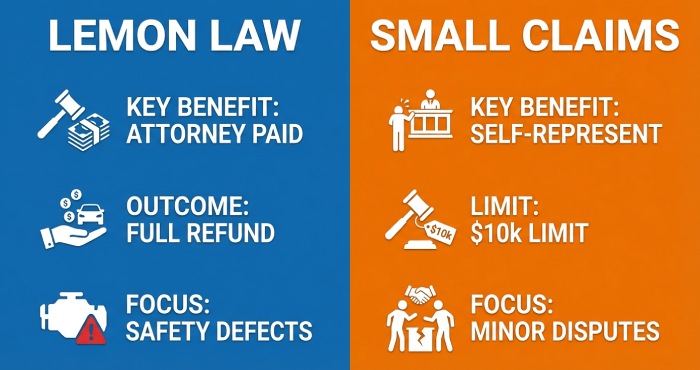
Lemon Law
Small Claims Court
Scope
Warranty vehicle defects with repeated repair failures.
Small money disputes for quick compensation.
Best For
Owners/lessees with serious car defects (e.g., California Lemon Law).
Individuals wanting fast, low-cost cases without lawyers.
Speed
Faster with repair records and settlement readiness.
Faster with proper paperwork and quick court dates.
Remedies, costs, and risks
Remedies and Adjustments under Lemon Laws: According to state lemon laws, consumers are entitled to either a refund or a replacement vehicle (after deducting a mileage adjustment). Additionally, they may also be eligible for civil penalties in cases of intentional violations and can recover legal fees if they win their case.
Limitations, Expenses, and Collection in Small Claims: Small claims courts provide a quicker, more economical resolution with capped damages. However, there are no statutory penalties or fee shifting, meaning the plaintiff must manage the collection of any awarded judgment themselves.
Unexpected Costs to Consider: Even if your claim is successful, various factors such as mileage deductions, restrictions on expert testimony use, and possible delays in receiving payment can diminish or postpone your overall compensation.
Decision guide and checklist
How to choose the fastest route
Opt for lemon law if:
You’ve made several recorded attempts to fix your vehicle under the manufacturer’s warranty, and the issue significantly compromises its safety, value, or performance. You seek either a refund or replacement, along with potential penalties and legal fees.
Select small claims court if:
Your damages are within the court’s monetary limits and concern straightforward out-of-pocket expenses or warranty issues. You prefer a quicker, more straightforward procedure with fewer formalities.
Documents to gather
Purchase/lease contract, warranty booklet, and any extended coverage.
Complete repair attempts file: repair orders, work descriptions, dates, mileage.
Timeline of symptoms, photos/videos, recall notices, and communications with the manufacturer or dealer.
Proof of payments, incidental expenses (towing, rentals), and demand letters.
Pitfalls that slow cases
Gaps in records, missing repair orders, or unclear defect descriptions.
Failing to send a clear demand for refund or replacement before filing.
Suing the wrong entity or improper service in small claims court.
Agreeing to arbitration without understanding its limits on legal remedies.
When to get help
Complex defects, disputed warranty coverage, or pushback on buyback calculations merit consultation. For localized guidance, lemon law lawyers at McMillan Law Group provide insight into the claim process.
If you find yourself with a malfunctioning vehicle, knowing how Lemon Law differs from Small Claims Court can help you avoid unnecessary time, expense, and hassle. Although Small Claims Court might appear to be a faster option for smaller issues, California’s Lemon Law typically offers more robust protection, such as complete refunds, vehicle replacements, and coverage for legal fees making it a superior choice for eligible situations. By seeking advice from a knowledgeable Lemon Lawyer San Diego, you can ensure that you select the quickest and most efficient route to obtain the compensation you deserve and get back on the road safely.