Acquiring a boat symbolizes a commitment to freedom, exploration, and tranquility on the water, but that vision can quickly diminish due to ongoing mechanical problems or repairs. For numerous boat owners, these “nautical nuisances” transform their enthusiasm into annoyance. Lemon Law serves as a protective measure, ensuring manufacturers are responsible while providing solutions such as repairs, replacements, or refunds.
00:00
Why Lemon Law Applies Afloat
The boat lemon law is designed to safeguard consumers when a recreational boat proves to be faulty and cannot be fixed in a timely manner. The specifics of this coverage differ by location; some regulations apply directly to boats, while others depend on federal laws like the Magnuson–Moss Warranty Act and the Uniform Commercial Code. Typically, new boats come with manufacturer warranties, but used boats might also be protected if they have a valid warranty in effect.
A defect is deemed significant if it considerably impacts the boat’s functionality, value, or safety, such as problems with the engine, steering, or structural integrity. Generally, manufacturers are held accountable under warranty terms, although dealers may also be responsible for their own warranties or any misleading claims they make.
What Makes a Boat a Lemon
Common Defects
The most frequent mechanical defects and structural defects that trigger boat lemon law claims include:
Engine and drivetrain: Overheating, oiling failures, gearcase issues, and recurrent power loss or stalling under load.
Hull and structure: Osmotic blistering, delamination, bulkhead separations, stringer failures, and transom rot that affect seaworthiness and can become a faulty sea vessel hazard.
Electrical and electronics: Charging-system failures, battery-drain mysteries, corroded harnesses, CAN-bus glitches, and navigation electronics that repeatedly fail.
Steering and controls: Hydraulic leaks, autopilot malfunctions, helm play, and throttle/shift controls that bind or lag.
Repair Thresholds and Warranty Rules
Lemon law criteria vary from state to state, but generally, a claim can be made after three to four unsuccessful repair attempts for the same issue or if the vehicle is out of service for over 30 days within the initial 12 to 24 months. The extent of coverage is determined by the warranty details, which usually do not cover issues related to wear and tear, improper use, or lack of maintenance.
Additional complications can arise from modifications made after purchase or from “as is” sales conditions. Nonetheless, the Magnuson Moss Warranty Act limits misleading warranty restrictions, enabling consumers to pursue repairs, replacements, refunds, or damages if manufacturers do not fulfill their warranty commitments.
Enforcing Your Rights Afloat
Claims Process, Laws, and Owner Playbook
How the Claim Works
Record everything: Maintain thorough documentation, including photographs, videos, and all repair papers, such as independent surveyor assessments.
Notify quickly: Write to the dealer and manufacturer to protect your warranty and legal entitlements promptly.
Window for repairs: Provide ample time for repairs, but escalate the issue if it remains unresolved after a reasonable period.
Arbitration or litigation: Consider arbitration if necessary, but retain the option to pursue court action if it proves unsatisfactory or unjust.
Potential outcomes: You might be eligible for a refund, a replacement, or reimbursement for associated losses and costs.
If you need guidance, consider consulting a seasoned lemon law attorney early in the process; experienced lemon law lawyers can help structure notices, protect deadlines, and position your claim for the strongest outcome.
Laws That Back You Up
Boat owners dealing with ongoing defects can rely on various legal protections. Certain state lemon laws specifically include boats, whereas others do not, so it’s crucial to examine state regulations and consult resources like FindLaw. On the federal side, the Magnuson-Moss Warranty Act enables consumers to make claims when warranties are violated, frequently serving as a key legal recourse. The Uniform Commercial Code also addresses warranty breaches, offering remedies such as damages or the option to withdraw acceptance. If there are safety concerns, they can be reported to the United States Coast Guard, which may initiate recalls and bolster claims.
Owner Playbook
A successful guide for boat ownership begins with thorough research before purchase. This includes obtaining a survey, checking for recalls through the U.S. Coast Guard, and confirming warranty details in writing. Once a defect arises, take immediate action by documenting the issues and informing the dealer. After each repair attempt, evaluate the results and keep records. If repairs exceed acceptable limits, escalate the matter formally by referencing the Magnuson-Moss Warranty Act and applicable state laws. If necessary, engage in mediation or legal action, bolstered by clear evidence such as service logs, photographs, and survey documentation.
Focus negotiations on your legal rights, calculated losses, and feasible solutions like replacement or repurchase. Having expert surveyors and knowledgeable attorneys from organizations like the Maritime Law Association of the United States can enhance your position. Be mindful of common errors, such as missing deadlines or agreeing to vague repair agreements. Acting swiftly can alleviate ongoing financial stress and help ensure you receive just compensation if the defective boat cannot be repaired.
Lemon Law Boat Accountability Statistics
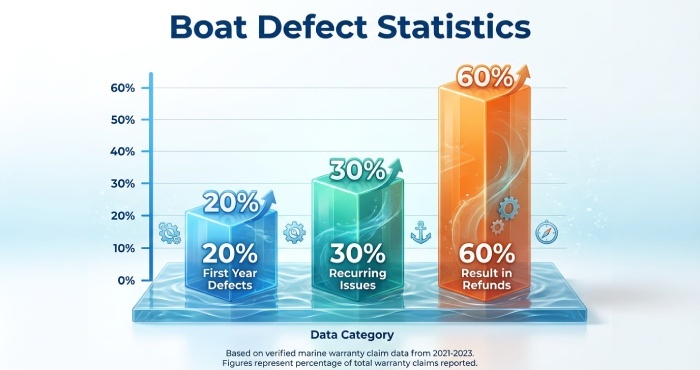
Statistics regarding accountability under lemon laws for boats indicate that a notable portion of boat defects persists even after several repair efforts. This underscores the vital importance of consumer protection laws in ensuring manufacturers are held liable.
Nearly 1 in 5 boat owners report significant defects within the first year
Highlights how common early manufacturing issues can be
About 30% of marine warranty claims involve recurring problems
Shows repeated failures that may qualify under lemon law criteria
Boats may spend an average of 25–40 days in repair during major defect cases
Indicates “days out of service,” a key lemon law trigger
Over 60% of successful lemon law claims result in refunds or replacements
Demonstrates strong consumer protection outcomes
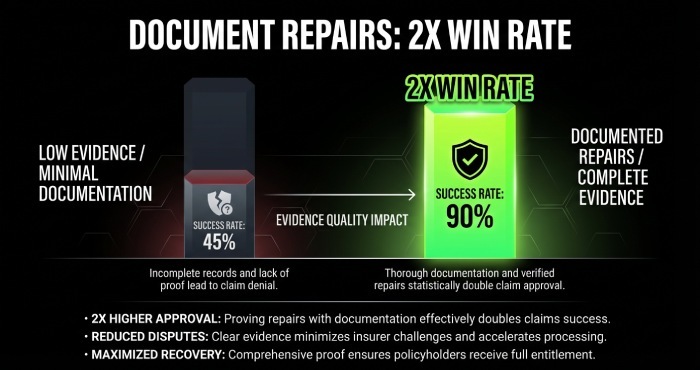
Consumers who document repairs properly are 2x more likely to win claims
Emphasizes importance of record-keeping for accountability
The Lemon Law plays an essential role in protecting boat owners, holding manufacturers responsible when significant defects transform an exciting acquisition into a frustrating experience. By being aware of your rights, keeping thorough records of any problems, and operating within the legal system, you can seek appropriate solutions like repairs, replacements, or refunds. If issues continue to arise, consulting with a skilled lemon law attorney in San Diego can offer the necessary knowledge to handle intricate claims and achieve a satisfactory resolution, ultimately safeguarding both your investment and your peace of mind.
When your car starts acting more like a burden than a benefit, it may be more than just bad luck—it could be a “lemon.” California’s Lemon Law Warranty empowers consumers to fight back, ensuring manufacturers are held accountable for persistent defects. With the guidance of experienced lemon law lawyers, drivers can turn frustrating repair cycles into rightful compensation or replacement. Understanding your rights is the first step toward reclaiming control of your vehicle—and your peace of mind.
00:00
What Qualifies as a “Lemon” in California
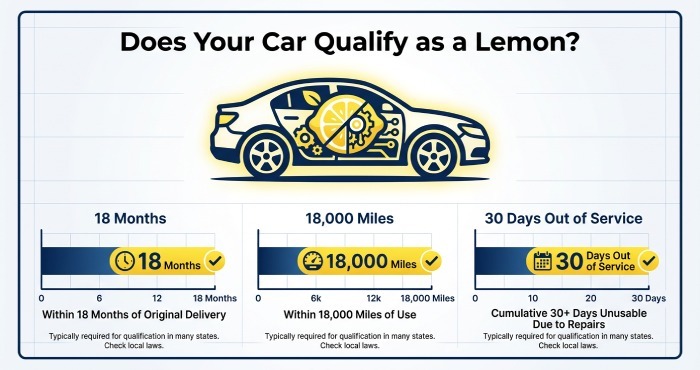
California’s Song-Beverly Consumer Warranty Act is a cornerstone of Warranty Law that protects buyers when a vehicle—a covered consumer product—fails to conform to an express warranty. A car is presumed a “lemon” when, within the first 18 months or 18,000 miles (whichever comes first), either:
The warrantor or seller made at least two attempts to repair a serious safety defect, or four or more attempts to repair a recurring defect that substantially impairs use, value, or safety; or
The vehicle was out of service for repair for a cumulative 30 or more days.
These are guidelines under state statutes, not absolute requirements; other timelines can still qualify.
New vs. Used/CPO and “Pre-Owned Goods”: New vehicles typically come with extensive manufacturer-backed warranties, whereas used or Certified Pre-Owned (CPO) vehicles — and even secondhand items — may be eligible for certain protections if they come with a warranty or service plan, despite being sold “as is.”
Types of Defects and Required Repair Attempts: For significant safety-related defects, fewer repair attempts are generally needed, whereas recurring problems must demonstrate a reasonable number of documented repair efforts to be valid.
Time Frames and Extensions: While many assumptions focus on an 18-month period or 18,000 miles, claims can still be successful beyond these thresholds if backed by solid documentation, all within a standard four-year statute of limitations.
Essential Concepts in Warranty Law: Warranty law encompasses express warranties, implied warranties of merchantability and fitness for a particular purpose, alongside regulations stipulated by the Uniform Commercial Code that clarify consumer rights and remedies.
Key Roles – Warrantor, Seller, Merchant, Consumer: The party providing the warranty is known as the warrantor, while the individual or business selling the vehicle is the seller or merchant; the consumer is the end user who purchases it for personal use.
The Claim Process, Step by Step
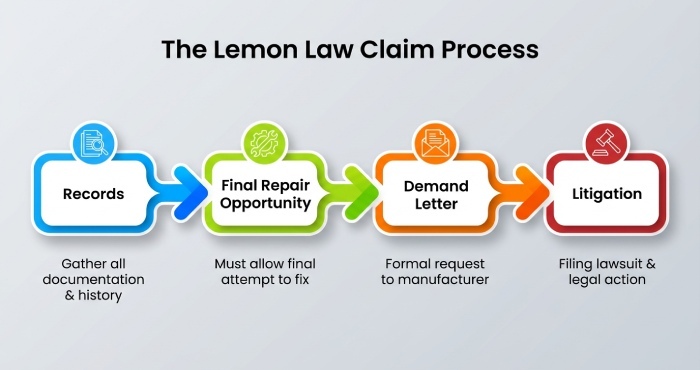
A disciplined process maximizes your consumer rights and enforces the warrantor’s warranty obligations.
Records to Preserve: Keep all documents pertaining to repairs, including orders, invoices, correspondences, and expense logs linked to the defect.
Reporting Issues and Final Repair Opportunities: Contact the seller immediately and provide them with a chance for a final repair, unless safety concerns make this impossible.
Demands, Mediation, and Litigation: Draft a demand letter, explore options for arbitration or mediation, and proceed with legal action if necessary for resolution.
Timeframes and Expectations: The timeline for evaluating and resolving cases can differ, with arbitration typically being quicker than litigation.
Loaner Vehicles/Reimbursement for Rentals: You might qualify for a loaner vehicle or reimbursement for rental costs as part of incidental damages.
Practical Playbook to Protect Your Claim
Turn strong facts into a strong file.
Communication Scripts and Recordkeeping
At service check-in: “Please note that this is the third visit for the same stalling issue; I need a safety inspection and a loaner if the vehicle is kept overnight.”
In writing to the warrantor: “This nonconformity substantially impairs use, value, and safety. Please confirm your final repair attempt date or proceed with repurchase/replacement under California Warranty Law.”
Organize a timeline: Complaint, diagnosis, parts ordered, repair completion, days out of service.
Don’ts That Weaken Your Case
Avoid modifications that create causation disputes.
Don’t miss scheduled maintenance; the seller may argue misuse.
Refrain from continuing to drive a dangerous defective product; document safety concerns immediately.
Negotiation Tips
Leverage the Uniform Commercial Code’s remedies for breach of warranty alongside Song-Beverly.
Compare offers as you would during comparison shopping—replacement versus refund—using total cost, taxes, negative equity impact, and downtime.
Choosing Counsel and Resources
Experienced counsel can navigate mediation, arbitration, or litigation while maximizing attorneys’ fees recovery permitted by statute. For tailored guidance, you can consult specialized lemon law lawyers or work with a focused advocate, such as a Cadillac lemon law attorney in San Diego.
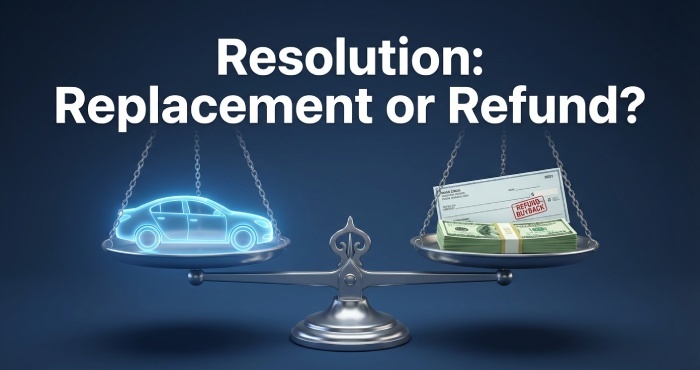
Post-Resolution Options: Replacement vs. Refund
Replacement: Ensure fitness for a particular purpose and merchantability with a fresh written warranty and no hidden limitation of warranties.
Refund: Confirm buyback line items, including taxes, fees, and incidentals, and verify the mileage offset calculation.
Final Pointers on Broader Warranty Law
It’s crucial to document express and oral warranty commitments in writing whenever feasible.
The implied warranty of merchantability guarantees that a vehicle is suitable for standard driving conditions, while the fitness for a particular purpose applies when specific requirements are made known.
If a written warranty or service agreement is in place, disclaimers of implied warranties could be rendered invalid if they contradict state laws.
Warranty legislation dictates how warranty terms are enforced, whereas product liability deals with damages resulting from faulty products.
If you encounter a roadblock in a dispute settlement mechanism, escalate under federal law with the FTC or consult a Lemon Law attorney or your state’s attorney general, as consumer protections like Magnuson-Moss apply across industries, with vehicles being high-value examples where state and federal rights converge.
If your vehicle becomes a “lemon,” the California Lemon Law offers protections so you don’t have to face the issue by yourself. By knowing your rights and taking swift action, you can confidently seek a repair, replacement, or refund. With appropriate legal support, even the most challenging car problems can lead to a just and positive outcome.
The landscape of consumer protection in the auto industry has evolved considerably due to federal laws, state regulations, and significant court rulings. Buyers of cars that consistently malfunction — often referred to as “lemons” previously had limited recourse when repairs fell short. However, over the years, legal rulings have bolstered vehicle owners’ rights by outlining manufacturers’ obligations, specifying what constitutes a lemon, and broadening the options for redress.
Currently, a mix of federal warranty legislation and state lemon laws provides enhanced safeguards for consumers dealing with ongoing vehicle issues.
The Federal Backbone of Lemon Law Protection
The Magnuson–Moss Warranty Act serves as a key pillar for contemporary warranty-related conflicts. Introduced to enhance clarity and fairness in consumer warranties, this federal legislation delineates essential obligations for manufacturers that provide written warranties on items, such as cars.
According to this law, manufacturers are required to transparently present warranty conditions and adhere to their repair commitments throughout the warranty duration. Should issues remain unresolved despite warranty repairs, consumers have the right to initiate a federal lawsuit for breach of warranty.
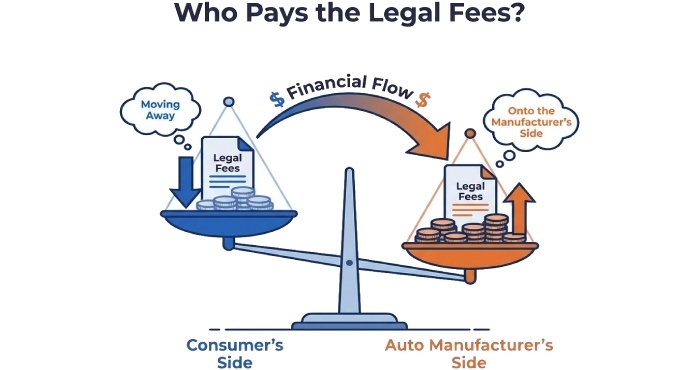
An important feature of this legislation is its provision for shifting fees. When consumers win their cases, a Lemon Law attorney is entitled to collect reasonable legal fees and court expenses from the manufacturer. This enables vehicle owners to file claims without facing substantial legal costs. As a result, it facilitates consumers in securing effective legal assistance and striving for justice in lemon law cases.
How Federal Law Works With State Lemon Laws
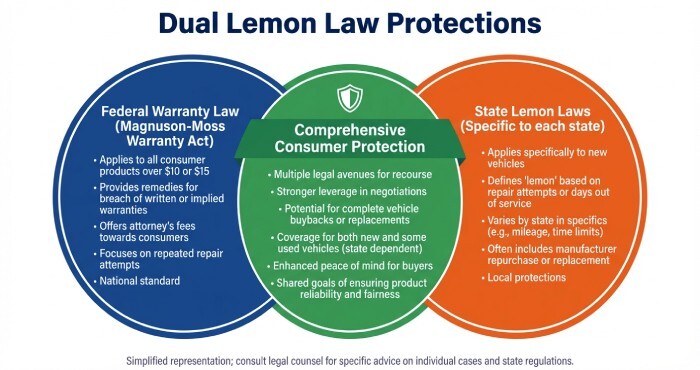
Federal warranty law does not take the place of state lemon laws; rather, they work in conjunction with each other. Numerous states have implemented laws specifically targeting defective vehicles, offering clear solutions for consumers.
A notable illustration is the Song-Beverly Consumer Warranty Act, commonly referred to as the California Lemon Law. This legislation mandates that manufacturers either replace or buy back vehicles if they are unable to be fixed after a reasonable number of attempts.
Courts have consistently determined that federal warranty law enhances, rather than replaces, the protections offered by state lemon laws. As a result, consumers frequently file claims under both legal systems at the same time. This strategy of merging federal and state claims can bolster a consumer’s legal stance and expand the remedies available in court.
Arbitration and Warranty Dispute Procedures
Manufacturers occasionally choose to settle conflicts via arbitration programs instead of going through conventional court processes. Although arbitration can lead to quicker outcomes, courts pay careful attention to whether these methods adhere to federal warranty regulations.
According to federal law, manufacturers are required to clearly communicate the details of their dispute-resolution programs and make certain that they are equitable and accessible for consumers. Courts often assess if arbitration methods uphold consumer rights and ensure unbiased decision-making.
If these arbitration systems do not meet legal standards, courts may permit consumers to skip the arbitration process and directly file their claims in the justice system.
Defining a “Lemon” in Appellate Court Decisions
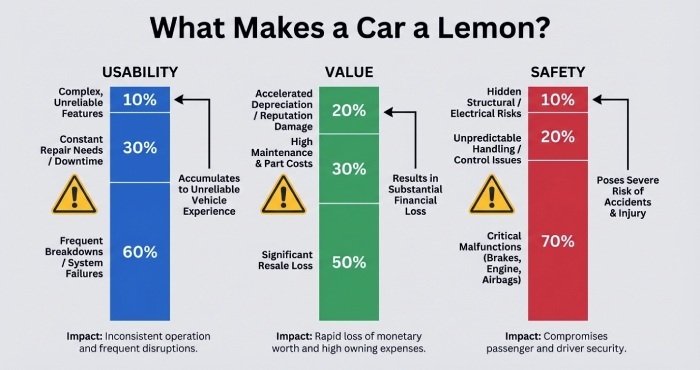
In many cases handled by a lemon law attorney, courts determine a vehicle is a lemon when its defect substantially affects the car’s usability, value, or safety.
Significant Compromise of Usability, Value, or Safety
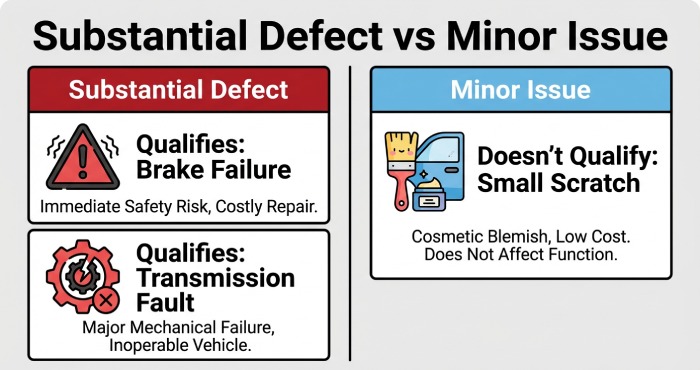
Appellate rulings highlight that not all defects are sufficient to qualify. Minor aesthetic issues or infrequent minor problems usually fall short of the required legal standard. Courts look into whether the defect notably disrupts normal operation or diminishes the vehicle’s dependability.
Instances of defects that may be considered substantial include:
Even sporadic problems may be deemed significant if they pose safety hazards or detract from the vehicle’s reliability.
What Counts as a Reasonable Number of Repair Attempts
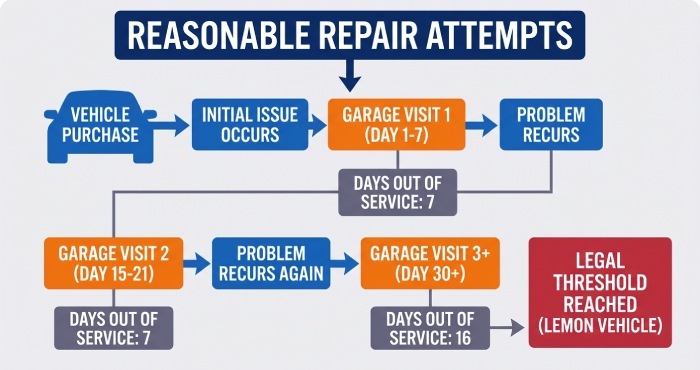
A crucial aspect of lemon law cases is whether the manufacturer was given a fair chance to fix the problem. Courts assess this criterion individually for each case, yet typical benchmarks include:
Several attempts to fix the same issue
A reduced number of attempts when the defect poses significant safety concerns
An extended duration during which the vehicle is inoperable
Additionally, judges review whether the manufacturer acted swiftly and offered adequate repair assistance via authorized service centers.
Evidence Courts Consider in Lemon Law Cases
Effective lemon law claims usually hinge on comprehensive documentation. Courts frequently highlight the necessity of well-organized records that showcase the timeline of defects and repair efforts. Key forms of evidence can encompass:
Service invoices and repair orders
Warranty papers
Correspondence with dealerships, such as emails or letters
Consumers who keep detailed records tend to bolster their legal standing, facilitating the court’s assessment of repair timelines.
Attorney’s Fees and Civil Penalties
Fee-shifting clauses have emerged as a significant asset in lemon law litigation. When consumers win warranty disputes, courts frequently mandate that manufacturers cover the legal fees of Lemon Law Lawyers. This allows vehicle owners to seek justice from large manufacturers without the burden of legal costs.
In instances of intentional wrongdoing, courts may levy civil penalties on manufacturers. This is applicable when companies are found to willfully breach warranty commitments or purposely postpone buybacks or replacements.
Typically, the burden of proof lies with the consumer, who must establish that the defect arose within the warranty period and that the manufacturer had a fair chance to fix it.
The Continuing Evolution of Lemon Law Consumer Protection
Key legal precedents in lemon laws have significantly enhanced consumer safeguards within the automotive industry. By providing clear guidelines on warranty responsibilities, identifying major defects, and broadening available solutions, the judiciary has established a framework that empowers consumers to contest faulty vehicles more efficiently.
The synergy between federal warranty regulations and state lemon laws now offers a thorough approach for addressing conflicts. As cars evolve with increasing technology, it is expected that courts will further develop these legal standards.
At its core, the main goal of lemon law is unchanged: it aims to guarantee that consumers obtain dependable vehicles and appropriate solutions when manufacturers do not fulfill their warranty commitments. An experienced Lemon Law Lawyer in San Diego can assist vehicle owners in asserting these rights and seeking either compensation or a replacement when ongoing issues are not addressed.
DIY Lemon Law strategies help vehicle owners build strong documentation, track repair attempts, and encourage manufacturers to address serious defects quickly. If multiple warranty repairs fail to fix a problem that significantly affects the vehicle’s safety, value, or use, consulting experienced lemon law lawyers can help you understand state timelines and pursue remedies such as a refund, replacement, or settlement.
00:00
Rules and Records: The Foundation
Hack #1: Map Your State’s Lemon Law Rules, Deadlines, and Remedies
Begin by outlining the Lemon Law criteria specific to your state, which encompasses notice regulations, the count of repair attempts or duration of being out of service, and the potential remedies like refunds, vehicle replacements, or exchanges. Seasoned Lemon Law attorneys stress the importance of adhering to strict deadlines and maintaining detailed records to strengthen your claim and enhance the chances of a favorable outcome.
What to Map
Statute of limitations and any tolling rules
Final repair opportunity notice content and delivery method
Calculation of use deduction and buyback formula based on MSRP
Eligibility for a substantially similar replacement vehicle versus full refund
Whether a release of claims is required at delivery of relief (and what it must say)
Pro Tip: Dispute Programs and Arbitration
Some states require a certified dispute settlement mechanism or state certified dispute settlement step before filing suit. Know whether arbitration is recommended or mandatory and whether it is binding arbitration.
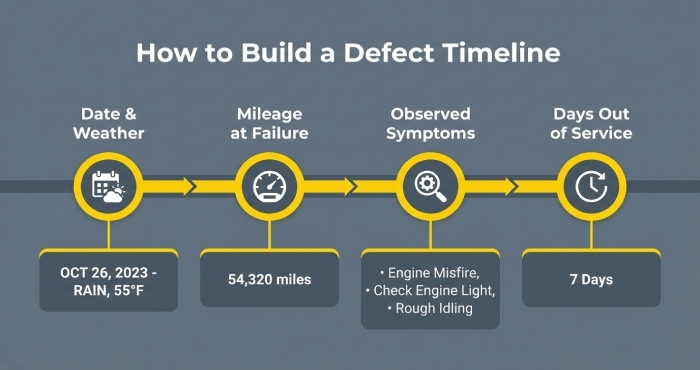
Hack #2: Build a Precise Defect Timeline and Mileage/Days-Out-of-Service Log
Maintain a day-by-day chronology of symptoms, mileage at each failure, and days out of service. Pair each entry with a specific vehicle repair order to show repeated, unresolved defects under warranty or extended warranty coverage.
Logging Essentials
Date, mileage, weather/conditions, warning lights, and drivability notes
Dealer name, repair order number, and actual downtime
Service advisor statements or “could not duplicate” notes
Cross-references to videos, OBD-II data, and TSBs/recalls
Evidence and Service Documentation
Hack #3: Demand Complete Repair Orders and Paper Trails at Every Service Visit
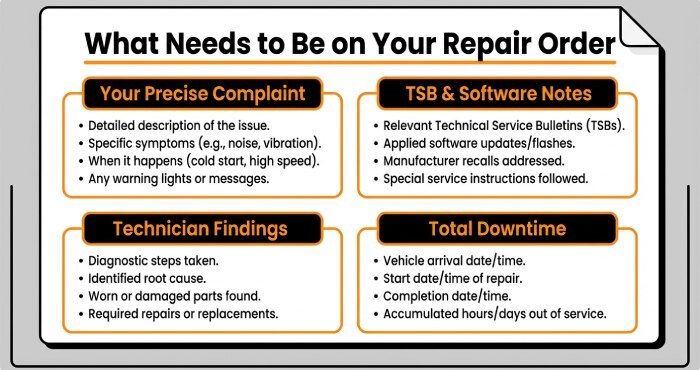
Insist on detailed, printed repair orders—don’t accept a vague paper form or a bare-bones email. Incomplete documents are a trap for the unwary and weaken a DIY Lemon Law record.
What Belongs on Every Repair Order
Your precise complaint in your own words
Technician findings, tests performed, and all parts replaced
Software updates, TSB numbers, road-test notes, and mileage in/out
Total days out of service and next-steps plan
Service Write-Up Checklist
Confirm the VIN and odometer match your log
Ask for line-item labor ops and part numbers
Request copies of prior visits if the system “can’t find” them
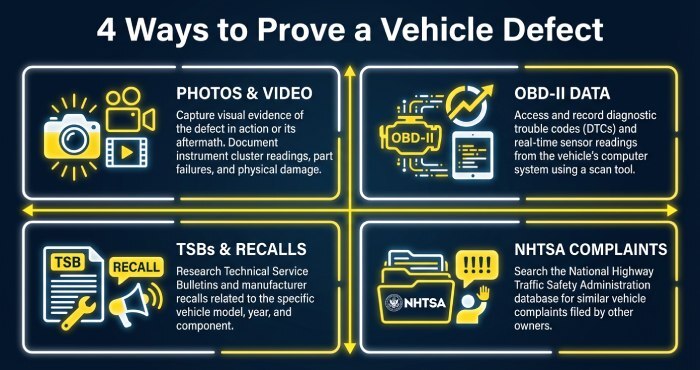
Hack #4: Document the Defect Like a Pro—Photos, Video, OBD-II Data, and Witness Statements
Use your phone and an OBD-II scanner to create a clear record. Short videos of the defect, freeze-frame codes, dash lights, and ambient conditions strengthen a lemon law claim.
Corroboration Matters
Collect witness statements from passengers or service personnel
Back up files in a cloud folder labeled for fast review
Hack #6: Use TSBs, Recalls, and NHTSA Complaints to Prove a Known, Repeated Issue
Technical Service Bulletins (TSBs), safety recalls, and NHTSA complaint data show the manufacturer knew (or should have known) of systemic problems. This evidence supports both liability and remedy.
Source and Cite
Print or save TSB PDFs with publication dates and applicability
Reference NHTSA campaign numbers and complaint IDs
Note whether updates were attempted during vehicle repair
Hack #5: Trigger the Final Repair Opportunity with a Clear, Certified Demand Letter
Most Lemon Law statutes require giving the manufacturer a final chance to repair. Send a certified, return-receipt letter that sets a deadline and identifies the defect history.
What to Include
VIN, in-service date, mileage, concise defect summary, and repair attempts
Demand for relief: full refund or a substantially similar replacement vehicle
Request for a safe loaner or replacement vehicle free of charge during further work
Warning: do not sign any premature release of claims in exchange for diagnostics
Cite fee-shifting provisions and your readiness for dispute settlement or arbitration
lemon law buyback value” width=”700″ height=”370″ />
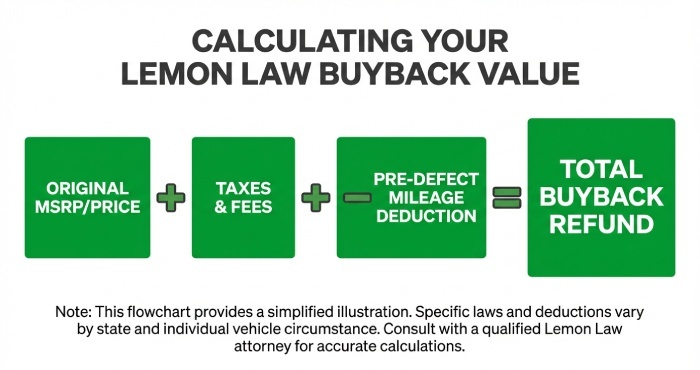
Hack #7: Calculate Your Buyback Value Using the Statutory Formula and Use-Offset
Most statutes compute a full refund using MSRP or purchase price plus taxes, fees, and incidental damages, minus a use deduction based on miles driven before the first substantial defect. Include financing charges and add-ons where permitted.
Formula Basics
Start with MSRP or the actual purchase price, as your state requires
Add sales tax, title, registration, and permissible incidental costs
Subtract the use deduction tied to pre-defect miles
Compare with a trade out or a replacement vehicle to see which refund option is best
Evaluate the manufacturer’s offer against statute and your documents
Organize and Negotiate With Leverage
Hack #8: Create a Claims Binder and Digital Evidence Vault for Fast, Persuasive Review
Organize your lemon law claim like a trial exhibit set in Inglewood. An indexed binder and a synced cloud folder can speed up reviews by manufacturer customer service teams, outside counsel, or a state-certified dispute settlement panel in California.
Demand letter, delivery receipts, and any settlement or case results references
Hack #9: Negotiate with Leverage—Fee-Shifting, Arbitration Programs, and Escalation Paths
Leverage comes from clean documentation, clear remedies, and statutory fee-shifting. Politely escalate from dealer to manufacturer customer service, then to corporate resolution teams. Consider a certified dispute settlement mechanism or arbitration if it improves timing while weighing the risk of an adverse decision in binding arbitration.
Leverage Points
Cite statute of limitations and your intent to preserve all lemon law rights
Compare outcomes: full refund versus replacement vehicle; confirm whether accessories and extended warranty refunds are included
Reject any overbroad release of claims that exceeds your state’s Lemon Law
If the manufacturer’s offer is low, present your calculation and a clean, paper form settlement draft you propose
To sum up, utilizing these DIY Lemon Law strategies can assist you in recording issues, managing repair documentation, and bolstering your consumer rights case. Nevertheless, seeking advice from a knowledgeable San Diego lemon law attorney can enhance your likelihood of obtaining a refund, replacement, or equitable settlement.
A lot of car owners have misconceptions about lemon laws, which can hinder them from exercising their rights when they face ongoing issues with their vehicles. By clarifying the prevalent myths surrounding lemon laws, consumers can better identify when they might have a legitimate case and pursue the appropriate legal solutions.
00:00
Why these lemon law myths persist—and what they cost consumers
Misunderstandings surrounding Lemon Law can result in car buyers wasting time, money, and essential legal protections. Although these laws differ by state, their primary purpose is to safeguard consumers when a malfunctioning vehicle remains unfixable despite reasonable efforts.
Research from Consumer Reports and initiatives like Let ABC15 Know point out frequent issues related to repairs and warranties. In addition, legal firms like McMillan Law Group work to dispel myths and assist consumers with understanding their eligibility, necessary documentation, and potential resolutions such as buybacks, replacements, or financial compensation.
Myth 1: Lemon laws apply only to brand-new purchases
A common misconception among consumers is that lemon law is applicable solely to new cars. However, it also extends to leased vehicles and, in certain states, can include certified pre-owned or used cars that are still covered by the manufacturer’s warranty or fall within a specified lemon period, based on either time or mileage.
Key points:
Coverage typically turns on whether the vehicle’s non-conformity arose and was presented for vehicle repairs during the manufacturer’s warranty.
Certified pre-owned and leased vehicles can be eligible if defects are reported within the applicable warranty period and statutory windows.
Dealer responsibilities often include disclosing prior repair history and ensuring accurate vehicle inspection and vehicle condition statements at the dealership.
Because eligibility is state-specific, directories of the best lemon law Lawyers and consumer resources can help you confirm if your state’s lemon law protections extend to your situation. Reputable firms, whether national brands or local counsel, can provide legal advice tailored to your facts.
Myth 2: Any defect or inconvenience makes a vehicle a lemon
How states define substantial defect and non-conformity
A substantial defect is more than a squeak or minor cosmetic issue. Examples include recurring brake failures, transmission malfunctions, steering problems, or electrical faults that raise safety concerns. A non-conformity typically means the vehicle does not conform to the manufacturer’s warranty—i.e., the automaker promises a level of performance or quality that the vehicle repeatedly fails to meet.
Why documentation matters: repair history and consumer reporting
Judges and arbitrators place significant importance on documentation, so it’s crucial to retain all repair invoices, service records, dealer orders, and tow receipts. Maintaining a detailed record of repairs made during the warranty can help demonstrate recurring problems, which can be further supported by recall information, NHTSA campaign numbers, and your personal inspection notes.
Myth 3: You can wait until the warranty ends or keep driving indefinitely
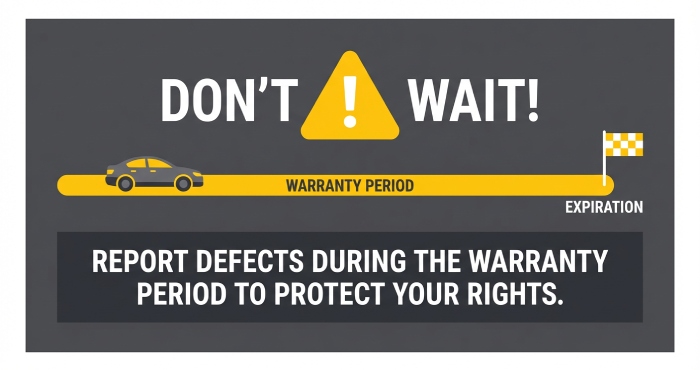
Many people mistakenly believe that they can delay action under lemon laws; however, these laws typically mandate that defects be reported and repair efforts initiated within the warranty period or designated lemon timeframe. Although repairs may carry on after the warranty has lapsed, eligibility usually hinges on when the issue was first noticed and if it was reported in a timely manner. Therefore, it is crucial to document issues promptly and have the vehicle inspected without delay.
Practical tip: Escalate when repair attempts stack up, the vehicle condition remains unsafe, or days out of service accumulate beyond statutory thresholds. Early legal advice from an attorney or lawyer experienced in lemon law can prevent missed deadlines and preserve remedies.
Myth 4: You must go to court and pay out of pocket
A common misconception among vehicle owners is that pursuing lemon law claims involves expensive legal battles. However, several laws contain fee-shifting clauses that obligate manufacturers to cover the attorney fees for consumers who win their cases.
Fee-shifting, arbitration, and manufacturer programs
Fee-shifting: If you prevail, the automaker typically pays your legal fees; you do not need to front full litigation costs to vindicate your rights.
Alternatives: State-sponsored arbitration, private mediation, or a manufacturer’s dispute resolution program may deliver remedies faster than trial—though outcomes vary.
Strategy: Evaluate whether negotiation, arbitration, or filing suit best positions your claim based on repair history, safety risks, and state-specific proof standards for substantial defect and non-conformity.
When in doubt, consult a seasoned Lemon Law attorney to assess notice requirements, eligibility windows, and refund options. If you need local guidance, a Lemon Law attorney San Diego can help you navigate California-specific rules on vehicle reacquisition and mileage offsets.
.
Myth 5: A lemon guarantees a free new car or full refund
Many people erroneously believe that proving a vehicle is a lemon automatically entitles them to a new car or a total refund. However, the options available can differ from state to state, and might include a buyback, a replacement vehicle, or monetary compensation.
How it works in practice:
Buyback vs. replacement: You may choose between a replacement vehicle or refund options, subject to state law and availability. Replacement usually requires a substantially similar model.
Refund components: Refunds often include the purchase price, taxes, and certain incidental damages (towing, rental cars), less usage. Some states also consider finance charges.
Valuation and offsets: Usage deductions may be informed by odometer readings and, in negotiations, by market references such as Kelley Blue Book (Blue Book) values—though statutory formulas control.
Many vehicle owners hesitate to exercise their rights or pursue legitimate claims due to misunderstandings surrounding lemon laws. By clarifying these prevalent myths, consumers can better identify when they are eligible for protection and compensation. Being knowledgeable about warranty details, repair obligations, and legal deadlines empowers vehicle owners to make informed choices and take suitable actions if they encounter problems with a faulty vehicle.


 buyback-car-value-2029.jpg” alt=”claim process” width=”700″ height=”370″ />


 lemon law buyback value” width=”700″ height=”370″ />