Why Automakers Request Vehicle Inspections Before Settlement
When a manufacturer is negotiating a buyback, replacement, cash-and-keep settlement, or repair-based resolution, it may request a vehicle inspection before finalizing the agreement. The stated reason is usually straightforward: the automaker wants to verify the defect, confirm the vehicle’s condition, document mileage, check the VIN, and determine whether any accident damage, neglect, unauthorized repair, or aftermarket modification affects the legal claim.
Inspection goals in a lemon law or defect dispute
Manufacturer Vehicle Inspections: Your Rights When an Automaker Wants to Examine Your Car Before Settlement
For example, an alleged transmission defect may lead to a road test, OBD2 scan, visual inspection, and diagnostic review, with findings compared against repair orders, recall records, and vehicle history.
A manufacturer-requested inspection is directly connected to the warranty dispute and may influence settlement negotiations. Consumers should understand the proposed inspection procedures, document the vehicle’s existing condition, and review any inspection terms before providing access.
Your Legal Rights During a Manufacturer Vehicle Inspection
You can ask for limits and written terms
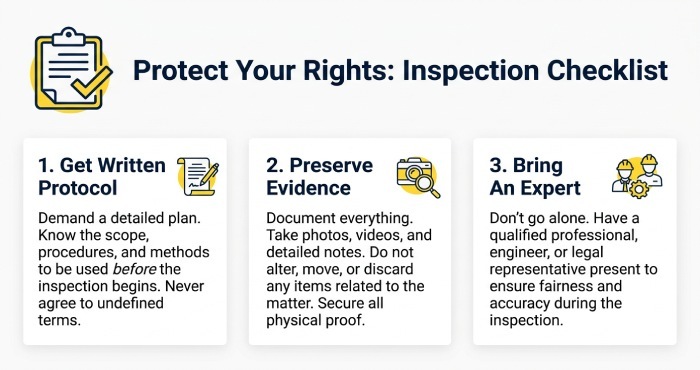
Before agreeing, ask for the inspection protocol in writing. The protocol should identify the inspector, whether a certified mechanic will participate, whether the vehicle will be taken to a Dealer, manufacturer facility, law firm parking area, or independent inspection station, and whether the automaker intends to perform an OBD2 scan, road test, or invasive diagnostic procedure.
You may also request that your attorney, expert, mechanic, or independent certified mechanic attend. If you are in California, consulting a California lemon law lawyer may help you understand whether the inspection required by the manufacturer is reasonable under the facts of your case.
You should preserve evidence
Your rights also include protecting evidence. Take photographs and video before the vehicle inspection. Save repair orders, diagnostic reports, photographs, videos, maintenance records, and any independent mechanic’s assessment. These documents can help establish the vehicle’s condition before the manufacturer conducts its inspection.
Do not let the inspection become a one-sided evidence event
A manufacturer may describe the vehicle inspection as routine, but it can become a major evidence event. If the inspector claims there was failure to inspect, poor maintenance, low fluid levels, worn tires, altered electrical wiring, or prior body and frame damage, those findings may appear in the inspection report and affect settlement. That is why your own inspection checklist and independent safety inspection records can be important.
What to Do Before Handing Over Access to Your Car
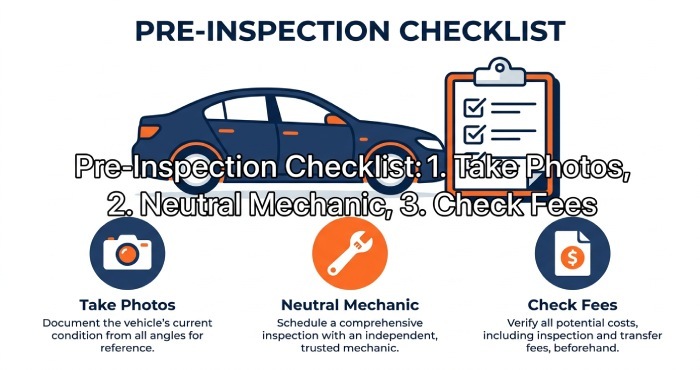
Before you hand over keys, prepare as if every detail matters. Start with a written inspection checklist that includes the VIN, mileage, warning lights, current symptoms, repair history, and visible condition. Photograph the brakes, tires, lights, interior, engine bay, underbody areas, exhaust system, suspension, steering components, and any alleged accident damage.
Practical steps before the inspection appointment
Schedule your own pre-purchase inspection-style review, even if you already own the vehicle. A certified mechanic can document the current condition and create a neutral inspection report before the manufacturer’s inspector arrives. This is especially helpful for a used vehicle, classic vehicle, RV, or vehicle with a complicated repair history. If the matter involves a motor home or recreational vehicle, an rv lemon law attorney may be relevant because RV inspections can involve chassis, coach, electrical, plumbing, and safety inspection issues.
Ask whether the manufacturer will charge any inspection fee, inspection price, storage fee, or towing fee. In most lemon law disputes, the consumer should be cautious about paying an inspection fee requested by the opposing side unless the agreement clearly explains why it is owed. If the automaker requires re-inspection after repair, confirm whether the re-inspection is limited to the same defect or expanded to unrelated systems.
Common Red Flags and Tactics to Watch For
Warning signs during the inspection process
Be cautious if the manufacturer refuses to provide the inspection report, will not allow your mechanic to attend, or insists on an extended road test without mileage limits. Watch for claims that a safety inspection failure proves your lemon law claim is weak. A failed safety inspection may involve brakes, lights, tires, steering, or suspension, while your legal claim may involve a separate manufacturer defect.
Another concern arises when the manufacturer attempts to attribute the reported defect to unrelated vehicle conditions without providing supporting diagnostic evidence. Consumers should request a copy of the inspection findings and ask for clarification when conclusions about maintenance, modifications, accident damage, or vehicle misuse are disputed. An independent expert may help evaluate whether those findings are supported by the vehicle’s actual condition and repair history.
How Inspection Results Can Affect Your Settlement
Inspection results can influence whether the manufacturer offers a buyback, replacement, additional repair, cash settlement, or denial. A clean vehicle inspection may support your claim by confirming recurring symptoms, active diagnostic codes, abnormal road test behavior, or failed components. A detailed inspection report from an independent certified mechanic can be powerful when it aligns with repair orders and the manufacturer’s own findings.
An unfavorable inspection report can reduce leverage if it suggests accident damage, abuse, modification, lack of maintenance, or failure to inspect critical systems. However, a manufacturer’s report is not automatically the final word. You may challenge the inspection process, request the data behind an OBD2 scan, obtain a second safety inspection, seek a re-inspection, or have your own expert prepare a comprehensive report.
If you are in San Diego or dealing with a California lemon law dispute, a lemon law attorney San Diego can help evaluate how the inspection report affects settlement value. In some cases, the key question is not whether the vehicle passed a safety inspection or whether an inspection station would issue an inspection certificate. The central issue is whether the manufacturer defect substantially impairs use, value, or safety and whether the automaker had a reasonable opportunity to repair it.
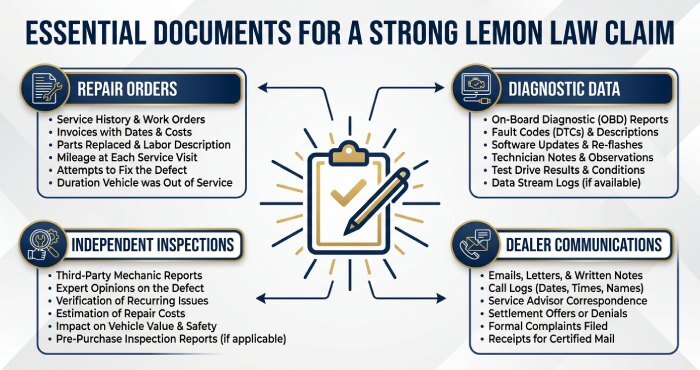
A strong lemon law claim file should include repair orders, recall records, vehicle history reports, photographs, diagnostic data, independent inspection findings, and communications with the dealership and manufacturer. Together, these records can help establish the recurring defect, document repair attempts, and address disagreements about the manufacturer’s inspection conclusions.