
Acquiring a new vehicle or a certified pre-owned one is intended to ensure dependability, safety, and reassurance. Sadly, some buyers find themselves with faulty cars that spend more time in the shop than on the road. When persistent repairs do not resolve significant problems, lemon laws can offer legal safeguards and financial relief. However, the success of a claim often hinges on the strength of the evidence presented. Among the most crucial types of evidence are records of communication with the dealership.
Every correspondence with the dealership, whether through emails, text messages, repair bills, or notes from service advisors, plays an essential role in building your case. These documents help establish a timeline of incidents, show multiple repair attempts, and indicate whether the manufacturer or the dealership was aware of the issue. If you’re collaborating with a reputable Lemon law attorney in California, well-organized communication records can greatly enhance your claim, increasing the likelihood of obtaining compensation, a replacement vehicle, or a refund.
Understanding the Role of Evidence in Lemon Law Cases
Lemon law claims rely heavily on proper documentation. Although your spoken account of persistent vehicle issues is important, written evidence serves as objective validation that strengthens your legal case.
Most state lemon laws require consumers to demonstrate that:
- The vehicle has a significant defect.
- This defect impacts the car’s safety, value, or usability.
- The manufacturer or dealer was given a fair chance to fix the issue.
- The defect persists despite repair efforts.
Keeping records of communications can help substantiate these claims. Without adequate documentation, dealerships or manufacturers can easily contest your assertions, arguing that the issue is minor, infrequent, or unresolved because you didn’t cooperate adequately.
Why Dealership Communication Records Matter
Lemon law claims hinge on having solid documentation. Although your spoken account of ongoing vehicle issues is important, written records serve as objective evidence that can bolster your legal stance.

Most lemon laws across various states necessitate consumers to demonstrate: Each interaction with a dealership generates a paper trail. While these communications might seem mundane at the time, they can prove vital evidence in a lemon law case later on.
Records from the dealership can support your case by confirming:
- The specific dates when issues were reported
- The symptoms you detailed
- The frequency of repairs attempted
- The repairs that were attempted
- Whether the dealership recognized the problem
- Delays caused by parts being unavailable
- Comments made by service personnel or management
Often, manufacturers try to downplay the severity of defects. Clear records of communication make it more challenging for them to deny the existence of the issue.
The major points to establish include:
- The presence of a significant defect
- The impact of the issue on the vehicle’s usability, value, or safety
- The reasonable opportunity given to the manufacturer or dealership to fix the problem
- The persistence of the defect despite repair attempts
Documentation aids in confirming all these aspects. Without appropriate records, dealerships or manufacturers may find it easier to challenge your claims or assert that the issues were minor, infrequent, or unresolved due to lack of cooperation.
Types of Communication Records You Should Keep
Many consumers might not be aware of how many documents can be used to strengthen a lemon law case. Having well-organized paperwork can significantly enhance your argument.
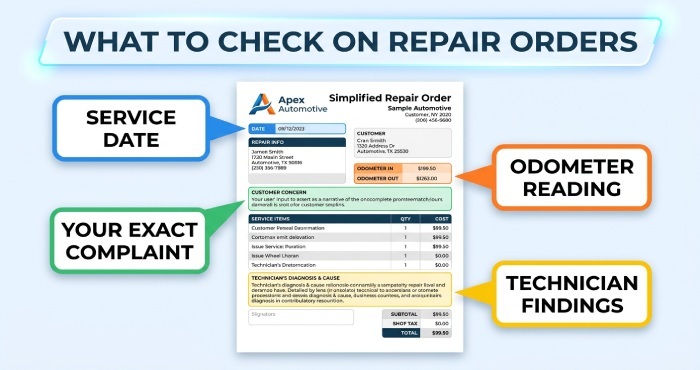
Repair Orders and Service Invoices
Repair orders play a crucial role in any lemon law claim. These records generally contain:
-
- Service date
- Odometer reading at the time of repair
- Your explanation of the problem
- Findings by the technician
- Repairs that were carried out
- Suggestions for future maintenance
Always obtain copies of repair orders before you leave the dealership. It’s essential to scrutinize them closely to confirm that your concerns are accurately reflected. If you notice that the dealership downplays or alters your description of the issue, address it right away.
For instance, if you stated that your “vehicle stalls while driving,” but the invoice only notes “customer reports minor hesitation,” this discrepancy could have implications for your case down the line.
Emails Between You and the Dealership
Emails provide a well-documented record that’s hard to contest. They can reveal your attempts to address the problem and the dealership’s responses. Important email evidence might consist of:
- Requests for service appointments
- Follow-up inquiries about ongoing issues
- Replies from service representatives
- Acknowledgments of recurring problems
- Delays caused by parts shortages
- Conversations about warranty details
It’s wise for consumers to keep all emails from the dealership, regardless of their perceived significance at the moment.
Text Messages and Online Chat Records
Contemporary auto dealerships typically utilize text messaging and online booking systems for communication. These interactions can serve as important documentation. For instance, they may include:
- Verification of repair appointments
- Comments regarding safety issues with the vehicle
- Alerts about unsuccessful repairs
- Suggestions for follow-up service
- Notifications regarding backordered parts
It’s advisable to capture screenshots and keep secure records of all digital discussions.

Phone Call Logs and Notes
While phone calls are more challenging to validate, comprehensive notes can still bolster your argument. After your discussion with a dealership staff member, make sure to document the following:
- The date and time of the conversation
- The representative’s name and title
- The content of your discussion
- Any commitments or clarifications given
If your state allows call recording and you decide to do so, make sure to adhere to the relevant consent regulations.
Proving the Manufacturer Had a Reasonable Opportunity to Repair
Manufacturers often contend that consumers haven’t allowed them sufficient opportunities to rectify vehicle issues. Documentation of communication can effectively challenge this claim. Your records can reveal:
- The number of times repairs were attempted
- The duration the vehicle spent in the repair facility
- Whether you repeatedly reported the same problem
- That you adhered to suggested repair guidelines
A thoroughly documented repair history can illustrate that the manufacturer had plenty of chances to address the defect.
Showing the Impact on Vehicle Safety and Reliability
Certain defects pose a greater risk than others. Documentation of communication can aid in demonstrating the severity of the problem. For instance:
- Complaints about brake failures
- Issues with steering
- Engine stalling incidents
- Electrical system failures
- Airbag malfunctions
- Problems with sudden acceleration
If you’ve consistently notified the dealership about your concerns regarding the vehicle’s safety, those records can significantly bolster your case. A proficient lemon law attorney, who serves California drivers, can leverage this documentation to illustrate that the defect impacts not just convenience, but also safety and the overall value of the vehicle.
Photos and Videos as Supporting Evidence
While communication records are essential, visual evidence can further strengthen your claim.
Helpful examples include:
- Dashboard warning lights
- Fluid leaks
- Vehicle smoke
- Malfunctioning electronics
- Videos of unusual noises or stalling
Pairing visual proof with dealership communications can make your evidence even more compelling.

The Role of a Lemon Law Attorney
The Importance of Legal Counsel in Lemon Law Matters
Handling a lemon law case on your own can be daunting, particularly when car manufacturers have teams of legal professionals dedicated to safeguarding their interests. A skilled lemon law lawyer trusted by California residents can methodically examine your communications with the dealership, pinpoint flaws in the manufacturer’s arguments, and enhance your chances of securing compensation.
How a Lemon Law Attorney Can Help Your Case
A seasoned attorney can provide invaluable assistance through:
- Analyzing repair logs and service documentation
- Collecting evidence to support your claim
- Liaising with manufacturers and dealerships on your behalf
- Preparing and submitting lemon law claims and legal documents
- Negotiating buybacks or settlements
- Representing you in court if necessary
Cost-Effective Legal Support
Many individuals are reluctant to seek legal help due to concerns over costs. However, numerous lemon law provisions state that manufacturers must cover attorney fees if the consumer wins the case. Consequently, collaborating with a reputable lemon law attorney that California drivers trust may be more budget-friendly and achievable than many might assume.
Manufacturer Buybacks and Settlements

The Impact of Comprehensive Documentation on Settlements
When records of dealership communications clearly indicate numerous repair attempts and ongoing issues, manufacturers may opt to resolve the claim rather than engage in a protracted legal battle. Thorough documentation can bolster your case by illustrating that vehicle problems continued despite several efforts to fix them.
Potential Resolutions for a Lemon Law Claim
Depending on the specifics of the situation, consumers may be eligible for various forms of compensation, such as:
- Repurchase or buyback of the vehicle
- A replacement vehicle of equal value
- Monetary compensation
- Reimbursement for expenses related to repairs
- Coverage for towing fees or rental vehicle costs
The Importance of Well-Structured Communication Records
Having well-organized records greatly enhances a consumer’s bargaining position. Emails, repair receipts, text exchanges, and written grievances create a detailed timeline of the manufacturer’s inability to resolve the defect, thereby increasing the chances of achieving a favorable settlement.
Final Thoughts
Dealership communication records can significantly support a lemon law claim by showing repeated repair visits, persistent vehicle defects, and how the issues affect your car’s safety and performance. Maintaining copies of repair orders, invoices, emails, text messages, and service reports can help demonstrate that the manufacturer was unable to resolve the problem. If your vehicle continues to have major defects, experienced San Diego Lemon Law Lawyers may help you seek a refund, replacement vehicle, or financial compensation.