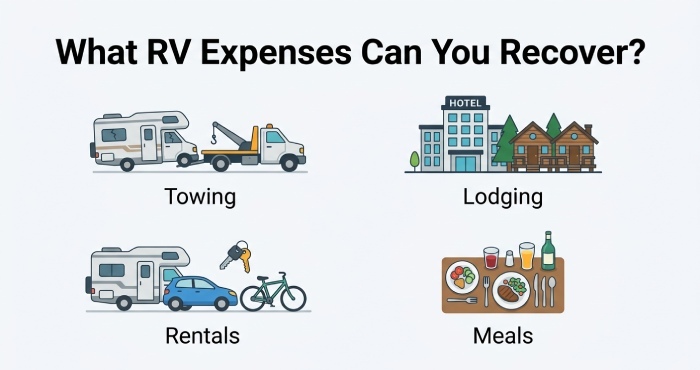
Yes—under the California Lemon Law, RV owners may be able to recover incidental expenses when a defective RV requires repeated warranty repairs or sits out of service for extended periods. These expenses can include towing, lodging, rental transportation, meals, storage, and other reasonable out-of-pocket costs caused by the vehicle defect and the manufacturer’s failure to repair it within a reasonable number of repair attempts.
California’s primary lemon law statute, the Song-Beverly Consumer Warranty Act, protects buyers and lessees of consumer goods, including certain recreational vehicle purchases. If your motorhome, fifth wheel trailer, travel trailer, campervan, pop-up camper, truck camper, or similar recreational vehicle develops substantial nonconformities that affect its use, value, or safety, you may have a claim for a refund or replacement—plus related incidental damages.
A qualified lemon law lawyer or lemon law attorney can evaluate whether your recreational vehicle qualifies for lemon status and whether your extra expenses are recoverable. For RV-specific claims, many consumers begin by speaking with an rv lemon law attorney who understands how California Lemon Law applies to a defective RV, motorhome, fifth wheel trailer, or travel trailer.
How California Lemon Law Applies to Defective RVs
The California Lemon Law generally applies when a manufacturer or its authorized dealer cannot repair a material defect covered by an express warranty after a reasonable number of repair attempts. For RV owners, this can involve repeated warranty repairs for engine problems, transmission problems, electrical problems, brake problems, steering problems, water leaks, slide-out failures, roof defects, or other chronic mechanical issues.
Covered RV Types and Warranty Issues
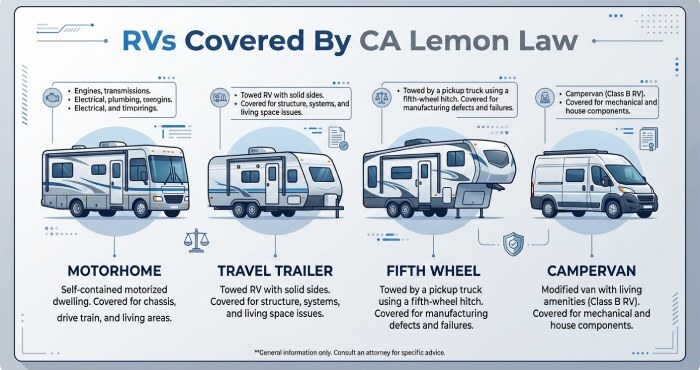
California Lemon Law may apply to various RVs, including motorhomes, travel trailers, fifth wheels, campervans, and truck campers, although coverage depends on the defective component and warranty. If a defect substantially impairs the RV’s use, value, or safety and cannot be repaired after a reasonable number of attempts, the owner may have a valid lemon law claim regardless of the RV brand.
What Counts as Incidental Expenses in an RV Lemon Law Claim
Incidental expenses are costs reasonably caused by the defective RV and the failed warranty repairs. In an RV lemon law case, these expenses are separate from the primary remedy, such as a refund or replacement. They are meant to compensate the owner for extra money spent because the manufacturer or dealer could not fix the recreational vehicle as promised.
Examples of Recoverable Incidental Costs
Common incidental expenses may include towing charges, diagnostic fees, rental cars, temporary lodging, campground cancellation fees, rideshare charges, fuel costs connected to repair visits, and storage fees while the motorhome or travel trailer is unusable. If a fifth wheel trailer is stuck at a dealer for warranty repairs and the owner must pay for alternative accommodations, those costs may be relevant.
A lemon law lawyer will usually look for a clear connection between the defective RV and the expense. For example, hotel bills incurred because a class C motorhome broke down during a trip may be recoverable if the breakdown involved a covered vehicle defect. Similarly, towing a lemon RV to an authorized dealer after repeated engine problems or transmission problems may support reimbursement.
Documentation Matters
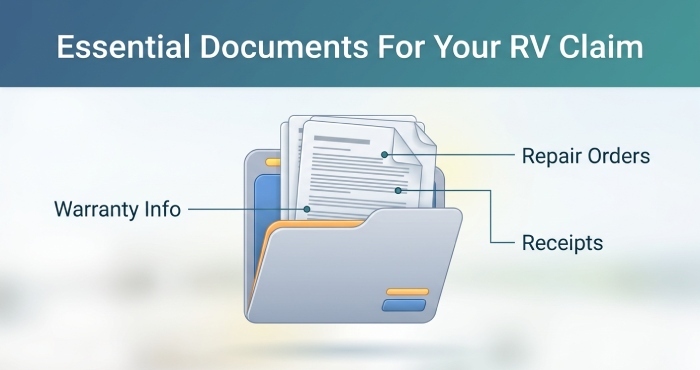
Receipts, invoices, repair orders, text messages, emails, trip records, campground reservations, and credit card statements can all help prove incidental damages. A lemon law attorney may also request the complete warranty repairs history from the dealer and compare it with your out-of-pocket expenses.
Keep Expenses Reasonable and Related
Courts and manufacturers often scrutinize whether the expense was reasonable, necessary, and directly tied to the RV lemon law problem. Luxury upgrades, unrelated aftermarket parts, or costs not caused by the defect may be harder to recover.
Common RV-Related Costs Owners May Be Able to Recover
Owners of a defective RV may face significant financial strain while waiting for repairs. A motorhome, fifth wheel trailer, or travel trailer is often used for vacations, long-distance travel, temporary housing, or full-time living. When warranty repairs drag on, the financial impact can be substantial.
Rental vehicle charges while the motorhome is unavailable
Hotel stays when the RV cannot be safely occupied
Meals during unexpected breakdowns
Storage fees for an unusable fifth wheel trailer or travel trailer
Lost campsite or reservation deposits
Diagnostic charges related to covered defects
Transportation costs to and from the dealer
Emergency repairs related to electrical problems, brake problems, steering problems, water leaks, or engine problems
California Lemon Law may allow successful consumers to recover attorney’s fees and costs, making legal help more accessible. Many lemon law attorneys offer a free consultation to determine whether an RV qualifies for a claim.
How a Lemon Law Lawyer in California Can Help Document and Pursue Reimbursement
A lemon law lawyer can help identify which expenses are legally recoverable and how to present them during negotiation with manufacturer representatives. An experienced lemon law attorney can also analyze whether the manufacturer had enough repair attempts and whether the RV meets California Lemon Law standards.
If you are unsure where to begin, consulting a california lemon law lawyer can help you evaluate the warranty, repair history, and incidental losses. A lawyer can review whether the motorhome, fifth wheel trailer, or travel trailer has a material defect, whether the repair attempts were reasonable, and whether your claim should seek a refund or replacement plus reimbursement.
Building the Claim File
A strong RV lemon law file usually includes:
Purchase or lease documents
Warranty and express warranty materials
Dealer repair orders
Manufacturer correspondence
Photos or videos of the defect
Receipts for incidental expenses
Timeline of breakdowns and warranty repairs
Notes about conversations with the dealer or manufacturer
A lemon law attorney can help pursue legal action if the manufacturer refuses a fair resolution, although many claims are settled through negotiation. The goal is to protect the consumer’s rights when the RV’s defect significantly affects its use, value, or safety.
For owners in Southern California, a lemon law attorney san diego may be able to assist with RV lemon law claims involving a defective RV purchased or serviced in the region.
Understanding Lemon Law Buybacks and How Loan Balances Fit In
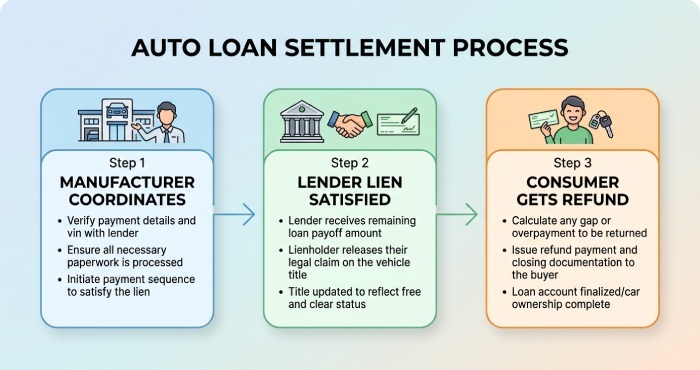
A lemon law settlement involving a financed vehicle is more than a simple cash payment. When a manufacturer agrees to a buyback, it must first address the outstanding car loan by coordinating with the lender. Only after the loan payoff is calculated can any remaining refund be paid directly to the consumer.
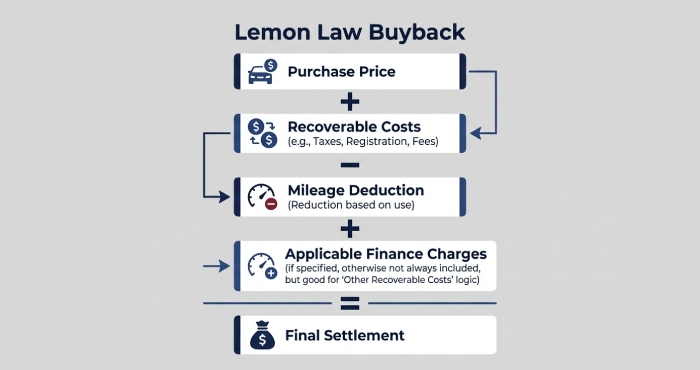
In a typical lemon law claim, the buyback amount may include the purchase price or eligible payments made by the consumer, less any lawful mileage deduction and plus certain recoverable costs. The manufacturer works with the bank or finance company to obtain the current payoff amount before completing the settlement.
Because the lender holds a lien on the vehicle, the loan must generally be satisfied before ownership can be transferred back to the manufacturer. Reviewing the payoff amount, accrued interest, and any remaining loan balance is an important step, and a lemon law attorney can help ensure the settlement is calculated correctly.
What Happens to Principal vs. Interest in a Lemon Law Settlement
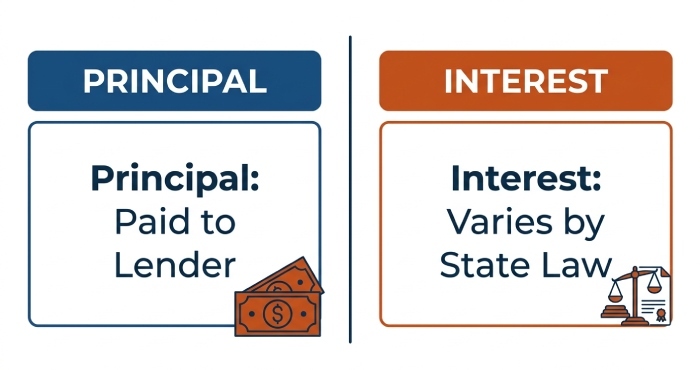
The principal on a car loan is the amount borrowed to purchase the vehicle, while interest is the cost of borrowing that money. In a lemon law settlement, the loan principal is usually resolved through the lender payoff so the loan can be satisfied and the vehicle title transferred.
Whether a consumer can recover interest already paid depends on the applicable state law and the terms of the settlement. Under the California Lemon Law, many purchase-related payments may be recoverable, but finance charges are not always reimbursed and may be treated differently depending on the loan agreement and the specific facts of the case.
Principal Usually Follows the Payoff
The remaining loan principal is usually shown on the payoff statement. If the buyback exceeds the payoff amount, the consumer may receive the remaining balance as a refund.
Interest Is Reviewed Differently from Principal
Loan interest is not always treated the same as principal in a buyback. Whether it is reimbursed depends on the settlement terms and the specific case.
Review the Retail Installment Contract
The retail installment contract outlines the loan details, finance charges, and any add-on products. Reviewing it helps identify costs included in the vehicle financing.
Compare Payment History to Payoff
Your payment history shows how much was applied to principal and interest over time. Comparing it with the final payoff helps verify that the settlement is accurate.
When Interest Paid May Be Reimbursed or Excluded
Interest paid on a loan for a defective vehicle may be recoverable if it is directly tied to the consumer’s finance payments and permitted under the applicable state lemon law. In many successful lemon law claims involving repeated warranty repairs, reimbursement of eligible finance charges may increase the consumer’s recovery beyond the payoff of the remaining loan principal.
However, interest is not always fully recoverable. If the loan includes negative equity from a prior trade-in or financing for optional add-on products, the manufacturer may argue that the related interest should not be included in the refund because those amounts are not directly attributable to the defective vehicle.
Common reimbursement and exclusion issues
A buyback scenario can involve several categories of money:
Payments made toward principal and interest on the car loan
Current loan balance and lender payoff
Registration, taxes, and official fees
Out-of-pocket expenses for towing, rental cars, or diagnostics
Optional products such as GAP Insurance, service contracts, or maintenance plans
Lease payments and obligations under lease agreements
Prior negative equity rolled into the purchase
A manufacturer may agree to manufacturer reimbursement for some finance charges but classify others as excluded costs. The dispute often turns on statutory language, settlement negotiation, and documentation. Firms such as McMillan Law Group, led by Julian McMillan, and other consumer firms such as
Consumers in Southern California may also consult a lemon law attorneysan diego for localized guidance, while statewide claims may warrant speaking with a california lemon law lawyer. For motorhomes and recreational vehicles, a specialized rv lemon law attorney may be appropriate because RV financing, warranties, and repair histories can be more complex.
How Mileage Offsets, Fees, and Payoff Amounts Affect Your Recovery
The mileage offset can significantly reduce the amount a consumer receives in a manufacturer buyback because it accounts for the vehicle’s use before the first qualifying repair attempt. A large usage deduction may reduce the refund enough that it no longer covers the remaining loan payoff, potentially leaving the consumer with negative equity unless the manufacturer agrees to pay the difference.
Consumers should also review settlement terms carefully when a replacement vehicle is offered. A replacement does not automatically eliminate the existing loan or lease obligations and may involve new financing, taxes, registration costs, or other fees. Confirming how the loan payoff, lease balance, and any remaining financial obligations will be handled is essential before accepting the settlement.
Practical Steps for Documenting Auto Loan Interest and Protecting Your Settlement
To protect your lemon law recovery in Rancho Palos Verdes, organize your financial records before settlement negotiations begin. Strong documentation makes it easier to prove the interest you’ve paid, identify any negative equity, and challenge an incomplete refund calculation, helping ensure you receive the full compensation you may be entitled to under the law.
Start by collecting:
The purchase contract or lease agreement 2. The complete car loan payment history 3. Current payoff statement from the finance company 4. Records of all repair attempts and repair orders 5. Warranty documents from the manufacturer and warranty provider 6. Receipts for out-of-pocket expenses 7. Documents for GAP insurance, service contracts, and other add-ons 8. Any communications with the dealer, manufacturer, lender, or insurance company
Information found on Google, YouTube, Facebook, LinkedIn, X (Twitter), WhatsApp, or Pinterest can provide general background but should not replace legal advice for your specific lemon law claim. A free consultation with a qualified lemon law attorney can help determine whether interest is recoverable, whether the manufacturer buyback properly addresses your loan balance, and whether a replacement vehicle or cash refund is the better option.
Before signing a release, confirm the settlement states who pays the lender, when the payoff will be made, whether per diem interest is included, and whether the loan balance will be fully satisfied. Also verify how the settlement treats usage deduction, negative equity, interest paid, optional add-ons, and any remaining obligations that could affect your rights, credit score, or future financing.
Before committing to a California Lemon Law buyback program, consumers should understand how different trade-in options may affect legal entitlements, financial recovery, and the possibility of receiving a refund of purchase price.
Under the Song-Beverly Consumer Warranty Act, a faulty vehicle may qualify for a manufacturer buyback, replacement vehicle, cash settlement, or other remedies when repeated repair attempts fail to fix a substantial non-conformity covered by an Express Warranty.
1: Dealer Trade-In Toward a New or Certified Pre-Owned Vehicle
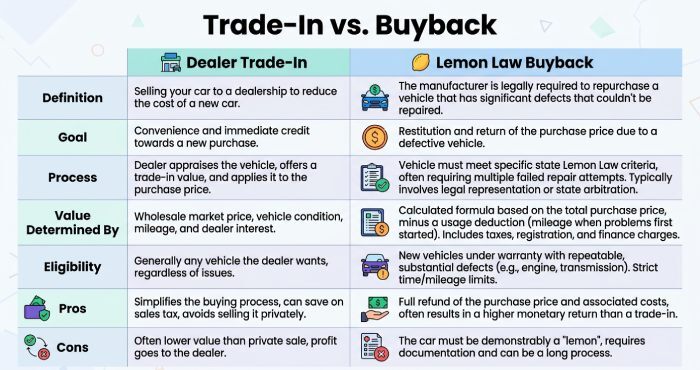
A traditional Dealer trade-in is often the fastest path to a replacement vehicle. You bring the defective car to a Dealership or Auto dealer, receive a trade-in value, and apply that amount toward a new model or certified pre-owned vehicle. This option may appeal to a Consumer who needs immediate transportation and cannot wait for a manufacturer buyback or formal buyback program.
When a Dealer Trade-In May Make Sense
A dealer trade-in may be a practical option if the defects are minor and do not qualify under California Lemon Law. However, serious or repeated warranty issues may make a lemon law claim more beneficial than trading in the vehicle.
Watch for Negative Equity and Reduced Value
A vehicle with known defects may receive a lower trade-in value, creating negative equity or additional costs. Compare the dealer’s offer with the potential benefits of a California Lemon Law refund or replacement before making a decision.
Keep Every Document Before Signing
Save all repair orders, warranty records, receipts, and communications before completing a trade-in. These documents can help support your California Lemon Law claim if you pursue legal action later.
2: Manufacturer Loyalty or Goodwill Trade-In Assistance
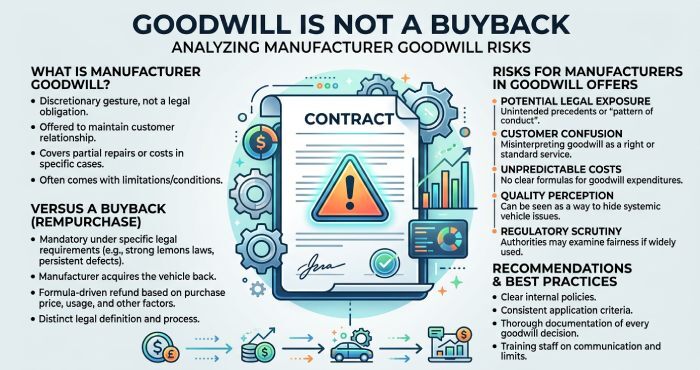
Goodwill Is Not the Same as a Buyback Program
A goodwill offer may provide a rebate, partial loan payment, or discount on a replacement vehicle, but it is generally not the same as compensation available under California Lemon Law. A qualifying buyback may include a refund, reimbursement of eligible costs, finance charges, and other recoverable amounts, subject to the applicable usage deduction.
Manufacturer buyback programs must also comply with California disclosure requirements when the vehicle is resold, helping protect future buyers through consumer protection and warranty laws.
Questions to Ask Before Accepting Goodwill
Ask whether accepting goodwill assistance waives your lemon law claim, affects future remedies, or prevents you from seeking a manufacturer buyback later. A lemon law attorney can review the settlement language before you sign. If you are in Los Angeles, Orange County, or the County of Los Angeles, local California lemon law attorneys may also be familiar with regional dealership practices.
3: Private-Party Sale Before Filing a Lemon Law Claim
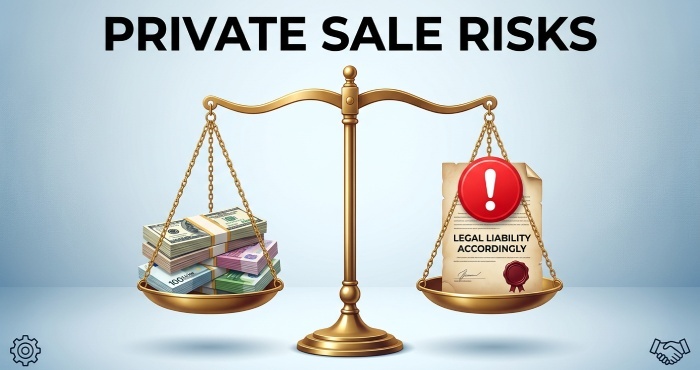
A private-party sale may sometimes produce a higher price than a Dealer trade-in. However, selling a defective car directly to another buyer before filing a lemon law claim can be risky, especially if the faulty vehicle has unresolved non-conformity issues.
Disclosure Risks and Consumer Rights
Private sellers should avoid misrepresenting a vehicle’s condition. If the car has a history of repeated repairs, safety defects, or multiple visits to an authorized dealer, those issues should be disclosed to help prevent future disputes.
Selling a defective vehicle may also affect your lemon law claim. Once the vehicle is sold, it may be harder to pursue a manufacturer buyback, replacement vehicle, or refund because the manufacturer may no longer be able to inspect it. Some Lemon Law Firm attorneys advise waiting until your claim is resolved before selling.
Impact on Refund and Compensation
A California Lemon Law refund may include your down payment, monthly loan payments, taxes, registration fees, payoff amount, and certain out-of-pocket expenses, minus any applicable mileage deduction.
4: Third-Party Online Car Buying or Instant Cash Offer Programs
Advantages of Fast Cash Offers
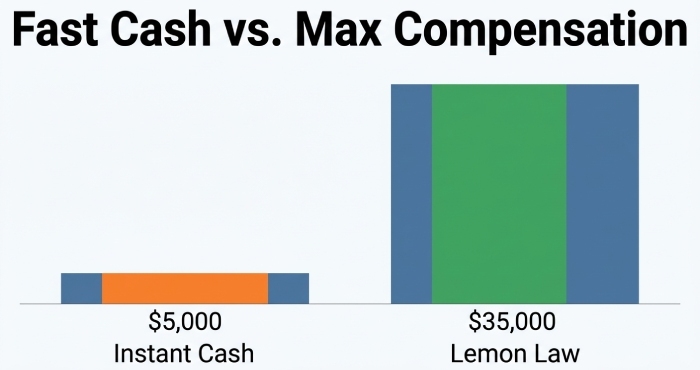
The main benefit is speed. You may receive payment within days and avoid repeated visits to auto dealerships. For a Consumer with a faulty vehicle that is unreliable, a fast sale can help secure funds for a replacement vehicle.
Still, online offers may be reduced after inspection if the defective car has warning lights, drivetrain problems, electrical defects, or incomplete repair records. A transferable warranty may help preserve value, but serious defects can sharply lower the final offer.
Legal and Financial Trade-Offs
If the vehicle potentially qualifies under California Lemon Law, an instant cash sale could leave money on the table. A manufacturer buyback may provide broader compensation than a standard resale offer, especially where the Manufacturer failed to repair a serious non-conformity after reasonable repair attempts.
Before choosing these trade-in options, compare the cash offer with possible legal protection under the Song-Beverly Consumer Warranty Act. A lemon law attorney can estimate whether a buyback program, cash settlement, replacement, or refund would likely exceed the third-party offer. For specialized vehicles, such as motor homes, consulting an rv lemon law attorney may be especially important.
5: Trade-In After Consulting a California Lemon Law Lawyer
Why Legal Review Comes First
A lemon law attorney can determine whether you may qualify for a manufacturer buyback, replacement vehicle, refund of purchase price, or cash settlement. The fee-shifting provision in California Lemon Law may require the Manufacturer to pay attorney fees for a successful claim, which can make legal review accessible to many consumers.
If you need regional help, resources such as a lemon law attorney san diego or a california lemon law lawyer can explain how a trade-in might affect your legal entitlements. Consumers in Orange County may search for a Lemon Attorney Orange County, while those elsewhere may consult California lemon law attorneys, a Legal Professional, or a Lemon Law Firm familiar with Manufacturer and Dealer practices.
Coordinating Trade-In Timing With a Lemon Law Claim
A lemon law attorney may recommend waiting to trade in your vehicle until the manufacturer reviews your claim or settlement discussions begin. Proper timing and documentation can help protect your legal rights and maximize your potential recovery.
What a Lawyer May Compare
A lemon law attorney may compare:
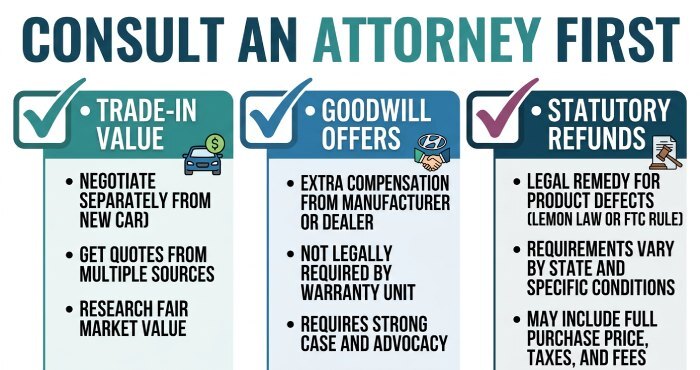
Dealer trade-in value versus statutory refund
Goodwill offer versus formal buyback program
Replacement vehicle terms versus refund of purchase price
Manufacturer buyback estimate versus private-party sale
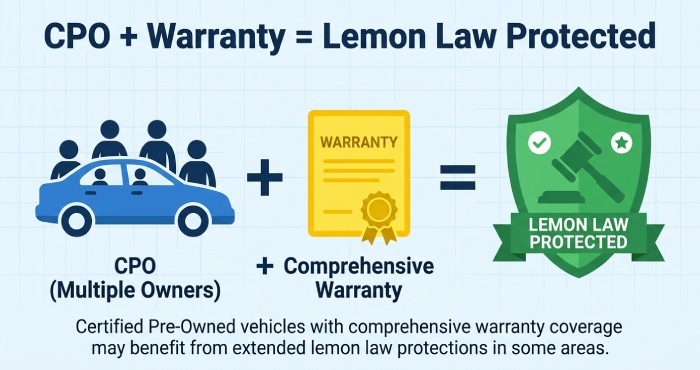
Yes. A certified pre-owned car with multiple previous owners can still qualify for lemon law protection if it was sold with a valid written warranty and the defect occurred during applicable warranty coverage. Under the California Lemon Law, the key issue is not simply how many people owned the pre-owned vehicle before you. The central question is whether the manufacturer, dealer, or warranty provider failed to repair a substantial defect after reasonable repair attempts while the manufacturer’s warranty or CPO warranty was still active.
For buyers in Orange County and throughout California, this distinction matters. Many consumers assume that used cars, pre-owned cars, or Certified Pre-Owned (CPO) vehicles are excluded from Lemon Law protections. That is not always true. A certified pre-owned car may be protected if it came with a manufacturer’s warranty, a remaining new car warranty, or another qualifying written warranty backed by the manufacturer.
How California Lemon Law Applies to Certified Pre-Owned Vehicles
The California Lemon Law, formally part of the Song-Beverly Consumer Warranty Act, protects consumers who purchase or lease vehicles covered by a written warranty. While many people associate California Lemon Law with brand-new vehicles, lemon law coverage can also apply to certified pre-owned vehicles when they are sold with warranty protection.
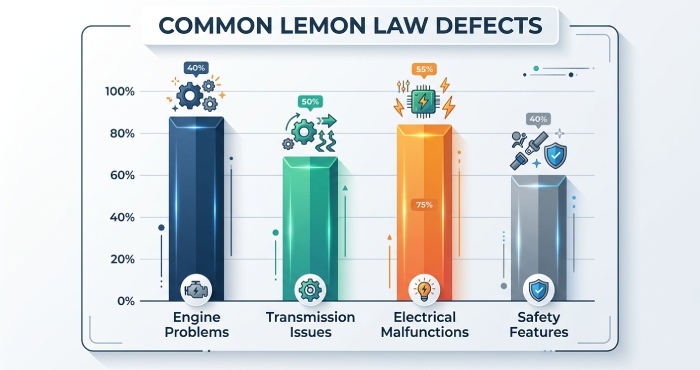
A Certified Pre-Owned (CPO) vehicle is typically inspected, reconditioned, and backed by the manufacturer or a manufacturer’s agent. If the certified pre-owned car has serious vehicle defects—such as engine problems, transmission issues, electrical malfunctions, or defective safety features—the buyer may have a valid lemon law claim.
CPO Cars and Written Warranty Protection
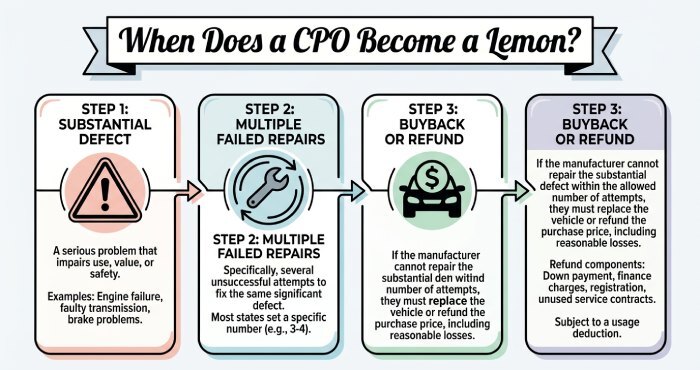
In California, a certified pre-owned (CPO) car that comes with a written warranty might be eligible for protection under the Lemon Law. If a significant issue compromising the vehicle’s safety, functionality, or worth cannot be resolved after a reasonable number of attempts to repair it, the owner could be entitled to various remedies, including a refund, replacement, compensation, or a buyback from the manufacturer, commonly known as a lemon law buyback.
Consumers searching for guidance may compare resources from a California lemon law lawyer, especially when evaluating whether a certified pre-owned car still has enforceable warranty rights.
Why Multiple Previous Owners Do Not Automatically Disqualify a CPO Vehicle
Multiple prior owners do not automatically prevent a pre-owned vehicle from being covered under California Lemon Law. The number of owners may affect the factual analysis, but it is not the sole deciding factor. What matters most is whether the vehicle was sold with an active manufacturer’s warranty, CPO warranty, or other qualifying written warranty.
For example, a certified pre-owned car may have had two previous owners but still be sold by an authorized dealer with manufacturer-backed warranty coverage. If that pre-owned vehicle develops a persistent issue during the warranty period, the buyer may still have a lemon law claim.
What Really Matters: Warranty Status and Defect History
A lemon law attorney usually examines the warranty, documentation of repairs, purchase receipts, and any proof indicating when the defect first occurred. If the problem surfaced while under the manufacturer’s or certified pre-owned warranty, the buyer might still have legal avenues to pursue.
Thorough repair documentation, assessments from mechanics, and records from repair shops can demonstrate that a significant defect was present and that attempts to fix it were not successful.
When a Prior Lemon Law Buyback Is Involved
If the certified pre-owned car was previously repurchased by the manufacturer, the seller may have had a duty to disclose that history. A prior manufacturer repurchase does not always mean the vehicle cannot be resold, but the disclosure must be accurate. A lemon law attorney can evaluate whether the manufacturer repurchase history was properly revealed and whether a new lemon law claim is still available.
The Role of Manufacturer Warranties and CPO Warranty Coverage
A manufacturer’s warranty is often the foundation of a California Lemon Law case involving a certified pre-owned car. The warranty may be the remainder of the original new car warranty, an extended CPO warranty, or another written warranty issued by the manufacturer or warranty provider.
If the pre-owned vehicle has ongoing warranty coverage, the manufacturer may be responsible for repairing covered defects. When the manufacturer or its authorized dealer cannot repair a substantial defect after reasonable repair attempts, the consumer may have a lemon law claim.
Why the Manufacturer’s Warranty Is Critical
The manufacturer’s warranty helps determine whether the defect arose during the protected period. Time restrictions, mileage limits, and warranty terms all matter. If the defect began before the warranty expired, the buyer should preserve documentation showing the first repair visit, repair orders, and communications with the dealer or manufacturer.
Key Evidence Needed to Prove a Lemon Law Claim for a Used CPO Car
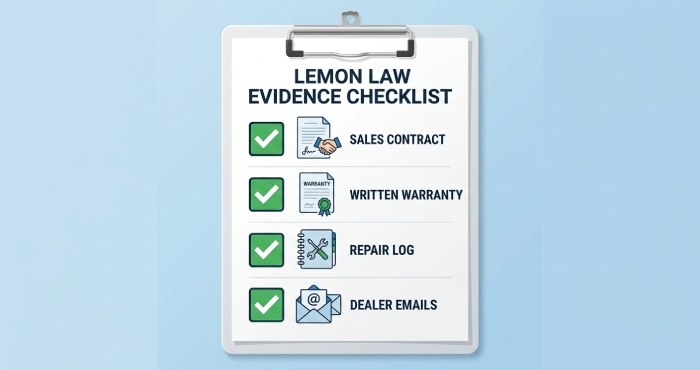
Important evidence may include:
The CPO sales contract and purchase documents
The written warranty, manufacturer’s warranty, and CPO warranty booklet
A complete repair log showing dates, mileage, symptoms, and repair attempts
Repair orders documenting engine problems, transmission issues, electrical malfunctions, or safety features that failed
Emails, text messages, or letters exchanged with the dealer or manufacturer
Notes about loss of use, towing, rental cars, or repeated visits to the mechanic
A California Lemon Law case often turns on whether the manufacturer had a reasonable opportunity to repair the pre-owned vehicle. If the same significant defect continues after multiple repair attempts, or if the car spends an excessive number of days out of service, the certified pre-owned car may qualify for a lemon law buyback.
For broader regional comparison, some consumers also review resources from a lemon law attorney san diego when researching how California claims are handled.
When to Contact a Lemon Law Lawyer in California for a Certified Pre-Owned Vehicle
A consumer should contact a lemon law attorney as soon as recurring problems appear in a certified pre-owned vehicle covered by a manufacturer’s warranty or written warranty. In Orange County, firms such as Attorney Barnes and Barnes Law Firm Orange County may offer a free consultation to determine whether the vehicle qualifies for a lemon law buyback.
An attorney can handle negotiations, mediation, or litigation if necessary, and may also identify issues involving prior repurchases or inadequate disclosures. Consumers with defective motor homes or recreational vehicles can similarly seek guidance from an RV lemon law attorney to evaluate their rights and available remedies.
Numerous buyers acquire extended warranties with the belief that they provide thorough coverage, only to find out later that some repairs are not included when issues occur. Typical exclusions can encompass items affected by normal wear and tear, regular maintenance, pre-existing issues, and damage resulting from misuse or neglect. By being aware of these restrictions before agreeing to a warranty, consumers can prevent surprise expenses and make wiser choices regarding their coverage.
Wear-and-Tear Items and Routine Maintenance That Extended Warranties Usually Do Not Cover
An extended warranty is often marketed as purchase protection against expensive car repairs, but consumers frequently misunderstand what warranty coverage actually includes. Unlike a factory warranty or manufacturer warranty, which typically comes with a new vehicle purchase, an extended warranty is usually a service contract sold by a dealership, auto dealer, service plan company, or Private warranty provider after—or near the end of—the original warranty period.
Consumables, Maintenance, and “Normal Use” Parts
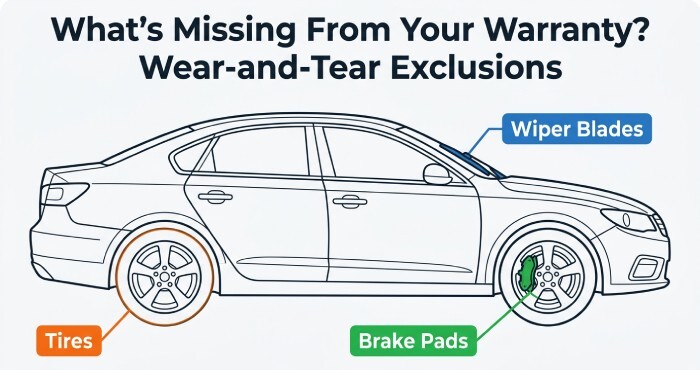
Most extended warranty plans exclude wear-and-tear items and routine maintenance. Brake pads, tires, wiper blades, belts, hoses, fluids, filters, spark plugs, alignments, and oil changes are rarely covered parts. Even when bumper-to-bumper coverage sounds broad, the warranty fine print may state that maintenance items are outside the service contract.
This is also true for many dealer warranty products, third-party warranty plans, and even some used car warranty agreements. A dealer warranty may cover specific mechanical failures, but it usually does not pay for predictable deterioration. Powertrain coverage, for example, may include engine coverage, transmission coverage, and drive axle coverage, but it will not usually cover clutch wear, fluid services, or damage caused by missed maintenance.
Why “Bumper-to-Bumper” Does Not Mean Everything
Bumper-to-bumper coverage can be misleading. A factory warranty may offer strong bumper-to-bumper coverage for a limited period, but an extended warranty version may include more warranty exclusions. The manufacturer warranty might cover defects in workmanship, while a third-party warranty may only cover listed failures of named components. Consumers should compare factory warranty terms, dealer warranty promises, and third-party warranty limits before assuming the warranty benefits are identical.
Pre-Existing Problems, Improper Repairs, and Maintenance Record Requirements
Maintenance Records and Claim Denials
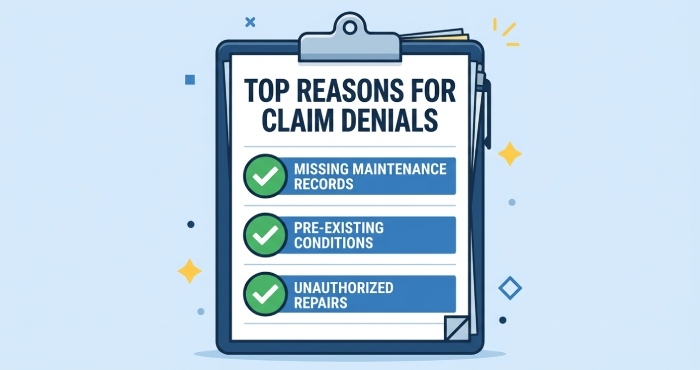
Extended warranty providers often require proof that the vehicle was maintained according to the manufacturer’s recommended service schedule. Missing records for oil changes, coolant flushes, or transmission services can lead to claim denials, particularly when engine, transmission, or drivetrain components fail.
Coverage may also be denied if prior repairs were performed improperly, non-OEM parts were used where required, or unauthorized repairs contributed to the breakdown. In addition, many warranty contracts require repairs to be completed at approved repair facilities or dealerships before reimbursement or coverage will be considered
Keep Written Proof Before and After Repairs
A written warranty, maintenance receipts, diagnostic reports, and repair invoices can be critical. A reputable provider will explain documentation requirements clearly, while a less transparent service contract provider may rely on vague language to deny repair bills. Consumers should also track repair attempts, mileage limitations, and any conversations with the warranty administrator.
Exclusions for Electronics, Software, Diagnostics, and “Non-Mechanical” Components
Modern vehicles depend heavily on software, sensors, modules, cameras, infotainment systems, hybrid systems, and advanced driver-assistance technology. Yet many extended warranty contracts still distinguish between “mechanical breakdown” and electronic, software, diagnostic, or non-mechanical failures.
Electronics and Diagnostics Are Often Limited
Factory warranties typically include coverage for electronic parts while the original warranty is in effect. However, extended warranties frequently do not cover certain items like screens, navigation systems, key fobs, wiring, software upgrades, and diagnostic services.
Additionally, battery coverage may be restricted, with distinct warranties available for various battery components. Since coverage levels can differ significantly, it is crucial for consumers to thoroughly examine the warranty details and manufacturer information to know what is included and what is excluded.
How Lemon Law Protections Differ from Extended Warranty Coverage and When Consumers Should Seek Legal Help
Lemon law protections are fundamentally different from an extended warranty. A factory warranty, manufacturer warranty, dealer warranty, third-party warranty, or service contract is simply a promise to repair or pay for certain covered components. By contrast, lemon law rights are legal remedies that may apply when substantial vehicle defects persist despite reasonable repair attempts. A California lemon law lawyer can evaluate the repair history, warranty coverage, and defect documentation to determine whether the consumer may be entitled to a refund, replacement vehicle, or other relief under California’s lemon law statutes.
Warranty Coverage vs. Statutory Rights
A lemon law claim usually focuses on defects covered during the original manufacturer warranty or factory warranty period. State lemon law rules vary, but many require repeated repair attempts, a serious safety defect, or the vehicle being out of service for a specified number of days.
In Oakland, California, consumers may also rely on federal protections under the Magnuson-Moss Warranty Act when a written warranty is breached, supporting claims involving warranty coverage disputes, repeated repair failures, and deceptive warranty practices.
An extended warranty may help pay for out-of-pocket repairs after the factory warranty expires, but it generally does not create the same refund eligibility, replacement rights, or statutory compensation available under lemon law. A third-party warranty denial may be a contract dispute, while a lemon law case may involve the car manufacturer’s failure to repair defects under the manufacturer warranty. Arbitration may be required in some programs, and some consumers may encounter an arbitration form from a car manufacturer or state agency.
A lemon law expert or Lemon Law attorney can help determine whether the consumer has a service contract dispute, a manufacturer warranty claim, or a true lemon law claim. In California, consumers may consult a San Diego lemon lawyer to evaluate their legal options and determine whether they qualify for remedies under the state’s lemon law protections.
If the issue involves repeated defects during the factory warranty, lemon law may offer stronger remedies than an extended warranty. If the dispute involves denied repair costs under a dealer warranty, third-party warranty, or customizable coverage plan, the consumer may need to challenge service claim restrictions, repair shop restrictions, or improper exclusions directly with the service contract provider.